The Apollo Masters Fire and the Vinyl Supply Crisis That Followed
On the morning of February 6, 2020, something happened in Banning, California that would send shockwaves through the global music industry. At just before 8 a.m., a fire broke out at Apollo Masters Corporation, one of only two companies in the entire world that manufactured lacquer discs, the essential first step in vinyl record production. The fire triggered three fire alarms and was accompanied by five or six explosions. Eighty-two firefighters responded, needing three hours to bring the blaze under control. Miraculously, no staff members were injured, and students at nearby Banning High School were also unharmed. To this day, the exact cause of the fire remains undetermined.
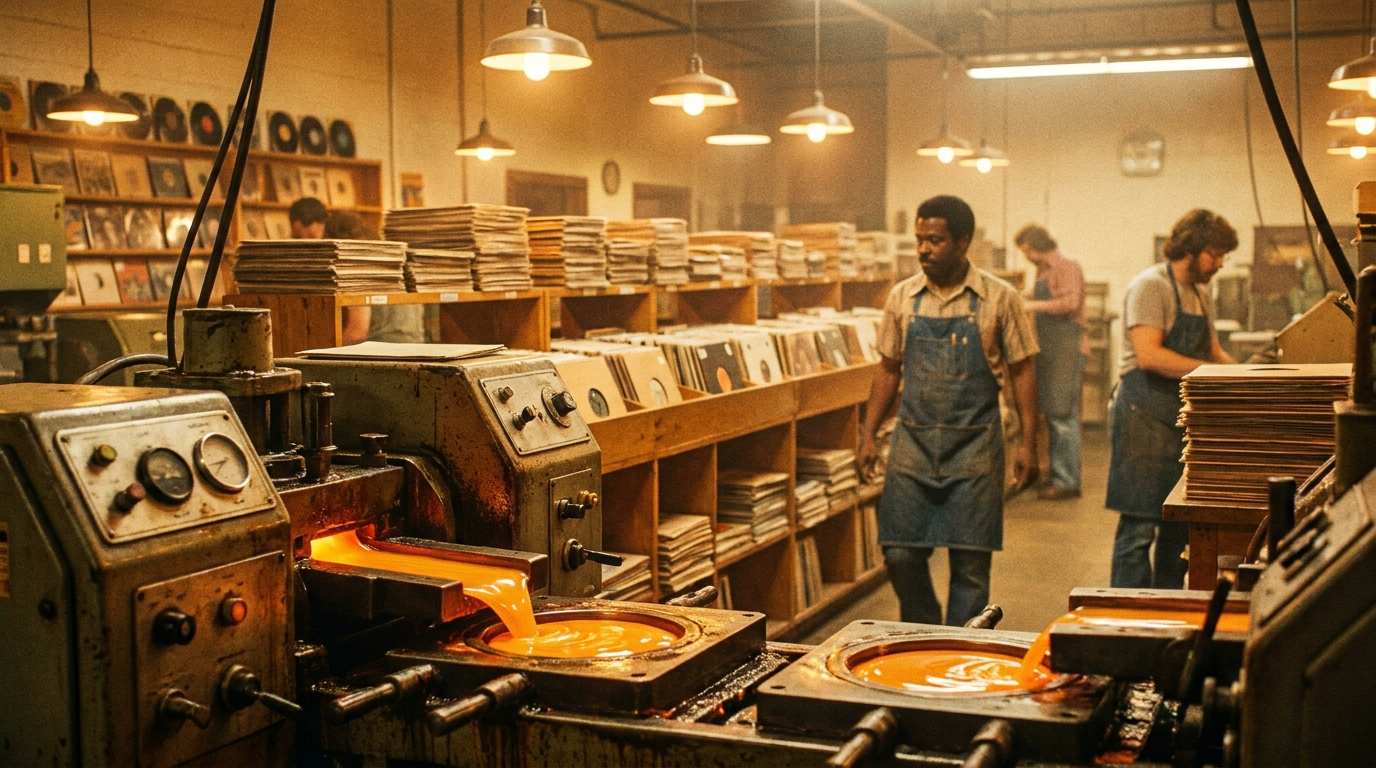
For most music fans, the name Apollo Masters probably does not ring any bells. Yet this small company, tucked away in a Southern California industrial park, played an absolutely critical role in the vinyl record supply chain. When you bought a vinyl record, the only reason that record existed in physical form began with a lacquer disc. Here is how the process works: first, a master recording is cut onto a lacquer disc, creating a negative impression. From this lacquer master, metal molds are then made, and those molds are what press the grooves into the vinyl you finally hold in your hands. Without lacquer discs, there are no records, period.
Apollo Masters was not some giant corporation with global reach. It was a modest operation, but one with an outsized importance to the music world. Together with MDC in Japan, Apollo Masters formed the backbone of the global lacquer disc manufacturing duopoly. For decades, these two companies handled what might be called the first sacred step in bringing music into physical existence. Then, quietly, MDC in Japan closed its doors. That left Apollo Masters as the sole remaining lacquer disc manufacturer on Earth, a staggering concentration of a critical resource in a single facility.
The timing could not have been worse. Vinyl was in the middle of a massive revival in 2020. Sales that year reached their highest levels since 1988, a remarkable turnaround for a format that everyone had written off as dead during the CD era. The indie record store had returned as a cultural institution, and labels both major and independent were scrambling to meet demand. The industry was already stretched thin, with pressing plants working at capacity and lead times extending well beyond what anyone considered healthy.
When the Apollo Masters fire happened, it was as if someone had cut the head off the snake. Pressing plants that had been waiting for lacquer masters suddenly had nowhere to turn. Projects were halted indefinitely. The estimated wait time for new vinyl production, which had already stretched into months, shot up even further, with some plants quoting lead times of six months or more. Prices for vinyl records began to climb, and there was simply nothing the market could do about it.
Small independent labels bore the brunt of the damage. These were the companies that had embraced vinyl most enthusiastically during the revival, often building their entire identity around beautiful pressings of niche artists and obscure reissues. Many of these labels had archived lacquer masters going back years, sometimes decades, representing the culmination of their catalog. Some lost years of these irreplaceable masters in the fire, and with them, the ability to easily repress beloved titles that had been fan favorites for generations.
The crisis forced a reckoning across the industry. New players began exploring lacquer disc manufacturing, and some existing plants invested in expanding their capabilities. The recovery was slow, measured in years rather than months, and it permanently altered the supply chain dynamics that had once seemed so stable. Today, the vinyl supply chain remains more diversified than it was in February 2020, though the lessons of that fateful morning in Banning have not been forgotten.
The Apollo Masters fire stands as a reminder of how fragile our cultural infrastructure can be. A single facility, a single accident, was enough to throw the entire global vinyl industry into chaos. For music lovers who wondered why their favorite indie records took so long to come back into print, or why certain pressings became so expensive, the answer traces back to a fire in a small California town on a February morning in 2020, and to the fragile supply chain that collapsed in its wake.
A spreadsheet tracks what you own. What's Spinning identifies what's playing.
On-device vinyl ID logs your listening history automatically. 7-day free trial.
Looking for Shazam for vinyl?
What's Spinning identifies what's playing on your turntable on-device, logs history, and AirPlays now-playing to your TV.
Comparing vinyl ID apps?
Analog requires Discogs and is iPhone-first (iPad coming). What's Spinning works without Discogs on iPhone and iPad with AirPlay.
Try What's Spinning Free
Turn your iPad into a live now-playing display. Track every record you spin.
START FREE TRIALThen $4.99/mo or $39.99/yr · Cancel anytime