Best Turntable Cartridge Under $100 for Warm Sound
If you want the best cartridge under 100 vinyl listeners can buy for a warmer, more forgiving sound, my pick is the Grado Prestige Black3. It is not the only smart buy in this bracket, and it is not the best match for every tonearm, but it hits the brief better than the usual bright, detail-first budget cartridges. It gives older pressings a little body, softens the top end without turning records dull, and makes long listening sessions feel less analytical.
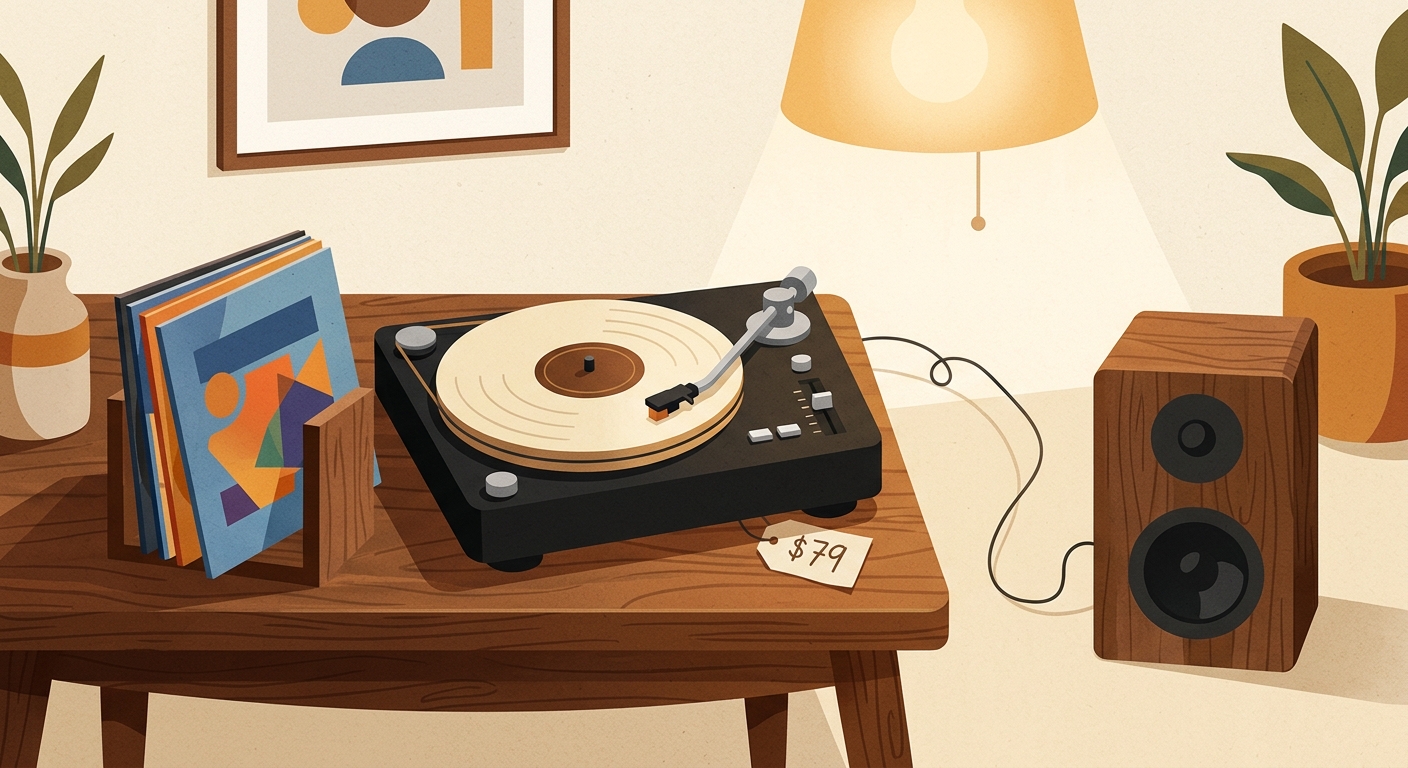
That matters because a cartridge is the first electrical translator in your vinyl chain. The stylus traces the groove, the cantilever moves, and the cartridge turns that motion into a tiny signal for your phono stage. A $79 to $99 cartridge cannot fix a noisy pressing or a badly aligned turntable, but it can change whether a familiar record feels lean and edgy or relaxed and human.
The short answer
For warm sound under $100, start with the Grado Prestige Black3. Grado's Prestige line is known for a full midrange and easy treble, and the Black3 is the affordable entry point. If your turntable is prone to hum with unshielded moving iron designs, or if you want the easiest installation and stylus upgrade path, choose the Audio-Technica AT-VM95E instead. LP Gear lists the AT-VM95E at $74 and notes its bonded 0.3 x 0.7 mil elliptical stylus, 4.0 mV output, 20 Hz to 22,000 Hz playback range, and recommended 2.0 gram tracking force in its published specs.
Why the Grado Black3 wins for warmth
Warmth is not just more bass. A warm cartridge usually has a generous lower midrange, a smoother upper treble, and a presentation that lets voices, horns, guitars, and room tone sound fleshy rather than etched. The Black3 leans that way. On soul, jazz, folk, classic rock, and 1970s singer-songwriter records, that voicing can be exactly what a modest system needs.
The tradeoff is that Grado cartridges can be more setup-sensitive than some Audio-Technica models. They are often described as moving iron cartridges, they do not always love every turntable motor layout, and some owners report hum on certain decks. If your turntable has a history of Grado hum, the safer buy is the AT-VM95E. If not, the Black3 is the budget cartridge I would choose when the goal is tone first, forensic detail second.
The best alternatives under $100
- Audio-Technica AT-VM95E, best all-rounder. This is the practical recommendation for most new vinyl setups. It tracks reliably, uses a modern threaded body that makes mounting less fiddly, and belongs to a stylus family that lets you upgrade later without replacing the whole cartridge. Its elliptical stylus reads more groove information than a basic conical tip, and the published 4.0 mV output is friendly to common MM phono stages. It is not as warm as the Grado, but it is balanced, clean, and forgiving enough for used records.
- Audio-Technica AT-VM95C, best cheap choice. If your budget is closer to $40 than $100, the conical VM95C is a smart stopgap. A conical stylus is less revealing than an elliptical, but that can be a virtue on beat-up thrift-store LPs. The sound is rounded, tracking is stable when aligned correctly, and you can later install a better VMN95 stylus on the same cartridge body.
- Ortofon 2M Red, best if found on sale. At normal pricing it often sits above the strict $100 line, but sales and pre-mounted deals can bring it close. Ortofon publishes a 5.5 mV output, 20 Hz to 20 kHz frequency response, elliptical stylus, and 1.8 gram recommended tracking force for the 2M Red on its product page. It is lively and open rather than lush, so I would not call it the warmest pick, but it has strong energy and good compatibility.
- Sumiko Oyster, best old-school sleeper. The Oyster is a simple moving magnet cartridge with a reputation for a slightly rounded, easygoing balance. It is not the last word in tracing fine detail, but it can flatter less-than-perfect records and budget systems. If your listening diet is older rock, garage, reggae, or used-bin soul, that relaxed presentation may be more satisfying than a brighter spec-sheet champion.
What to listen for when you audition
Use three records you know well. Pick one clean, well-mastered LP, one average used record, and one vocal-heavy album. On the first, listen for cymbal decay and stereo placement. On the second, listen for whether surface noise becomes distracting. On the vocal record, listen for chest, sibilance, and whether the singer feels locked in the center. A warm cartridge should make you want to play side two, not reach for the volume knob every time a chorus gets loud.
Also check alignment before judging anything. A good cartridge mounted badly will sound thin, distorted, or splashy. Set tracking force with a scale if you can, confirm anti-skate, and make sure the stylus is clean. The jump from “budget cartridge” to “this actually sounds expensive” often comes from setup, not from spending another $50.
How this fits a vinyl collection
If you use What's Spinning to track what you actually play, cartridge choice becomes less abstract. After a month, your listening history may show that you spin warm 1970s pressings, blue note reissues, and worn favorite copies more than pristine audiophile records. That is useful data. Buy the cartridge that flatters the records you reach for, not the one that wins a shootout on someone else's system.
Final recommendation
Buy the Grado Prestige Black3 if your priority is warm sound under $100 and your turntable is a good match. Buy the Audio-Technica AT-VM95E if you want the safest recommendation, easier mounting, and a clear upgrade path. Either one is a meaningful improvement over a tired stock stylus, and both are cheap enough to leave money for the thing that matters most: more records worth playing.
FAQ
Is an elliptical stylus better than a conical stylus?
Usually, yes, if the record is in decent shape. An elliptical stylus can trace higher-frequency groove detail more accurately than a conical stylus. A conical stylus can still be useful for worn records because it is often less revealing of damage and surface noise.
Will a warmer cartridge reduce record crackle?
It can make crackle less prominent, but it will not remove it. Cleaning records, replacing a worn stylus, and setting tracking force correctly do more for noise than cartridge voicing alone.
Can I put any under-$100 cartridge on any turntable?
No. You need to match the cartridge to your headshell, tonearm mass, mounting style, and phono input. Most standard half-inch moving magnet cartridges work on common adjustable tonearms, but fixed-cartridge and P-mount turntables are different.
Should I replace the whole cartridge or just the stylus?
If your current cartridge body is decent and replacement styli are available, a stylus swap can be the best value. Replace the whole cartridge when the body is basic, damaged, incompatible with better styli, or voiced in a way you do not enjoy.
A spreadsheet tracks what you own. What's Spinning identifies what's playing.
On-device vinyl ID logs your listening history automatically. 7-day free trial.
Looking for Shazam for vinyl?
What's Spinning identifies what's playing on your turntable on-device, logs history, and AirPlays now-playing to your TV.
Comparing vinyl ID apps?
Analog requires Discogs and is iPhone-first (iPad coming). What's Spinning works without Discogs on iPhone and iPad with AirPlay.
Try What's Spinning Free
Turn your iPad into a live now-playing display. Track every record you spin.
START FREE TRIALThen $4.99/mo or $39.99/yr · Cancel anytime
Get it on your iPhone
Open on iPhone