Best Vinyl Records for Chefs (and Cooking at Home)
The best albums to spin while cooking are not just records with pleasant background sound. They need pace, texture, warmth, and enough personality to make prep feel like part of the evening rather than a chore. Vinyl is especially good for this because a side break gives you a natural checkpoint: flip the record, taste the sauce, reset the room, then keep going.
For collectors, a great kitchen record also has to be resilient in rotation. These are albums with real musical weight, clear vinyl appeal, strong production stories, and enough accessibility that guests will lean into the room instead of asking what is going on. The list below favors records that sound wonderful on wax, have documented chart or certification history, and bring a specific cooking mood, from knife-work jazz to Sunday-sauce soul.
-

Kind of Blue, Miles Davis, 1959
Kind of Blue changes the temperature of the room without demanding that you stop chopping onions to admire it. Released by Columbia Records in 1959, the album was recorded at Columbia’s 30th Street Studio in New York City on March 2 and April 22, 1959, with producer Irving Townsend overseeing sessions that have become almost mythic in jazz history. Miles Davis brought in John Coltrane, Cannonball Adderley, Bill Evans, Paul Chambers, Jimmy Cobb, and Wynton Kelly, then built the music around modal sketches rather than dense chord progressions. That approach is central to why the record still feels so open and breathable. The players are listening as much as playing, which makes the album ideal for cooking, where timing, attention, and improvisation all matter. See the album overview at Wikipedia.
Its commercial afterlife is just as remarkable as its musical reputation. Kind of Blue has been certified 5x Platinum by the RIAA, an extraordinary achievement for an acoustic jazz LP, and it remains one of the most recognizable gateway records for collectors. Original U.S. Columbia pressings are especially desirable, with mono copies issued as CL 1355 and stereo copies as CS 8163. Early “six-eye” Columbia labels, clean jackets, and quiet vinyl are all prized, although even later reissues can be deeply satisfying because the recording itself has so much natural space. The 30th Street Studio ambience gives the cymbals air, Chambers’s bass body, and Davis’s trumpet a centered, almost vocal presence.
For cooking, start side one when you begin prep. “So What” has that cool, unhurried bass figure that lets you settle into knife work, while “Freddie Freeloader” swings just enough to make stirring a sauce feel like part of the rhythm section. “Blue in Green” is the pause before the simmer, delicate and reflective, while “All Blues” carries a gentle rolling pulse that suits a long braise, a risotto, or anything that asks you to stay nearby but not panic. “Flamenco Sketches” is the perfect plating music, graceful, spacious, and quietly conclusive. The album works because it never crowds the cook. It gives you confidence, room, and a little elegance, exactly what a good kitchen soundtrack should do.
One more reason it belongs in a cooking stack is repeatability. Some records are thrilling once and tiring on the third play, but this one keeps revealing small decisions: the way Cobb feathers the ride cymbal, how Evans shades a chord, how Davis leaves a phrase unfinished and makes the silence useful. That makes it safe for weeknight pasta and still special enough for guests. If you are buying one jazz LP for the kitchen, this is the low-risk, high-reward choice.
-

Getz/Gilberto, Stan Getz and João Gilberto, 1964
If dinner is heading toward citrus, herbs, grilled fish, or a bottle of something cold, Getz/Gilberto is almost unfairly perfect. Released by Verve Records in 1964, the album was recorded at A&R Studios in New York on March 18 and 19, 1963, with Creed Taylor producing. The core cast is small but historic: Stan Getz on tenor saxophone, João Gilberto on guitar and vocals, Antônio Carlos Jobim on piano, Sebastião Neto on bass, Milton Banana on drums, and Astrud Gilberto stepping to the microphone for “The Girl from Ipanema” and “Corcovado.” The result is not background music in the dismissive sense. It is background as architecture, a warm, balanced room where everything you do in the kitchen feels calmer and more precise. More album details are available at Wikipedia.
The record was a commercial and cultural breakthrough for bossa nova in the United States. It reached the upper tier of the Billboard pop album chart, became a major jazz seller, won the Grammy Award for Album of the Year, and “The Girl from Ipanema” won Record of the Year. It has also been certified Gold by the RIAA. For vinyl collectors, original Verve pressings are a major target, commonly associated with mono V-8545 and stereo V6-8545 catalog numbers. The Olga Albizu cover art is part of the appeal, but so is the sound: Getz’s tenor is breathy and close, João’s guitar is dry and rhythmically exact, and the percussion is feather-light rather than showy. Clean copies reward attentive listening because the music depends on tiny details, vocal placement, brushed motion, and the subtle push-pull of Brazilian time.
As a cooking record, it excels because it keeps movement in the room without raising your pulse. “The Girl from Ipanema” is the obvious entry point, but “Doralice” is the track that really gets a kitchen moving, nimble, conversational, and bright. “Para Machucar Meu Coração” has a duskier mood for slow sautéing, while “Desafinado” and “Corcovado” are essential for their melodic ease and intimate vocal blend. This is a record for mise en place, for shelling peas, zesting lemons, making a vinaigrette, or letting garlic soften slowly in olive oil. It brings sophistication without stiffness. Put it on and the kitchen feels less like a workspace and more like a small cafe where the cook happens to have excellent taste.
-

Tapestry, Carole King, 1971
Tapestry is comfort food in album form, which makes it one of the most natural cooking records ever pressed. Released in 1971 on Ode Records through A&M, it was produced by Lou Adler and recorded at A&M Studios in Hollywood in January 1971. Carole King had already helped write an enormous part of the American pop songbook, but here she moved from behind the curtain to the center of the room. The sound is direct, unfussy, and human: piano in the foreground, warm drums, sympathetic guitar, and vocals that feel less performed than shared across a kitchen table. The album’s history, release information, and awards are summarized at Wikipedia.
The chart story is enormous. Tapestry spent 15 weeks at number one on the Billboard 200, won the 1972 Grammy Award for Album of the Year, and has been certified 14x Platinum by the RIAA. “It’s Too Late” and “I Feel the Earth Move” topped the Billboard Hot 100 as a double-sided single, while the album itself became a fixture in American homes. That ubiquity is part of its vinyl appeal. Original U.S. copies on Ode, catalog SP 77009, are not impossible to find, but condition matters because the quieter passages expose groove wear. Early pressings with the textured, domestic cover image of King and her cat feel especially connected to the album’s identity: intimate, lived-in, and emotionally durable.
Production-wise, Tapestry avoids spectacle. Lou Adler lets the songs carry the record, and the band plays with a kind of studio humility that suits the material. James Taylor and Joni Mitchell appear on background vocals, Danny Kortchmar adds guitar, Charles Larkey anchors the bass, and the arrangements leave enough space for King’s piano to function almost like a second narrator. That sonic restraint is why it works so well while cooking. You can sing with it, ignore it for a minute while checking the oven, then fall right back in on the next chorus.
The essential tracks are practically a greatest-hits set: “I Feel the Earth Move,” “So Far Away,” “It’s Too Late,” “Home Again,” “Beautiful,” “You’ve Got a Friend,” and “Will You Love Me Tomorrow?” In the kitchen, it is best for baking, soup, Sunday breakfast, or any meal where nostalgia is part of the seasoning. It is steady, melodic, and generous. When a recipe asks for patience, Tapestry gives you company.
-

Rumours, Fleetwood Mac, 1977
Rumours is a slightly dangerous cooking record because every song is tempting to sing, but that is also why it belongs near the stove. Released by Warner Bros. Records in 1977, it was produced by Fleetwood Mac with Ken Caillat and Richard Dashut during sessions spread across California studios, including the Record Plant in Sausalito and Los Angeles, Wally Heider’s Studio 3, Criteria in Miami, Sound City, Davlen, Producer’s Workshop, and Zellerbach Auditorium. The famous backstory is romantic chaos, but the record’s real miracle is discipline. Five people in emotional free fall made one of the most polished, balanced, and rhythmically satisfying pop-rock albums ever cut. Background on the album’s sessions and reception can be found at Wikipedia.
The commercial numbers are staggering. Rumours hit number one on the Billboard 200, won the Grammy Award for Album of the Year, and has been certified 21x Platinum by the RIAA in the United States. Worldwide sales are commonly cited around 40 million. Original U.S. copies on Warner Bros., catalog BSK 3010, are a staple of used bins, but truly clean copies are more collectible than people assume because this album was played constantly at parties, in cars, and on living-room stereos. The vinyl matters because the production is so carefully layered: Lindsey Buckingham’s guitars are crisp and percussive, John McVie’s bass lines are melodic but firm, Mick Fleetwood’s drums are dry and purposeful, and the three-vocal blend of Stevie Nicks, Christine McVie, and Buckingham is the album’s secret engine.
For cooking, Rumours gives you momentum. “Second Hand News” is a perfect first-track spark when burners are coming on and pans are being pulled from cabinets. “Dreams” settles into a relaxed groove for chopping and stirring, while “Never Going Back Again” is light enough for quick prep. “Don’t Stop” and “Go Your Own Way” bring the lift you need when the kitchen gets busy, and “The Chain” is practically built for the dramatic moment when everything comes together at once. Christine McVie’s “You Make Loving Fun” and “Songbird” add sweetness without making the whole meal sentimental.
It works because the record is both immaculate and messy. The playing is controlled, the hooks are immediate, but the emotional weather keeps changing. That is cooking too: heat, timing, adjustment, recovery, and a little theater. Put it on for taco night, roast chicken, pasta, or dinner with friends, and the kitchen will start to feel like the best room in the house.
-

Songs in the Key of Life, Stevie Wonder, 1976
Songs in the Key of Life is the big feast on this list. Released in 1976 on Tamla, a Motown label, it arrived as a double LP with an additional bonus EP, making it feel less like a standard album and more like a full table spread. Stevie Wonder produced the record himself, drawing on sessions at Crystal Sound in Hollywood, the Record Plant in Los Angeles and Sausalito, the Hit Factory in New York, and other rooms during a long creative stretch in the mid-1970s. The result is soul, funk, jazz, pop, gospel, Latin rhythm, and orchestral color gathered into one panoramic statement. The album’s release history, studio information, and accolades are outlined at Wikipedia.
Commercially, it was treated like an event from the start. Songs in the Key of Life debuted at number one on the Billboard pop albums chart, remained at the top for 13 consecutive weeks, won the Grammy Award for Album of the Year, and has been certified Diamond by the RIAA. For collectors, original U.S. Tamla pressings, often identified with catalog T13-340C2, are especially satisfying when complete with the bonus EP and booklet. Because the album was ambitious physically as well as musically, condition and completeness matter. A full package in strong shape has a different presence on the shelf than a loose two-record copy without its inserts.
The production is astonishingly varied but never random. “Sir Duke” snaps with horn-driven joy and a bass line that practically grins. “I Wish” is funk built for movement, with drums and clavinet locking into a groove that can turn vegetable prep into choreography. “Knocks Me Off My Feet” and “Summer Soft” show Wonder’s harmonic richness, while “Pastime Paradise” is spare, tense, and cinematic. “Isn’t She Lovely” brings the domestic warmth, complete with the famous baby sounds, and “As” stretches into a devotional groove that feels endless in the best possible way.
In the kitchen, this is the album for a project meal. Put it on when you are making gumbo, lasagna, barbecue sides, a holiday spread, or anything that takes time and rewards attention. It has peaks, interludes, sweetness, social conscience, and celebration, which means it can carry you from prep through cleanup without wearing thin. The record’s vinyl scale also suits the ritual of cooking: flip a side, taste the pot, adjust the salt, keep going. Few albums make everyday labor feel so abundant.
-

Buena Vista Social Club, Buena Vista Social Club, 1997
If cooking has a house band, it might be Buena Vista Social Club. Recorded in March 1996 at EGREM Studios in Havana and produced by Ry Cooder, this World Circuit and Nonesuch release feels like someone opened the kitchen windows and let the whole street drift in. The album gathered veteran Cuban musicians including Compay Segundo, Ibrahim Ferrer, Rubén González, Omara Portuondo and Eliades Ochoa, then captured them with a warmth that still feels startlingly present. The core sound is son cubano, bolero, descarga, danzón and guajira, but what matters on vinyl is the room tone: hand percussion tucked into the corners, upright bass with a woody bounce, voices that seem to lean across the table. For the basic facts, chart history and certification trail, the album history is a useful starting point.
It was not a niche success. Buena Vista Social Club reached number 80 on the Billboard 200, topped Billboard's Top Latin Albums, Tropical Albums and World Albums charts, and became a global catalog monster, with worldwide sales reported at more than eight million. It also topped the German album chart and earned platinum or multi-platinum awards in several markets, including RIAA platinum status in the United States. Original buyers usually encountered it on World Circuit CD, commonly cited as WCD 050 in the UK and Nonesuch 79478-2 in the US, while vinyl collectors tend to look for clean World Circuit pressings and later heavyweight reissues because the album benefits from a quiet surface and a cartridge that can track acoustic transients without glare.
For the stove, this one is nearly foolproof. Start with "Chan Chan" while chopping onions, let "De Camino a la Vereda" pick up the simmer, and save "Dos Gardenias" for the moment when the sauce comes together. The production never crowds you, yet it has enough rhythmic lift to keep knife work moving. It is social music without demanding party volume, detailed enough for attentive listening but relaxed enough to sit behind conversation. The collector angle is also practical: because this record has stayed in print in various editions, it is one of the rare universally loved albums that can be both a serious shelf piece and an everyday cooking record.
It also helps that the record creates an instant sense of hospitality. Even if you are only making rice and beans, the guitars, trumpet lines, and group vocals make the room feel communal. On vinyl, the side breaks give you time to stir, taste, and turn the heat down before the next groove begins. It is the sound of a meal becoming an occasion, which is exactly why collectors keep reaching for it.
-

Aja, Steely Dan, 1977
Aja is the record for cooking when you want precision without losing swing. Released on ABC Records in 1977 and produced by Gary Katz, it was recorded between late 1976 and July 1977 at a spread of elite studios including Village Recorder, Producer's Workshop, Hollywood Sound Labs, Warner Bros. in Burbank, ABC in Los Angeles and A&R in New York. That multi-studio itinerary matters because the album sounds less like a rock band in a room than a perfectly plated tasting menu. Donald Fagen and Walter Becker built these songs with session players who could make complex changes feel casual, including Steve Gadd, Wayne Shorter, Larry Carlton, Chuck Rainey, Bernard Purdie, Michael McDonald and many more. The album's documented release and chart history shows how quickly that polish found a mass audience.
Commercially, Aja became Steely Dan's highest-charting US album, peaking at number 3 on the Billboard 200 and number 5 on the UK Albums Chart. It was one of the early beneficiaries of the RIAA's platinum album era and is certified 2x platinum in the United States, with additional certifications including 2x platinum in Canada and gold in the UK. Collectors often talk about original US ABC pressings with catalog number AB-1006, later AA-1006 variants and high-end audiophile reissues because this is a record that exposes the whole playback chain. A noisy copy turns the satin finish into hash. A great copy lets you hear the exact pocket of Bernard Purdie's shuffle on "Home at Last" and the studio air around Gadd's famous solo on the title track.
As cooking music, it works because every groove is organized. "Black Cow" is ideal for mise en place, all sleek electric piano and bitter cocktail wit. "Peg" gives you the bright chorus for stirring, whisking or dancing between counters. "Deacon Blues" is the long simmer, a song that somehow makes self-pity feel luxurious. The sonic details are part of the fun: horn charts that gleam, background vocals blended like a sauce, bass lines that move with chef-like confidence. It is not rustic music, and that is the point. Put Aja on when you are following a recipe with multiple pans, a glass of wine nearby and a need for calm control. It keeps your timing tight while making the whole kitchen feel expensive.
Collectors should also note that this is a useful system-check record. If the cymbals get brittle, the cartridge may be bright. If the bass loses definition, speaker placement or pressing quality may be the culprit. That makes Aja both functional and fun: it helps you hear your setup while still giving the kitchen a polished groove. Few albums make technical listening feel this effortless during dinner prep.
-
Graceland, Paul Simon, 1986
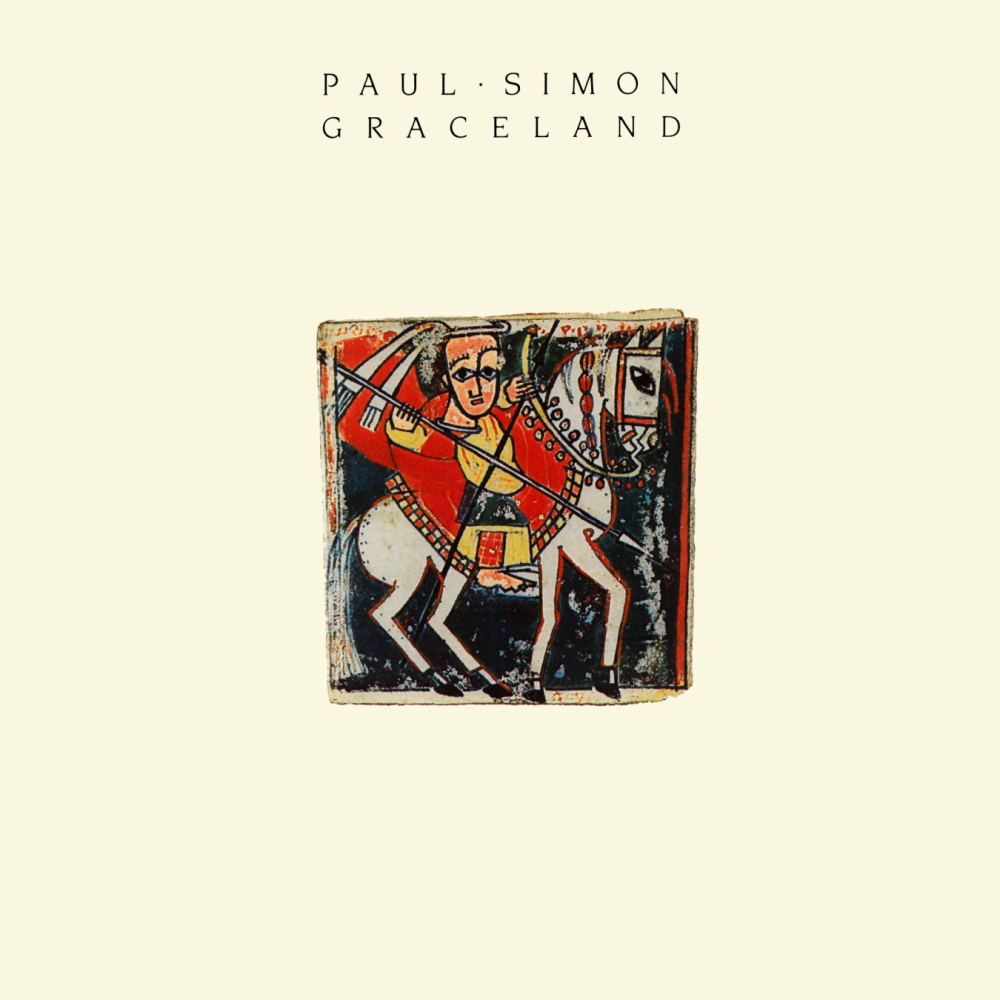
Paul Simon's Graceland is one of the great records for turning dinner prep into forward motion. Released by Warner Bros. in 1986 and produced by Simon, it was recorded from October 1985 to June 1986 across South Africa, New York, London, Los Angeles and Louisiana, with major work associated with The Hit Factory in New York and sessions involving South African musicians including Ladysmith Black Mambazo, guitarist Ray Phiri and players from the township jive scene. Its creation has a complicated political context because Simon recorded in South Africa during the apartheid-era cultural boycott, but the music itself became a landmark hybrid of American songwriting, mbaqanga, isicathamiya, zydeco, rock and pop. The album record documents both the controversy and the extraordinary commercial reach.
That reach was enormous. Graceland peaked at number 3 on the US Billboard album chart, hit number 1 in the UK, Australia, Canada, France, the Netherlands, New Zealand, Switzerland and other territories, and won the Grammy Award for Album of the Year. It is certified 5x platinum by the RIAA in the United States, 9x platinum by the BPI in the UK and has worldwide sales commonly cited around 14 million. Original US vinyl collectors look for Warner Bros. 1-25447 pressings, while later anniversary editions and audiophile cuts remain popular because this is a rhythm-first record with a lot of low-end articulation. The bass and drums are not just support. They are the countertop pulse.
In the kitchen, Graceland is all about buoyancy. "The Boy in the Bubble" starts with accordion and percussion like a pot beginning to boil. "Diamonds on the Soles of Her Shoes" is practically engineered for guests arriving early, with Ladysmith Black Mambazo's vocals opening into a groove that can carry chopping, plating and refilling glasses. "You Can Call Me Al" brings the quick bass break, the horn stabs and the kind of hook that keeps fatigue away when the recipe runs long. Sonically, the album is crisp but not sterile, full of interlocking guitar figures, springy bass, hand percussion and dry vocal presence. It is a collector favorite because clean copies deliver a huge soundstage without needing punishing volume. It is a cooking favorite because it makes repetitive tasks feel like choreography. Peel, dice, stir, taste, repeat, and the record keeps smiling.
The album is also a reminder that a cooking record can be complicated and joyful at the same time. Its history deserves context, but its grooves remain inviting, and the best vinyl copies let the choral passages, accordion, bass, and percussion occupy different parts of the room. For a busy kitchen, that separation matters. You can hear the beat while draining pasta, then catch a lyric when the room gets quiet.
-

The Miseducation of Lauryn Hill, Lauryn Hill, 1998
The Miseducation of Lauryn Hill is the rare dinner record that can handle every mood in the room: celebration, reflection, flirtation, frustration and grace. Released by Ruffhouse and Columbia in 1998, it was recorded between September 1997 and June 1998 at studios including Chung King and The Hit Factory in New York, Circle House in Miami, Metropolis in London, Perfect Pair in East Orange and Tuff Gong in Kingston. Lauryn Hill is credited as the central producer, with Che Pope and Vada Nobles among the key production contributors. The album folds hip-hop, neo soul, R&B, reggae and gospel into a sequence that feels intimate but never small. Its documented commercial history is almost as staggering as the music.
It debuted at number 1 on the Billboard 200, selling more than 422,000 copies in its first week, then became one of the defining albums of the late 1990s. It won the Grammy Award for Album of the Year, spent 92 weeks on the Billboard 200 and was certified Diamond by the RIAA in 2021, making Hill the first female rapper to receive that certification. It also reached number 1 in Canada and Ireland, number 2 in the UK and Australia, and is certified 4x platinum in the UK. For vinyl collectors, original US 2LP Ruffhouse and Columbia copies, often associated with catalog C2 69035, are prized because clean originals can be costly and later represses vary. It is a long album, so pressing quality matters. Inner-groove congestion can blunt the vocal detail if the cut or copy is weak.
Cooking to Miseducation gives you a whole evening arc. "Doo Wop (That Thing)" is the instant energy boost for washing greens or setting the table. "Ex-Factor" is the slow stir, all ache and restraint, with Hill's voice close enough to feel confessional. "To Zion" brings warmth and lift, while "Everything Is Everything" is perfect when the room fills and the food is nearly ready. Production details make it especially satisfying on wax: live bass and drums alongside programmed rhythms, classroom interludes that create narrative space, gospel harmonies that bloom, reggae undertow that keeps things grounded. It works while cooking because it is emotionally generous without becoming background wallpaper. You can sing along, nod along, or let it deepen the room. For a vinyl collection tracker audience, it is also a reminder that some records are not just collectible because they are scarce. They are collectible because people keep needing them.
-
Blue, Joni Mitchell, 1971
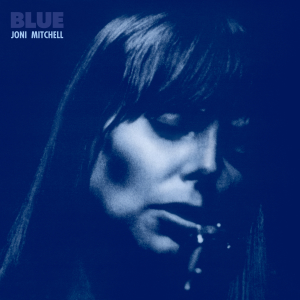
Joni Mitchell's Blue is the choice for cooking alone, cooking for someone you miss, or cooking something simple enough to let the record take over the emotional labor. Released by Reprise in 1971, produced by Mitchell and recorded at A&M Studios in Hollywood, it is one of the most direct singer-songwriter albums ever pressed to vinyl. The arrangements are spare but never empty: piano, acoustic guitar, dulcimer, carefully placed bass and sympathetic appearances from players including James Taylor, Stephen Stills and Russ Kunkel. Mitchell's open tunings and elastic phrasing make the songs feel handmade, which is exactly why they sit so naturally beside the tactile rituals of cooking. The album's chart and certification history confirms that this intimate record became a long-running classic rather than a private cult object.
Commercially, Blue peaked at number 15 on the US Billboard 200, number 3 on the UK Albums Chart and number 9 on Canada's RPM albums chart. It later earned RIAA platinum certification in the United States and 2x platinum certification from the BPI in the UK. Original US Reprise pressings are commonly identified with catalog number MS 2038, and collectors pay close attention to early labels, matrix details and condition because quiet vinyl is crucial here. This is not a record that hides surface noise behind dense drums. A clean copy lets the piano on "River" hang in the air, lets the dulcimer on "Carey" sparkle and lets Mitchell's breath and consonants sit right at the front of the image.
For cooking, Blue is less about tempo than presence. "Carey" is the best track for chopping herbs or tossing a salad, loose and sunlit with just enough bounce. "California" suits the moment when you check the oven and pour another drink. "A Case of You" is for stirring slowly and pretending you are not completely undone by the lyric. "River" can turn dishwashing into a tiny winter movie. The sonic details reward close listening, but the album also gives a kitchen a kind of human quiet that is hard to fake. It is ideal for bread, soup, late breakfast, tea, anything where patience matters. On vinyl, the side breaks help too. Side one carries longing and travel, side two deepens into memory and confession. Flip the record, taste the pot, adjust the salt, and let one of the greatest albums ever made remind you that cooking is also a way of paying attention.

What's Going On, Marvin Gaye, 1971
Marvin Gaye's What's Going On is the rare socially conscious masterpiece that also feels completely at home beside a cutting board, a simmering pot, and a glass of something good. Released by Tamla in 1971, with the original U.S. LP commonly identified as Tamla TS310, it reached number 1 on Billboard's Top Soul Albums chart and number 6 on the pop album chart, later earning RIAA Gold certification and BPI Platinum status, as summarized in the album's chart and certification history. That commercial success matters for vinyl collectors because it means original copies are findable, but condition, mastering, and early Tamla details still make a big difference.
The record was produced by Marvin Gaye himself and recorded mainly in Detroit at Hitsville U.S.A., Golden World, and United Sound, with additional work at The Sound Factory in Los Angeles. Its sound is famously fluid: Eli Fontaine's opening saxophone, James Jamerson's melodic bass lines, congas, strings, layered backing vocals, and conversational street ambience all blend into a continuous suite rather than a simple sequence of singles. The production has a lived-in warmth that rewards a full LP listen. On vinyl, side one is practically one long exhale, moving from "What's Going On" into "What's Happening Brother" and "Flyin' High (In the Friendly Sky)" with a seamless, communal feel.
For cooking, this album works because it has movement without hurry. "Mercy Mercy Me (The Ecology)" is graceful enough for prep work, "Inner City Blues (Make Me Wanna Holler)" adds late-meal gravity, and the title track sets a humane, welcoming mood as soon as the needle drops. It is ideal for Sunday sauce, roasted vegetables, gumbo, or anything that benefits from patience. Collector-wise, clean early Tamla pressings are prized for their midrange presence and sleeve texture, while later audiophile reissues can bring extra clarity to the strings and percussion. Either way, What's Going On turns the kitchen into a room with a conscience, a groove, and a pulse.
The suite-like sequencing is what pushes it from good to essential. You are not just dropping a needle on a collection of songs, you are letting a whole atmosphere unfold. That matters when cooking because meals also unfold in stages. The album can start with washing greens, move through the slow browning of onions, and still feel right when the plates hit the table. Few soul records balance moral seriousness, sensual warmth, and domestic ease this beautifully.

Diamond Life, Sade, 1984
Diamond Life is dinner-party elegance pressed into the shape of a debut album. Released in 1984 on Epic, with the original U.K. LP commonly associated with Epic EPC 26044, Sade's first record was a major international breakthrough. It topped charts in several European markets, reached the U.K. Albums Chart top tier, climbed to number 5 on the Billboard 200 in the United States, and accumulated multi-platinum certifications, including major U.K. and U.S. awards noted in its release and chart history. For a cooking playlist, that broad appeal is exactly the point: it sounds luxurious, but never fussy.
Recorded at Power Plant Studios in London and produced by Robin Millar, Diamond Life is a model of restraint. The band gives Sade Adu's voice room to glide, while the arrangements pull from smooth soul, jazz-pop, quiet storm, and Latin-tinged sophistication. The rhythm section is crisp but unforced, the saxophone lines are polished without becoming wallpaper, and the whole album has a clean, late-night sheen. "Smooth Operator" is the obvious centerpiece, but "Your Love Is King," "Hang On to Your Love," and "Frankie's First Affair" are just as important to the album's cooking-friendly flow. Nothing crowds the room, yet every detail feels intentional.
On vinyl, Diamond Life is especially satisfying because its production loves space. A clean pressing lets the bass stay rounded, the percussion stay light, and the vocal sit exactly where it should, centered and calm. Collectors often look for early Epic U.K. copies for period-correct artwork and mastering, while U.S. Portrait and later Epic issues remain useful, affordable ways to get the album into rotation. This is a record for chopping herbs, searing fish, stirring risotto, or plating something simple with confidence. It keeps the kitchen cool even when the stove is hot, and its pacing is perfect: seductive opener, recognizable hits, deeper cuts that do not interrupt conversation, and a tone that says the meal is going to be good before anyone has taken a bite.
The collector lesson is simple: this is a record where cleanliness beats rarity. A quiet, well-centered copy will do more for the listening experience than a more expensive copy with groove wear. Because the arrangements are so spare, little details matter: the decay on percussion, the breath around the vocal, the rounded bass notes under “Smooth Operator.” In a kitchen, those details create calm, which is the real luxury.

Moondance, Van Morrison, 1970
Van Morrison's Moondance is one of the great kitchen records because it feels handmade in the best possible sense. Released by Warner Bros. in 1970, with the original U.S. LP commonly listed as Warner Bros. WS 1835, it reached number 29 on the U.S. album chart and number 32 in the U.K., later becoming a steady catalog seller with RIAA 3x Platinum certification and BPI Platinum status, as noted in its chart and certification listings. It was not a blockbuster out of the gate in the modern sense, but it became the kind of record people keep, replace, gift, and pull from the shelf when the room needs light.
The album was recorded in August and September 1969 at A&R Studios in New York City and produced by Morrison. After the spectral drift of Astral Weeks, this one tightened the frame: punchier horn charts, jazz-inflected rhythm guitar, walking bass, bright acoustic textures, and songs built around swing, soul, folk, and R&B. "And It Stoned Me" opens like a memory of rain and childhood, "Moondance" brings supper-club snap, "Crazy Love" glows, and "Caravan" is pure communal lift. The production is not glossy, but it is alive. You can hear musicians responding to one another, which gives the album a natural tempo for moving around a kitchen.
Vinyl collectors value early green-label Warner Bros. pressings for their period feel, though condition is crucial because quieter songs like "Into the Mystic" expose groove wear quickly. Reissues can be excellent everyday players, but an original or early copy with clean surfaces has a warm, woody presence that suits the music beautifully. For cooking, Moondance is versatile: breakfast, stew, roast chicken, pasta, pancakes, late-night toast. It has rhythm when you need momentum and tenderness when you need the meal to slow down. Essential tracks include "Into the Mystic," "Come Running," and "Everyone," but the album's real strength is continuity. It never shouts over the pan, never collapses into background, and always makes the kitchen feel a little more human.
It is also one of the safest records to put on when you do not know your guests well. Jazz listeners hear the swing, soul listeners hear the phrasing, folk listeners hear the songwriting, and casual listeners usually know at least the title track. That broad welcome is valuable in a kitchen, where music should support the meal rather than test everyone’s patience. Moondance makes almost any table feel warmer.
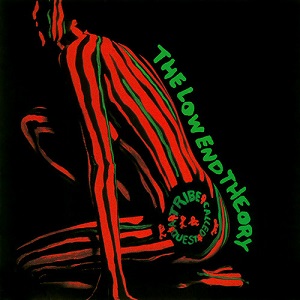
The Low End Theory, A Tribe Called Quest, 1991
The Low End Theory is for the cook who wants the kitchen to bounce without losing focus. Released in 1991 on Jive, with original U.S. vinyl commonly associated with Jive 1418-1-J, A Tribe Called Quest's second album reached number 45 on the Billboard 200 and number 13 on Billboard's Top R&B/Hip-Hop Albums chart, later earning RIAA Platinum certification and BPI Silver status, according to its documented chart and certification history. Those numbers only hint at its deeper importance: it helped define jazz rap, alternative hip-hop, and the idea that bass could be both intellectual and physical.
Recorded across New York studios including Battery, Greene St., and Soundtrack, the album was produced by A Tribe Called Quest with Skeff Anselm. Its sonic identity is famously spare: upright bass samples, crisp drums, dry vocal placement, and a low-frequency discipline that leaves space around every rhyme. Q-Tip and Phife Dawg trade lines with conversational precision, while Ali Shaheed Muhammad's sensibility keeps the tracks uncluttered. The result is a record that grooves hard but never feels chaotic. "Excursions," "Buggin' Out," "Check the Rhime," "Jazz (We've Got)," and "Scenario" are essential, but the deeper magic is how calmly the album swings from idea to idea.
For vinyl people, The Low End Theory has extra relevance because the album's low end is not just a title. A good pressing and a properly dialed-in cartridge give the kick, bass, and samples real body without turning the room muddy. Original Jive copies are collectible, partly because early 1990s hip-hop LPs were often bought for DJ use and clean examples can be harder to find than the sales figures suggest. Later reissues are practical, but the format matters either way: flipping the record gives the meal a natural checkpoint. Start prep with "Excursions," get onions in the pan by "Check the Rhime," and let "Scenario" carry the final rush before serving. It works while cooking because it is rhythmic, witty, and controlled. The beats keep your hands moving, the rhymes reward attention, and the atmosphere stays relaxed enough for chopping, stirring, tasting, and talking.
Because the production is so uncluttered, the album also avoids the fatigue that can make some louder hip-hop records hard to cook through. The drums hit, but they do not bully the room. The bass is deep, but it leaves space for conversation. That balance makes it ideal for casual dinners, tacos, burgers, late-night noodles, or any meal where the cook wants energy without chaos. It is smart music that still moves.

Come Away with Me, Norah Jones, 2002
Norah Jones's Come Away with Me is comfort food in album form, but its softness is more sophisticated than its reputation sometimes suggests. Released by Blue Note in 2002, with vinyl editions commonly carrying Blue Note/Capitol catalog details such as 7243 5 32088 1 9, it became a global phenomenon. It reached number 1 on the Billboard 200, won the Grammy for Album of the Year, and built a huge certification profile, including Diamond certification in Canada and multi-platinum or diamond-level awards in numerous markets, all reflected in its chart, award, and certification record. It was one of those albums that crossed jazz, pop, country, and adult alternative audiences without sounding engineered by committee.
The recording history is part of the charm. Sessions ran from 2000 into 2001, with work at Sorcerer Sound in New York City and Allaire Studios in Shokan, New York. Producers included Arif Mardin, Jay Newland, Norah Jones, and Craig Street, and the sound is intimate by design: close-miked piano, brushed drums, gentle guitar, upright bass, and Jones's voice placed warmly at the center. "Don't Know Why" is the signature, but "Come Away with Me," "Feelin' the Same Way," "Turn Me On," "Nightingale," and "The Nearness of You" are just as important to the album's quiet spell. The production avoids showy dynamics, which makes the record easy to live with over the length of a meal.
For collectors, Come Away with Me is interesting because its original era was dominated by CD, so vinyl copies and later high-quality reissues carry particular appeal. Clean pressings highlight the album's room tone and low-volume detail, while noisy copies can distract from the very intimacy that makes it special. It is a natural breakfast record, but it also suits slow dinners: soup, roast chicken, baked pasta, late-night dessert, or anything where the cook wants calm concentration rather than adrenaline. The music does not demand that everyone stop talking, yet it rewards anyone who leans in. Put it on when the kitchen lights are lower, the prep is mostly done, and the meal needs a final touch of warmth. Few records make a room feel more immediately cared for.
The album is especially useful at the end of a long day because it lowers the room’s volume without flattening it. A lot of mellow records turn anonymous after two songs, but this one has enough country, jazz, and songwriter detail to stay present. For vinyl collectors, it is a reminder that newer classics deserve shelf space too. Put it beside older Blue Note staples and it still earns its place.
What to buy first
If you are building a cooking stack from scratch, start with three records that cover different kitchen moods: Kind of Blue for calm precision, Rumours for group dinners, and Buena Vista Social Club for warm, social cooking. Add Aja when you want audiophile detail, Songs in the Key of Life when the recipe is a project, and Blue for quiet nights when the cooking is more reflective than festive.
FAQ
What makes an album good for cooking on vinyl?
A good cooking record has flow, warmth, and enough rhythmic motion to keep you moving without making the kitchen frantic. Vinyl also helps because side breaks create natural moments to check a dish, stir a pot, or reset before serving.
Should I play valuable original pressings in the kitchen?
Usually, no. Kitchens have steam, oil, and busy hands, so rare originals are better saved for dedicated listening. For daily cooking, buy clean reissues or affordable player copies, then keep jackets and records away from the stove.
Are jazz records better for cooking than rock or soul records?
Not automatically. Jazz can be excellent because it leaves room for concentration, but rock, soul, bossa nova, hip-hop, and singer-songwriter records can be just as good. The best choice depends on the meal, the room, and how much energy you want.
How can What's Spinning help with kitchen listening?
What's Spinning listens to your turntable and automatically logs what you play, so you can see which albums actually become part of your cooking routine. Over time, that listening history becomes a useful record of your favorite dinner records, Sunday morning albums, and late-night cleanup picks.
A spreadsheet tracks what you own. What's Spinning identifies what's playing.
On-device vinyl ID logs your listening history automatically. 7-day free trial.
Looking for Shazam for vinyl?
What's Spinning identifies what's playing on your turntable on-device, logs history, and AirPlays now-playing to your TV.
Comparing vinyl ID apps?
Analog requires Discogs and is iPhone-first (iPad coming). What's Spinning works without Discogs on iPhone and iPad with AirPlay.
Try What's Spinning Free
Turn your iPad into a live now-playing display. Track every record you spin.
START FREE TRIALThen $4.99/mo or $39.99/yr · Cancel anytime
Get it on your iPhone
Open on iPhone