Free Vinyl Shelf Label Template for a Better Organized Record Collection
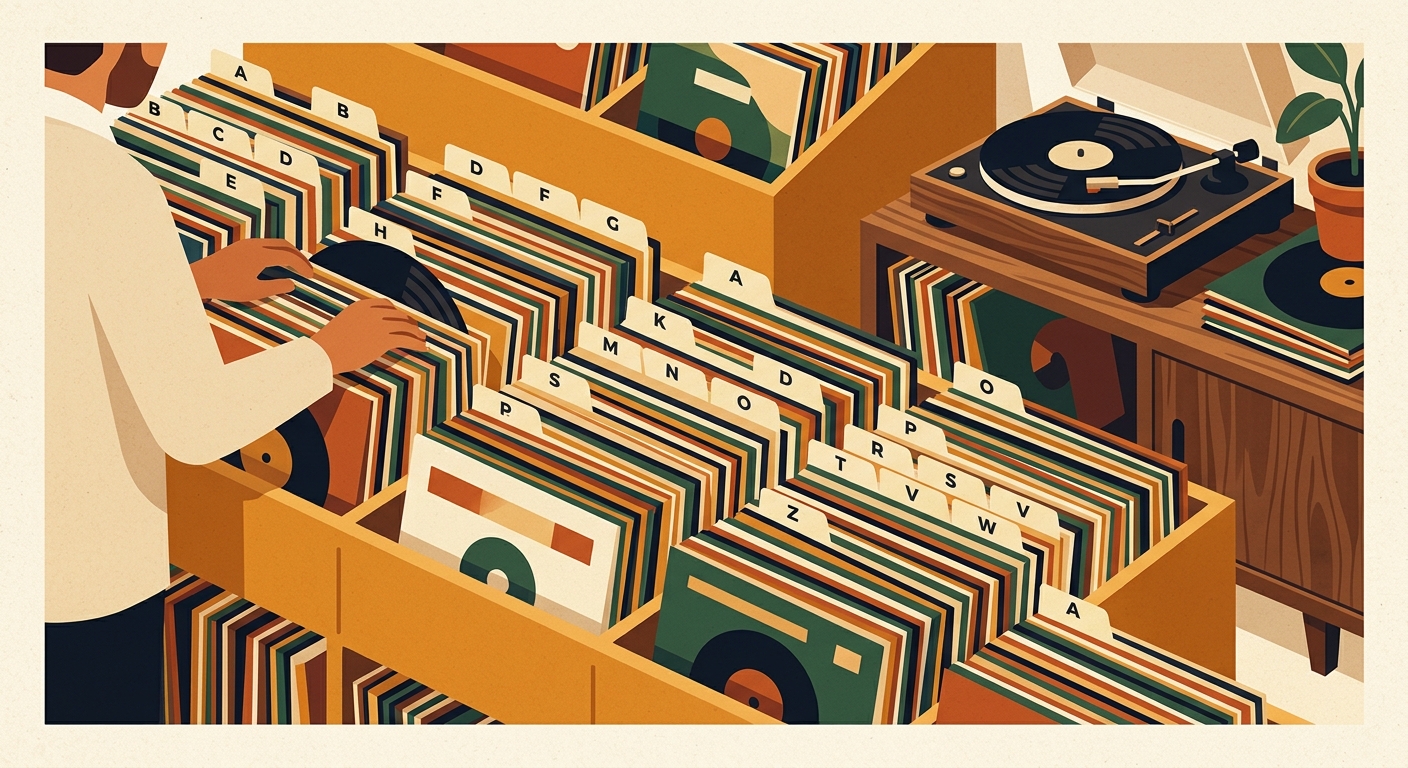
A free vinyl shelf label sounds like a tiny thing until your collection stops fitting in one crate. Once you have a few dozen LPs, browsing by memory turns into the familiar collector shuffle: pull five jackets forward, forget whether Neil Young is under Y or classic rock, then promise yourself you will organize it properly next weekend.
Labels fix that. They turn a shelf from a pretty stack of records into a usable music library. The Library of Congress recommends storing grooved discs upright, handling LPs by the edge and label area, and using sturdy shelving because grooved discs average more than 35 pounds per shelf-foot [1]. That matters for labels because the best system helps you find records while keeping the rows vertical, supported, and easy to move.
There is also a bigger reason to get organized now: vinyl is not a niche corner anymore. RIAA year-end reporting has shown vinyl revenues over the billion-dollar mark in the United States, with LPs continuing to outpace CDs in recent years [2]. More records coming in means more chances for duplicates, forgotten favorites, and messy shelves. A simple label system pays off fast.
Free vinyl shelf label template
Use this template as a starting point. Print it on card stock, cut along the outside edge, and either tape labels to the front lip of the shelf or attach them to taller divider cards that sit between records.
| Label | Use it for | Suggested text |
|---|---|---|
| Alphabet tab | Main artist filing | A, B, C, D, E |
| Range tab | Big sections | A to C, D to G, H to L |
| Genre tab | Mood or DJ browsing | Jazz, Soul, Punk, Country, Electronic |
| Queue tab | Active listening piles | New arrivals, Clean next, Play this week |
| Condition tab | Maintenance | Needs inner sleeve, Replace jacket, Check grading |
For a printable card, use a 3 inch by 1 inch label face. If you are making divider cards, cut the card to about 13 inches tall by 12 inches wide, then leave a 0.5 inch tab above the jacket height. That gives you a visible header without forcing the records to lean.
The best filing system for most collectors
Start alphabetical by artist. It is boring in the best possible way: fast, obvious, and easy for someone else to understand. File solo artists by last name, so Joni Mitchell goes under M and Miles Davis goes under D. File bands by the first meaningful word, so The Cure goes under C and The Rolling Stones goes under R.
Then add small exceptions only where they help. Keep soundtracks under S if that is how you think about them. Use a separate section for 7-inch singles if they live in a different box. Give box sets their own label if they are too tall or heavy for the main row. The goal is not library perfection. The goal is finding the record before your coffee gets cold.
If your collection is already genre-based, labels still work. Put broad genres on the shelf edge, then use alphabetical dividers inside each section. Jazz A to M and Jazz N to Z is easier to browse than one giant jazz block. For collectors using What's Spinning, shelf labels pair nicely with automatic play history: the app tells you what you actually play, while the labels help you reach it quickly.
How to make labels that last
Print on 80 lb or heavier card stock if the labels will be handled. For shelf-edge labels, matte label paper looks clean and avoids glare from room lighting. For divider cards, use acid-free card stock or archival-safe plastic dividers if you are storing valuable records. Avoid sticky notes directly on jackets, especially textured sleeves, older paper, or anything with fragile lamination.
Use high contrast: black text on cream, white, pale yellow, or kraft paper works better than stylish low-contrast ink. Keep the typography large enough to read while standing. A collector shelf is not a spreadsheet; if you need to crouch and squint, the design has failed.
A simple weekend setup
- Pull the records out one shelf at a time, not all at once.
- Dust the shelf and check that it is not bowing under weight.
- Sort records into temporary A to Z piles.
- Print alphabet labels first, then add genres or queue labels only if needed.
- Leave one finger of space in each section so records slide in and out without pressure.
- Play three records when you are done. Organization should lead back to listening.
The last step is not a joke. A shelf label system is only successful if it makes you play more music. If it turns the room into a filing cabinet, simplify it.
FAQ
What size should vinyl shelf labels be?
For most cube shelves and record store style bins, a label face around 2.5 to 3 inches wide is easy to read without hiding album spines. If you use divider cards between records, make the tab about half an inch taller than the jackets.
Should I organize records by artist, genre, or year?
Alphabetical by artist is fastest for daily use. Genre works well for large collections or DJ shelves. Year is fun for deep listening projects, but it usually needs a second index because finding one record can take longer.
Can shelf labels damage records?
Labels should never press against the vinyl itself. Put labels on shelf edges, sleeves, or divider cards, and leave enough space that records stay upright without being packed tightly.
How often should I update vinyl shelf labels?
Update them whenever a section grows enough that browsing gets slow. A good rule is to split a section once it passes about 40 to 60 LPs, especially for common letters like S, M, or T.
Try What's Spinning Free
Turn your iPad into a live now-playing display. Track every record you spin.
START FREE TRIALThen $4.99/mo or $39.99/yr · Cancel anytime