How to Organize Vinyl in a Small Apartment
Organizing vinyl in a small apartment is partly about taste, but mostly about physics. Records are beautiful, square, heavy, and annoyingly easy to damage if you treat them like books. The good news is that a small collection can feel intentional instead of cramped if you give every record a safe vertical home, keep the active listening area clear, and use a catalog so you are not constantly pulling half the shelf apart to find one album.
The stakes are real. The RIAA reported that U.S. vinyl revenues grew 10% to $1.4 billion in 2023, the seventeenth straight year of growth, and vinyl albums outsold CDs in units, 43 million to 37 million. More people are bringing records into apartments that were not designed for 35-pound shelf-feet of PVC. Here is how to make the space work without turning your living room into a storage unit.
1. Start with the weight, not the vibe
The Library of Congress notes that grooved discs average 35-plus pounds per shelf-foot, which means one innocent-looking row can weigh as much as a small child. Avoid flimsy bookcases, leaning ladder shelves, and wall-mounted shelves unless you know the load rating and wall anchoring.
Cube storage is popular because a 12-inch LP jacket needs a cubby with breathing room. Look for interior openings around 13 inches high and deep. IKEA KALLAX-style cube units work for many collectors because the cubes keep each run short, which reduces sideways pressure.
2. Store records vertically, with short supported rows
Flat stacks are tempting in a tiny apartment because they look tidy at first. They are also how the bottom record becomes a hostage. The University of Illinois Preservation Self-Assessment Program recommends storing similarly sized discs vertically, with full-height and full-depth dividers spaced every 4 to 6 inches. That advice is meant for preservation collections, but it scales down beautifully at home.
In practical terms, do not leave a half-empty cube with records slouching at a 30-degree angle. Use sturdy bookends, archival boxes, or a vertical divider so every record stands close to upright. Keep 7-inches, 10-inches, and 12-inches separated. Mixed sizes create uneven pressure, and uneven pressure is where warps and jacket wear begin.
3. Divide the collection by how you actually listen
Alphabetical order is classic, but it is not sacred. In a small apartment, the best system is the one that reduces handling. Try a three-zone layout:
- Daily reach: one cube or crate near the turntable for current favorites, new arrivals, and records you are trying to play more often.
- Main library: the permanent shelf, organized alphabetically by artist, genre, label, or decade.
- Overflow or archive: records you rarely play, stored safely but not in prime real estate.
This stops the whole collection from becoming a messy queue. It also makes your room feel calmer because the listening area only shows the records you are actively living with. What’s Spinning helps here by tracking what you own and what you have played recently, so your physical shelf does not need to carry the whole memory load.
4. Use furniture you already need
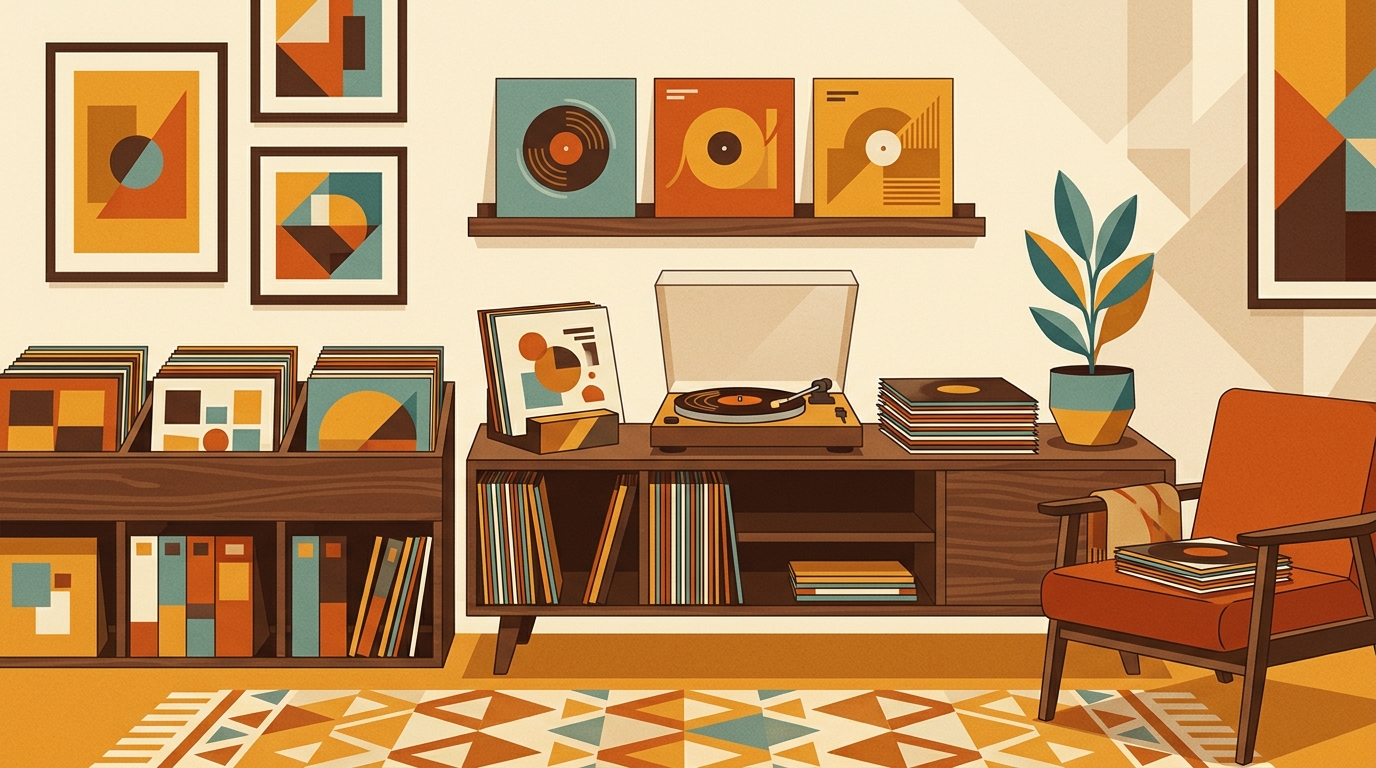
Small apartments reward double-duty furniture. A low cube shelf can become a media console. A sturdy sideboard can hold a turntable on top and records below. A rolling record cart can live beside the sofa and move when guests come over. Be cautious with under-bed storage; it only works if records stay vertical in a rigid container.
5. Control heat, humidity, and sunlight
Apartment storage fails fastest near windows, radiators, vents, and exterior walls. The Library of Congress recommends a cool, relatively dry, stable home environment, about 35% to 40% relative humidity, while avoiding attics, basements, leaks, direct light, and environmental extremes. You do not need a museum vault, but you do need consistency.
Keep shelves out of direct sun. Leave a little airflow behind storage furniture. If your apartment swings humid in winter or summer, use a small hygrometer near the collection. It is cheap, unglamorous, and more useful than another limited-color variant of an album you already own.
6. Make a one-in, one-out rule
Small-space collecting gets easier when the boundary is physical. Pick a shelf limit and respect it. When the daily reach cube is full, something moves back to the main library. When the main library is full, a record moves to overflow, trade, or sell.
Keep 10% to 15% empty space in each cube or row. That gap prevents jacket damage when pulling records and gives new arrivals somewhere to land.
7. Catalog shelf location, not just album titles
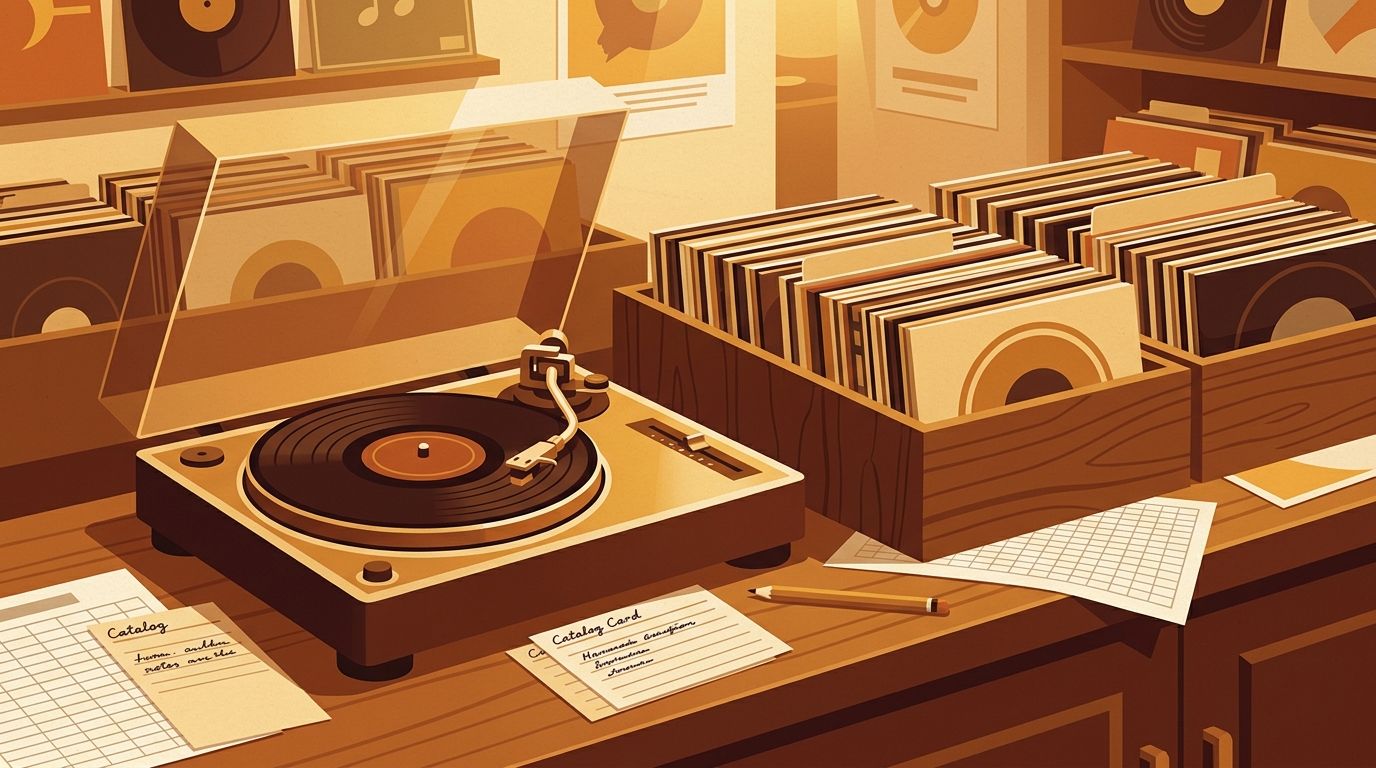
The smallest apartments are where cataloging pays off the most. Add location notes such as “KALLAX A2,” “jazz crate,” or “new arrivals cart.” If you reorganize by genre or listening frequency, update locations immediately. The goal is simple: search the collection, walk to the right cube, pull the record once.
That habit also prevents duplicate buying. Before you grab a used copy at the shop, check whether you already own it, where it lives, and whether your current copy is good enough. The less space you have, the more every duplicate has to justify itself.
Small apartment vinyl setup checklist
- Use sturdy cube shelving or furniture with a known load capacity.
- Store LPs vertically, not in flat stacks.
- Add dividers or bookends every few inches so records do not lean.
- Keep records away from sunlight, radiators, vents, and damp exterior walls.
- Separate daily plays, the main library, and overflow.
- Leave breathing room in every row.
- Track shelf locations digitally so you handle records less.
FAQ
What is the best way to organize vinyl in a small apartment?
Use vertical cube storage for the main collection, keep a small “now playing” or new-arrivals crate near the turntable, and catalog shelf locations digitally. The best system is compact, stable, and easy to maintain after a long day.
Can I store records under my bed?
Only if they remain vertical in a rigid container and the space is dry, cool, and easy to access. Avoid soft bins and horizontal stacks. Under-bed storage is better for overflow than for records you play every week.
How much space should I leave on a record shelf?
Leave enough room to pull records without forcing the jackets apart. A practical target is 10% to 15% empty space per cube or row, plus dividers or bookends so records stay upright instead of leaning.
Is it bad to stack vinyl records flat?
Yes, especially for anything beyond a very temporary stack. Flat storage puts weight on the lower records, makes albums harder to access, and can contribute to warping or jacket damage. Store LPs vertically with support.
Sources
A spreadsheet tracks what you own. What's Spinning identifies what's playing.
On-device vinyl ID logs your listening history automatically. 7-day free trial.
Looking for Shazam for vinyl?
What's Spinning identifies what's playing on your turntable on-device, logs history, and AirPlays now-playing to your TV.
Comparing vinyl ID apps?
Analog requires Discogs and is iPhone-first (iPad coming). What's Spinning works without Discogs on iPhone and iPad with AirPlay.
Try What's Spinning Free
Turn your iPad into a live now-playing display. Track every record you spin.
START FREE TRIALThen $4.99/mo or $39.99/yr · Cancel anytime
Get it on your iPhone
Open on iPhone