How to Set Up a Dedicated Vinyl Listening Station
A good vinyl listening station does not have to be expensive. It does have to be intentional. The goal is simple: give the turntable a stable home, give your speakers room to work, keep records close enough to play often, and make the whole corner inviting enough that you actually sit down and listen. The RIAA's 2024 year-end report says United States recorded music revenue reached $17.7 billion and notes that vinyl has continued a nearly 20-year surge, so many collectors are now moving from "I own records" to "I need a proper place to play them." RIAA
Here is a practical vinyl listening station setup that works for apartments, dens, spare rooms, and shared living spaces.
1. Pick the quietest stable location you can spare
Start with the room, not the gear. A turntable is a vibration reader. It turns tiny groove movement into sound, so it can also pick up footfalls, cabinet resonance, and speaker energy. Avoid wobbly floors and furniture that rocks when you touch it. The Library of Congress recommends keeping audiovisual materials in a clean, stable environment, away from direct or intense light, radiators, vents, and sources of vibration. That advice is preservation-minded, but it is also good listening-room advice. Library of Congress
If you live in an older house with springy floors, try a rigid console against a load-bearing wall. If footfalls still make the stylus jump, consider a wall shelf mounted into studs.
2. Use furniture that separates three jobs
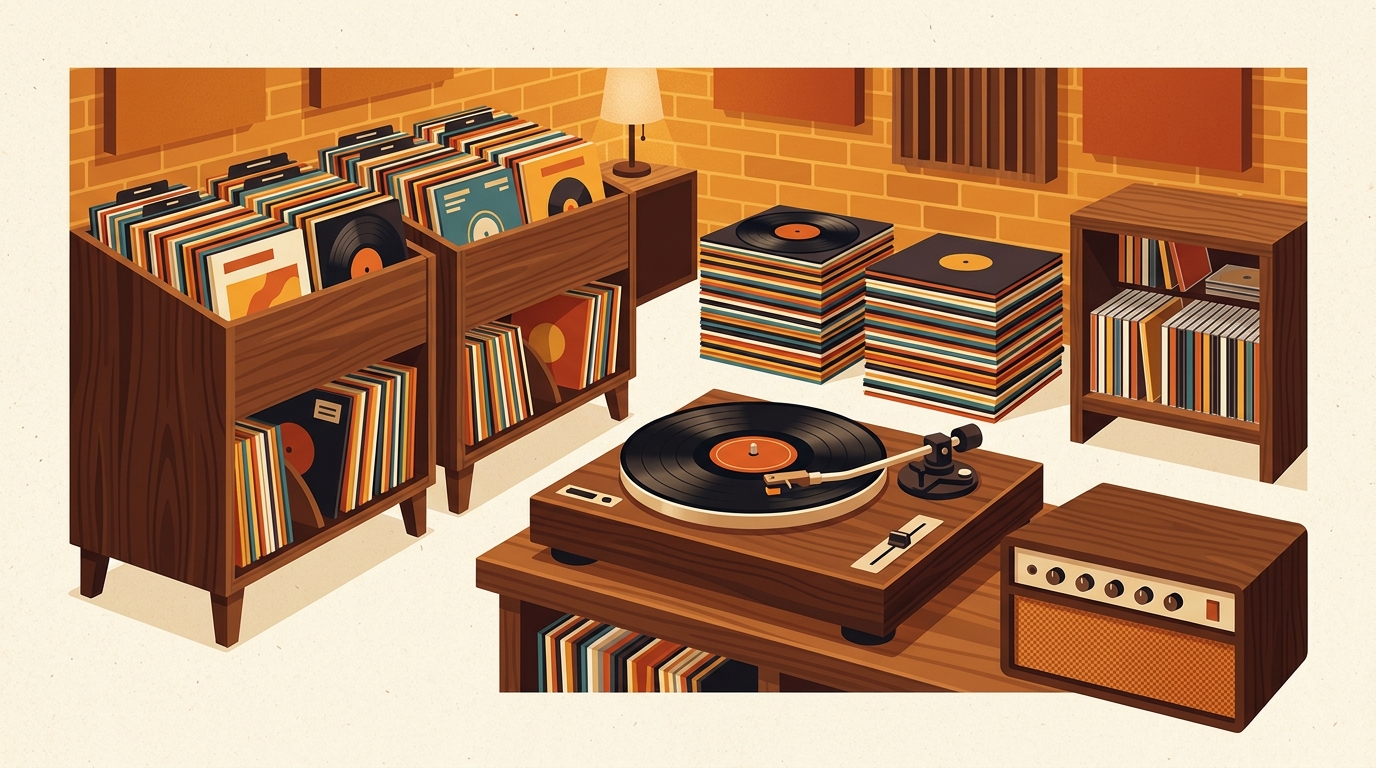
Your station needs three zones: playback, storage, and handling. Playback is the top surface for the turntable and maybe a phono preamp. Storage is the vertical space for records. Handling is a small clean area for sleeves, brushes, and the record you are about to play.
For the turntable surface, prioritize mass and rigidity. A dedicated hi-fi rack is nice, but a solid media console can work if it does not flex. Keep speakers off the same surface when possible, because speaker vibration can feed back into the deck. Pro-Ject's isolation platform guidance is blunt about this: do not place a turntable directly on vibration-sensitive furniture or shelves if you can avoid it. Pro-Ject
3. Place speakers for the chair, not for the room photo
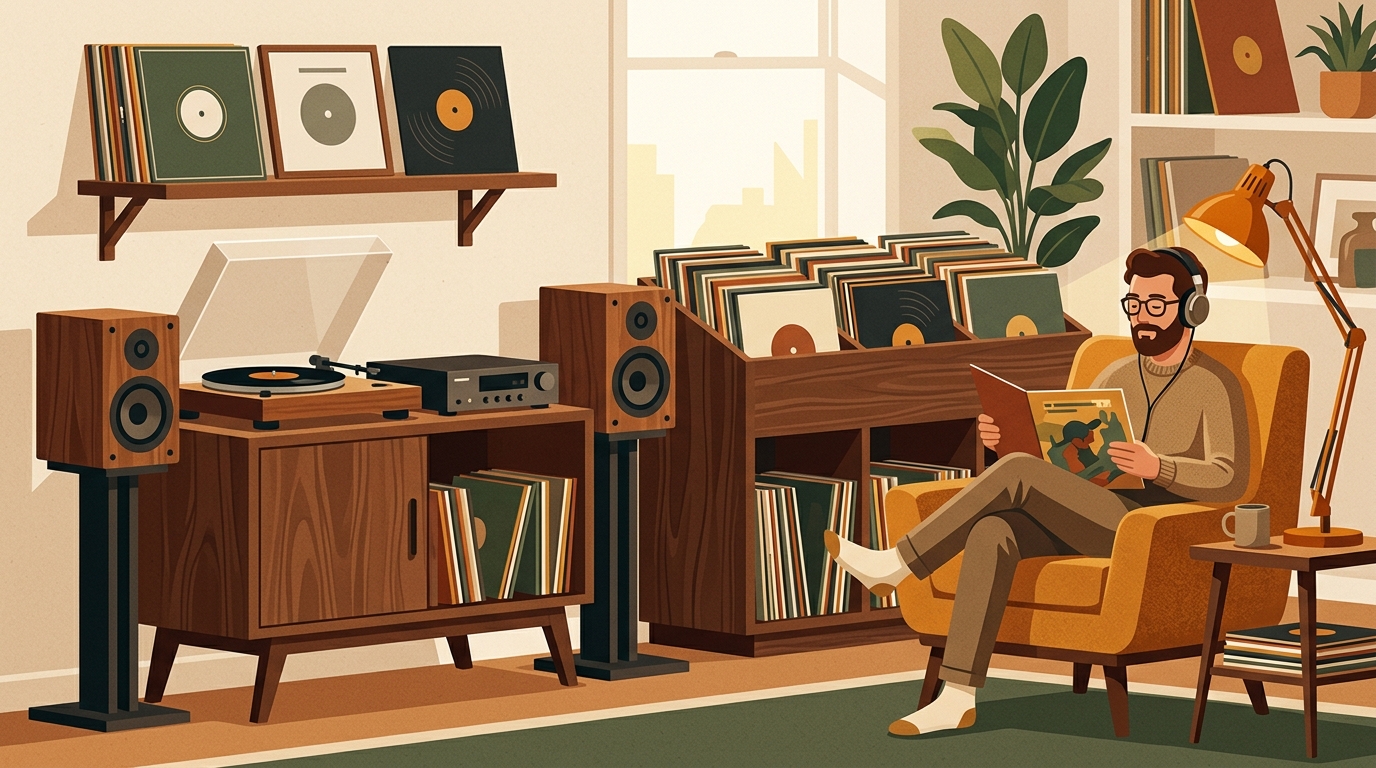
Speaker placement is where many good-looking vinyl corners lose the plot. Set the chair first, then place the speakers so the left speaker, right speaker, and listener form a rough triangle. Aim tweeters near ear height and pull speakers a little away from rear walls and corners if bass gets boomy. Bookshelf speakers on stands usually beat speakers crammed into shelves, but isolation pads can help when stands are not possible.
4. Set up the turntable before judging the sound
A dedicated station should make setup repeatable. Level the plinth. Confirm the platter spins freely. Set tracking force to the cartridge manufacturer's recommended range, then set anti-skate to match as a starting point if your tonearm allows it. Ortofon notes that anti-skating, azimuth, and tracking force are part of proper adjustment, and that correct anti-skating helps achieve optimal tracking ability with minimum record wear and distortion. Ortofon
Cartridge alignment is worth learning once. A basic two-point protractor can reduce inner-groove distortion and make older records less frustrating.
5. Build record storage into the listening habit
Store LPs vertically, not stacked flat. Keep the records you play most within arm's reach, but do not cram cubes so tightly that jackets scrape every time you pull one out. Leave a little finger space, use outer sleeves for valuable covers, and replace dusty paper inners with anti-static sleeves.
The Library of Congress recommends room temperature or below, about 35 to 40 percent relative humidity for home collections, with stable conditions and minimal light exposure. If you cannot hit those numbers exactly, aim for consistency. Avoid attics, garages, sunny windows, and any shelf sitting over a heater. Warped records are basically your collection filing a complaint.
6. Keep cleaning tools visible
A cleaning routine only works if the tools are right there. Put a carbon fiber brush, stylus brush, microfiber cloth, and record-cleaning solution in a tray beside the turntable. Brush the record before each play and clean the stylus gently in the direction recommended by the cartridge maker. Ortofon says to remove dust from the diamond tip before and after playback of each record. If you buy used records, add a manual wet-cleaning system, vacuum machine, or ultrasonic cleaner depending on budget.
7. Add light, seating, and a simple logging habit
The best station is the one that pulls you into the chair. Use warm lighting that lets you read liner notes without shining directly on records. Add a small table for headphones or a notebook, but keep drinks away from the playback surface. A dedicated crate for "next up" records can make nightly listening feel curated instead of random.
This is also a natural place to use What's Spinning once, not as homework, but as memory. If the app tracks what you play, you can look back after a month and see which records actually made it onto the platter. That is more useful than the fantasy version of your taste that only exists in your Discogs wantlist.
Start with setup, then upgrade
Before chasing exotic gear, confirm the basics: a level turntable, speakers placed for the chair, records stored vertically, cleaning tools within reach, and enough light to handle sleeves safely. A carefully arranged listening station can make a modest turntable sound more relaxed and turn collecting from a storage problem into a daily ritual.
FAQ
What is the best place for a vinyl listening station?
Choose a stable, low-traffic spot away from direct sun, vents, radiators, and vibration sources.
Do I need speaker stands for a vinyl setup?
Not always, but stands make placement easier. Put tweeters near ear height and form a rough triangle with your chair.
Should records be stored near the turntable?
Yes, if the shelf is sturdy and records are stored vertically. Keep them away from heat, sun, and damp spaces.
How can I make a small listening station sound better?
Start with setup basics: level the turntable, set tracking force, reduce vibration, clean records, and adjust speaker placement.
A spreadsheet tracks what you own. What's Spinning identifies what's playing.
On-device vinyl ID logs your listening history automatically. 7-day free trial.
Looking for Shazam for vinyl?
What's Spinning identifies what's playing on your turntable on-device, logs history, and AirPlays now-playing to your TV.
Comparing vinyl ID apps?
Analog requires Discogs and is iPhone-first (iPad coming). What's Spinning works without Discogs on iPhone and iPad with AirPlay.
Try What's Spinning Free
Turn your iPad into a live now-playing display. Track every record you spin.
START FREE TRIALThen $4.99/mo or $39.99/yr · Cancel anytime