The Top 20 New Wave Albums of All Time
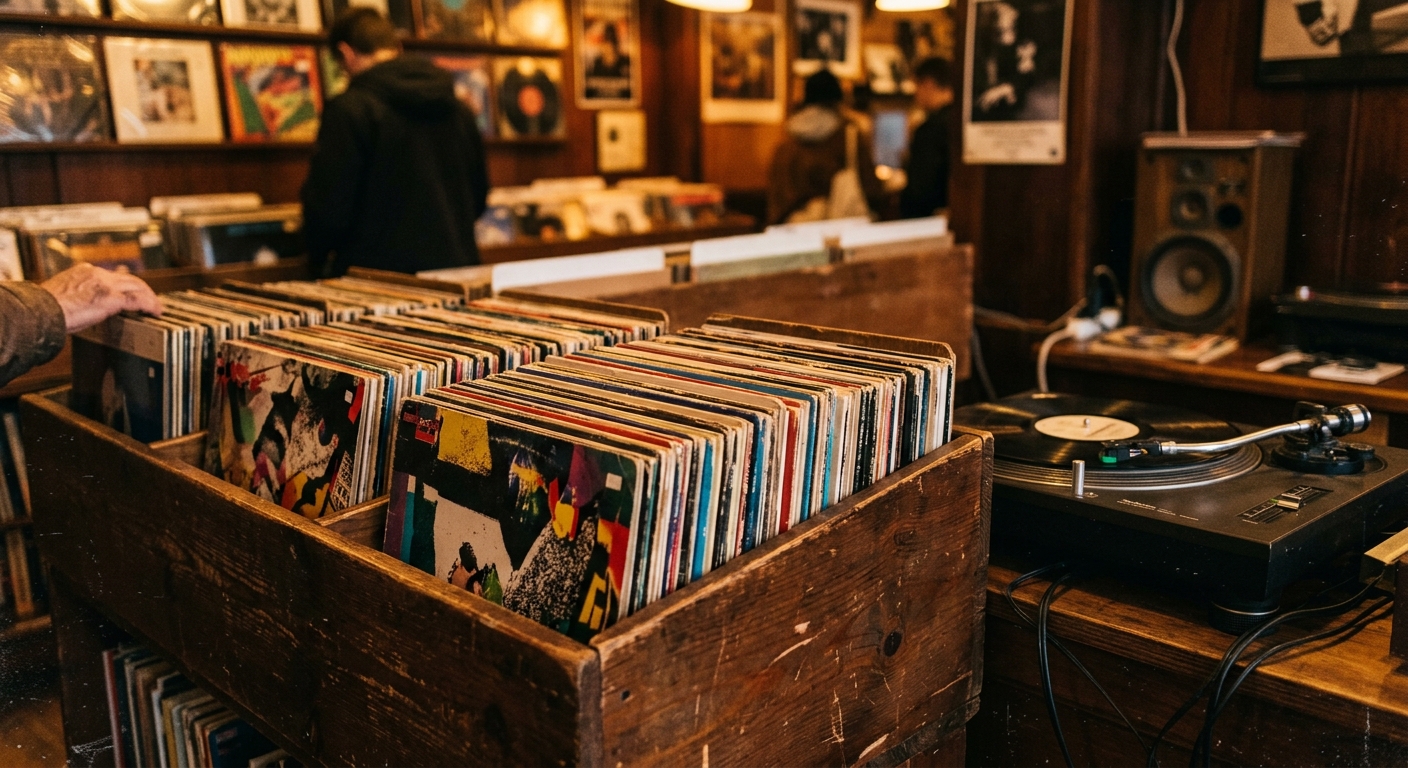
If you are building a vinyl shelf around the best new wave albums of all time, new wave is a dream genre to collect. New wave emerged in the United States and United Kingdom in the mid to late 1970s as a more melodic broadening of punk culture, eventually absorbing synth-pop, power pop, art rock, and dance-rock into one flexible umbrella [1].
For collectors, that range is the point. These records were built for the LP era: bold sleeves, sharp side breaks, and production choices that breathe when the pressing is clean.
Here is a collector-minded ranking of 20 essential new wave albums, weighted for influence, songwriting, vinyl appeal, and how often you will actually want to put the record on.
The top 20 new wave albums
 Talking Heads, Remain in Light (1980)
Talking Heads' Remain in Light (1980) stands as one of the most ambitious albums of the new wave era, born from an extraordinary collaboration with producer Brian Eno and the full Fela Kuti-inspired Afrobeat treatment by the expanded Heads lineup. The album shifted dramatically to a complex polyrhythmic soundscape built on layered guitar textures, percussion, and David Byrne's increasingly abstract lyrics. Tracks like 'Once in a Lifetime' and 'Born Under Punches' showcased a revolutionary approach to song structure that blurred boundaries between rock, funk, and African music. For vinyl collectors, the original 1980 Sire pressing remains highly sought after, particularly the mastered-to vinyl edition that captured the low-end warmth Eno insisted upon. Rolling Stone named it the fifth greatest album of the 1980s, and its influence on world music, post-punk, and alternative rock continues to resonate decades later. This belongs on any serious new wave shelf as a defining statement of what the genre could achieve when pushing against its own boundaries.
 Blondie, Parallel Lines (1978)
Blondie's Parallel Lines (1978) represents the perfect synthesis of punk energy and pop craftsmanship that made new wave accessible without being a compromise. Produced by the legendary Mike Chapman, the album balanced Debbie Harry's captivating vocals against Chris Stein and Clem Gawski's razor-sharp guitar hooks, while the rhythm section of Nigel Harrison and Clem Burke locked everything into relentless forward motion. The session included legendary contributions from producer Mike Chapman on keyboards, and the recording captured the band at their peak creative moment, with 'Heart of Glass' becoming a number one hit that controversially embraced synthesizer technology when synthesizers were still being debated in rock circles. The album reached number one in the UK and reached number fourteen in the US, eventually going quadruple platinum. For vinyl collectors, the original Chrysalis Records pressing features distinctive cover art with the striped hazard design that has become iconic, and early pressings command premium prices. Parallel Lines deserves shelf space as evidence that punk's rebellion could produce genuinely great pop records without losing its edge.
 The Cars, The Cars (1978)
The Cars' self-titled debut (1978) announced a band that understood exactly what new wave needed to be: smart, danceable, and undeniably rocking. Produced by Roy Thomas Baker (who had just finished Never Mind the Bollocks with the Sex Pistols), the album crackles with Ric Ocasek's detached vocal delivery and Benjamin Orr's melodic basslines that drive songs like 'Just What I Needed' and 'My Best Friend's Girl' into instant classics. The recording at Syncro Studio in Montreal captured an American band that had absorbed British punk and German electronic Kraftwerk into something wholly their own. The Cars earned a certification of platinum sales within a year of release and established radio staples that still rotate on classic rock stations. Original Atlantic Records pressings with the Ric Ocasek photograph cover featuring the band members in stark black and white represent solid vinyl value, with promo copies and first pressings commanding collector premiums. This debut belongs on the new wave shelf as proof that American bands could master the synth-driven hooks and ironic detachment that defined the genre's British origins.
 Elvis Costello & The Attractions, This Year's Model (1978)
Elvis Costello & The Attractions' This Year's Model (1978) stands as one of the sharpest, most energized albums ever recorded, with Costello's lyrics cutting like switchblades against the breakneck rhythms provided by The Attractions. Nick Lowe produced what many consider his finest work, capturing the band in their natural habitat of neo-soul rhythm sections and pub rock urgency in sessions that reportedly happened at a pace that left the musicians exhausted. The album featured the single '(What's the Story) Morning Glory?' which became an unexpected UK number one despite BBC resistance to its perceived drug references. Elvis Costello won the Grammy Award for Best Rock Vocal Performance in 1979, and the album ranked highly in end-of-year critics polls across the board. For vinyl collectors, the original Radar Records UK pressing and the US Epic version both feature the distinctive photograph of Elvis in leather jacket, and first pressings maintain collector appeal. This album belongs on any new wave shelf as essential evidence that punk's energy could coexist with genuine lyrical intelligence and musical sophistication.
 Devo, Q: Are We Not Men? A: We Are Devo! (1978)
Devo's Q: Are We Not Men? A: We Are Devo! (1978) arrived as a deliberately bizarre artistic statement that challenged every assumption about what rock music could express, with producer Brian Eno bringing his expertise in texture and atmosphere to the band's already unconventional vision. The album features the now-legendary cover of 'I Want to Be Your Property' turning the Rolling Stones' bluesy strut into something approaching mechanical despair, while tracks like 'Jocko Homo' and ' Mongol' established Devo's vocabulary of robotic movements, anti-individualist philosophy, and mutated power pop. The recording sessions in Los Angeles produced a sound that balanced Eno's ambient touches with aggressive rock guitars and the band's trademark electronic modulation. The album peaked at number twelve in the UK and reached number eighty-nine in the US, gaining a cult following that has only grown with time. Original Warner Bros. pressings feature the iconic Energy Dome helmets on the cover art, making them particularly desirable collector items. This debut belongs on the new wave shelf as an essential artifact of the era's experimental extremes and its willingness to question everything about performance and authenticity.
 The B-52's, The B-52's (1979)
The B-52's self-titled debut (1979) introduced a band that insisted on celebrating the absurd and the visionary simultaneously, with recording sessions at Atlanta's Studio One capturing an entire aesthetic philosophy in its infancy. The production by Chris Hilderbrand preserved every quirky detail of Fred Schneider's keyboard bleats, Kate Pierson and Cindy Wilson's call-and-response vocals, and the dual guitar assault of Keith Strickland and Ricky Wilson playing their angular, danceable rhythms. The album generated the college radio hits 'Rock Lobster' and '52 Girls,' establishing the band's cult following that would eventually produce mainstream hits from later albums. The album eventually went platinum in the US after several years of steady sales, and critics recognized its singular vision even before commercial success arrived. Capisce Records first pressings remain collector targets, particularly those with the distinctive black cover with colorful album art. This debut belongs on the new wave shelf as evidence that pop music could be genuinely fun and deeply strange at the same time.
 The Human League, Dare (1981)
The Human League's Dare (1981) represents the moment where synth-pop fully matured into a commercial and artistic force, with producer Martin Rushent's famous conversion of the band's home studio in Derbyshire into a professional recording space enabling the lush electronic soundscape that defined the album. The album features synth hooks placed above traditional song structures, with Jo Jordan's bass and Ian Marsh's guitar replaced almost entirely by sequencing keyboards, producing a sound that influenced virtually every synth-pop act that followed. Phil Oakey's vulnerable vocals and the irrepressibly danceable 'Don't You Want Me' made the album a UK number one and international breakthrough, with the latter track becoming a global hit that reached number one in the US. Dare sold over a million copies in the UK alone and established the template for eighties electronic pop that dominated the decade. Virgin Records original pressings feature the striking cover photograph of Oakey in hat and trenchcoat, and early pressings command significant collector premiums. This album belongs on the new wave shelf as the definitive statement of synth-pop's potential to replace rock band instrumentation entirely while maintaining genuine emotional impact.
 Duran Duran, Rio (1982)
Duran Duran's Rio (1982) combined the visual sophistication of MTV-era promotion with songwriting that justified the attention, with producers Colin and the band itself creating lush arrangements that transcended mere dance music. The album features the legendary 'Hungry Like the Wolf,' a song whose jungle-inspired video revolutionized music television while the actual track delivered substantive musical goods beyond its visual hooks, with John Taylor's fretless bass lines and Nick Rhodes's layered synthesizer work creating layers of texture. The recording at Surrey's Wessex Studios captured a band transitioning from promising new wave disciples to genuine pop craftspeople capable of sophisticated arrangements. Rio reached number two in the UK albums chart while 'Hungry Like the Wolf' and 'Rio' both reached the American top ten, establishing Duran Duran as major international stars. The album went double platinum in the US and earned critical respect that many synth-pop acts of the period never achieved. Original Capitol Records pressings with the striking cover photograph featuring model Alexandra (surrounded by tropical fish in a tank) remain collector must-haves. This album belongs on the new wave shelf as proof that visual presentation and musical substance could reinforce each other completely.
 New Order, Power, Corruption & Lies (1983)
New Order's Power, Corruption & Lies (1983) marks the moment where Joy Division's dark post-punk evolved into something entirely new: danceable, electronic, and cautiously optimistic while still carrying undercurrents of grief about Ian Curtis's recent death. The album opens with 'Age of Consent,' building to 'Blue Monday,' whose relentless sequencer loop and Peter Hook's melodic bass line became the best-selling twelve-inch single in UK history. The album reached number four in the UK and established New Order as one of the era's most important acts, bridging post-punk and early house music in ways that continue to influence contemporary electronic rock. Factory Records original pressings feature the striking Peter Saville cover art with the Pre-Raphaelite painting detail, making them particularly valuable collector items. This album belongs on the new wave shelf as the pivotal document of a band's transformation and the beginning of electronic rock's dominance in alternative music.
 Tears for Fears, Songs from the Big Chair (1985)
Tears for Fears' Songs from the Big Chair (1985) represents the moment where new wave embraced sophisticated, grandiose production without losing its emotional core, with the band working with producer Chris Loco Telford to create a sound that balanced accessibility with artistic ambition. The album's first single 'Shout' built to a cathartic release that made it a global anthem, while 'Everybody Wants to Rule the World' delivered political themes wrapped in gloriously radio-friendly hooks that reached number two in the UK and number one in the US. The recording at The Town House in London captured Roland Orzabal and Curt Smith's harmonies at their most accomplished, with keyboards and guitar layered into dense arrangements that rewarded repeated listening. The album sold over four million copies in the US alone and produced three major hit singles, establishing Tears for Fears as one of the decade's most successful bands. Mercury Records original pressing remains a solid value in the collector's market, particularly in pristine condition. This album belongs on the new wave shelf as proof that ambitious lyrics about power and corruption could coexist with massive singalong choruses that transcended any single genre category.
 The Police, Synchronicity (1983)
The Police's Synchronicity (1983) represents the culmination of Sting, Andy Summers, and Stewart Copeland's evolution from a competent reggae-rock hybrid into genuinely great songwriters operating at the height of their powers. The production by Hugh Padgham created a remarkably clean sound that let each instrument occupy its own space in the stereo field, with Sting's bass particularly prominent in the mix. Every track on the album could have been a single, from the ghostly 'Every Breath You Take' (which became one of the most played songs in radio history) to the surging 'Message in a Bottle' to the complex album track 'Walking on the Moon.' The recording captured the band working in separate rooms, with Padgham's famous 'ambient drum miking' technique creating enormous depth. Synchronicity reached number one in the US and UK simultaneously, with 'Every Breath You Take' winning the Grammy for Song of the Year. Original A&M pressings feature the distinctive gatefold sleeve with the photograph of the band overlaid with synchronicity diagrams, and they command steady collector premiums. This album belongs on the new wave shelf as the proof that reggae-influenced rock could produce timeless pop songs without sacrificing musical sophistication.
 Gary Numan, The Pleasure Principle (1979)
Gary Numan's The Pleasure Principle (1979) revolutionized electronic music by replacing traditional band instrumentation entirely with synthesizers, sequencers, and drum machines while maintaining accessible song structures that connected with mainstream audiences. Producer Thomas Dolby helped create the stark, mechanical sound that distinguished Numan's vision from earlier progressive synth rock. The album's centerpiece 'Cars' became a UK number one hit and remains one of the most recognizable songs of the entire new wave era, with its descending synthesizer riff and apocalyptic imagery perfectly capturing the decade's anxieties about technology and urban isolation. The recording captured a sound that was deliberately cold and dehumanized, matching Numan's concept of technology replacing humanity. The Pleasure Principle reached number one in the UK albums chart and established Numan as an international star, with 'Cars' succeeding far beyond British borders. Original Beggars Banquet pressings feature the distinctive cover artwork with the geometric pattern that has become iconic, and early pressings maintain collector appeal among electronic music enthusiasts. This album belongs on the new wave shelf as the definitive statement of synth-pop's ability to replace rock instrumentation completely while producing genuinely great pop music.
 Eurythmics, Sweet Dreams (Are Made of This) (1983)
Eurythmics' Sweet Dreams (Are Made of This) (1983) took the duo of Annie Lennox and Dave Stewart from obscure art rock experimenters to global superstars virtually overnight, establishing Lennox's distinctive contralto vocals and theatrical presentation as defining elements of the decade's sound. The album was recorded quickly in cramped studio conditions that actually enhanced its raw, experimental quality, with Dave Stewart producing alongside Conny Plason. The title track's iconic synthesizer hook and Lennox's powerful vocal delivery made it a worldwide number one hit, while tracks like 'Love Is a Stranger' demonstrated the band's ability to craft immediate pop moments from avant-garde sensibilities. The album reached number two in the UK and number fifteen in the US, eventually selling over four million copies in America alone. RCA original pressings feature the striking cover photograph of Lennox in blonde victory pose, making them particularly recognizable collector items. This album belongs on the new wave shelf as proof that synth-based pop could sound completely original and commercially devastating at the same time, and that theatrical presentation could enhance rather than distract from musical substance.
 XTC, Drums and Wires (1979)
XTC's Drums and Wires (1979) represents one of the most technically accomplished and under appreciated albums of the new wave era, with producer Graham definitive work that captured the band's expansion of their punk origins into genuinely experimental territory. The album featured the single 'Making Plans for Nigel' which received substantial BBC Radio1 coverage despite (or because of) its satirical take on British industry, and the album's title track explored rhythmic complexity that influenced dozens of subsequent bands. Andy Partridge and Colin Moulding had developed a songwriting partnership that could shift from acoustic whimsy to aggressive post-punk without losing the band's essential identity, and producer John Leckie understood how to preserve the band's eccentricity while capturing crisp production. Drums and Wires did not chart as high as it deserved commercially, reaching only number twenty-nine in the UK, but critics recognized it as one of the year's finest albums. Virgin Records original pressings feature distinctive cover art by Hipgnosis that has become increasingly valuable in collector's markets. This album belongs on the new wave shelf as essential evidence that British pop could be simultaneously accessible and intellectually rigorous, and that punk's influence could produce genuine artistic sophistication.
 The Go-Go's, Beauty and the Beat (1981)
The Go-Go's Beauty and the Beat (1981) shattered every expectation about what an all-female rock band could achieve commercially and artistically, with producers Richard Gottehrer and Erik Kaz Gregson creating a perfect synthesis of California sunshine pop and post-punk energy. The album features the singles 'Vacation' and 'We Got the Beat,' both of which reached the American top twenty and established the Go-Go's as representatives of a reinvented Los Angeles scene that valued fun and danceable rhythms without sacrificing musical integrity. Belinda Carlisle's vocals and Kathy Valentine's bass lines became instantly recognizable elements of early eighties rock radio, while Charlotte Caffey's keyboards and Jane Wiedlin's guitar created a uniquely West Coast sound. The recording at Sound City Studios in Los Angeles captured the band's live energy almost perfectly, giving the album a propulsive quality that made repeated listening genuinely exciting. Beauty and the Beat reached number one on the US Billboard charts, making it the first album by an all-female band to achieve that distinction. Original I.R.S. Records pressings feature the iconic cover photograph of the band members in distinctive outfits, and collectors prize early pressings for their vivid sound quality. This album belongs on the new wave shelf as historical evidence that female musicians could dominate commercial alternative music, and that Los Angeles could produce new wave acts with genuinely distinctive personalities.
 Orchestral Manoeuvres in the Dark, Architecture & Morality (1981)
Orchestral Manoeuvres in the Dark's Architecture & Morality (1981) represents the moment where synth-pop achieved its perfect balance between commercial accessibility and artistic experimentation, with producers Michael Chadwick and the band itself creating arrangements that featured Andy McCluskey's bass synthesizer prominently alongside expansive vocal harmonies. The album features the singles 'Tesla Girls' and 'Maid of Orleans,' with the latter reaching number one in the UK and becoming one of the defining tracks of early synth-pop. The recording at Little Ballantrae Studios in Scotland captured a band at the peak of their creative powers, with arrangements that used orchestral samples alongside electronic instrumentation in ways that suggested an entire orchestra was somehow performing in the small studio space. Architecture & Morality reached number three in the UK albums chart and established OMD as major international artists, with American success following the British breakthrough. Original DinDisc Records pressings feature striking cover artwork with the Scottish distillery photograph that has become iconic, and they command collector premiums particularly in pristine condition. This album belongs on the new wave shelf as the proof that synth-pop could incorporate orchestral elements without losing its electronic identity, and that pop songs about historical figures could work perfectly within an electronic context.
 The Psychedelic Furs, Talk Talk Talk (1981)
The Psychedelic Furs' Talk Talk Talk (1981) represents the moment where the band fully realized their potential to merge cinematic post-punk with genuinely memorable pop songwriting, with producer Steve Lillywhite bringing his expertise in atmospheric rock production to enhance the band's already formidable arsenal of mood and tension. The album features the singles 'Talk Talk Talk' and 'Pretty in Pink,' with the latter providing the title for John Hughes's iconic teen film several years later, though the relationship between band and movie would eventually become contentious. Richard Butler's dramatic baritone vocals and Tim Butler's bass lines created instant atmosphere, while the guitar work of John Ashton and Paul Wilson constructed sonic landscapes that were simultaneously edgy and accessible. The recording at RKO Studios in London captured a band that had developed a mature sound drawing from film scores, post-punk, and classic pop traditions. Talk Talk Talk reached number thirteen in the UK and established the Psychedelic Furs as one of the era's most important acts, with the album eventually going gold in the US. The Columbia Records original pressing remains solid collector value, particularly with the distinctive cover artwork featuring Richard Butler's compelling portrait. This album belongs on the new wave shelf as evidence that theatrical presentation and emotional depth could coexist in post-punk without either element compromising the other.
 INXS, Kick (1987)
INXS's Kick (1987) represents the moment where Australian rock fully arrived on the international stage, with producer Chris Thomas helping the band achieve a sound that balanced glossy mainstream production with genuine rock energy. The album features the singles 'Need You Tonight' and 'Never Tear Us Apart,' with the former becoming a global hit that reached number one in the US and transformed INXS into arena headliners overnight. The recording at Studios301 in Sydney captured a band working at the peak of their creative powers, with Andrew Farriss's keyboard arrangements and Michael Hutchence's magnetic vocals making every track feel like an event. The album reached number three in the UK and number nine in the US, selling over three million copies in America alone and establishing INXS as one of the decade's most successful rock bands. The WEA International original pressing features the striking cover photograph of lead singer Michael Hutchence in contemplative pose, and early pressings command steady collector premiums. This album belongs on the new wave shelf as evidence that rock bands from outside traditional centers could achieve global dominance without compromising their identity, and that the boundary between mainstream rock and new wave remained genuinely permeable in the mid-eighties.
 A Flock of Seagulls, A Flock of Seagulls (1982)
A Flock of Seagulls' self-titled debut (1982) captured a band operating at the precise intersection of synth-pop accessibility and guitar-driven rock energy, with producer Ian Broudie creating arrangements that showcased the band's dual nature. The album features the singles 'I Ran (So Far Away)' and 'Space Age Love Song,' with the former becoming an enduring radio staple whose iconic music video established the band's visual identity as thoroughly as its sound. Mike Score's distinctive falsetto vocals and the band's dramatic hair and fashion sense made them immediate MTV favorites, while the actual music delivered substantially more than its visual spectacle might have suggested. The recording captured a Liverpool band that had absorbed post-punk, synth-pop, and glam rock influences into something genuinely original. The album reached number thirty-two in the UK and established A Flock of Seagulls as one of early eighties pop's most distinctive voices. The Jive Records original pressing features the striking cover artwork with the elongated face photograph, making it immediately recognizable among collectors. This album belongs on the new wave shelf as evidence that Liverpool's musical legacy extended beyond Beatles influence into genuinely experimental new wave territory that achieved commercial success without sacrificing originality.
 Roxy Music, Avalon (1982)
Roxy Music's Avalon (1982) represents Bryan Ferry at his most sophisticated and commercially successful simultaneously, with producer Rhett Davies helping create a lush, romantic sound that perfectly suited the album's lyrical themes of longing and sophisticated decadence. The album features the single 'More Than This,' which became a global hit and remains one of the defining tracks of the entire new wave era, with Ferry's vocal delivery and the band's layered arrangement producing a sound that was simultaneously seductive and emotionally empty in ways that perfectly served the lyrics. The recording at The Power Station in New York City captured a band at their most accomplished, with Phil Manzanera's guitar textures and Andy Mackay's saxophones creating an atmosphere of elegant longing. Avalon reached number one in the UK and number eighteen in the US, demonstrating that Roxy Music could achieve their most refined artistic statement while reaching their largest audience. The E.G. Records original pressing features the distinctive cover artwork with the Japanese woman in traditional dress, and it remains one of the most beautiful album covers of the entire new wave period. This album belongs on the new wave shelf as proof that decadent sophistication and emotional depth could coexist in electronic rock, and that the new wave movement could produce music as emotionally sophisticated as any previous popular music tradition.
What to buy first
If you are starting from zero, buy clean copies of Remain in Light, Parallel Lines, The Cars, Dare, and Rio first. Those five give you the whole map: art-funk, pop-punk polish, radio power pop, synth-pop, and MTV-era style. From there, branch toward your taste.
Original pressings are fun, especially when the sleeve is part of the magic, but condition matters more than bragging rights. A noisy copy of Parallel Lines is less useful than a quiet reissue you will play weekly. Keep a play log. What's Spinning helps by turning your turntable sessions into a record of what you actually listen to, not just what you own.
FAQ
What is the best new wave album to start with on vinyl?
Start with Talking Heads' Remain in Light if you want art-rock depth, Blondie's Parallel Lines if you want pop immediacy, or The Cars if you want a front-to-back record that still sounds huge on a modest turntable setup.
Are original new wave pressings better than reissues?
Not automatically. Clean original pressings can sound fantastic and have collector appeal, but modern reissues are often quieter, easier to find, and less risky if you mainly want a listening copy.
Why do so many new wave albums sound good on vinyl?
The best records in the genre balance tight drums, bright guitars, punchy bass, and analog-era synths. On a good pressing, that combination gives vinyl the snap and warmth collectors love.
How should I track a growing new wave vinyl collection?
Keep notes on pressing, condition, and play history. What's Spinning makes that easier by logging what you play from your turntable, so your collection turns into a listening history instead of just a shelf list.
A spreadsheet tracks what you own. What's Spinning identifies what's playing.
On-device vinyl ID logs your listening history automatically. 7-day free trial.
Looking for Shazam for vinyl?
What's Spinning identifies what's playing on your turntable on-device, logs history, and AirPlays now-playing to your TV.
Comparing vinyl ID apps?
Analog requires Discogs and is iPhone-first (iPad coming). What's Spinning works without Discogs on iPhone and iPad with AirPlay.
Try What's Spinning Free
Turn your iPad into a live now-playing display. Track every record you spin.
START FREE TRIALThen $4.99/mo or $39.99/yr · Cancel anytime