Vinyl for Interior Design: How to Make Records Part of the Room
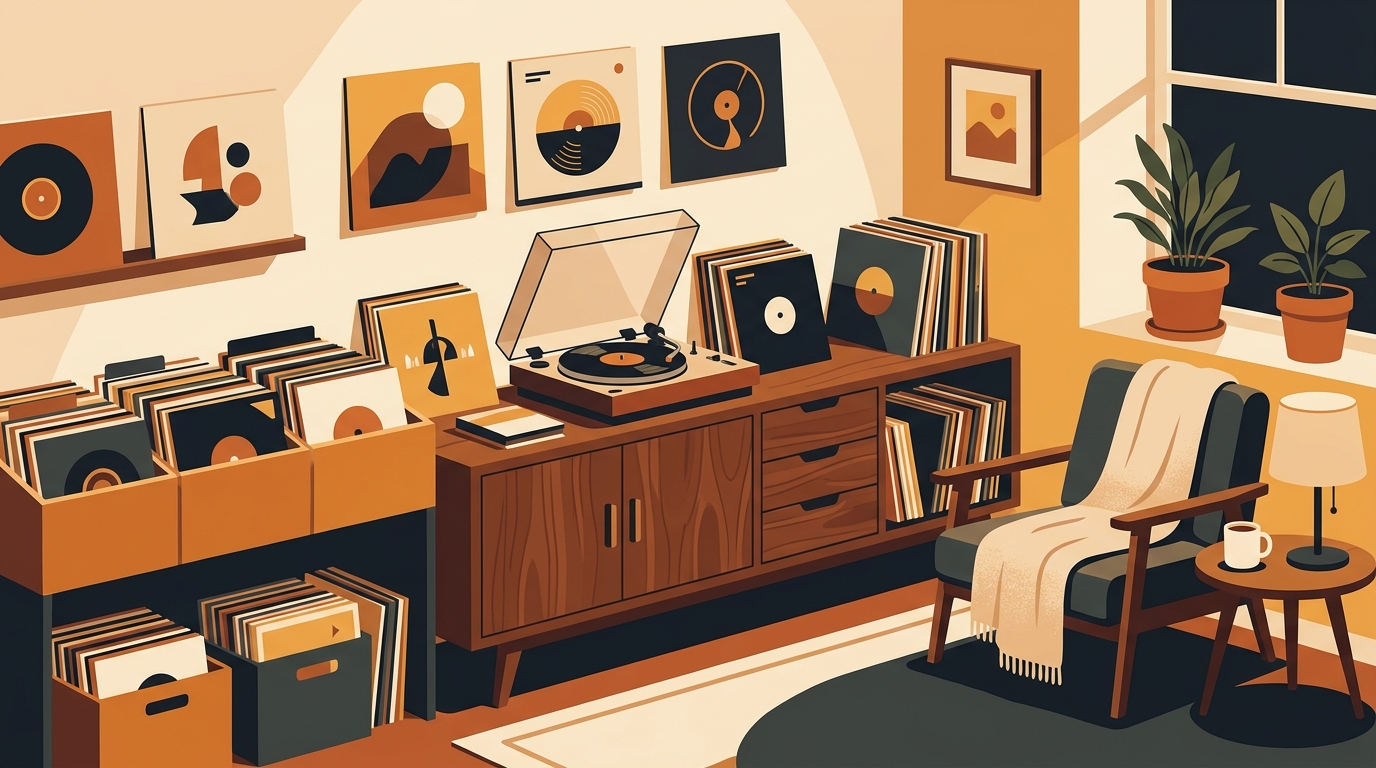
Using vinyl for interior design works because records are not just music storage. They are square-foot pieces of graphic art, tactile objects, and a visible signal that a room is meant to be lived in and listened in. The trick is making the collection feel intentional.
Vinyl is worth designing around because it is no longer a niche object. The Recording Industry Association of America reported that U.S. vinyl revenue grew 7 percent to $1.4 billion in 2024, the format's eighteenth consecutive year of growth. Vinyl albums also outsold CDs for the third year in a row, 44 million units versus 33 million. More homes are making room for records again, and the best setups treat them as both a listening system and part of the room. RIAA
Start with the room's job
Before buying shelves or drilling into a wall, decide what the vinyl area is supposed to do. A living room setup for parties should invite guests to browse. A bedroom listening corner can be quieter and more edited. Designers interviewed by Deep Cut emphasized function and feeling first: how you want to live in the room, and whether the turntable is a focal point or a supporting detail. Deep Cut
Use album covers like rotating art
The easiest interior design win is front-facing album art. A 12-inch sleeve is nearly perfect wall decor: large enough to read from across the room, square enough to grid cleanly, and personal enough to avoid looking like hotel art. Use slim picture ledges, record frames, or a small now-playing stand near the turntable. Keep spacing consistent for a gallery feel, or use a looser row above a console.
The key is editing. Do not display every record you own. Choose covers that work with the room's palette, then rotate them monthly or seasonally. What's Spinning is useful here because it can tell you what you have actually been playing, not just what looks good on a shelf.
Give storage enough breathing room
Records look best when the storage has a little negative space. Jammed cubes and overstuffed crates read as clutter, even when the records are organized. Leave room for growth, dividers, a small lamp, and a cleaning brush. If your collection is big, split it into two roles: accessible spine-out storage for the library, plus a smaller front-facing area for display.
For furniture, mid-century silhouettes work for an obvious reason: the era fits the format. Low credenzas, walnut cabinets, glass-fronted storage, and warm metal lamps all flatter album art without competing with it. Minimal white shelving can also work, especially when you want colorful sleeves to read cleanly.
Place the turntable for sound, not just symmetry
A turntable can be beautiful, but it is still a sensitive playback machine. Yamaha's setup guidance is clear: put speakers on a different surface from the turntable, avoid placing the turntable on top of a speaker or subwoofer, and use solid, heavy furniture that does not wobble. Yamaha also warns against stacking a turntable on top of a receiver or amplifier because blocking ventilation can cause overheating. Yamaha
U-Turn Audio gives similar advice: keep the turntable level, isolate it from speaker vibration, avoid electrical interference from amps, routers, and wireless transmitters, and keep it in a climate-controlled indoor space. They recommend roughly 65 to 75 degrees Fahrenheit and 30 to 50 percent relative humidity. In design terms, the sunlit window ledge may look great in a photo, but it is a poor long-term home for records or gear. U-Turn Audio
Make the listening corner feel intentional
Lighting does a lot of the work. A warm lamp over a record cabinet, a low LED strip inside glass-front storage, or a shaded table lamp next to the turntable can make the area feel curated without turning it into a shrine. Warm wood, linen, brass, leather, and woven rugs all pair naturally with vinyl.
Cable control matters too. Hide power strips behind the console, run speaker wire cleanly, and leave the turntable surface uncluttered. A record brush and one now-playing sleeve are usually enough.
Protect the records you display
Good vinyl decor should not damage the collection. Avoid direct sunlight, radiators, damp exterior walls, bathrooms, and kitchens. Use frames, ledges, or mounts that support the sleeve, not the bare disc. For rare or sentimental pressings, display the jacket and store the vinyl safely in an inner sleeve, or use UV-filtering frames if the wall gets bright indirect light.
Most importantly, keep the records in rotation. A display that changes feels alive. The best vinyl interiors make music easy to reach, hear, and see.
FAQ
Is it safe to use vinyl records as wall decor?
Yes, if you display the sleeve or use a frame or ledge that supports the jacket without touching the disc. Keep records away from direct sun, heat sources, damp walls, and hardware that clamps the vinyl itself.
Where should a turntable go in a living room?
Place it on a level, heavy, stable surface, ideally separate from speakers and subwoofers. Avoid stacking it on top of an amplifier or receiver, and keep cables away from power adapters and wireless electronics when possible.
How many records do I need for a styled display?
A single now-playing stand can work with one sleeve. A small wall grid usually starts to feel intentional at six to nine records, while larger collections benefit from a mix of spine-out storage and a few rotating front-facing covers.
How can What's Spinning help with a design-focused record setup?
What's Spinning tracks what you own and what you actually play, so you can rotate displayed sleeves by season, mood, color, or listening history instead of leaving the same few covers on the wall forever.
Try What's Spinning Free
Turn your iPad into a live now-playing display. Track every record you spin.
START FREE TRIALThen $4.99/mo or $39.99/yr · Cancel anytime