Monthly Vinyl Budget Tracker for Collectors
If you have been collecting vinyl records for any length of time, you already know how easy it is to walk into a record store for one thing and walk out with three. The thrill of the hunt is part of the culture, but unchecked spending can turn a beloved hobby into a source of guilt. A monthly vinyl budget tracker gives you the structure to enjoy collecting without the financial anxiety that sometimes follows a particularly productive record store trip.
The average new vinyl album costs between $25 and $35 at a record store, while used pressings can range from a few dollars to several hundred depending on rarity and condition. Add shipping costs for online purchases, the occasional cleaning machine accessory, and replacement styluses, and the numbers start to matter. Without a system in place, most collectors have only a vague sense of what they are spending each month. A dedicated tracker fixes that.
A vinyl budget tracker works like any other expense log but tailored to the specific categories that matter for record collectors. At a minimum, it should capture the date of each purchase, the artist and album title, the format (LP, 7-inch, box set), the source (record store, Discogs, Amazon, subscription service), the condition if pre-owned, and the total cost including any shipping or taxes. Those columns give you a running ledger of every dollar that flows out of your wallet and into your shelf.
The real value emerges when you start aggregating that data. A monthly summary tells you how much you spent on new releases versus used pressings. A category breakdown shows whether most of your money is going toward jazz imports or mainstream reissues. A year-to-date total gives you the honest answer when someone asks how much you have spent on records this year. That number is almost always higher than people expect, which is exactly why seeing it in writing changes behavior.
Budgeting does not mean restricting yourself to one record per month or feeling guilty about every purchase. It means having enough awareness that you can make intentional choices. If you know you have already spent $300 on records in May, you might pause before dropping $80 on a repress you can find again later. Or you might decide that the $80 repress is worth it and skip the impulse grab at the bookstore next door. The budget is a tool for awareness, not deprivation.
Spreadsheet programs like Google Sheets or Microsoft Excel are the most accessible option for building a vinyl budget tracker. Set up a main entry sheet with the columns described above, then add a summary sheet that uses SUMIF formulas to total spending by month, by source, and by format. Google Sheets is particularly convenient because it syncs across devices and can be accessed from your phone while you are standing in a record store deciding whether to buy.
For collectors who already use a dedicated budgeting app like YNAB, Monarch Money, or Actual, adding a vinyl category is straightforward. Create a category for music and records, then log each purchase as a transaction with a payee name that makes the album identifiable. At the end of the month, you get a clean picture of vinyl spending alongside your groceries, utilities, and everything else. Some collectors keep their vinyl budget entirely separate from their main household budget, which makes the hobby feel more like a proper hobby and less like an encroachment on family finances.
The discipline of logging each purchase as it happens is the only part that requires effort. Five seconds with your phone as you walk out of the store, or a quick entry at the end of the day, is all it takes. The alternative is a pile of receipts and a hazy memory of what you spent three months ago. Most collectors who try tracking for even one month are surprised by the total. That surprise is the feature, not a bug. Knowing the number is the first step toward deciding what you actually want to do with it.
Seasonal patterns are worth noting too. Record Store Day in April, Black Friday in November, and the holiday gift-giving season tend to concentrate heavy spending into a few weeks. A good tracker lets you see those spikes clearly and plan for them. If you know that November always brings five or six gift purchases for family members who share your taste, you can set that money aside in October rather than scrambling in December.
Some collectors take the tracker further and log not just spending but the estimated resale value of each record. That turns the spreadsheet into a rough net worth statement for your collection. It is an optional step that appeals mostly to investors and serious collectors with rare pressings, but even casual collectors often find it illuminating to see what their shelf would fetch if they ever needed to sell.
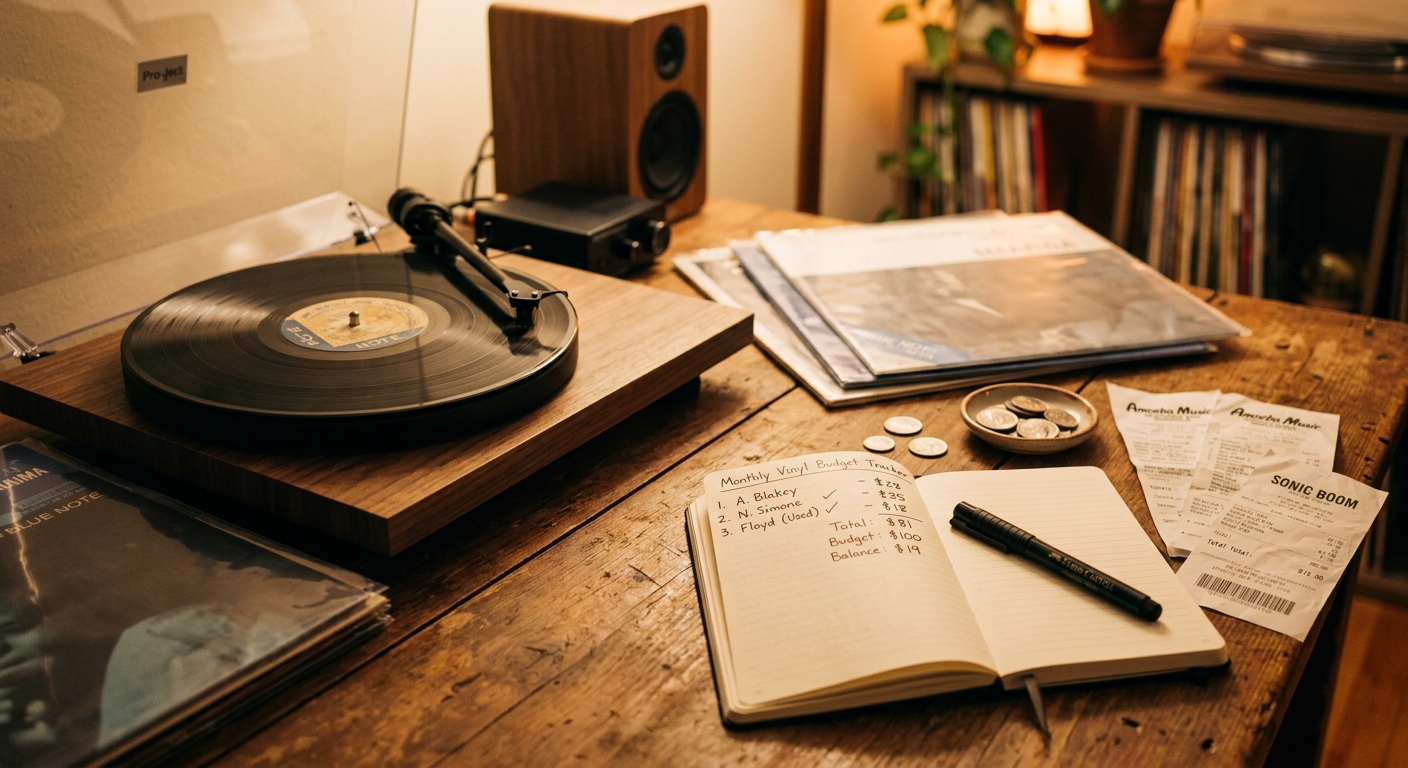
The best vinyl budget tracker is the one you will actually use. Whether it is a complex Google Sheet with charts and conditional formatting or a single handwritten column in a notebook, the act of recording your spending is what matters. Once you have even a month or two of data, patterns emerge. You start to notice which stores offer the best value, which formats drain the most from your wallet, and which months are the most dangerous for your bank account. That awareness is the real gift of tracking, and it lets you keep collecting for the long run without the stress of wondering where all the money went.
A spreadsheet tracks what you own. What's Spinning identifies what's playing.
On-device vinyl ID logs your listening history automatically. 7-day free trial.
Looking for Shazam for vinyl?
What's Spinning identifies what's playing on your turntable on-device, logs history, and AirPlays now-playing to your TV.
Comparing vinyl ID apps?
Analog requires Discogs and is iPhone-first (iPad coming). What's Spinning works without Discogs on iPhone and iPad with AirPlay.
Try What's Spinning Free
Turn your iPad into a live now-playing display. Track every record you spin.
START FREE TRIALThen $4.99/mo or $39.99/yr · Cancel anytime