The Best Albums Released in 1968: 20 Essential Records for Vinyl Collectors
If you collect vinyl, 1968 is one of those years that makes a shelf feel alive. The rock album was getting longer and stranger, soul was moving with enormous confidence, country was being reintroduced to rock audiences, and live records were becoming cultural documents rather than leftovers. A search for the best albums released 1968 is really a search for the moment the LP became the main canvas for popular music.
This list is built for listeners and collectors. Influence matters, but so do pressing history, artwork, side breaks, recording character, and the practical question of whether you will actually keep playing the record. I checked album histories, chart references, Discogs master pages, and certification databases, then weighted the final ranking toward records that still reward time on a turntable.
One practical note before the list: if you use What's Spinning to track what your turntable actually plays, a year-specific shelf like this becomes more useful. You can see whether your 1968 section is living music or just a historically impressive row of spines.
The best albums released in 1968
-
1. The Beatles, The Beatles, 1968
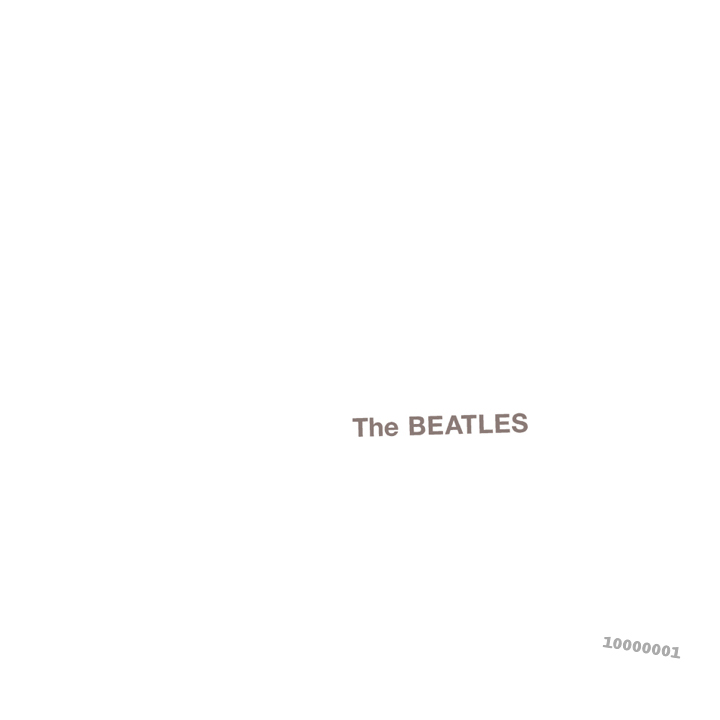
The blank sleeve still feels like a dare. In November 1968, the Beatles issued a double album on Apple that was officially self-titled, quickly nicknamed the White Album, and large enough to contain folk miniatures, hard rock, music-hall jokes, tape collage, country parody, proto-metal menace, and some of the prettiest ballads the group ever cut. For vinyl collectors, the object is unusually important: early UK copies were numbered, top-loading, and packaged with portraits plus a poster, so condition is not just about groove noise. The record was mostly recorded at EMI Studios and Trident during a famously tense period after the India retreat, with individual members often working separately. That fractured process is audible in a useful way. Each side has its own temperature, from the acoustic hush of Blackbird to the grinding overload of Helter Skelter. Buy it as a double LP experience, not as a greatest-hits extraction; the sprawl is the architecture. Wikipedia has the album background and release details, while Discogs is useful for pressing variations.
-
2. Electric Ladyland, The Jimi Hendrix Experience, 1968

Hendrix used the studio like a weather system on Electric Ladyland. Released as a double album in 1968, it became the Experience's only U.S. number one LP and remains the clearest document of Hendrix as producer, arranger, guitarist, and nocturnal editor. The vinyl story is complicated before the needle even touches the groove, because collectors distinguish the original UK Track nude-cover edition from the U.S. Reprise cover, later alternate artwork, and modern reissues cut from different sources. Musically, the record can sound huge or hazy depending on pressing and setup. Voodoo Chile spreads across a side like a club jam caught on hot tape, while 1983... (A Merman I Should Turn to Be) turns psychedelic rock into underwater cinema. If you want one 1968 rock album that justifies a full-range system, this is it. It needs quiet vinyl, clean bass, and a cartridge that can track dense guitar without turning it into fuzz soup. Wikipedia has the album background and release details, while Discogs is useful for pressing variations.
-
3. Astral Weeks, Van Morrison, 1968

Commercially, Astral Weeks was not a blockbuster in 1968; spiritually, it has never stopped expanding. Van Morrison recorded it in New York with producer Lewis Merenstein and a small group of jazz-rooted players, including bassist Richard Davis and guitarist Jay Berliner, which explains why the record moves less like folk-rock and more like musicians orbiting a singer in real time. That makes it an unusually rewarding LP. The side breaks do not interrupt a set of singles, they divide meditations: Cyprus Avenue, Madame George, Ballerina, Slim Slow Slider. Collectors should be patient here because surface noise matters. Morrison's voice often sits exposed against acoustic bass, flute, vibraphone, and brushed percussion, so a worn copy can pull you out of the spell. The best listening copies make the album feel suspended between room sound and memory. It is not rare in the way private-press records are rare, but clean early Warner Bros.-Seven Arts copies have a particular late-60s presence worth hearing. Wikipedia has the album background and release details, while Discogs is useful for pressing variations.
-
4. Beggars Banquet, The Rolling Stones, 1968

After the ornate fog of Their Satanic Majesties Request, the Stones returned in 1968 with a record that sounded leaner, meaner, and more dangerous. Beggars Banquet opens with Sympathy for the Devil, recorded with a samba pulse and enough studio heat to become mythology, then digs into country blues, acoustic menace, slide guitar, and political unease. It also marks the beginning of the Jimmy Miller production era, the stretch many collectors treat as the band's core album run. The first sleeve concept, a graffiti-covered bathroom wall, was delayed by record-company objections, so early issues often appeared with the formal invitation cover. That artwork history gives collectors something extra to track besides matrix numbers. Sonically, this is a record where too much brightness can spoil the dust and wood in the arrangements. Street Fighting Man, famously built from cassette-recorded acoustic guitars, can sound explosive on a good pressing because its power is texture, not volume alone. Wikipedia has the album background and release details, while Discogs is useful for pressing variations.
-
5. Music from Big Pink, The Band, 1968
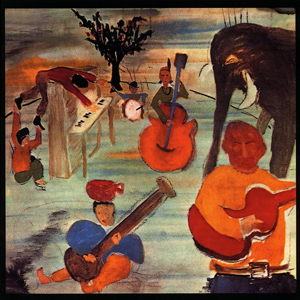
Nothing about Music from Big Pink tried to win the psychedelic arms race. The Band's 1968 debut came out of the Woodstock orbit, drawing on material and sensibility connected to the Basement Tapes period with Bob Dylan, but it sounded older, earthier, and stranger than the era around it. The pink house on the cover is not branding fluff; it points to the communal setting that shaped the music. The Weight became the cultural shorthand, yet the album's deeper power is in its ensemble character: Levon Helm, Richard Manuel, Rick Danko, Garth Hudson, and Robbie Robertson sound like a single weathered organism. On vinyl, the record rewards systems that handle midrange tone rather than fireworks. Organ, piano, bass, mandolin, drums, and overlapping voices sit in a warm, handmade balance. Original Capitol rainbow-label pressings are attractive, but many later copies serve well if they are quiet. This is roots music filtered through musicians who had absorbed road miles, not nostalgia. Wikipedia has the album background and release details, while Discogs is useful for pressing variations.
-
6. Lady Soul, Aretha Franklin, 1968

Lady Soul is only about twenty-eight minutes long, and that brevity is part of its force. Released by Atlantic in January 1968, it captures Aretha Franklin at a point where gospel authority, pop intelligence, and Muscle Shoals-seasoned rhythm had become inseparable. Chain of Fools, Since You've Been Gone, and Ain't No Way give the record three different kinds of emotional command: strut, lift, and devastation. The collector angle starts with Atlantic soul vinyl itself. Clean mono or stereo originals can be thrilling, but they were often played hard, stacked on changers, and carried to parties. A quiet copy lets you hear how carefully the band leaves space for Franklin, especially around Carolyn Franklin's writing and the Sweet Inspirations' backgrounds. The album is not about audiophile spectacle. It is about timing, placement, and a voice that can bend a room around one syllable. If your 1968 shelf is too guitar-heavy, Lady Soul corrects the balance immediately. Wikipedia has the album background and release details, while Discogs is useful for pressing variations.
-
7. At Folsom Prison, Johnny Cash, 1968
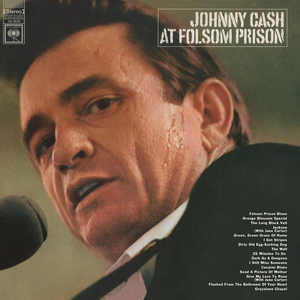
Johnny Cash did not simply record a concert at Folsom State Prison; he turned the prison-room atmosphere into part of the album's instrument. Columbia released At Folsom Prison in 1968, and the record helped revive Cash's commercial momentum while deepening the outlaw persona that had always been more complicated than costume. The audience reactions matter, but so do the pauses, jokes, and the way Cash addresses the room without condescension. Original Columbia copies are plentiful enough that condition should be your obsession. Listen for groove wear around the louder applause and Cash's baritone; if the voice breaks up, keep looking. The album's pacing is almost perfect for vinyl because the performance keeps pushing forward, from Folsom Prison Blues through Cocaine Blues and 25 Minutes to Go. For collectors, this is also a reminder that live records can be more than souvenirs. Here, format, place, and performance are locked together. Wikipedia has the album background and release details, while Discogs is useful for pressing variations.
-
8. Bookends, Simon & Garfunkel, 1968

Bookends is a concept album hiding inside immaculate pop craft. Side one moves through youth, aging, memory, and American dislocation, while side two gathers singles and related pieces that still feel emotionally linked. Released in April 1968, it reached number one in the United States and the UK, boosted by Mrs. Robinson and the duo's post-Graduate cultural moment. The black-and-white cover suits the record's mood: not psychedelic overflow, but clean lines and quiet anxiety. For vinyl buyers, Columbia two-eye pressings are common targets, yet the real test is sibilance control. Paul Simon and Art Garfunkel's close harmonies can punish a worn groove or misaligned cartridge. Save the Life of My Child uses studio effects and a Moog texture that can surprise people who remember the album as soft folk-pop. Old Friends, by contrast, needs silence around it. A good copy turns the record into a small, precise film about time passing. Wikipedia has the album background and release details, while Discogs is useful for pressing variations.
-
9. Sweetheart of the Rodeo, The Byrds, 1968
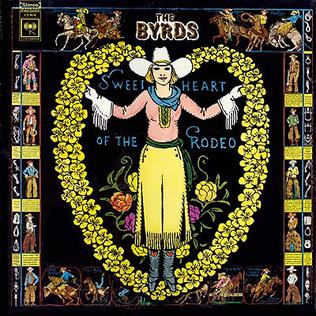
Sweetheart of the Rodeo baffled some 1968 rock listeners because it walked straight into country music instead of treating it as seasoning. Gram Parsons had just entered the Byrds' orbit, and his influence helped push the band toward pedal steel, old songs, Dylan material, and a Nashville vocabulary that would shape country rock for decades. The backstory is catnip for collectors: vocal parts were changed after contractual complications involving Parsons, making the album's released form different from the imagined Parsons-led version fans discuss. On LP, the pleasure is less about rarity than feel. The songs are concise, the arrangements breathe, and Sneaky Pete Kleinow's steel guitar gives the record a dry shimmer. Original Columbia copies can sound excellent when clean, though buyers should check for groove wear because country and folk-rock albums were often everyday records, not shelf queens. It is a historically important album that still works as a relaxed Sunday spin. Wikipedia has the album background and release details, while Discogs is useful for pressing variations.
-
10. The Kinks Are the Village Green Preservation Society, The Kinks, 1968
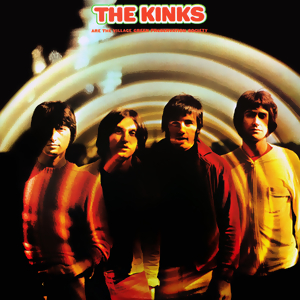
Ray Davies looked backward in 1968 without making a museum piece. The Kinks Are the Village Green Preservation Society arrived to modest sales, then gradually became one of the band's most beloved albums because its English village, picture-book characters, lost friends, steam trains, cats, and village greens are really about modern life slipping away. Collectors care deeply about variants because the album exists in 12-track and 15-track histories, with UK Pye originals especially prized. Musically, it does not need volume to make its case. The magic is in the compact writing and the slightly boxy, intimate production. Picture Book and Do You Remember Walter feel bright at first, then sadder with age, which is exactly why the album keeps gaining listeners. On vinyl, a warmer setup suits it; too much clinical detail can make the record seem smaller than it is. Treat it like a short-story collection, and it becomes one of 1968's quiet miracles. Wikipedia has the album background and release details, while Discogs is useful for pressing variations.
-
11. Odessey and Oracle, The Zombies, 1968
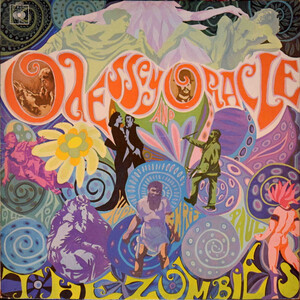
The misspelled title was accidental, the afterlife was not. Odessey and Oracle was recorded largely at Abbey Road and Olympic after the Zombies' original run was already wobbling, then released in 1968 before Time of the Season turned into a delayed U.S. hit. The album is a baroque pop jewel: Mellotron colors, close harmonies, clipped drums, and songs that compress entire emotional worlds into three minutes. First UK CBS copies are expensive for good reason, but the record has had many reissues because demand finally caught up with its reputation. Vinyl suits it because the arrangements are small but ornate. Care of Cell 44 has bounce, A Rose for Emily has chamber-pop poise, and Hung Up on a Dream earns its title without becoming mushy. The album is also a useful collecting lesson: initial commercial disappointment can become canonical value when later listeners hear what the market missed. The cover art's blue-green psychedelic illustration looks wonderful at LP scale. Wikipedia has the album background and release details, while Discogs is useful for pressing variations.
-
12. Cheap Thrills, Big Brother and the Holding Company, 1968

Cheap Thrills sold the San Francisco myth with a wink and a scream. Columbia released it in 1968, R. Crumb's comic-book cover made it instantly recognizable, and Janis Joplin's voice made the record impossible to file as mere scene documentation. The title suggests a live album, and some audience noise reinforces that impression, but much of it was studio-built after live-recording plans proved difficult. That trick actually helps the LP: it has the sweat of performance with the focus of production. Piece of My Heart is the obvious blast, but Ball and Chain is where Joplin turns time elastic. Collectors should inspect covers closely because Crumb artwork invites wall display and ring wear is common. Original two-eye Columbia copies can carry real punch, yet condition again beats mythology. A battered first pressing is less satisfying than a clean later copy if you actually plan to play it loud. Wikipedia has the album background and release details, while Discogs is useful for pressing variations.
-
13. White Light/White Heat, The Velvet Underground, 1968

White Light/White Heat is the record on this list most likely to make your system sound broken by design. The Velvet Underground's second album was recorded fast, released by Verve in early 1968, and pushed distortion, repetition, deadpan humor, and exhaustion to a place that still feels confrontational. Sister Ray fills an entire side with organ grind, guitar scrape, and a rhythm section that seems to dare the tape to quit. For collectors, the early black-on-black skull cover is part of the legend, and clean originals are difficult because the music almost invites abuse. This is not an audiophile album in the polished sense. It is a document of overload, and vinyl makes that overload physical. The Gift places spoken narrative in one channel and instrumental churn in the other, turning stereo into mischief. If your collection has too many tasteful records, White Light/White Heat is the necessary problem child. Wikipedia has the album background and release details, while Discogs is useful for pressing variations.
-
14. We're Only in It for the Money, The Mothers of Invention, 1968
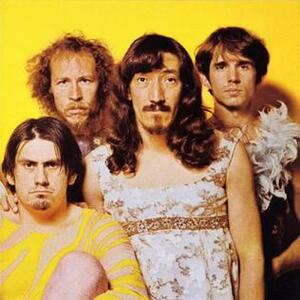
Frank Zappa aimed at hippie culture, censorship, consumerism, and the music business with a record that still feels edited with a razor blade. We're Only in It for the Money was released in 1968 after artwork and lyrical disputes, including a famously altered parody of Sgt. Pepper's Lonely Hearts Club Band. The album is short, packed, and intentionally disruptive: tape edits, doo-wop fragments, sped-up voices, orchestral bits, and acid satire collide before any single mood can settle. Vinyl collectors encounter a maze of mixes and censorship history, including the original Verve LP and later remixes that remain controversial. That makes research essential before buying. Sonically, the record is not conventionally pretty, but it rewards attentive listening because every interruption has placement. The LP format helps by forcing you to take the collage as a side-length argument. It is funny, annoying, smart, juvenile, and historically sharp, often within the same minute. Wikipedia has the album background and release details, while Discogs is useful for pressing variations.
-
15. S. F. Sorrow, The Pretty Things, 1968
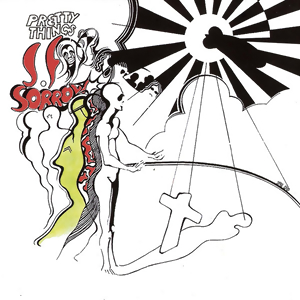
S. F. Sorrow is often called one of rock's early concept albums, but the collector appeal is more specific than that label. The Pretty Things recorded much of it at Abbey Road with Norman Smith producing, and the album follows the life of Sebastian F. Sorrow through birth, war, love, loss, and psychic collapse. Released in the UK in 1968, it arrived too late and too awkwardly promoted to become the blockbuster its ambition deserved. Original Columbia/EMI copies are therefore serious collector territory, with the gatefold and booklet elements making complete copies especially desirable. The music is tougher than its concept reputation suggests. Old Man Going hits with garage-rock force, while Private Sorrow and Balloon Burning show the band's psychedelic craft. On vinyl, the record benefits from a copy that keeps the dense midrange from smearing. It is the kind of album that turns crate digging into historical correction, because the reputation caught up long after the pressing run. Wikipedia has the album background and release details, while Discogs is useful for pressing variations.
-
16. Gris-Gris, Dr. John, the Night Tripper, 1968

Gris-Gris sounds less like a debut album than a door opening into a candlelit room you were not sure you had permission to enter. Mac Rebennack created the Dr. John persona in Los Angeles, drawing on New Orleans rhythm, studio mischief, psychedelic atmosphere, second-line feel, and theatrical voodoo imagery. The 1968 Atco LP did not behave like mainstream rock or soul, which is precisely why it remains so gripping for collectors. The grooves carry percussion, chants, horns, bass, and swampy organ in a thick, humid blend. Mama Roux is catchy enough to pull you in; I Walk on Guilded Splinters is the long ritual that keeps you there. Original Atco copies can sound wonderfully alive, but they are not always quiet, and this record needs low noise because so much of its drama sits in texture. It is a perfect left-field addition to a 1968 shelf otherwise dominated by British and California rock. Wikipedia has the album background and release details, while Discogs is useful for pressing variations.
-
17. The Notorious Byrd Brothers, The Byrds, 1968
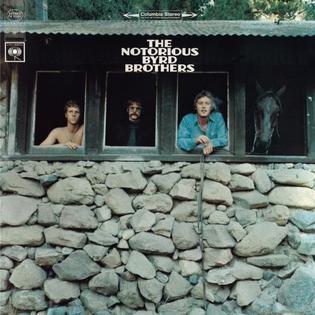
The Notorious Byrd Brothers is the Byrds album where lineup chaos somehow turned into studio elegance. Released in January 1968, it was made during a period of firings, departures, and internal strain, but the finished record glides through psychedelic rock, country touches, Moog experimentation, and luminous harmonies with almost impossible poise. The horse on the cover is part of the joke and part of the lore, a visual jab after David Crosby's exit. Collectors value original Columbia copies, especially clean stereo and mono variants, though reissues can reveal how carefully the album is layered. Draft Morning, Wasn't Born to Follow, and Goin' Back do not announce themselves with heavy drama; they drift, sparkle, and then linger. Vinyl helps because the album's details are soft-edged rather than aggressive. You notice the pedal steel, electronic textures, and vocal blend as a continuous surface. It is less famous than Sweetheart of the Rodeo, but in some rooms it is the more beautiful spin. Wikipedia has the album background and release details, while Discogs is useful for pressing variations.
-
18. Wheels of Fire, Cream, 1968

Wheels of Fire gives collectors two Creams in one package: a studio band with baroque blues-rock ambitions, and a live trio stretching songs until amplification becomes athletic event. Released as a double album in 1968, it reached number one in the United States and includes White Room, Politician, Crossroads, and Spoonful. The foil-style cover art by Martin Sharp is one reason original copies remain display favorites, but jackets are easily scuffed, so visual grading matters. The live sides are where turntable setup gets exposed. Jack Bruce's bass and Ginger Baker's cymbals can turn into congestion if the pressing is worn or the cartridge is struggling. Eric Clapton's guitar on Crossroads should be sharp and propulsive, not a sheet of glare. This is not the tidiest album of 1968, and that is fine. It captures the moment when blues-rock excess was becoming arena language, with all the excitement and bloat included. Wikipedia has the album background and release details, while Discogs is useful for pressing variations.
-
19. Eli and the Thirteenth Confession, Laura Nyro, 1968
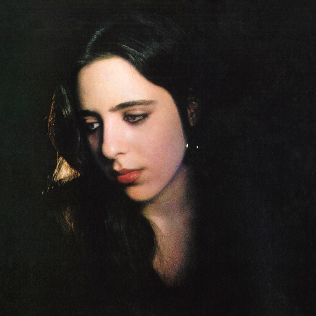
Laura Nyro's second album moves like city traffic, gospel service, Brill Building memory, and private diary all at once. Eli and the Thirteenth Confession was released by Columbia in 1968 and later fed the pop charts indirectly when other artists covered songs such as Eli's Comin' and Stoned Soul Picnic. Nyro's own versions are stranger and more elastic. Tempos shift, choruses arrive sideways, and the piano often feels like it is chasing the vocal rather than supporting it. For vinyl collectors, this is a record where mastering and condition can change the whole emotional read. Too much surface noise interrupts the quick turns; too much top-end emphasis can make the brass and voice feel hard. A clean Columbia copy lets the arrangements bloom without losing the New York urgency. It is also one of the best reminders that 1968 was not only about bands. Singer-songwriters were already bending album form in ways the next decade would build on. Wikipedia has the album background and release details, while Discogs is useful for pressing variations.
-
20. In-A-Gadda-Da-Vida, Iron Butterfly, 1968
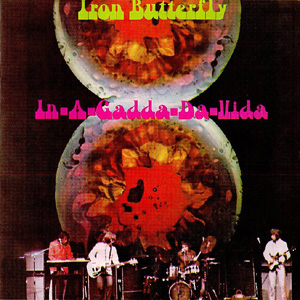
One side, one riff, seventeen minutes, and a drum solo that became part of late-60s furniture. In-A-Gadda-Da-Vida is easy to joke about, but the 1968 Atco album was a massive seller and a crucial bridge between psychedelic rock, heavy organ textures, and the long-form heaviness that hard rock audiences would soon demand. The title track takes up all of side two, which makes the LP format central to the experience. You flip the record and enter the tunnel. Original Atco copies are not rare, but many are beaten because this was a dorm-room, basement, and party record. Inspect for groove wear, especially on the title side where inner-groove distortion can make the organ and cymbals collapse. The album is not as compositionally rich as the top tier here, but its cultural footprint is enormous. A 1968 collection without it misses the populist side of psychedelic heaviness. Wikipedia has the album background and release details, while Discogs is useful for pressing variations.
What to buy first
If you are starting a 1968 shelf from scratch, buy five records first: The Beatles, Electric Ladyland, Beggars Banquet, Astral Weeks, and Lady Soul. That gives you double-album rock breadth, psychedelic studio ambition, blues-rock discipline, acoustic-jazz mystery, and peak Atlantic soul. After that, choose your branch. Country-rock collectors should move to Sweetheart of the Rodeo; live-record people should grab At Folsom Prison; psych and garage obsessives should chase S. F. Sorrow, Gris-Gris, and White Light/White Heat.
Do not let first-pressing fever make the decision for you. For 1968 albums, inserts, numbered sleeves, label variants, and censored artwork are fascinating, but a trashed original is still a trashed record. Buy the copy that matches your purpose: a clean reissue for regular listening, a complete early issue for collecting, or both if the album is central to your shelf.
Sources and further research
- RIAA Gold and Platinum database
- Billboard album chart archive
- Official Charts Company archive
- Discogs master release database
- Wikipedia album pages for release dates, recording notes, chart peaks, and cover art references
FAQ
What was the biggest vinyl album of 1968?
In pure pop-cultural weight, the Beatles' self-titled White Album is hard to beat. It topped charts, arrived as a numbered double LP in early editions, and remains one of the most collected rock albums of the year.
Are original 1968 pressings worth buying?
Sometimes. Originals carry period labels, jackets, inserts, and mastering choices, but condition matters more than age. A clean later pressing can be a better play copy than a noisy first pressing.
Which 1968 albums are best for testing a turntable setup?
Try Electric Ladyland for dense guitar and bass, Astral Weeks for quiet acoustic detail, Lady Soul for vocal focus, and Wheels of Fire for live-side tracking stress.
How many albums should a serious 1968 vinyl shelf include?
Start with five: The Beatles, Electric Ladyland, Beggars Banquet, Astral Weeks, and Lady Soul. Add genre branches from there, country rock with Sweetheart of the Rodeo, soul with Aretha, live country with At Folsom Prison, and heavy psych with In-A-Gadda-Da-Vida.
A spreadsheet tracks what you own. What's Spinning identifies what's playing.
On-device vinyl ID logs your listening history automatically. 7-day free trial.
Looking for Shazam for vinyl?
What's Spinning identifies what's playing on your turntable on-device, logs history, and AirPlays now-playing to your TV.
Comparing vinyl ID apps?
Analog requires Discogs and is iPhone-first (iPad coming). What's Spinning works without Discogs on iPhone and iPad with AirPlay.
Try What's Spinning Free
Turn your iPad into a live now-playing display. Track every record you spin.
START FREE TRIALThen $4.99/mo or $39.99/yr · Cancel anytime