Best Albums of the 1970s on Vinyl: A Guide
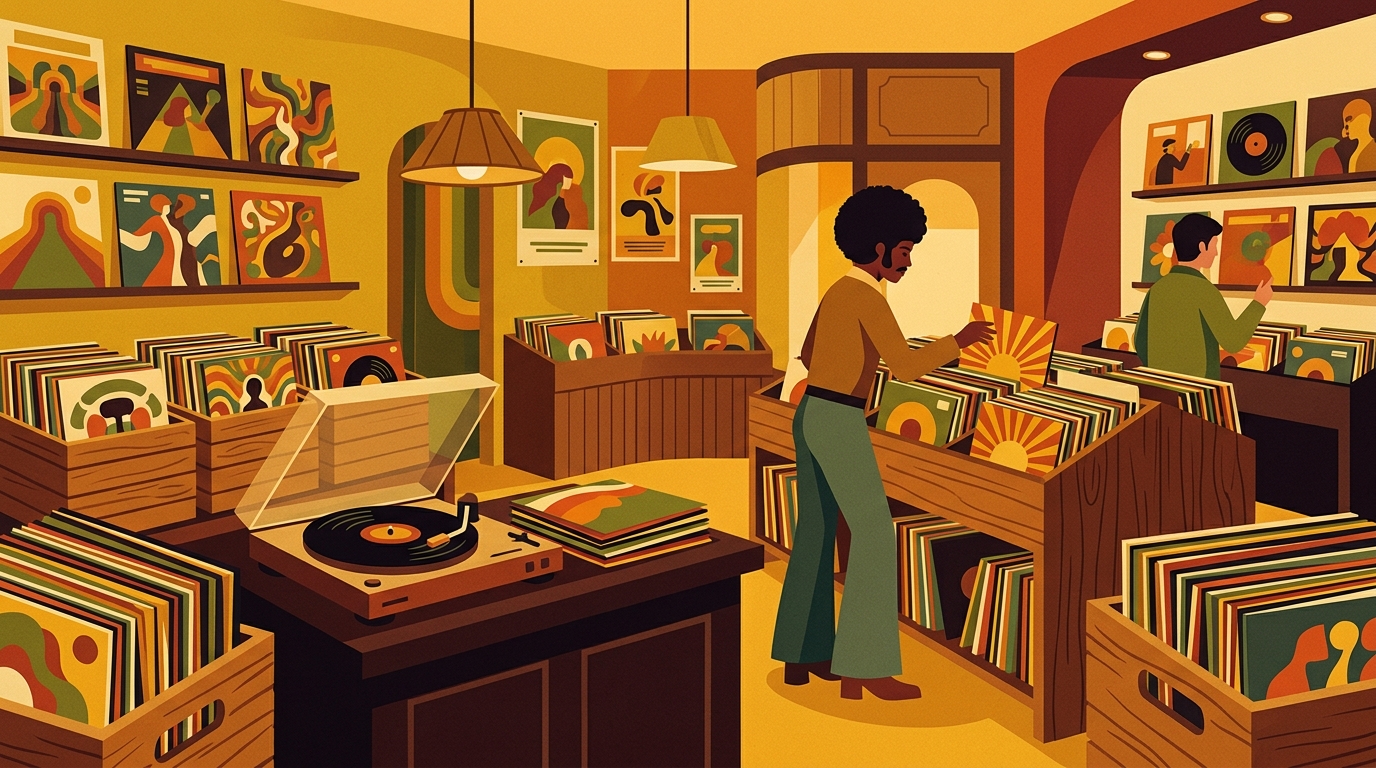
The 1970s were the decade when the album became a serious object: a sleeve you studied, a side break you felt, and a sequence that asked for forty focused minutes. Rock stretched out, soul became more political, reggae moved onto the world stage, electronic pop found its pulse, and punk reminded everyone that urgency still counted. That is why the best albums 1970s vinyl collectors chase are not only famous titles. They are records where sound, art direction, historical context, and the physical ritual of playing an LP all reinforce each other.
The vinyl revival gives these records fresh practical importance. The RIAA reported that U.S. LP and EP shipments reached 43.2 million units and $1.4 billion in retail value in 2024, while Luminate reported another huge year for U.S. vinyl sales led by catalog listening and pop culture reissues.[1][2] The market is crowded, so it helps to buy with intent. What's Spinning can track what you own and what you actually play, but the choosing still belongs to your ears.
This guide favors complete-album experiences, collectible artwork, availability, and records that reveal something specific about 1970s vinyl culture. It is not a price-flex list. A clean reissue that makes you play side two is more valuable than a scarce original you are afraid to touch.
The best 1970s albums on vinyl
-

What's Going On, Marvin Gaye, 1971
Marvin Gaye did not just make a socially conscious soul album, he changed what a Motown LP could be allowed to hold. The record was released on Tamla in 1971 after Gaye pushed past label resistance, and it still feels like one continuous public prayer moving through war, ecology, police violence, addiction, and faith. On vinyl, the transitions matter. The title track does not sit apart from the street-corner voices, congas, string lines, and gospel responses around it; the whole first side seems to inhale and exhale as one scene. Collectors should notice how the bass, percussion, and orchestration create depth without turning the mix into spectacle. A clean copy rewards moderate volume, because the emotional detail sits in the space between James Jamerson's lines and Gaye's stacked vocals. It is also one of the decade's clearest arguments for the LP as a complete artwork rather than a container for singles.[5]
-

Blue, Joni Mitchell, 1971
Blue is easy to praise and surprisingly hard to buy well, because quiet records expose every flaw. Joni Mitchell's 1971 album puts the listener close enough to hear the air around voice, piano, guitar, and dulcimer, which means groove wear can turn intimacy into grit. That is not a warning against originals, it is a reminder to inspect carefully and ask how the record was played. The writing is famously personal, yet the album's vinyl power comes from its pacing: small rooms, travel songs, romantic wreckage, then another turn inward. The cover, a deep blue portrait by Tim Considine, also belongs to the experience; it signals privacy before a note plays. Audiophile reissues can be wonderful here when they protect the midrange and do not polish away the ache. If your collection has room for only one singer-songwriter LP from the decade, this is the one that makes silence feel arranged.[6]
-
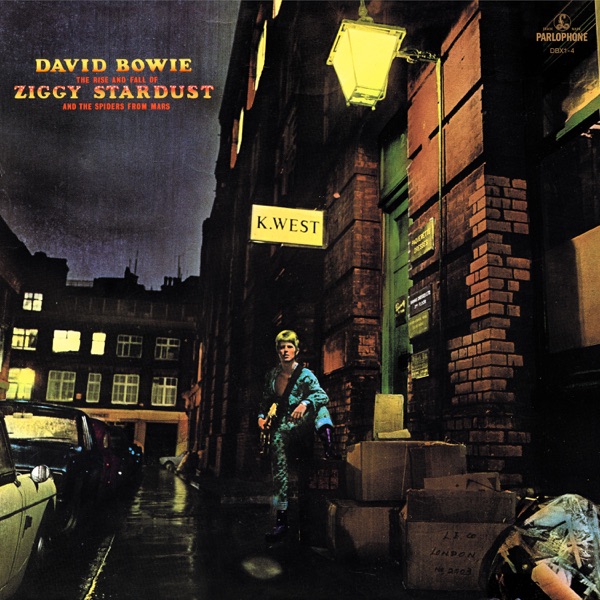
The Rise and Fall of Ziggy Stardust and the Spiders from Mars, David Bowie, 1972
Bowie's Ziggy Stardust works on vinyl because its fantasy arrives with almost comic-book clarity: a doomed alien rock star, a hungry band, and a sleeve that feels like a still from a lost midnight film. Recorded with the Spiders from Mars and produced by Bowie and Ken Scott, the album compresses glam, hard rock, cabaret gesture, and science-fiction melodrama into a tight LP rather than an overbuilt concept sprawl. Side one introduces the mythology with startling economy, while side two turns it into fame, violence, and collapse. For collectors, the orange RCA label pressings have the period aura, but later reissues can offer quieter surfaces and easier replacement if your copy becomes a frequent play. The thing to listen for is Mick Ronson's arrangement sense. He makes strings, guitars, and backing vocals feel theatrical without burying the songs. Few albums look this iconic on a shelf and still move this fast once the needle drops.[7]
-
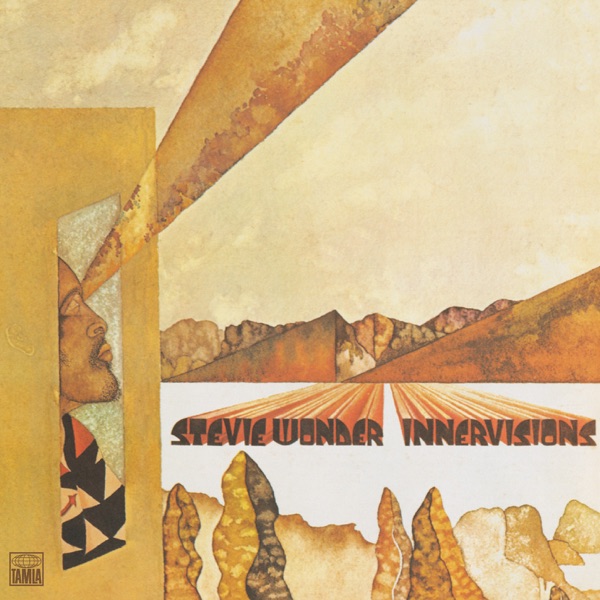
Innervisions, Stevie Wonder, 1973
Innervisions is the sound of Stevie Wonder treating the studio like an instrument he could pilot alone, then inviting a few perfectly chosen players into the cockpit. Released in 1973 during his astonishing early-1970s run, it uses ARP synthesizers, clavinet, drums, layered vocals, and elastic bass figures to make social observation feel musical rather than didactic. The album's range is the collector hook: spiritual dread in 'Living for the City,' sly funk in 'Higher Ground,' and wounded tenderness in 'All in Love Is Fair' all occupy the same compact LP. On vinyl, the sequencing gives the record a sense of argument. It does not simply show off Wonder's facility, it keeps changing the emotional weather while retaining one warm tonal center. Seek a copy that preserves punch without top-end glare, since the keyboards can get sharp on noisy or careless cuts. This is a 1970s record that makes a modest system sound alive when the pressing is right.[8]
-

The Dark Side of the Moon, Pink Floyd, 1973
The prism sleeve may be the most recognizable album cover of the 1970s, but The Dark Side of the Moon earns its shelf space by being obsessively engineered. Pink Floyd recorded much of it at EMI Studios with engineer Alan Parsons, building tape loops, clocks, cash-register rhythms, spoken-word fragments, and synthesizer passages into a continuous arc. Vinyl makes the architecture obvious. Side one moves from heartbeat to pressure to time; side two turns money, conflict, mortality, and mental strain into a controlled descent. The record is also a practical system test, not because it is loud, but because its quiet passages, stereo movement, and low-end effects reveal setup problems quickly. Original Harvest and early Capitol copies have collector romance, yet this title has been reissued so often that condition and mastering matter more than bragging rights. A silent copy of this album is not background music. It is a small planetarium show for your speakers.[9]
-
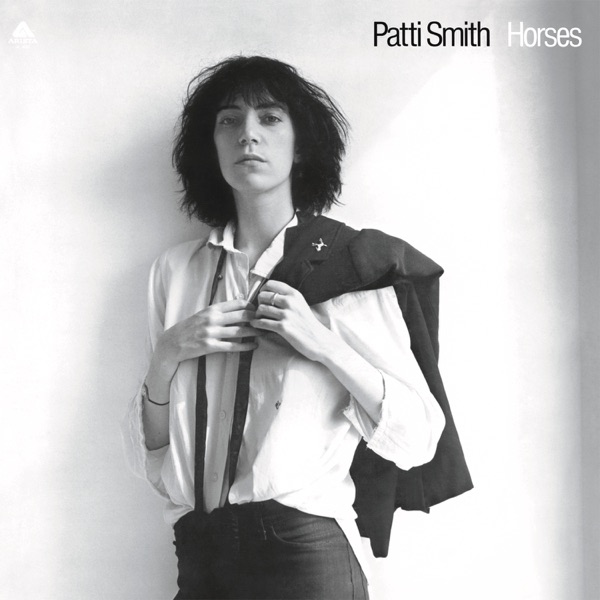
Horses, Patti Smith, 1975
Horses begins with one of the great first lines in rock and then refuses to behave like a debut album with limited options. Patti Smith, John Cale, photographer Robert Mapplethorpe, and a band that could lurch from garage rock into incantation made a record whose front cover is almost as influential as the music. The black-and-white sleeve did not sell rebellion as costume; it looked alert, severe, and unprotected. That matters for vinyl collectors because the jacket is part of the historical charge. Sonically, Horses is not a glossy record, and chasing hi-fi perfection misses the point. You want a pressing that keeps the vocal presence forward and lets the room tension survive, especially through 'Gloria' and 'Birdland.' In a 1970s collection heavy with studio mastery, this album contributes a different value: the sense that the LP can document a mind forming itself in real time, with danger left in the corners.[10]
-

Another Green World, Brian Eno, 1975
Another Green World is the quiet eccentric in this stack, a 1975 album where Brian Eno turned away from rock-band identity and toward miniature environments. Some tracks are songs, some are almost landscapes, and the guests, including Robert Fripp, Phil Collins, John Cale, and Percy Jones, appear like colors being added to a palette. The vinyl experience is unusually important because the album keeps changing scale. A short vocal piece may give way to an instrumental fragment that feels like a window opening onto weather. Collectors often come to Eno through ambient records, but this one sits at the hinge between art rock and the atmospheric work that followed. Listen for how much is left out. The arrangements do not crowd the grooves; they use space, attack, and decay as compositional material. A clean UK Island copy has obvious appeal, but the larger point is to find a pressing with low surface noise, since the smallest textures carry the spell.[11]
-

Born to Run, Bruce Springsteen, 1975
Born to Run is a maximalist record about escape, and the vinyl format helps its scale feel earned rather than merely oversized. Bruce Springsteen and producers Mike Appel and Jon Landau spent months chasing a dense, romantic sound that could turn New Jersey streets, boardwalk mythology, and young desperation into widescreen rock. The title track alone required elaborate overdubbing and became the album's calling card, but the LP works because the quieter emotional stakes keep returning. Side breaks matter here. The first side builds an entire universe of youth and motion before side two deepens the cost of chasing it. Collectors should treat early copies with caution, since this was a record people played hard, loudly, and often. Later clean pressings can be a better listening choice than a battered original. The saxophones, piano, drums, and stacked guitars should feel crowded in the best way, like a room where everyone is trying to leave at once.[12]
-

Songs in the Key of Life, Stevie Wonder, 1976
Songs in the Key of Life is the rare double album that justifies its size by sounding like a world rather than an expanded session dump. Released in 1976 after a long gestation, it arrived with an additional four-song EP in many original editions, which makes complete packaging especially important for collectors. Musically, the album moves through funk, jazz harmony, gospel, balladry, childhood memory, political grief, and pure melodic generosity with astonishing control. Vinyl gives you chapters. Each side has its own center of gravity, and the format encourages breaks that help the breadth feel navigable. Check that used copies include the booklet and bonus EP if you are paying collector prices; missing pieces are common. The sound can be lush, but the best pressings keep rhythm at the center, especially on 'I Wish' and 'Sir Duke.' If Innervisions is Wonder's compact masterpiece, this is his overflowing library, still organized enough to find what you need.[13]
-

Trans-Europe Express, Kraftwerk, 1977
Trans-Europe Express sounds like the future imagining old-world rail travel, which is exactly why it remains such a distinctive vinyl object. Kraftwerk's 1977 album turns motion, identity, machinery, and European modernity into cool, repetitive pop architecture. The cover art, with the group presented in formal, almost mannequin-like fashion, is not decorative; it extends the music's fascination with elegance and automation. For collectors, this is a record where pressing clarity changes the experience. The rhythms need precision, but they should not become brittle, and the synthesizer lines work best when they glide rather than jab. German-language and English-language editions each have their own appeal, so the version you choose depends on whether you want original context or broader familiarity. The album's influence on electronic pop, hip-hop, and dance music is enormous, but the reason to own it is simpler. It makes repetition feel luxurious, like watching lights pass through a train window at night.[14]
-

Rumours, Fleetwood Mac, 1977
Rumours is the blockbuster you should not dismiss just because every thrift-store crate once seemed to have a copy. Fleetwood Mac released it in 1977, and its commercial scale is part of the story: tens of millions of copies sold worldwide, multiple hit singles, and interpersonal chaos converted into harmonies polished enough for radio immortality. Vinyl listeners get more than the hits. The side one run from 'Second Hand News' through 'Songbird' shows how carefully the album balances bite, softness, and forward motion. The challenge for collectors is condition. Because the record was everywhere, many copies were owned by people who played it constantly, stacked it badly, or dragged worn styli through the grooves. A quiet, well-mastered reissue can beat a tired original without shame. The cover's pale, theatrical oddness still helps too. It hints that under the California smoothness is a private drama staged in full costume.[15]
-
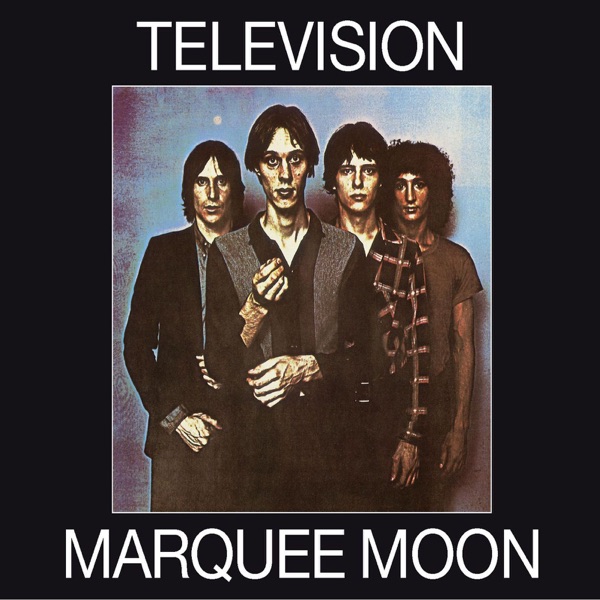
Marquee Moon, Television, 1977
Marquee Moon is a guitar record that rarely behaves like a guitar-hero record. Television's 1977 debut stretches songs until the interlocking parts between Tom Verlaine and Richard Lloyd become architecture, yet the performances stay wiry, dry, and alert. That makes it a fantastic vinyl listen for people who care about placement and attack. The long title track is the obvious centerpiece, but it is not a jam in the lazy sense; it climbs by design, tightening and releasing tension without needing blues-rock bulk. Early Elektra copies have appeal, and the stark cover suits the music's lack of excess. More than many punk-adjacent records, this one benefits from a system that can separate guitars cleanly without sanding off treble. Its importance is not just that it influenced post-punk and indie bands later. It proves a 1970s LP could reject bloat while still giving listeners room to get lost inside a single performance.[16]
-

Exodus, Bob Marley and the Wailers, 1977
Exodus carries the confidence of a band speaking to the world while still making music built for bodies in a room. Bob Marley recorded much of it in London after surviving a 1976 assassination attempt in Jamaica, and that exile context gives the album's title more weight than a simple travel metaphor. Vinyl highlights the split personality beautifully. Side one is heavier and more prophetic, with political and spiritual pressure in the grooves; side two opens toward love songs and communal uplift without losing authority. Collectors should inspect Island pressings for groove wear, because reggae bass lines can suffer badly on records played with poor tracking. The jacket's gold-and-earth palette, with its biblical and Rastafarian visual codes, also makes the LP feel ceremonial before the music starts. Exodus belongs in a 1970s shelf because it shows how global the album format had become. It is not rock borrowing reggae, it is reggae defining the decade on its own terms.[17]
-

Parallel Lines, Blondie, 1978
Parallel Lines is the 1978 moment when Blondie turned downtown attitude into immaculate pop without sanding off all the edges. Producer Mike Chapman pushed the band toward discipline, and the result is a record where punk snap, girl-group melodicism, disco pulse, and new-wave gloss all fit inside one bright package. On vinyl, the sequencing is a blast because the album keeps changing costume while staying concise. 'Heart of Glass' may dominate memory, but 'One Way or Another,' 'Picture This,' and 'Sunday Girl' prove how much craft surrounds the obvious hit. The sleeve, with Debbie Harry and the band framed against black-and-white stripes, is one of the decade's cleanest visual brand statements. For collectors, this is a title where original Chrysalis copies are common enough that you can be picky. Pass on noisy surfaces. The record's pleasure comes from crisp transitions, tight drums, and Harry's ability to sound amused, icy, and completely in command at the same time.[18]
-

London Calling, The Clash, 1979
London Calling arrived at the end of 1979 sounding like a band kicking open every door punk had supposedly closed. The Clash used the double-LP format not for indulgence, but for range: rockabilly, reggae, ska, R&B, hard rock, pop hooks, street reportage, and apocalyptic humor all jostle for room. The cover image, Paul Simonon smashing his bass, deliberately echoes Elvis Presley's debut design while announcing a very different kind of urgency. That sleeve alone makes it a classic vinyl artifact. Musically, the format matters because the album's sprawl is the argument. A single LP would make it tidier and less true. Early UK CBS copies are desirable, but any copy worth owning needs clean dynamics and intact packaging, since double albums often suffer from mismatched disc condition. London Calling closes the decade by treating the record collection itself as source material. It absorbs styles, reorders them, and still sounds like a city under weather.[19]
What to buy first
If you are starting from zero, build a small shelf with contrast. Buy What's Going On for soul as civic testimony, Blue for private songwriting, The Dark Side of the Moon for studio architecture, Rumours for pop craft under pressure, and London Calling for late-decade sprawl. Add Trans-Europe Express if electronic music matters to you, or Exodus if you want the decade's global reach represented immediately.
For originals, pay attention to inserts, inner sleeves, booklets, and bonus discs. Songs in the Key of Life is the obvious example, because incomplete copies lose part of the intended package. For reissues, look for pressing notes from listeners, not just hype stickers. Quiet vinyl, centered pressings, and respectful mastering are the boring details that make these records become companions instead of display pieces.
FAQ
What is the best 1970s vinyl album to buy first?
Start with What's Going On, Blue, The Dark Side of the Moon, or Rumours. They are easy to find as reissues, they show different sides of the decade, and they reward full-album listening rather than quick sampling.
Are original 1970s pressings better than new reissues?
Sometimes, but not automatically. Many originals were played heavily on basic changers or stored poorly. A quiet, well-mastered reissue can beat a noisy original, especially for detailed albums like Blue, Innervisions, and The Dark Side of the Moon.
How many albums should a beginner 1970s vinyl collection include?
A focused starter shelf of five to eight records is enough. Choose one soul album, one singer-songwriter record, one studio-rock classic, one punk or new-wave record, and one wild card from reggae, electronic music, or art rock.
What condition matters most when buying these albums used?
Groove condition matters more than a shiny jacket. Look for clean surfaces, minimal spindle marks, no feelable scratches, and seller notes about playback. For double albums, inspect every side separately.
Sources
- RIAA 2024 year-end report on LP and EP shipments
- Luminate 2024 year-end music report coverage
- Library of Congress National Recording Registry listing
- List of best-selling albums
- What's Going On Marvin Gaye album on Wikipedia
- Blue Joni Mitchell album on Wikipedia
- The Rise and Fall of Ziggy Stardust and the Spiders from Mars on Wikipedia
- Innervisions Stevie Wonder on Wikipedia
- The Dark Side of the Moon on Wikipedia
- Horses Patti Smith album on Wikipedia
- Another Green World Brian Eno on Wikipedia
- Born to Run album on Wikipedia
- Songs in the Key of Life on Wikipedia
- Trans-Europe Express album on Wikipedia
- Rumours Fleetwood Mac on Wikipedia
- Marquee Moon album on Wikipedia
- Exodus Bob Marley and the Wailers on Wikipedia
- Parallel Lines Blondie on Wikipedia
- London Calling album on Wikipedia
A spreadsheet tracks what you own. What's Spinning identifies what's playing.
On-device vinyl ID logs your listening history automatically. 7-day free trial.
Looking for Shazam for vinyl?
What's Spinning identifies what's playing on your turntable on-device, logs history, and AirPlays now-playing to your TV.
Comparing vinyl ID apps?
Analog requires Discogs and is iPhone-first (iPad coming). What's Spinning works without Discogs on iPhone and iPad with AirPlay.
Try What's Spinning Free
Turn your iPad into a live now-playing display. Track every record you spin.
START FREE TRIALThen $4.99/mo or $39.99/yr · Cancel anytime