Best Albums of 1977 on Vinyl: 18 Essential Records for Collectors
If you are searching for the best albums 1977 vinyl collectors still pull from the shelf, you have landed in one of the strangest and richest years in record-store history. Punk broke into public view, disco became a mass-market language, reggae moved further into the global album canon, art rock got colder and more electronic, and the studio perfectionists were still spending serious money chasing microscopic detail.
That mix matters because vinyl collecting is not just a ranking exercise. A 1977 collection can mean a clean copy of Rumours that everyone in the room knows by heart, a German-language Kraftwerk pressing, a U.K. Clash configuration, a quiet copy of The Belle Album, or a copy of Aja you use to check whether your cartridge alignment is telling the truth. If you track your listening with What's Spinning, this is the kind of year where the data gets interesting: the canonical record and the record you actually play every month are not always the same.
The timing is good for collectors. The RIAA's 2025 recorded-music reporting showed vinyl continuing to lead physical formats, with 46.8 million units sold in the U.S. and more than $1 billion in revenue. Luminate's 2025 year-end report also tracked vinyl sales growth, reporting U.S. vinyl sales up 8.6% to 47.9 million. More demand means better reissue programs, but it also means clean originals of beloved titles are picked over quickly.
Research for this guide draws on album pages from Wikipedia, the Library of Congress National Recording Registry, The Village Voice's 1977 Pazz & Jop critics poll, RIAA and Luminate market reporting, and release-history references linked throughout. Cover images are sourced from the albums' Wikipedia pages.
The best albums of 1977 for vinyl collectors
-
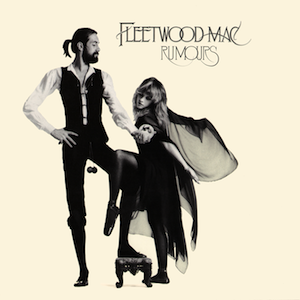
Rumours, Fleetwood Mac, 1977
Fleetwood Mac turned interpersonal wreckage into one of the most polished rock LPs ever pressed. Rumours was made while the band's two couples were splitting apart, yet the record is arranged with almost unbelievable discipline: three songwriters, three lead voices, and a rhythm section that keeps every emotional confession moving. The Library of Congress notes that the album grew out of roughly a year of work that began at the Record Plant in Sausalito, and the finished LP later entered the National Recording Registry. For collectors, the vinyl appeal is not only the hits. Side one moves from the bright sting of "Second Hand News" to the delicacy of "Songbird," then side two places "The Chain" where its bass break feels like the whole band snapping back into one body. Early Warner Bros. copies are plentiful because the album sold massively, but that also means many were played to death on 1970s changers. Look for clean surfaces, quiet intros, and a jacket that has survived decades of coffee tables and dorm rooms. Rumours won the 1978 Grammy for Album of the Year and has sold more than 40 million copies worldwide, but it still works best as a turntable record: human mess, engineered until it gleams. Source.
-
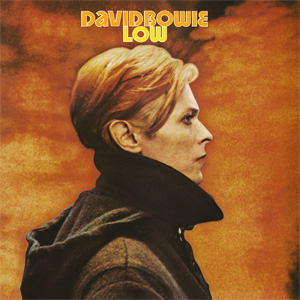
Low, David Bowie, 1977
The first surprise on Low is how little it cares about behaving like a conventional David Bowie album. After the excess and exhaustion of Los Angeles, Bowie recorded in France and West Berlin with Tony Visconti and Brian Eno nearby, producing a record split between clipped art-pop fragments and mostly instrumental atmospheres. That side break is the collector's hook. Side one is all nervous motion, gated drums, guitar sparks, and songs that vanish before they can become radio comforts. Side two opens into colder landscapes, with synthesizers and treated sound carrying the narrative more than lyrics. On vinyl, the division is physical; you flip the record and enter another city. Visconti's drum treatment gives the first side a punch that can sound startling on a strong pressing, while the quieter second side punishes noisy vinyl. Original RCA copies have cachet, but later reissues can be very satisfying if they preserve the album's dry impact and empty spaces. Low belongs in a 1977 collection because it captures rock music learning how to be modern without asking permission from rock tradition. Source.
-

Aja, Steely Dan, 1977
Steely Dan made perfection sound expensive, then made the expense feel sinister. Aja is the studio-craft entry in any serious 1977 vinyl stack: jazz harmony, session-player precision, Walter Becker and Donald Fagen's acid wit, and a soundstage clean enough to expose weak cartridges. The album credits read like a West Coast session summit, with players such as Steve Gadd, Wayne Shorter, Larry Carlton, Chuck Rainey, and many others moving through the record's exacting arrangements. Gadd's drum work on the title track is a reason some collectors use Aja as a setup test, but the album is not merely audiophile furniture. The songs are full of losers, operators, and glamorous surfaces that look better from across the room. Vinyl copies vary widely. Original ABC pressings can have beautiful balance, but they also attract high prices in clean condition because so many listeners know the record's reputation. If your copy sounds clinical, listen harder to the bass and cymbal decay; if it sounds smeared, the system or pressing is probably hiding the joke. This is 1977's glossiest record about spiritual rot. Source.
-
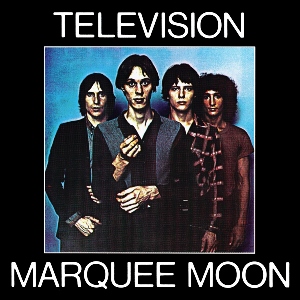
Marquee Moon, Television, 1977
Punk usually gets summarized as speed and blunt force, but Television's debut argues for tension, negative space, and guitars that think before they strike. Marquee Moon came out of the CBGB scene, yet it does not sound like three chords thrown at a wall. Tom Verlaine and Richard Lloyd braid guitar lines with unusual patience, Fred Smith and Billy Ficca keep the pulse lean, and the title track stretches past ten minutes without turning into jam-band fog. That makes the LP format essential. The long title cut closes side one like a city street opening into night, while side two proves the band could be sharp, melodic, and strange in shorter forms. The album placed high in the 1977 Pazz & Jop critics poll, which helps explain why it has become canonical even though it was never a blockbuster. Original Elektra pressings are desirable, but a clean reissue is often the saner way to hear the interlocking guitars without surface hash. Marquee Moon is the 1977 record to buy when you want punk's setting but not its expected vocabulary. Source.
-

Exodus, Bob Marley and the Wailers, 1977
A violent historical moment sits behind the calm authority of Exodus. Bob Marley left Jamaica after the 1976 assassination attempt and recorded much of the album in London, turning displacement into a record that balances spiritual resolve with some of the most approachable songs in the Wailers catalog. Side one is heavier, more political, and more incantatory; side two contains "Jamming," "Waiting in Vain," "Three Little Birds," and "One Love/People Get Ready," a run so generous it can obscure how carefully the album is built. On vinyl, the bass is the argument. A thin pressing or tired stylus makes the record feel like a greatest-hits preview, but a good copy lets Family Man Barrett's lines carry the room. Collectors should check island labels, country of origin, and jacket wear, since Marley records often worked hard at parties before becoming wall-display classics. Exodus was later celebrated by major critics and remains one of the most widely loved reggae LPs, but the record's deeper value is in the sequence: struggle, movement, release, and communal warmth across two sides. Source.
-
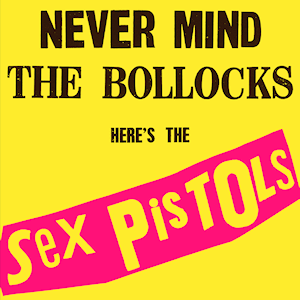
Never Mind the Bollocks, Here's the Sex Pistols, Sex Pistols, 1977
The sleeve alone still looks like a warning label slapped over polite British culture. Never Mind the Bollocks arrived with legal trouble, banned words, tabloid panic, and a band already becoming myth before it had much time to be a functioning band. The production is more powerful than the cartoon version of punk allows: Chris Thomas gives the guitars a dense, almost metallic wall, Paul Cook and Steve Jones drive the record with blunt reliability, and Johnny Rotten's vocal phrasing turns contempt into rhythm. For vinyl collectors, pressing history matters because the album exists in multiple U.K. track configurations, label variations, and country-specific packages. Some buyers chase the earliest Virgin copies; others simply want a loud, flat, clean pressing that can deliver the midrange shove. The record's value is not delicacy. It is the way the LP compresses a cultural explosion into one object that still feels rude on a shelf. In a 1977 list, this is the necessary collision point: rock as provocation, product, scandal, and excellent noise. Source.
-

Animals, Pink Floyd, 1977
Pink Floyd followed stadium-scale success with an album that sounds colder, angrier, and more concrete than Wish You Were Here. Animals takes its loose inspiration from Orwell, sorts people into dogs, pigs, and sheep, then stretches three long pieces across the LP with very little comfort offered. The cover is half the collector story: the inflatable pig over Battersea Power Station became one of the band's defining images, and original jackets tend to show wear because the dark industrial photograph is not forgiving. Musically, this is a guitar record hiding inside a concept record. David Gilmour's parts on "Dogs" cut through the bleakness, Roger Waters's lyrics bite harder than usual, and the side lengths make the album feel severe in a way streaming can soften. The 2018 remix later gave collectors another version to debate, but older pressings still have a particular murk and weight that suit the material. Buy Animals when you want the Floyd catalog's most cynical major statement, not when you want cosmic drift. Source.
-
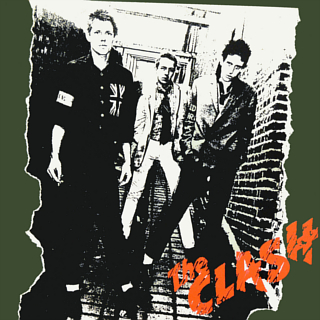
The Clash, The Clash, 1977
The Clash's debut did not need polish to feel ambitious. Released in the U.K. in 1977, it moves faster than the band could probably have explained itself at the time: unemployment, police pressure, boredom, reggae influence, American cultural noise, and London street energy all crash into songs that sound urgent rather than tidy. Vinyl buyers should know that the U.K. and U.S. versions differ, with the American edition arriving later and swapping in several singles. That makes format choice part of the argument. The U.K. LP is the pure 1977 document, rawer and more local; the U.S. version is a broader introduction with undeniable tracks. The cover photograph by Kate Simon gives the group a stark identity before the needle even drops. Sonically, do not expect audiophile depth. Expect attack, clipped guitars, and a rhythm section learning how to make punk swing toward reggae without losing forward pressure. It is the debut that proves punk could have politics, humor, style, and record-collector complications before anyone had time to file the genre safely. Source.
-

My Aim Is True, Elvis Costello, 1977
Elvis Costello's first album is a debut built on nerves, not budget. Recorded before the Attractions became his regular band, My Aim Is True uses Clover as the backing group and puts Costello's voice, wordplay, and tightly wound melodies in front of arrangements that still carry pub-rock roots. That tension is why the LP has aged so well. It is not punk in the simplest sense, but the songs have the clipped impatience of 1977, especially when Costello sounds like he is swallowing entire arguments to fit them inside three minutes. The jacket image, Costello with pigeon-toed stance and oversized glasses, helped create a visual persona instantly recognizable from across a record store. Collectors chase Stiff and early Columbia variations, but the real priority is a copy that keeps the vocals centered and the guitars crisp. "Alison" may be the song everyone knows, yet the album's force comes from the accumulation of short scenes: resentment, desire, suspicion, and jokes with teeth. It is one of 1977's clearest examples of songwriting sharpened by a cultural reset. Source.
-

Heroes, David Bowie, 1977
Bowie released two essential studio albums in 1977, and Heroes is the one that sounds most like Berlin becoming architecture. Where Low is fractured and private, Heroes feels larger, steelier, and more dramatic. Robert Fripp's guitar arrives like a siren cutting through fog, Tony Visconti's production keeps the drums and keyboards imposing, and the title track uses distance as a recording idea as much as a lyric. The album's second side again moves into instrumental territory, but it feels less like withdrawal than a walk through divided streets and industrial weather. Vinyl makes the contrast between the first side's songs and the later atmospheres explicit. You have to turn the record over, which gives the instrumental pieces a kind of ritual entry. The Masayoshi Sukita cover photograph, drawn from the same visual language as Bowie's Berlin-era persona, is one of the period's strongest sleeves. Collectors who already own Low should not treat Heroes as a sequel to be acquired later; it is the companion that explains the scale of the experiment. Source.
-

Saturday Night Fever, Various Artists, 1977
A disco soundtrack became one of the defining commercial objects of the decade. Saturday Night Fever is a double LP built around the Bee Gees' astonishing run of songs, but the record also gathers Yvonne Elliman, Tavares, Kool & the Gang, KC and the Sunshine Band, and orchestral material that ties it to the film's world. Its collector interest is partly cultural scale: the soundtrack sat at the center of disco's move from clubs into suburban living rooms, movie theaters, radio playlists, and department-store record bins. On vinyl, the double album format matters because it turns disco into a home ritual, four sides of groove, ballad, and cinematic punctuation. There are countless copies in the wild, which is both blessing and problem. You can find it cheaply, but many copies suffered from heavy party rotation. Check for groove wear on the Bee Gees tracks, seam splits, and missing inners. This is not a token pop inclusion. It is the 1977 LP that shows how dance music, film marketing, and vinyl manufacturing could converge into a phenomenon. Source.
-

The Stranger, Billy Joel, 1977
Billy Joel found the producer who understood his theatrical instincts and tightened them for radio without sanding off the New York edges. Phil Ramone's work on The Stranger gives the album a clean, durable sound, while Joel moves through character sketches, barroom memory, romance, and Catholic guilt with the confidence of someone finally being heard at the right scale. The hit list is long: "Just the Way You Are," "Movin' Out," "Only the Good Die Young," and "She's Always a Woman" made the album unavoidable, but vinyl owners should pay attention to the sequencing around the title track and "Scenes from an Italian Restaurant." That longer piece benefits from side-one placement because it feels like a miniature stage show inside the LP. Early Columbia copies are common, and many sound excellent if not worn. Because the album sold so broadly, condition is more important than rarity. The cover, Joel reclining with boxing gloves and a mask, is also more psychologically pointed than its soft-rock reputation suggests. The Stranger is the mainstream singer-songwriter pick that earns its shelf space through construction, not nostalgia. Source.
-

Trans-Europe Express, Kraftwerk, 1977
Kraftwerk made an album about motion that barely seems to sweat. Trans-Europe Express turns train travel, European identity, machine rhythm, and elegant repetition into music that would later echo through synth-pop, electro, hip-hop, techno, and design culture. The collector decision often begins with language. German and English versions each have their own feel, and the sleeve presentation can change the record's aura before playback starts. On vinyl, the title sequence has a physical momentum that digital shuffling weakens; the pulse locks in, small details enter and leave, and the record becomes less like a band performance than a system moving through stations. Pressing quality matters because surface noise can distract from the precision, but the music is not sterile. It has humor, glamour, and a strange melancholy under the clean lines. In the context of 1977, Trans-Europe Express is a reminder that the year's revolution was not only guitars and safety pins. Some of the future arrived dressed like a timetable. Source.
-

Rocket to Russia, Ramones, 1977
The Ramones' third album is where the cartoon becomes classic pop without losing its buzz-saw grin. Rocket to Russia includes "Sheena Is a Punk Rocker," "Rockaway Beach," and "Teenage Lobotomy," songs that make the band sound both dumber and smarter than almost anyone else in 1977. Tommy Ramone's final studio album as drummer has a special snap, and the production gives the guitars enough brightness for the hooks to register. Vinyl is the right delivery system because the songs arrive in a rush, short enough to feel disposable until the choruses refuse to leave. The cover art and inner cartoon world also matter; Ramones records were never only audio objects, they were graphic declarations of speed, attitude, and uniformity. Original Sire copies can be collectible, but clean playback is the first priority because groove damage turns the already compressed attack into fuzz soup. If Never Mind the Bollocks is confrontation, Rocket to Russia is punk as beach party, horror comic, and bubblegum machine wired to explode. Source.
-
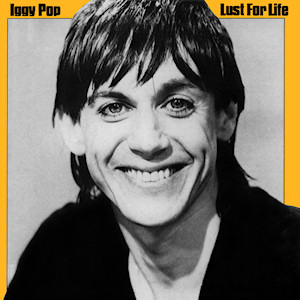
Lust for Life, Iggy Pop, 1977
The grin on the cover is almost unsettling because the music knows exactly how fragile the comeback is. Lust for Life, Iggy Pop's second 1977 album, was made during his Berlin period with David Bowie involved, but it is less shadowy than The Idiot and more direct in its attack. The title track's drum pattern has become part of rock's shared vocabulary, while "The Passenger" turns drift into anthem. What makes the LP interesting for collectors is its balance between cleaned-up presentation and feral identity. Iggy sounds focused, but not domesticated; the band is tight, but the songs still carry street-level danger. RCA pressings can have real punch, and the album benefits from volume because the rhythm section wants to move air. The cover's bright, almost wholesome portrait sets up a useful contradiction with the subject matter inside. In a 1977 collection, Lust for Life sits between punk's immediate shock and Bowie's art-rock reconstruction, proof that survival can sound exuberant without becoming safe. Source.
-

Talking Heads: 77, Talking Heads, 1977
Few debuts sound this awkward on purpose and this confident by accident. Talking Heads: 77 presents David Byrne, Tina Weymouth, Chris Frantz, and Jerry Harrison before the later Eno-assisted expansions, when the band's nervous minimalism still had room to look around. The album's design is plain and modern, almost anti-rock, which fits songs that treat ordinary social behavior as something slightly alien. "Psycho Killer" is the obvious anchor, but the deeper vinyl pleasure is hearing how the band uses space. Weymouth's bass lines carry shape, Frantz keeps the drums dry, Harrison adds color without clutter, and Byrne sings like he has discovered anxiety as a lead instrument. Original Sire copies are not impossibly rare, though clean jackets matter because the simple cover shows wear easily. The record is also a useful counterweight to the year's louder punk documents. It shares the scene's stripped-down economy, but the destination is art school funk, not pure attack. This is where one of the most important American bands of the next decade starts drawing its map. Source.
-

New Boots and Panties!!, Ian Dury, 1977
Ian Dury's breakthrough album sounds like London slang, music-hall timing, pub-rock muscle, funk instincts, and punk-era permission all shoved into the same overstuffed jacket. New Boots and Panties!! is funny, crude, tender, and sharply observed, with the Blockheads providing musicianship far more supple than the period's anti-virtuoso slogans would suggest. The original U.K. Stiff presentation is part of the fun, from the shopfront cover with Dury and his son Baxter to the label's independent attitude. Collectors should pay attention to early pressings and inserts, but the key is whether the record keeps its rhythmic bounce. A dull copy makes Dury seem like a novelty ranter; a lively one reveals how much groove sits under the wordplay. NME placed it at the top end of its 1977 conversation, and that makes sense because the album catches a very British crossroads: punk energy, older comic traditions, class observation, and danceable band chemistry. It is not the neatest canonical choice, which is exactly why a 1977 shelf needs it. Source.
-
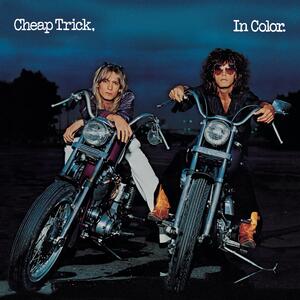
In Color, Cheap Trick, 1977
Cheap Trick's second album is brighter and more controlled than the debut, and that polish has caused arguments ever since. In Color contains "I Want You to Want Me," "Southern Girls," and "Downed," songs that show how the band could smuggle strange edges into power-pop shapes. The cover gag is unforgettable: Robin Zander and Tom Petersson looking glossy on motorcycles, Rick Nielsen and Bun E. Carlos appearing on mopeds on the back. That visual split captures the band's whole appeal, pin-up charm colliding with record-collector weirdness. Some fans prefer the rawer live versions that would appear later, but the studio LP has its own case. It shows Cheap Trick discovering how commercial surfaces could intensify rather than erase eccentric songwriting. Original Epic copies are usually affordable compared with bigger 1977 trophies, making In Color a smart buy for collectors who want hooks, guitars, and personality without entering luxury-auction territory. Find one with a clean high end; the choruses should pop, not scrape. Source.
-
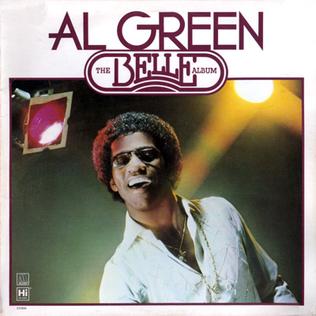
The Belle Album, Al Green, 1977
Al Green's The Belle Album does not chase the obvious pleasures of his early-70s Hi Records peak. It is quieter, more self-contained, and deeply tied to the spiritual transition that was reshaping his life. Green produced the album himself, and the sound is intimate enough that the grooves can feel like private testimony rather than a soul star working the room. The title track wrestles with earthly love and religious calling in language that is plain, conflicted, and devastating. From a vinyl perspective, this is the album on the list most dependent on condition. Surface noise intrudes because so much of the record's power sits in small vocal bends, guitar details, and the space around the rhythm section. It may not command the instant recognition of Call Me or I'm Still in Love with You, but collectors who already own the obvious Al Green titles should come here for the turning point. In 1977, while punk shouted and disco shone, Green made a record about conscience, desire, and surrender. Source.
What to buy first
If you are starting a 1977 shelf from scratch, resist the urge to buy only punk because the year is bigger than the haircut. Start with Rumours for shared-language songwriting, Aja for studio precision, Low or Heroes for Bowie's Berlin-era reinvention, Marquee Moon for guitar architecture, and Exodus for reggae's most inviting album-scale statement. Add Never Mind the Bollocks or The Clash when you want punk's social charge, then bring in Trans-Europe Express to hear the electronic future arriving on rails.
For buying copies, grade the vinyl before you romanticize the date on the label. Many 1977 LPs were played on heavy-tracking changers, stacked at parties, or carried through college moves in paper sleeves. Check quiet passages, spindle marks, inner sleeves, jacket seams, and country-specific track lists. A clean reissue is often better than a collectible original that sounds like sandpaper wearing a leather jacket.
FAQ
What is the best 1977 album to buy first on vinyl?
Start with Rumours if you want the most universally playable 1977 LP, Aja if you want a system-testing studio record, Marquee Moon if you want guitar interplay, Exodus if you want reggae warmth, or Low if you want the year's most influential art-rock pivot.
Are original 1977 pressings worth paying extra for?
Sometimes. Originals can carry historical value, label variations, inserts, and mastering choices that collectors love, but condition matters more than age. A noisy original of Aja or Low may be less enjoyable than a clean modern reissue.
Why was 1977 such an important year for albums?
Several scenes peaked or broke open at once: punk, disco, reggae, art rock, power pop, singer-songwriter pop, and studio jazz-rock. The result is a year where mainstream blockbusters and underground debuts both changed how LP collections look.
How many 1977 albums should a new vinyl collector own?
Five carefully chosen titles can cover the year well: one blockbuster, one punk record, one art-rock record, one dance or reggae record, and one audiophile studio record. Build outward after you know which sounds you actually play often.
A spreadsheet tracks what you own. What's Spinning identifies what's playing.
On-device vinyl ID logs your listening history automatically. 7-day free trial.
Looking for Shazam for vinyl?
What's Spinning identifies what's playing on your turntable on-device, logs history, and AirPlays now-playing to your TV.
Comparing vinyl ID apps?
Analog requires Discogs and is iPhone-first (iPad coming). What's Spinning works without Discogs on iPhone and iPad with AirPlay.
Try What's Spinning Free
Turn your iPad into a live now-playing display. Track every record you spin.
START FREE TRIALThen $4.99/mo or $39.99/yr · Cancel anytime