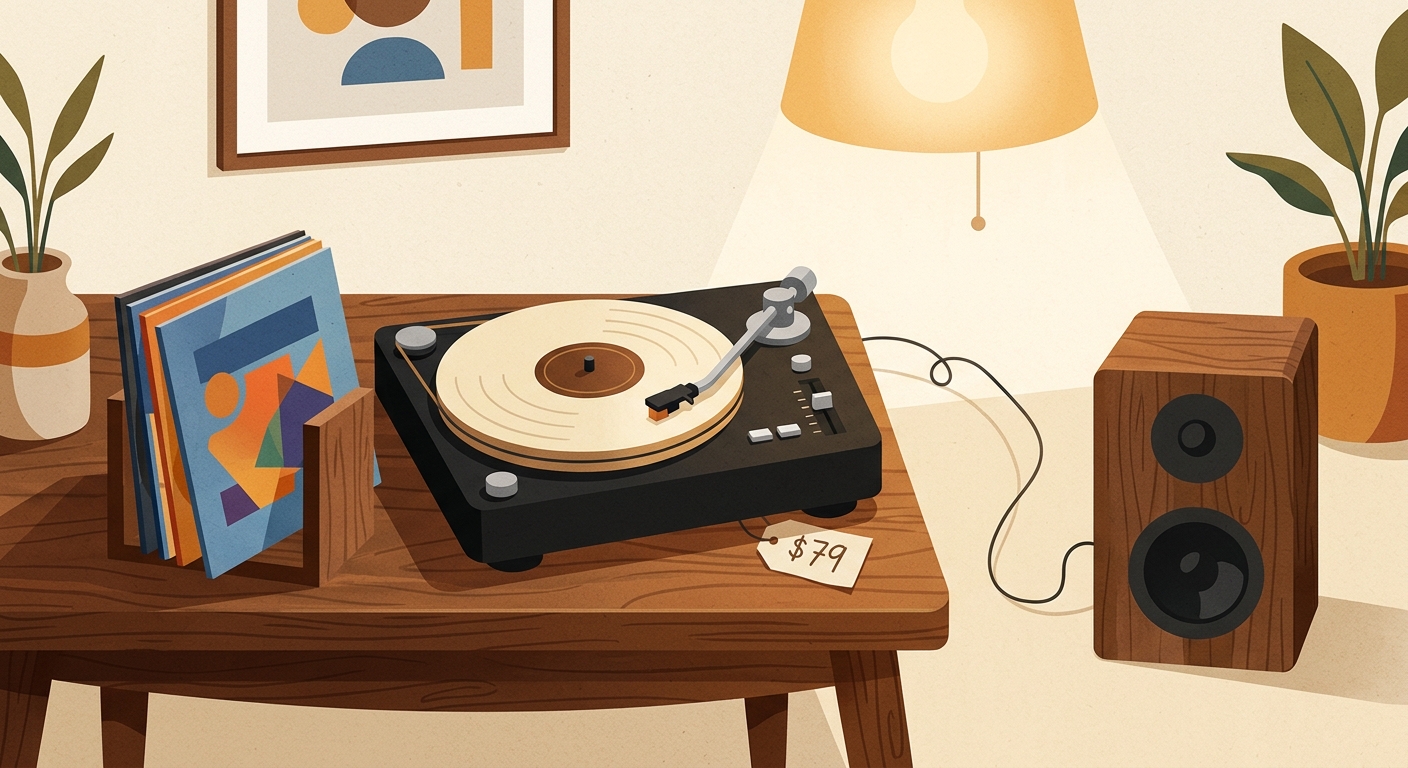
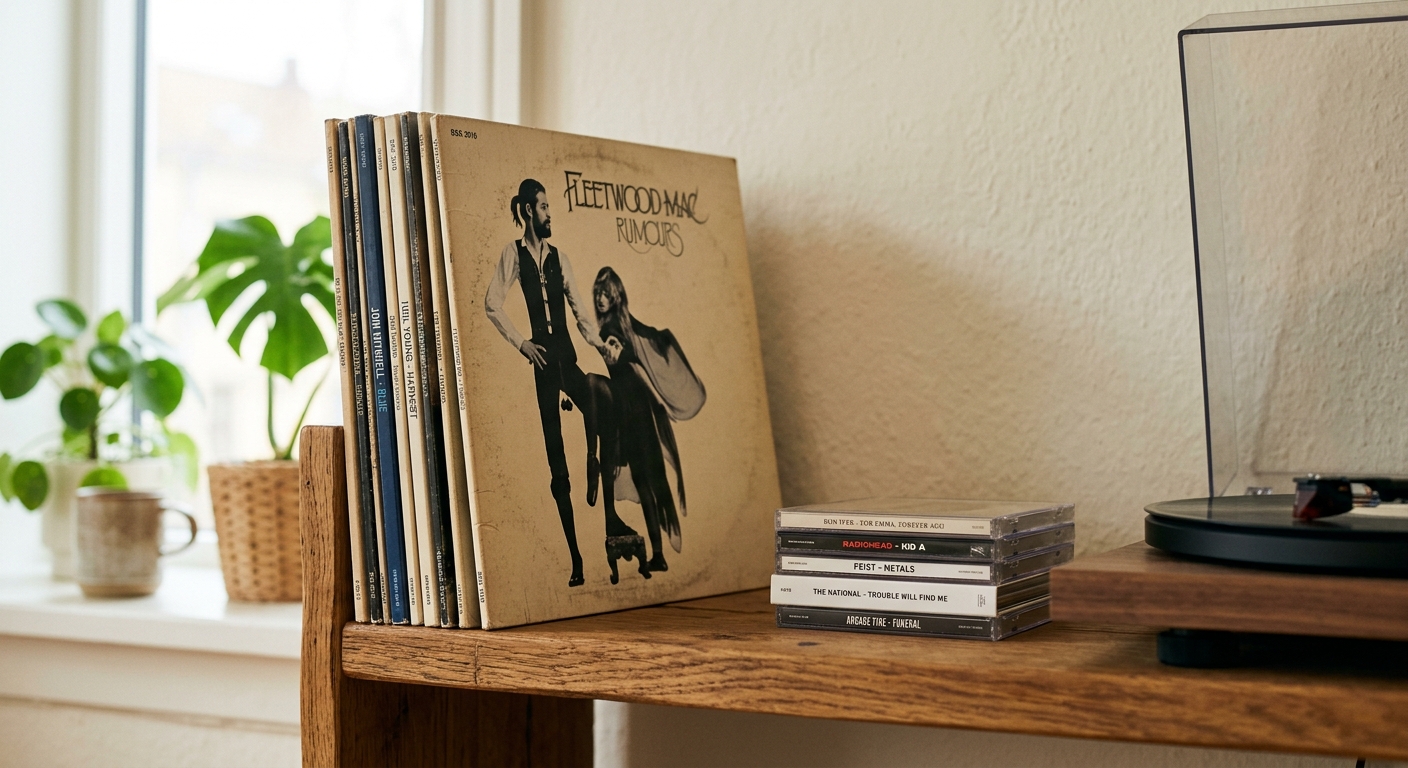
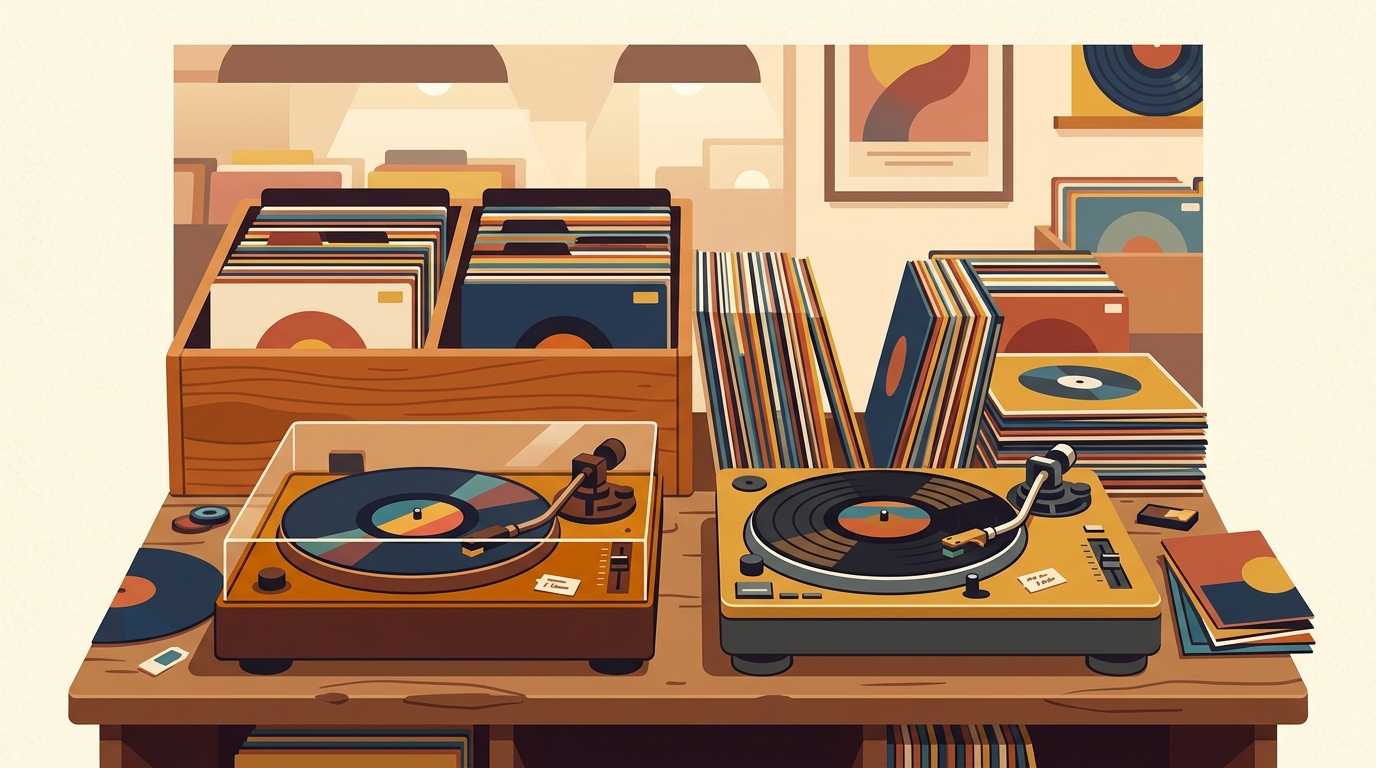
Best Beginner Turntables Under $100 for New Vinyl Collectors
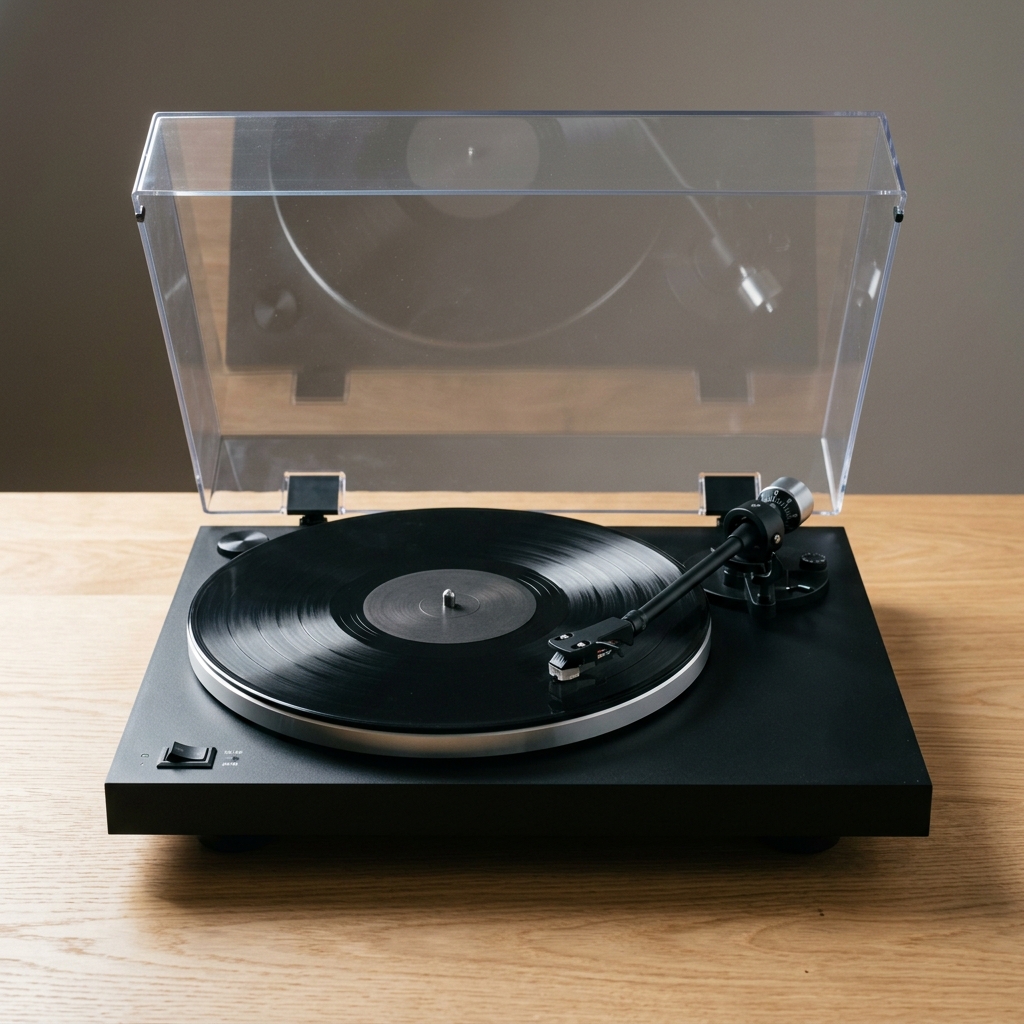
Picking your first turntable under $100 is genuinely easier in 2026 than it was five years ago. The bar for entry-level decks has climbed: belt-drive designs with adjustable counterweights, built-in phono preamps that work with any speaker, and Bluetooth output on models that previously would have needed a separate adapter. But the under-$100 tier still has sharp edges. Skip the wrong deck and you risk a wobbly tonearm, a cartridge that chews records after a season, and a soundstage so flat you wonder why vinyl fans bother.

This guide compares four beginner turntables under $100 that have actually shipped in volume and survived a year of regular play. Each handles the basics a new collector needs: a real belt-drive motor, a counterweight or tracking-force adjustment, and a removable headshell so you can upgrade the cartridge later. None of them are audiophile dreams. All of them are honest first steps into vinyl.
Audio-Technica AT-LP60X: the safe default
The AT-LP60X is the deck most new collectors end up with, and most of them are happy. It is fully automatic, which sounds like a small thing until you have actually tried to cue a record by hand for the first time. The integrated cartridge is the AT-3600L, a moving-magnet design that tracks cleanly at 3.5 grams and treats your records gently. The built-in phono preamp is switchable, so you can run it directly into any powered speaker or into a real receiver later when you upgrade.
What you give up: no adjustable counterweight, no anti-skate, and the tonearm is straight rather than S-shaped. None of that matters for someone learning what a record even is. Audio-Technica has shipped millions of these and the resale value holds. The "X" revision (released 2019, still current in 2026) added a removable RCA cable and improved the power supply, both small quality-of-life wins. Street price sits around $99 with a cartridge pre-installed.
ION Audio Max LP: the all-in-one option
The ION Max LP is a different pitch entirely. It is a three-speed (33, 45, 78) deck with built-in speakers, Bluetooth output to send audio to a real speaker, and a wooden plinth that looks more expensive than it is. For someone who wants to play a record without buying any other gear, the Max LP is the only sub-$100 deck that does it out of the box.
The trade-off is sound quality. The integrated speakers are tiny, the cartridge is a ceramic type that wears grooves faster than a moving-magnet design, and the tonearm has no adjustable counterweight. If your plan is "play a record tonight, upgrade in six months," the Max LP works fine as a stepping stone. If your plan is "this is my main deck for years," spend the extra $30 and get the AT-LP60X instead.
Crosley C6: the manual alternative
The Crosley C6 is the cheapest belt-drive turntable on this list with a real adjustable counterweight. That alone puts it in a different category from the AT-LP60X for anyone who plans to upgrade the cartridge later. The C6 ships with an Audio-Technica AT-95E cartridge installed (a $35 standalone cartridge, which is unusual at this price) and supports standard 1/2-inch mount headshells.
The downsides are build quality and reliability. Crosley's reputation is mixed — early models from the 2010s had motor issues, and even the current C6 has a plastic plinth that resonates more than wood. But the cartridge is the part that touches your records, and the AT-95E is a known quantity. If you want a manual deck at a budget price and you care about upgrade potential, the C6 is the only real option under $100. Street price typically lands around $99.
Sony PS-LX310B: the Bluetooth bridge
The Sony PS-LX310B is the newest deck on this list (released 2019) and the only one with aptX Bluetooth built in. If you want to send audio wirelessly to a Bluetooth speaker or headphones, the LX310B does it without an adapter. The deck is fully automatic, has a switchable phono preamp, and uses an MM cartridge (Sony's own, but compatible with standard replacements).
Sound quality is in the same neighborhood as the AT-LP60X — both are competent, neither is exciting. The Bluetooth implementation is the real differentiator. For apartment dwellers with Bluetooth speakers and no receiver shelf, this is the path of least resistance. Street price around $129 makes it the priciest deck here, but it is the only one under $150 with reliable Bluetooth output and a real audio-grade codec.
What to actually buy
If you want the lowest-friction first turntable: AT-LP60X. It is automatic, sounds fine, and will not break.
If you want to upgrade the cartridge later: Crosley C6. The AT-95E cartridge alone is worth the price, and a real counterweight means you can swap in any standard mount.
If you want Bluetooth out of the box: Sony PS-LX310B. No other sub-$150 deck does aptX well.
If you want speakers built in: ION Max LP. The only all-in-one option that actually works.
Setup tips that save you from heartache
Whatever deck you pick, four habits will save you from destroying records. First, always check the stylus for dust before you cue. Second, replace the cartridge after 500-1000 hours of play, not when it starts sounding bad. Third, keep the dust cover closed when the deck is not in use. Fourth, never touch the stylus tip with anything other than a dedicated stylus brush. New collectors who follow these four rules keep their records in good shape for years.
Frequently asked questions
Is a turntable under $100 actually worth it?
Yes, if your goal is to play records and learn what vinyl sounds like. The under-$100 tier is good enough for casual listening. If your goal is to hear the difference between a Mobile Fidelity pressing and a standard reissue, you need a deck with a real adjustable tonearm and a cartridge upgrade path — that starts around $300.
Do I need a separate phono preamp?
No. Every deck on this list has a built-in phono preamp that you can switch on or off. If you have a home stereo receiver from the last 15 years, it probably has a phono input — switch the deck's preamp off and use the receiver's instead.
What about those suitcase-style turntables under $50?
Skip them. The integrated speakers are too small to evaluate sound, the ceramic cartridges wear records faster than they need to, and the build quality does not last. If $50 is your absolute ceiling, find a used AT-LP60 or a vintage Technics SL-D2 instead.
Can I connect any of these to my computer?
Yes, with a $10 RCA-to-3.5mm cable. Switch the deck's phono preamp on, plug into your computer's line-in or microphone jack, and use Audacity (free) to record. Audio quality is fine for personal use.
How long will a beginner turntable last?
The AT-LP60X and Sony LX310B run reliably for 5-10 years of regular play. The Crosley C6 typically lasts 3-5 years before the motor or counterweight mechanism shows wear. The ION Max LP is built for 2-3 years of casual use.
A spreadsheet tracks what you own. What's Spinning identifies what's playing.
On-device vinyl ID logs your listening history automatically. 7-day free trial.
Looking for Shazam for vinyl?
What's Spinning identifies what's playing on your turntable on-device, logs history, and AirPlays now-playing to your TV.
Comparing vinyl ID apps?
Analog requires Discogs and is iPhone-first (iPad coming). What's Spinning works without Discogs on iPhone and iPad with AirPlay.
Try What's Spinning Free
Turn your iPad into a live now-playing display. Track every record you spin.
START FREE TRIALThen $4.99/mo or $39.99/yr · Cancel anytime
Get it on your iPhone
Open on iPhone