The Best Classical Albums on Vinyl

Classical vinyl asks for a slightly different buying instinct than rock, jazz, or soul. You are not only choosing the composition; you are choosing a conductor, orchestra, soloist, label, hall, engineer, pressing, and often a box full of booklets. That is why the best classical albums vinyl collectors should know are not always the most famous pieces. They are records where performance, sound, history, and format all line up.
This guide focuses on albums that make sense as records: landmark interpretations, beautifully documented boxes, modern classical titles that still reward side-by-side listening, and recordings with enough cultural gravity to justify shelf space. I used album pages and label histories from sources including Wikipedia, Deutsche Grammophon, Decca, Hyperion, Nonesuch, and ECM-style collecting references, then filtered the list through a vinyl-first question: would this be satisfying to own, handle, play, and revisit on a turntable?
A quick collector note before the list: classical bins can be absurdly underpriced, but quiet condition matters. A scuffed Beethoven symphony may survive better than a scratched Hildegard vocal record. When you bring records home, log what you actually play. What's Spinning can help you track your listening so your classical shelf becomes a living collection rather than a museum of impressive spines.
The best classical albums on vinyl
-

Bach: The Goldberg Variations, Glenn Gould, 1956
Start with the chair. You can hear it, or at least the folklore says you can, and that tiny bit of studio humanity is part of why Gould's debut still feels alive on vinyl. Columbia recorded the then 22-year-old pianist in 1955 and issued the album in 1956; Wikipedia notes that it was reported to have sold 40,000 copies by 1960, an extraordinary number for a Bach keyboard record. The performance is quick, dry, brilliantly articulated, and almost anti-romantic, which makes the LP format especially revealing. Surface noise is not your friend here, so condition matters more than label glamour. A clean mono copy has punch and presence, while later reissues can sound quieter and more polite. For collectors, this is both a landmark interpretation and a reminder that classical vinyl is not just about orchestral spectacle. Sometimes the collectible thrill is a piano, a room, a risky tempo, and a player with an unmistakable musical fingerprint. Source.
-

Karajan: Beethoven Symphonies, Herbert von Karajan, Berlin Philharmonic, 1963
A Beethoven cycle can be a bookshelf object as much as a listening choice, and Karajan's 1963 Deutsche Grammophon box is one of the defining examples. The recordings were made in 1961 and 1962 with the Berlin Philharmonic, then released as a complete symphonic set at the moment stereo LP culture was turning classical music into a home hi-fi showpiece. The famous yellow-label presentation helps, but the draw is the sound: controlled strings, burnished brass, and a sense that every climax has been planned from above. Some listeners find Karajan too polished, others hear the architecture of Beethoven made unusually legible. On vinyl, the appeal is partly ritual. You do not consume nine symphonies in one sitting; you take the box down, choose a spine, and let one work occupy the room. For a collector building a core classical shelf, this is the sort of set that explains why complete cycles became status objects in the LP era. Source.
-

Der Ring des Nibelungen, Georg Solti, Vienna Philharmonic, 1965
Few classical boxes feel more like an engineering project than Decca's Solti Ring. Recorded between 1958 and 1965, it was the first complete studio recording released of Wagner's four-opera cycle, and it became a benchmark for what stereo opera could do at home. Producer John Culshaw treated the studio not as a smaller opera house but as its own dramatic space, using effects, placement, and Decca's celebrated engineering to create a theatrical world inside the speakers. That matters on vinyl because the set asks for commitment. You are managing sides, librettos, and a mountain of records, but the payoff is scale: anvils, Rhine depths, gods, mortals, and brass that can make a room feel too small. Used copies vary wildly, so inspect booklets and inner sleeves before celebrating a bargain. A complete, clean box is not casual storage, it is a monument, and one of the rare classical purchases where the physical mass matches the ambition of the music. Source.
-

Carmen, Leonard Bernstein, Metropolitan Opera Orchestra, 1973
Bernstein's Carmen is not shy about theater. Recorded in 1972 and released in 1973, the Deutsche Grammophon set uses Marilyn Horne, James McCracken, Adriana Maliponte, Tom Krause, the Metropolitan Opera Orchestra, and Bernstein's instinct for letting drama breathe. What makes it useful for a vinyl collector is the way opera exposes system balance. If your cartridge leans bright, chorus and brass can harden; if your speakers image well, the scenes gain shape and heat. Carmen also belongs on this list because complete opera boxes reward the physical design of records: cast lists, librettos, session photographs, and side changes that create natural pauses between scenes. This is not background Bizet. It is a big, character-forward reading that can turn a Sunday afternoon into an event. If your classical shelf is mostly symphonies and piano records, one full opera box gives the collection a different kind of narrative weight. Source.
-
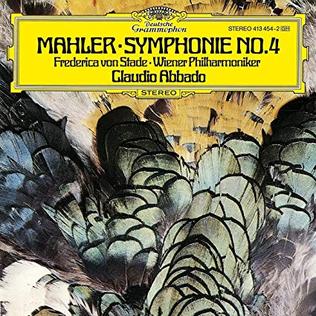
Mahler Symphony No. 4, Claudio Abbado, Frederica von Stade, Vienna Philharmonic, 1978
Mahler on vinyl often means large boxes and late-night volume management, but Abbado's Fourth is a more elegant entry point. The recording runs about 57 minutes, according to its Wikipedia entry, and pairs the Vienna Philharmonic with Frederica von Stade in the final movement. That compactness helps the LP experience: the symphony fits the format without feeling like a marathon, and the music's childlike heaven, sleigh bells, pastoral turns, and sudden shadows all benefit from a quiet pressing. Abbado avoids the heavy perfume that can make Mahler feel inflated. Instead, the performance has a chamber-like clarity, which lets the last movement arrive less as a grand finale than as a strange window opening. For collectors, this is a smart Mahler record because it works on ordinary evenings. You do not need to prepare for apocalypse. You need a clean copy, sensible volume, and enough attention to notice how much unease is hidden inside the charm. Source.
-

Mozart Mass K. 139, Claudio Abbado, Vienna Philharmonic forces, 1976
This Abbado Mozart LP is a collector's sleeper because it is not the obvious Requiem pick. The album presents Mozart's Waisenhaus-Messe, K. 139, in a 45-minute recording with Gundula Janowitz, Frederica von Stade, Wieslaw Ochman, Kurt Moll, the Chorus of the Vienna State Opera, and the Vienna Philharmonic. That personnel list is the hook: the performance has vocal luxury without becoming sluggish. On vinyl, sacred choral music can either bloom or blur, and this record gives you a useful test of inner detail. Can you follow the choir without losing the soloists? Do the strings support rather than smear? The cover also has that old major-label seriousness that looked terrific in a crate, even when the repertoire was less famous than the big symphonies nearby. If your classical buying has been driven by the same ten warhorses, this album is a good corrective. It proves that lesser-known Mozart can still give a collection depth, beauty, and a little scholarly satisfaction. Source.
-

A Midsummer Night's Dream, Seiji Ozawa, Boston Symphony Orchestra, 1994
Mendelssohn's fairy music is easy to underestimate until a good recording shows how precise it has to be. Ozawa's account with the Boston Symphony Orchestra gathers the overture and almost all of the incidental music into a 55-minute album, with Kathleen Battle and Frederica von Stade adding vocal sparkle. The recording is later than the golden LP decades, so vinyl buyers should pay attention to reissue details, but musically it earns a place because it brings color without bombast. The famous Wedding March is only one stop on the route. The real pleasure is the feather-light string writing, the woodwind mischief, and the way the orchestration seems to vanish before you can catch it working. This is also a good album for mixed company. Put on a heavy Bruckner side and the room may empty; put on Mendelssohn played with this much finesse and even casual listeners tend to stay. Source.
-

Switched-On Bach, Wendy Carlos, 1968
One reason Switched-On Bach still belongs in a classical vinyl guide is that it changed who felt invited into Bach. Wendy Carlos and producer Rachel Elkind built the album from Bach pieces realized on a Moog synthesizer, and its Wikipedia entry notes that it played a key role in bringing synthesizers to popular music. It also became a commercial phenomenon, winning three Grammy Awards and reaching listeners who might never have bought a harpsichord record. The collecting angle is unusually fun: early Columbia copies sit at the crossroads of classical bins, electronic music bins, and thrift-store oddities. Sonically, it is crisp, witty, and very exposed. A worn copy can sound scratchy fast, but a clean one has a laboratory brightness that suits the project. Purists once heard novelty; history has been kinder. On a turntable, the record feels like a moment when the future arrived wearing a powdered wig. Source.
-
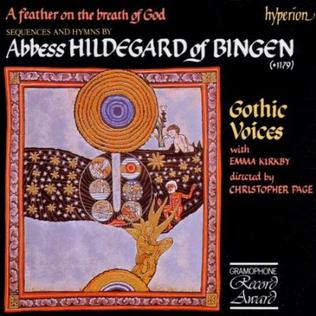
A Feather on the Breath of God, Gothic Voices with Emma Kirkby, 1982
A quiet room is the best accessory for this Hyperion album. A Feather on the Breath of God presents sacred vocal music by Hildegard of Bingen, recorded by Gothic Voices with soprano Emma Kirkby and released in 1982. Its importance is partly musical and partly historical: the record helped bring Hildegard's 12th-century music to modern listeners at a time when early music was becoming a serious collecting field, not just an academic corner. On vinyl, the challenge is silence. Sustained voices, sparse textures, and reverberant space make every tick obvious, so this is one to buy carefully rather than cheaply. The reward is intimacy that big orchestral spectaculars cannot offer. Instead of using the LP as a vehicle for scale, it uses the medium as a frame around breath, line, and resonance. If your collection needs something for late-night listening that is neither ambient nor background, this album sits in a beautiful middle ground. Source.
-

Black Angels, Kronos Quartet, 1990
Black Angels is the record to play for anyone who thinks string quartets are polite furniture. Kronos Quartet's 1990 album takes its title from George Crumb's Vietnam-era work, the piece that inspired David Harrington to found the ensemble in 1973. The album surrounds that charged center with music by Shostakovich, Istvan Marta, Thomas Tallis, and Charles Ives, making the LP feel like a haunted radio transmission across centuries. It is also a useful reminder that contemporary classical vinyl can be visceral. Bow pressure, shouted numbers, glassy harmonics, and sudden silences create a physical experience that rewards full attention. Nonesuch's presentation helped make Kronos feel modern without sanding off the danger. For collectors who mainly own symphonic standards, Black Angels opens another door: the classical record as concept album, political artifact, and sound-design object. It is not always comfortable, which is exactly why the shelf needs it. Source.
-

Symphony No. 3: Symphony of Sorrowful Songs, Henryk Gorecki, Dawn Upshaw, David Zinman, 1992
The unlikely bestseller story matters here because it is almost impossible to separate from the listening experience. Gorecki composed his Third Symphony in the 1970s, but the 1992 Nonesuch recording with Dawn Upshaw, the London Sinfonietta, and David Zinman turned it into a worldwide phenomenon. Wikipedia summarizes the work's subject matter as three movements built around lamenting texts, including a message written on a Gestapo prison wall. That context can make the album sound intimidating, yet the music itself moves with patient, devastating simplicity. Vinyl gives it room to breathe, especially if the pressing keeps the low strings steady and the soprano line free of glare. This is not a record for showing off quick hi-fi tricks. It is a long emotional arc, and the best listening happens when nobody in the room feels the need to explain it while it plays. Classical collections need at least one album that teaches restraint this persuasively. Source.
-

Mishima: A Life in Four Chapters, Philip Glass, Kronos Quartet, 1985
Film music often gets filed away from classical records, but Glass's Mishima score deserves to sit right in the main run. Written for Paul Schrader's 1985 film and performed in part by Kronos Quartet, it condenses Glass's motoric language into sharply etched scenes. The album works beautifully on vinyl because the pieces are concise, vivid, and varied enough to avoid the endurance-test problem that some minimalism presents to skeptical listeners. Strings bite, patterns lock, and the music carries dramatic urgency even without the film in front of you. The collecting appeal is also practical: soundtrack buyers and classical buyers both chase it, so condition and pressing information matter. If you already own Glassworks or Einstein on the Beach, Mishima adds a leaner, more cinematic angle. It is one of the clearest examples of late-20th-century classical language crossing into a broader record-collecting culture without losing its identity. Source.
-
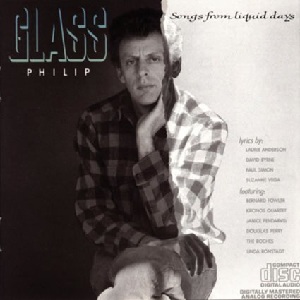
Songs from Liquid Days, Philip Glass, 1986
This is the pop-adjacent Glass record that still feels stranger than the guest list suggests. Songs from Liquid Days sets lyrics by Paul Simon, Suzanne Vega, David Byrne, and Laurie Anderson, with performers including Linda Ronstadt, the Roches, and Bernard Fowler. On paper it sounds like a crossover project designed by a record-company conference table; on the turntable it is more interesting than that. Glass's repeating figures keep their cool geometry, while the singers bring personality that can make the structures feel less austere. For vinyl collectors, the album has the appeal of a border object. It can live near contemporary classical, art pop, or experimental records, and it gives you an easy route into conversations about how classical composition interacted with 1980s studio culture. The sound is clean, bright, and period-specific in a way that suits the sleeve. Not every classical shelf needs crossover, but this one earns its slot by being genuinely odd rather than merely accessible. Source.
-

Recomposed by Max Richter: Vivaldi, The Four Seasons, Max Richter, Daniel Hope, Konzerthaus Kammerorchester Berlin, 2012
Vivaldi's Four Seasons is so familiar that it can turn into wallpaper, which is why Richter's intervention works. The 2012 Deutsche Grammophon project is not a light remix but a full recomposition that keeps recognizable fragments while changing the harmonic weather around them. Daniel Hope's violin gives the album a thread of old-world virtuosity, while Richter's looping instincts make the music feel at home beside minimalist and electronic records. On vinyl, it is a strong modern classical purchase because the concept is audible immediately. You can play it for someone who knows the original and watch them recognize, doubt, and then recalibrate. The pressing you choose matters, since the quiet pulses and string textures can flatten on noisy copies. It also pairs nicely with an original Four Seasons recording if you like comparing interpretive history across shelves. For a collector, this is less about replacing Vivaldi than hearing how durable his material remains under pressure. Source.
-

The Blue Notebooks, Max Richter, 2004
The Blue Notebooks has become a modern classical gateway record because it understands atmosphere without becoming vague. Released in 2004 on 130701, the album combines piano, strings, electronics, and readings by Tilda Swinton from Kafka's Blue Octavo Notebooks and Czeslaw Milosz. That literary frame could have become precious; instead, the record feels spare and direct. Vinyl suits it because the pacing is closer to a private notebook than a concert program. Short pieces arrive, leave an afterimage, and make space for the next thought. Collectors should know that this is a reissue-heavy title, so check whether you want standard black vinyl, colored editions, or anniversary pressings before buying the first copy you see. Musically, it belongs beside Part and Glass as much as beside ambient records. The album's best-known pieces have traveled widely through film and television, but the LP makes the surrounding material feel less like a playlist and more like a complete emotional argument. Source.
-

Sleep, Max Richter, 2015
Sleep is ridiculous in the most admirable way: an eight-and-a-half-hour concept album shaped around the neuroscience of sleep. The full work was released in 2015, with a shorter version also issued for listeners who prefer not to reorganize an entire night around a record. On vinyl, that scale becomes a collecting question as much as a musical one. Are you buying the complete object, the condensed listening experience, or the idea of owning a piece that challenges what an album can be? The music itself is quiet, slow, and intentionally low-drama, built from piano, strings, voice, and electronics that avoid obvious climaxes. It is not the classical album to put on when you want instant proof of your system's power. It is the one to keep for late hours, low light, and patient attention. If What's Spinning logs your actual listening habits, this is the kind of record that will reveal whether you collect for intention or for display. Source.
What to buy first
If you are starting from zero, buy one intimate record, one orchestral box, one opera or vocal album, and one modern classical title. My first four would be Gould's Goldberg Variations, Karajan's 1963 Beethoven cycle, Solti's Ring if you have the shelf space, and Kronos Quartet's Black Angels. Add A Feather on the Breath of God when you find a clean copy, then use Richter or Gorecki to bridge into more recent classical listening.
For used vinyl, inspect under strong light, check that multi-disc boxes are complete, and do not assume a famous label guarantees a quiet record. Classical records were often owned by careful listeners, which is good news, but they also have long soft passages that expose groove wear. If a seller lets you sample, listen to the opening minute of a quiet side rather than only the loud finale.
FAQ
What makes a classical album good on vinyl?
A strong classical vinyl album combines an important performance, good engineering, sensible side lengths, and a pressing quiet enough for soft passages. Condition is especially important for piano, chamber, and choral records because surface noise is easier to hear.
Should I buy original classical pressings or modern reissues?
Buy by condition and mastering, not age alone. Original Decca, Deutsche Grammophon, Columbia, Philips, and EMI pressings can be wonderful, but a clean modern reissue often beats a noisy first pressing.
Are classical box sets worth collecting?
Yes, if they are complete and clean. Check that every disc, booklet, libretto, and inner sleeve is present. Opera and symphony boxes can be tremendous values, but missing parts can make them frustrating.
How should I clean classical records?
Use a carbon-fiber brush before each play and wet-clean used records before judging them. Classical LPs contain many quiet passages, so dirt that might hide under rock drums becomes obvious during strings, piano, or voices.
A spreadsheet tracks what you own. What's Spinning identifies what's playing.
On-device vinyl ID logs your listening history automatically. 7-day free trial.
Looking for Shazam for vinyl?
What's Spinning identifies what's playing on your turntable on-device, logs history, and AirPlays now-playing to your TV.
Comparing vinyl ID apps?
Analog requires Discogs and is iPhone-first (iPad coming). What's Spinning works without Discogs on iPhone and iPad with AirPlay.
Try What's Spinning Free
Turn your iPad into a live now-playing display. Track every record you spin.
START FREE TRIALThen $4.99/mo or $39.99/yr · Cancel anytime