The Best Jazz Fusion Albums
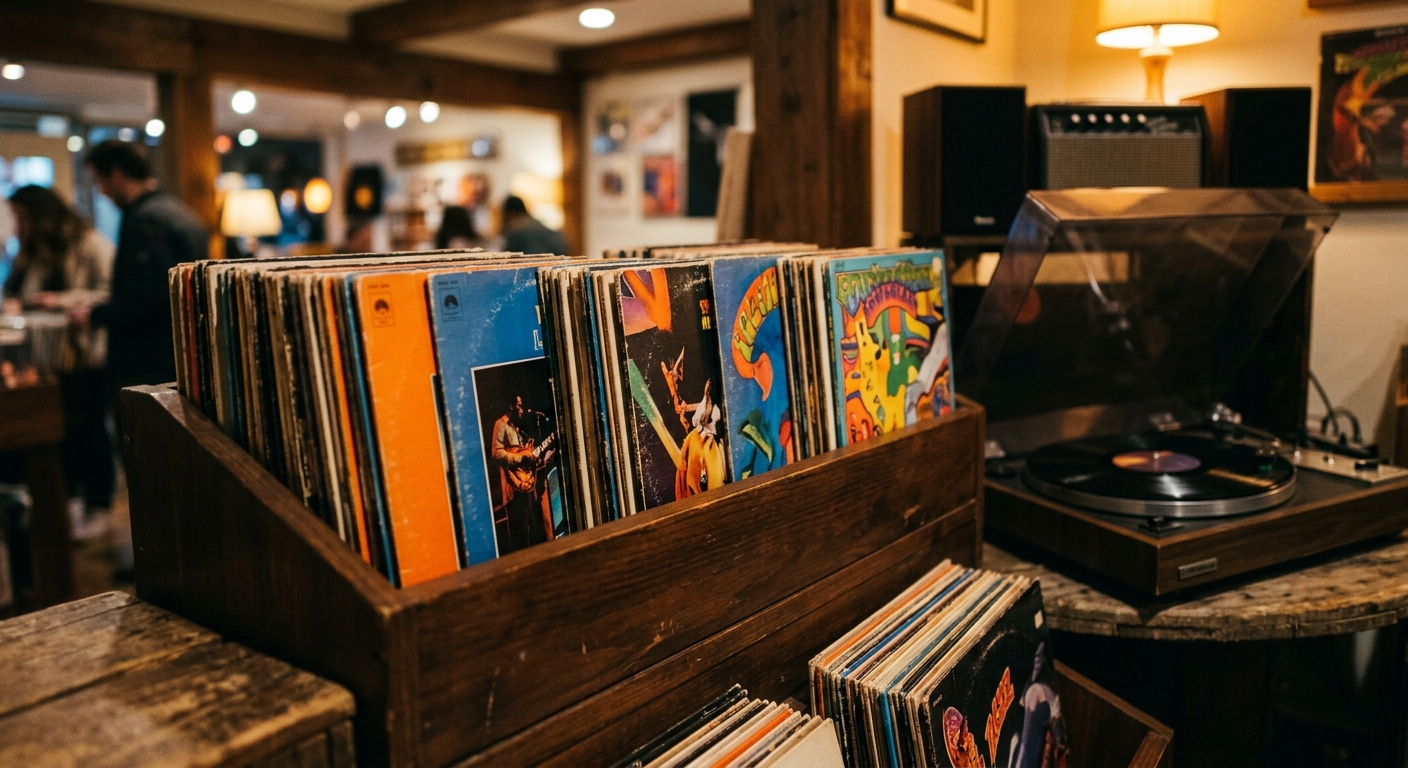
Jazz fusion emerged in the late 1960s when a generation of jazz musicians started listening to rock and roll alongside Miles Davis. Larry Coryell, often called the godfather of fusion, put it simply: "We loved Miles but we also loved the Rolling Stones." That tension between bebop tradition and electric rock energy created something entirely new, and the albums that defined the genre still sound thrilling on vinyl today [1].
For vinyl collectors, the 1970s was the golden era. Columbia, ECM, and polysyllabic labels like Antilles pushed boundaries in the studio, and many of those recordings translate beautifully to the LP format. The warmth of a clean pressing, the bass weight of a well-cut groove, the way an electric piano breathes differently through a phono preamp: these are the reasons collectors return to fusion albums over and over.
Here is a ranked guide to ten essential jazz fusion albums for the vinyl collector, weighted for musical influence, pressing quality, and how often you will actually want to drop the needle.
The top 10 jazz fusion albums
- Miles Davis, Bitches Brew (1970). The one that started everything. Recorded in August 1969 at Columbia's Studio B in New York, Bitches Brew took the electric turn Miles had hinted at on In a Silent Way and went fully electric. Produced by Teo Macero, the double LP featured a large ensemble with multiple drummers, electric piano, and Jimi Hendrix-level guitar textures. It sold 400,000 copies in its first year, making it four times more successful than the average Miles Davis album [2]. On vinyl, Bitches Brew rewards a good system. The dynamic range is enormous, and a clean original pressing reveals details buried in the digital version.
- Herbie Hancock, Head Hunters (1973). The most commercially successful fusion album of its era. Head Hunters reached No. 1 on the Billboard R&B chart and crossed over to pop audiences without losing its jazz credibility. The title track's bass line became one of the most sampled in hip-hop history. Produced by Hancock with a tight four-piece band featuring Bennie Maupin, Harvey Mason, and Paul Jackson, the album was recorded in a single afternoon at Warner Bros. Studios in Burbank. On vinyl, the low end is substantial and the grooves are usually well-cut on original pressings.
- Weather Report, Heavy Weather (1977). The album that brought jazz fusion to mass audiences. Featuring Jaco Pastorius on bass and Wayne Shorter on soprano and tenor sax, Heavy Weather reached a broader audience than any previous fusion record while keeping the improvisation sharp. "Birdland," written by Joe Zawinul, became a jazz standard and won a Grammy in 1978. The album went platinum and remains the best-selling jazz fusion record of all time. Original Columbia pressings are reasonably available and sound excellent when clean.
- Mahavishnu Orchestra, The Inner Mounting Flame (1971). The most aggressive fusion record on this list. Mahavishnu Orchestra's debut paired guitarist John McLaughlin with Jan Hammer on electric piano and organ, Jerry Goodman on violin, and a rhythm section of Rick Laird and Billy Cobham. The playing is intense, virtuosic, and sometimes brutal. Cobham's drum work on "The Dance of Maya" still sounds ahead of its time. The Inner Mounting Flame did not chart high on release but became enormously influential among musicians and collectors. Early Columbia pressings are worth seeking out.
- Chick Corea, Return to Forever (1972). The debut of the first edition of Return to Forever, recorded in February 1972 at A and R Studios in New York and produced by Manfred Eicher for ECM. This lineup featured Flora Purim on vocals, Stanley Clarke on bass, Airto Moreira on percussion, and Joe Farrell on woodwinds. The music is grounded in Brazilian rhythms and acoustic instruments while still pushing into electric territory. ECM's original pressings are typically quiet and well-centered, though the label's commitment to audiophile sound means the vinyl surfaces can be hit or miss depending on the pressing plant.

- Miles Davis, In a Silent Way (1969). Often cited as Miles's first true fusion album, In a Silent Way was recorded in a single session on February 18, 1969, at CBS 30th Street Studio in New York. Produced by Teo Macero, who edited and arranged the session material, the album marked the beginning of Miles's "electric" period. Two side-long suites make up most of the record, and the production is immersive: electric guitars, keyboards, and bass create textures that still feel modern. Original Columbia pressings from this era are worth playing carefully, as the surfaces can be noisy on well-traveled copies.

- Tony Williams Lifetime, Emergency! (1969). Tony Williams was only 23 when he left Miles Davis's band to form the Tony Williams Lifetime, bringing guitarist John McLaughlin and organist Larry Young into a project that combined rock intensity with jazz spontaneity. Emergency! was recorded just three months before Bitches Brew and shares that album's electric energy while pushing the format harder in a rock direction. The drumming throughout is relentless. Original poll-deluxe pressings are relatively affordable and usually play well.
- Pat Metheny, Bright Size Life (1976). Metheny's ECM debut introduced a trio with Jaco Pastorius on bass and Bob Moses on drums. Metheny was teaching at Berklee when he recorded this, and the compositions show a lyricism and song sense that separated him from the fusion pack early. Pastorius's playing throughout is remarkable, especially given that Manfred Eicher originally refused to allow an electric bass on the session. Original ECM pressings are typically quiet and the surfaces hold up well. The album only started selling significantly 10 to 15 years after its release, so originals are out there in decent numbers.

- Jaco Pastorius, Jaco Pastorius (1976). The debut solo album from the Weather Report bassist stands as one of the greatest electric jazz records ever made. Produced by Herb Alpert and recorded at His Master's Wheels and Sound Labs in Los Angeles, the album features a roster of fusion heavyweights including Wayne Shorter, Lee Morgan, and David Sanborn. "Portrait of Tracy" remains a landmark bass composition. The Word doc pressing is widely available and usually sounds excellent at moderate volumes.
What to buy first
If you are starting a jazz fusion vinyl collection, begin with Bitches Brew, Heavy Weather, and Head Hunters. Those three give you the full arc of the genre in its commercial prime. Bitches Brew is the historical starting point, Heavy Weather is the accessible gateway, and Head Hunters is the most fun to play at volume.
From there, move to The Inner Mounting Flame for aggression, Return to Forever for Brazilian warmth, and In a Silent Way for electric ambience. Bright Size Life and Jaco Pastorius are the late-era records worth having as the genre evolved beyond the commercial peak.
Original pressings are available for most of these albums at reasonable prices, but condition matters more than bragging rights. A noisy copy of Heavy Weather is less enjoyable than a quiet reissue. Keep a play log. What's Spinning helps by turning your listening sessions into a record of what you actually play, not just what sits on the shelf.
FAQ
What is the best jazz fusion album for beginners?
Start with Weather Report's Heavy Weather. It is the most accessible entry point with enough compositional depth to reward repeated listening. If you prefer something more challenging, try Miles Davis's Bitches Brew.
Are original pressings better than reissues?
Not automatically. Clean original pressings can sound fantastic and have collector appeal, but modern reissues from labels like Mobile Fidelity and Analogue Productions are often quieter and more reliably cut. For jazz fusion specifically, the pressing plant matters more than the year: a 1980s Columbia pressing from a good plant often sounds better than a poorly stored 1970s original.
Why does jazz fusion sound good on vinyl?
The genre was built for the recording studio and the LP format. The bass weight in Head Hunters, the dynamic range in Bitches Brew, and the air in Weather Report's production all translate differently through a phono stage. On a good system, these albums reveal details that get lost in digital playback.
How do I track a growing jazz fusion collection?
Log your plays and purchases. What's Spinning turns your turntable sessions into a listening history, so you know which albums you return to and which sit unplayed. That data is more useful than a static inventory when you are deciding what to buy next.
A spreadsheet tracks what you own. What's Spinning identifies what's playing.
On-device vinyl ID logs your listening history automatically. 7-day free trial.
Looking for Shazam for vinyl?
What's Spinning identifies what's playing on your turntable on-device, logs history, and AirPlays now-playing to your TV.
Comparing vinyl ID apps?
Analog requires Discogs and is iPhone-first (iPad coming). What's Spinning works without Discogs on iPhone and iPad with AirPlay.
Try What's Spinning Free
Turn your iPad into a live now-playing display. Track every record you spin.
START FREE TRIALThen $4.99/mo or $39.99/yr · Cancel anytime
Get it on your iPhone
Open on iPhone