Essential Krautrock Albums: A Vinyl Collector's Guide to the Cosmic Sound
If you are building a vinyl shelf around the essential krautrock albums, you are stepping into one of the strangest, most influential, and most rewarding genres a record collector can chase. Krautrock is the umbrella term British music journalists coined in the early 1970s to describe a loose constellation of West German experimental rock bands who emerged after 1968, including Kraftwerk, Can, Neu!, Faust, Tangerine Dream, Cluster, Harmonia, Amon Duul II, Popol Vuh, Ash Ra Tempel, Klaus Schulze, and La Dusseldorf, among many others [1]. The bands themselves often hated the term, but it stuck, and it now describes one of the most fertile periods of recorded music ever pressed to vinyl.
Why does krautrock matter so much for vinyl collectors specifically? Three reasons. First, the genre was born on LP. Many of these records are built around side long compositions that simply will not work as three minute streaming singles; the side break is part of the structure. Second, the original pressings, often on small German labels like Brain, Ohr, Pilz, Liberty, and Kling Klang, are visually stunning artifacts with hand drawn sleeves, gatefold inserts, and pressings that range from gorgeous to comically scarce. Third, the recordings themselves, mostly produced by Konrad "Conny" Plank or by the bands at their own studios such as Inner Space and Kling Klang, were engineered with extraordinary care for analog playback. They sound like vinyl. They sound, in many cases, like the reason you fell in love with vinyl in the first place.
This guide ranks 18 essential krautrock albums weighted for historical influence, songwriting and composition, vinyl appeal, and how often you will actually want to spin the record. Where relevant we note original pressing details, modern reissues, chart performance, and rough secondary market values so you can shop confidently. None of these records require an audiophile system to enjoy, but on a good turntable they reveal layers of detail that streaming has trouble reproducing.
The 18 essential krautrock albums

Kraftwerk, Autobahn (1974) Kraftwerk, Autobahn (1974). [Wikipedia]
Kraftwerk's fourth studio album is the record that turned krautrock into a commercial proposition and made the synthesizer feel like a serious instrument rather than a novelty. Released on Philips in West Germany in November 1974 and on Vertigo elsewhere, the album was produced by Ralf Hutter and Florian Schneider at their newly equipped Kling Klang Studio in Dusseldorf with engineer Konrad "Conny" Plank, the same producer who shaped early Neu! and Cluster records. The 22 minute title track, a hypnotic motorik travelogue inspired by the Autobahn network, fills the entire first side of the original LP and remains one of the most influential pieces of electronic music ever pressed to vinyl.
Commercially, Autobahn was a breakthrough. The album reached number 5 on the Billboard 200, number 4 in the UK Albums Chart, and the heavily edited 3 minute 28 second single version of the title track climbed to number 11 in the United States and number 25 in the United Kingdom, an extraordinary result for an instrumental sung in German. The Recording Industry Association of America certified it Gold. For collectors, the original Philips 6305 231 German pressing with the hand drawn Emil Schult cover painting of an autobahn merging into the horizon is the holy grail copy, regularly fetching three figures in clean condition on Discogs.
From a vinyl playback perspective, Autobahn is a beautiful test record. The long crossfades between vehicle sounds, Minimoog drones, and Schneider's flute force your turntable to track delicate low level material across both sides without breaking up. A clean cartridge alignment is the difference between feeling the engine drone in your chest and hearing thin hiss. Side B holds three shorter pieces, "Kometenmelodie 1," "Kometenmelodie 2," and "Mitternacht," that show the band already moving toward the rigid sequencer pulses that would define Trans-Europe Express and The Man-Machine.
If you only own one Kraftwerk album, this is the historically correct first purchase. Original US Vertigo pressings on the swirl label are warmer and more analog sounding than the later digital remasters, while the 2009 Kling Klang Editions reissue, supervised by Ralf Hutter himself, is the modern audiophile choice and is widely available new for around 30 dollars. Essential to the genre because everything else in this list owes Autobahn a debt, from the motorik pulse to the idea that German youth could build their own musical language without copying Anglo American rock.

Kraftwerk, Trans-Europe Express (1977) Kraftwerk, Trans-Europe Express (1977). [Wikipedia]
If Autobahn proved Kraftwerk could sell records, Trans-Europe Express is the album that proved they could invent entire future genres. Recorded at Kling Klang Studio with Ralf Hutter, Florian Schneider, Karl Bartos, and Wolfgang Flur, and engineered as always by Conny Plank in concert with the band, the album was released in March 1977 on Kling Klang in Germany and Capitol in the United States. The title track's metronomic train rhythm and Maurizio Polizzy style melodic bass would later be sampled, almost verbatim, by Arthur Baker and Afrika Bambaataa to build "Planet Rock" in 1982, effectively launching electro and indirectly seeding hip hop, techno, and house.
The album peaked at number 119 on the Billboard 200 and number 49 in the United Kingdom, modest chart numbers that vastly understate its cultural footprint. Detroit techno pioneers Juan Atkins, Derrick May, and Kevin Saunderson have repeatedly cited Trans-Europe Express as foundational, and David Bowie's late 1970s Berlin trilogy was openly indebted to its mood. The German Kling Klang pressing features alternate German language vocals on the title track and the lyric sequence "Showroom Dummies," "Trans-Europe Express," "Metal on Metal," "Franz Schubert," "Endless Endless," which collectors generally regard as the canonical sequence.
For vinyl listeners, Trans-Europe Express rewards a quiet pressing and careful tracking. The chugging metallic percussion of "Metal on Metal" can sound like genius or like a defect depending on cartridge condition, and the deep sub bass on "Showroom Dummies" will expose a tonearm that is not properly damped. The original Capitol ST-11603 US pressing is well regarded for its bass weight, while the 2009 Kling Klang remaster on 180 gram vinyl is the most widely available clean copy and is mastered from the original analog tapes by Robert Baldock.
Among essential krautrock albums, this is the bridge record. It points forward into electro, synth pop, and techno while still being tethered to the long form motorik tradition that Can and Neu! had established at the start of the decade. Buy it for the influence, keep it for the songs.
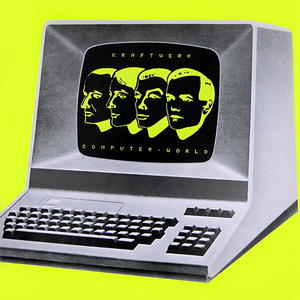
Kraftwerk, Computer World (1981) Kraftwerk, Computer World (1981). [Wikipedia]
Released in May 1981 on Kling Klang and EMI, Computer World is the album where Kraftwerk fully traded their analog modular rigs for digital sequencing, drum machines, and Texas Instruments Speak and Spell vocal effects. Tracks like "Numbers," "Pocket Calculator," and "Computer Love" sound today like prophecy, predicting a world of personal computing, surveillance, and online dating decades before any of those things were ordinary. Ralf Hutter and Florian Schneider produced the album themselves at Kling Klang Studio, with Karl Bartos and Wolfgang Flur completing the classic four piece lineup.
Chart wise, Computer World reached number 15 in the UK Albums Chart and number 72 on the Billboard 200, with "Computer Love" hitting number 1 in the United Kingdom when the BBC flipped the single to play its B side, "The Model," from the earlier Man-Machine album. The record's influence on early hip hop and electro is impossible to overstate. "Numbers" became one of the most sampled and breakdance friendly tracks of the 1980s, providing the rhythmic spine of countless block party mixes and early Bambaataa edits.
From a pressing standpoint, the original EMI EMC 3370 UK pressing and the Warner Brothers HS 3549 US pressing are both very playable and easy to find for under 30 dollars in VG plus condition. The 2009 Kling Klang Edition 180 gram reissue, which restores the original German language version of "It's More Fun to Compute" and uses Robert Baldock's careful analog cut, is the audiophile pick. The sleeve, a black and yellow CRT screen displaying the band's heads on a primitive computer terminal, is one of the great minimalist sleeves of the early 1980s.
Why it matters for vinyl collectors: Computer World marks the last fully essential Kraftwerk album of the classic period, and its bright, dry, surgically clean digital sound is a different kind of pleasure on a turntable than the warmer analog records that preceded it. Pair it with Trans-Europe Express and Autobahn on a shelf and you have the entire arc of the most influential electronic band ever assembled.
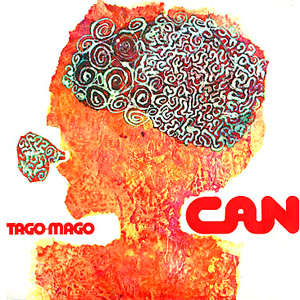
Can, Tago Mago (1971) Can, Tago Mago (1971). [Wikipedia]
Released in February 1971 as a double LP on United Artists in the United Kingdom and Liberty in West Germany, Tago Mago is the album most often cited when critics try to explain what krautrock actually is. Recorded by Can across 1970 and early 1971 at Schloss Norvenich, a castle near Cologne that the band rented out as a rehearsal space, and later at their own Inner Space Studio, the album was produced and engineered by guitarist and tape wizard Holger Czukay with vocalist Damo Suzuki front and center for the first time. Drummer Jaki Liebezeit, keyboardist Irmin Schmidt, and guitarist Michael Karoli round out the lineup.
The 18 minute "Halleluwah" on side three is the single most cited motorik groove of the era, a feat of editing and locked tape loops that turned a long jam into a structured composition. Side four's "Aumgn" and "Peking O" are full on musique concrete pieces that show how far Czukay was willing to push collage and tape splicing. For collectors, the original United Artists UAS 29211/2 double LP gatefold pressing, with Ulrich Eichberger's surreal cover painting of a face dissolving into a desert landscape, regularly trades for 100 to 250 dollars on Discogs in clean condition.
On vinyl, Tago Mago is a thrill ride. The bass is taut, the drums are dry, and the spatial effects panning around your speakers are noticeably wider on a proper LP than on any streaming version. The Spoon Records 2014 remaster cut by Andreas Lonardoni from the original tapes is the audiophile pick today, with deeper black backgrounds and more punch in the kick drum than the 1990s reissues. The 2021 50th anniversary box set added two LPs of live material from the same era that fans of "Halleluwah" will find indispensable.
Among essential krautrock albums, Tago Mago is non negotiable. It is the record where the genre stops being a German variant of psychedelic rock and starts being its own thing, with editing, rhythm, and electronic processing treated as primary instruments. If you only buy three krautrock albums, this is one of them.

Can, Ege Bamyasi (1972) Can, Ege Bamyasi (1972). [Wikipedia]
The follow up to Tago Mago is tighter, funkier, and easier to play at a dinner party while still being recognizably the same band. Released in November 1972 on United Artists in the United Kingdom and on Liberty in West Germany, Ege Bamyasi was recorded at Can's Inner Space Studio in Weilerswist, a former cinema the band had converted into a recording space lined with 1500 army mattresses for acoustic damping. Holger Czukay handled engineering and editing, with Damo Suzuki on vocals, Jaki Liebezeit on drums, Michael Karoli on guitar, and Irmin Schmidt on keyboards.
"Spoon," the seven minute closing track, became an unlikely West German hit single after it was used as the theme to the popular ARD television crime serial Das Messer in 1972, eventually selling over 300,000 copies and reaching number 6 in the German singles chart. "Vitamin C" has become one of the most synced krautrock tracks of the streaming era, appearing in Paul Thomas Anderson's Inherent Vice in 2014 and turning a new generation of listeners onto the album. The yellow okra can cover, designed by Ulrich Eichberger, is one of the most instantly recognizable LP sleeves of the decade.
For vinyl collectors, Ege Bamyasi is a sweet spot. Original UAG 29414 UK pressings can usually be found in VG plus condition for 50 to 90 dollars, less than half what you would pay for a clean Tago Mago. The Spoon Records 2014 reissue, mastered from the original analog tapes by Andreas Lonardoni and pressed on heavyweight vinyl with a faithful gatefold reproduction, is regarded as the best modern cut and is widely available new for around 30 dollars. The bass and snare are tight enough that you can use the record to dial in tracking force on a new cartridge.
Essential because it is the most accessible Can album. Where Tago Mago is a statement, Ege Bamyasi is a groove record you will actually put on regularly, and on a clean pressing the locked in feel of Liebezeit's drumming is one of the great pleasures in all of vinyl listening.

Can, Future Days (1973) Can, Future Days (1973). [Wikipedia]
Future Days is the last Can album with Damo Suzuki on vocals and arguably the most beautiful record the band ever made. Released in August 1973 on United Artists in the United Kingdom and Liberty in West Germany, it was recorded at Inner Space Studio over a few weeks in the spring and summer of 1973 with Holger Czukay producing and engineering. By this point Czukay had essentially stopped playing bass on stage, choosing instead to focus on editing and tape manipulation, which gave the album its drifting, watery quality. Michael Karoli's guitar floats in long delay tails, while Jaki Liebezeit's drumming is uncharacteristically restrained and oceanic.
The four tracks, "Future Days," "Spray," "Moonshake," and the 20 minute "Bel Air" that occupies all of side two, are often cited as the prototype for ambient rock, a sound that would later influence everything from Talk Talk's Spirit of Eden to Tortoise, Stereolab, and the post rock movement of the 1990s. Brian Eno has named Future Days as a favorite record on multiple occasions, and Radiohead's Thom Yorke and Stereolab's Tim Gane have both pointed to "Bel Air" as a touchstone.
Original UK United Artists UAS 29505 pressings are scarcer than Ege Bamyasi but easier to find than the original Tago Mago double, typically running 60 to 120 dollars in clean condition. The Spoon Records 2014 LP remaster, again handled by Andreas Lonardoni, restores the spatial depth that earlier digital era reissues flattened, and reveals little percussion details, ride cymbal swells, and shaker overdubs that previously seemed buried in the haze. On a quiet pressing, the side long "Bel Air" is a borderline meditative experience.
Essential because it shows how broad krautrock could be. The same band that locked into Tago Mago's hypnotic violence could, two albums later, make a record that floats. If you want to convince someone who thinks krautrock is just German robot music that the genre has soul, put Future Days on the turntable.

Neu!, Neu! (1972) Neu!, Neu! (1972). [Wikipedia]
Formed in 1971 in Dusseldorf by guitarist Michael Rother and drummer Klaus Dinger after both briefly played in early Kraftwerk, Neu! released their self titled debut on Brain Records' Metronome subsidiary in February 1972 with Conny Plank producing at his own studio in Cologne. The album was recorded in just four nights at the end of 1971 on a shoestring budget, with Rother and Dinger overdubbing every instrument themselves and Plank shaping the sound through tape delay, plate reverb, and his usual stack of homemade processing.
This is the album that gave the world the motorik beat, the steady four on the floor pulse with rolling sixteenth note hi hats that Dinger himself preferred to call the Apache beat. Opening track "Hallogallo," a 10 minute hypnotic instrumental built around two chords and that propulsive groove, is now widely regarded as one of the most influential rock recordings of the 1970s and was famously covered, in spirit if not in literal notes, by everyone from Stereolab to Sonic Youth to LCD Soundsystem's "All My Friends." The hand drawn Neu! logo in red marker on a white sleeve, designed by Dinger himself, is one of the iconic minimalist record sleeves of the decade.
Original Brain 1004 pressings are sought after but were never produced in huge numbers, and clean copies on Discogs regularly trade for 150 to 300 dollars. The 2001 Gronland reissue, supervised by Michael Rother with the cooperation of Klaus Dinger's estate, is the official modern pressing and is mastered from the original analog tapes. On vinyl the album's stereo separation is wider than the digital editions and the famous backward, decelerating "Negativland" track on side two sounds genuinely unsettling through a good system.
Essential because it is the source code for motorik. Without Neu!, there is no Stereolab, no Bowie's Heroes era, no LCD Soundsystem, arguably no post punk rhythm section worth mentioning. The first Neu! album is the rhythmic foundation on which much of the modern rock vocabulary still stands.

Neu!, Neu! 75 (1975) Neu!, Neu! 75 (1975). [Wikipedia]
Recorded between December 1974 and January 1975 at Conny Plank's studio outside Cologne, Neu! 75 is the third and final Neu! album of the classic era, and arguably the most influential. Released in March 1975 on Brain Records, the album splits cleanly into two sides that document a creative civil war between Michael Rother and Klaus Dinger. Side one, dominated by Rother, is meditative, pastoral, and synth driven, with the gorgeous "Isi" and "Seeland" pointing forward to ambient music and post rock. Side two, driven by Dinger and featuring his brother Thomas Dinger and Hans Lampe on twin drum kits, is loud, snarling, and openly punk in attitude, with "Hero" and "After Eight" predating the Sex Pistols by more than a year.
Conny Plank's production is the secret weapon. He recorded the Dinger brothers' twin drum kit setup with a stark, dry close mic technique that gives "Hero" its physical impact, and treated Rother's tape loop synth pieces with subtle plate reverb and analog tape echo that gives them their oceanic depth. Johnny Rotten has personally cited "Hero" as the song he was thinking of when he wrote "Anarchy in the UK," and David Bowie and Brian Eno carried Plank's name and methods into the Berlin trilogy.
The original Brain 1062 pressing with the matte white sleeve and red Neu! logo is the collector copy and runs 120 to 250 dollars on the secondary market. The 2010 Gronland reissue, supervised by Michael Rother, is the standard new pressing and benefits from the same careful analog mastering that the Gronland Neu! and Neu! 2 reissues received. On vinyl the contrast between the two sides is even more pronounced than on streaming, with the dynamics of side two hitting harder when properly cut.
Essential because Neu! 75 invented two different futures in 36 minutes. Side one foreshadows Brian Eno's Music for Airports and the entire ambient genre; side two foreshadows the Sex Pistols, Joy Division, and most of post punk. Few albums of any genre have such a wide and traceable influence.

Faust, Faust IV (1973) Faust, Faust IV (1973). [Wikipedia]
The first album from Faust to be released after the band signed with Richard Branson's then brand new Virgin Records, Faust IV came out in September 1973 with the catalog number Virgin V2004, making it part of the same opening batch as Mike Oldfield's Tubular Bells and Gong's Flying Teapot. Recorded at Virgin's Manor Studio in Oxfordshire with the band's regular collaborator Uwe Nettelbeck producing, Faust IV is the most accessible record in the group's discography and the easiest entry point into the wider Faust catalog.
The opening track, the 12 minute "Krautrock," is both a sly joke and a genuine masterpiece, a slow building drone piece that turns the term then being applied dismissively by the British music press into a badge of honor. "The Sad Skinhead," "Jennifer," and "Just a Second (Starts Like That!)" show Faust's pop side, with hooks that would not have been out of place on a Roxy Music record of the same era. The album closes with the joyful, almost vaudeville stomp of "It's a Bit of a Pain."
Original Virgin V2004 UK pressings, particularly the early "two virgins" label copies, regularly trade for 80 to 150 dollars on Discogs in clean condition, and the original Virgin sleeve with the lined notebook cover design is one of the most distinctive looking LPs of the period. The 2007 ReR Megacorp reissue, supervised by surviving Faust members Jean Herve Peron and Werner Diermaier, is the official modern pressing and includes the proper analog cut from the original tapes. The 2021 Bureau B remaster is another excellent option and is more widely available new for under 30 dollars.
Essential because Faust IV is the album that names the genre. The opening track is literally called "Krautrock," and the record's mix of avant garde tape collage, drone, motorik rhythm, and unexpectedly catchy songcraft is a one record summary of what the entire scene was capable of. Add it to a krautrock vinyl shelf and you have effectively bracketed the territory.
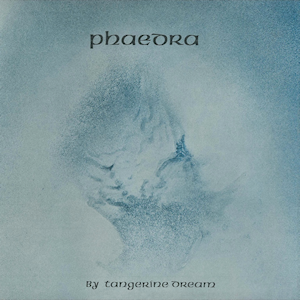
Tangerine Dream, Phaedra (1974) Tangerine Dream, Phaedra (1974). [Wikipedia]
Released in February 1974 on Virgin Records as catalog number V2010, Phaedra is the album that took Tangerine Dream from German underground curiosity to international electronic act. Recorded at the Manor Studio in Oxfordshire in late 1973 by Edgar Froese, Christopher Franke, and Peter Baumann, the album is built around Franke's then revolutionary use of a Moog modular synthesizer with a self built sequencer, which allowed him to lock long, evolving 16 step patterns into hypnotic pulses that fill the entire 17 minute title track on side one.
Phaedra reached number 15 in the UK Albums Chart, an extraordinary result for an entirely instrumental electronic album with no obvious singles and no marketing campaign. It was the first major commercial success for a sequencer driven electronic record and effectively launched what became known as the Berlin School of electronic music, influencing later artists from Klaus Schulze and Manuel Gottsching to John Carpenter and the entire 1980s synth score industry. The title track was famously composed in real time during studio sessions and survived a moment when Franke's sequencer drifted out of pitch, which the band kept rather than re recording.
For collectors, the original UK Virgin V2010 pressing with the two virgins label and the dark, surreal painted sleeve regularly fetches 60 to 120 dollars on Discogs in clean condition. The 2010 Virgin Records 30th anniversary edition, expanded with bonus material from the same sessions, is the most thorough release. On a good vinyl rig, the Moog modular sequencer pulses on side one have a low end weight and stereo width that digital encoding tends to flatten.
Essential because Phaedra is the moment Berlin school electronic music meets mainstream chart success. It is the bridge between the kosmische underground of the early 1970s and the polished sequencer rock that filled film scores and electronic music for the rest of the decade. Required listening for anyone tracing the genealogy of modern electronic music.
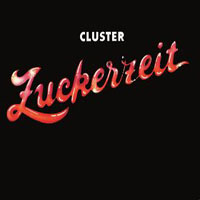
Cluster, Zuckerzeit (1974) Cluster, Zuckerzeit (1974). [Wikipedia]
By 1974 Cluster, the duo of Hans Joachim Roedelius and Dieter Moebius, had moved from the harsher industrial drones of their early work toward something stranger, sweeter, and more rhythmic. Recorded at Conny Plank's studio outside Cologne and released in November 1974 on Brain Records' Metronome subsidiary, Zuckerzeit, German for "sugar time," is the album that took kosmische into pop territory without surrendering any of its weirdness. Michael Rother of Neu! contributed production assistance on several tracks, which gave the record its surprisingly clean, motorik adjacent feel.
The album is split into Roedelius pieces, which are bright and melodic and feature unusually catchy synthesizer hooks, and Moebius pieces, which are spikier, more rhythmic, and built around primitive drum machine patterns that predate most of what would later be called electro pop. "Hollywood" is essentially a synth pop song with a dance beat, three years before that genre supposedly existed, and "Caramel" is a children's program theme from a parallel universe.
Original Brain 1065 pressings are not especially rare and can usually be found for 40 to 80 dollars on Discogs in VG plus condition. The 2009 Bureau B reissue, supervised by Roedelius himself and mastered from the original analog tapes, is the standard modern pressing and is widely available new for under 30 dollars. On vinyl the bright, slightly tinny synth tones get a welcome warmth and roundness that the digital editions can lack.
Essential because Zuckerzeit shows how kosmische and pop could meet without compromise. Brian Eno was a huge fan and would soon form a creative partnership with Cluster that produced the Cluster and Eno albums of 1977 and 1978. If you want to understand where the more playful side of synth pop came from, including bands like Stereolab and the more electronic moments of the indie 1990s, Zuckerzeit is the foundation.
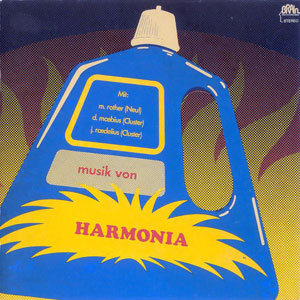
Harmonia, Musik von Harmonia (1974) Harmonia, Musik von Harmonia (1974). [Wikipedia]
Harmonia was a krautrock supergroup in the most literal sense: Michael Rother from Neu! joined Hans Joachim Roedelius and Dieter Moebius from Cluster in the village of Forst on the Weser river in Lower Saxony, where the three musicians lived together and recorded in a homemade studio. Their debut album, Musik von Harmonia, was released in May 1974 on Brain Records and is one of the most quietly influential records in the entire German underground.
The album's six tracks span motorik instrumentals like "Watussi" and "Ohrwurm," ambient drift pieces like "Sehr kosmisch" and "Sonnenschein," and the gentle pop of "Veterano." Brian Eno would later declare Harmonia "the world's most important rock band" after visiting Forst in 1976, and his collaboration with the trio resulted in the famous Tracks and Traces sessions that would not see official release until 1997. The cover, a stylized package of cleaning soap, is one of the great visual gags of 1970s LP design.
Original Brain 1044 pressings are increasingly scarce and command 100 to 200 dollars on Discogs in clean condition. The 2015 Gronland reissue is the official modern pressing, supervised by Michael Rother, and includes new mastering from the original tapes by Bo Kondren at Calyx Mastering in Berlin. The pressing is quiet and has noticeably more air around the synth pads than the digital edition. The 2017 Gronland Complete Works box set, which includes Musik von Harmonia, Deluxe, and the Tracks and Traces material, is the deep collector option.
Essential because Musik von Harmonia is the missing link between Neu!, Cluster, and the ambient music Brian Eno would invent later in the decade. It also remains a wonderful record on its own terms, full of warmth and surprise. On a good turntable the album's gentle synth pulses and hand played percussion have an organic, room shaped quality that headphones never quite capture.

Amon Düül II, Yeti (1970) Amon Düül II, Yeti (1970). [Wikipedia]
Recorded in late 1969 and released as a double LP in April 1970 on Liberty in West Germany and on United Artists in the United Kingdom, Yeti is the second album by Munich based commune band Amon Duul II and is widely considered the first essential krautrock LP. Where the band's chaotic 1969 debut Phallus Dei suggested possibilities, Yeti delivered them with focus and force. Produced by Olaf Kubler and recorded at Bavaria Music Studios in Munich, the lineup of Chris Karrer, John Weinzierl, Falk Rogner, Renate Knaup, Peter Leopold, and Dieter Serfas built a record that combined psychedelic rock, free improvisation, folk elements, and proto metal heaviness.
The 18 minute "Yeti (Improvisation)" on side three is the centerpiece, a long form improvised piece that influences everyone from Hawkwind to modern stoner bands like Earthless. The opening track "Soap Shop Rock" features Renate Knaup's strange, wordless vocal lines and one of the heaviest guitar tones in early German rock. The Friedensreich Hundertwasser inspired cover, with the hooded figure that may or may not be Death wandering across a mountain landscape, is one of the most haunting LP sleeves of the period.
Original Liberty LBS 83359/60 UK double LP pressings are highly collectible, with clean copies fetching 150 to 350 dollars on Discogs. The Repertoire Records 2017 LP reissue is the standard modern pressing and is mastered from the original tapes; it can usually be found new for around 35 dollars. The dynamics on side three's long improvisation are noticeably stronger on the analog reissue than on streaming, and the percussion has a snap on vinyl that digital tends to round off.
Essential because Yeti is the first album to suggest that krautrock had its own identity separate from British and American psychedelia. Heavier than Pink Floyd, freer than the Grateful Dead, and stranger than either, it is the album that opened the door for everything else in this list.

Popol Vuh, Hosianna Mantra (1972) Popol Vuh, Hosianna Mantra (1972). [Wikipedia]
Recorded in 1972 in Munich and released that same year on the Pilz label, Hosianna Mantra is the third album by Florian Fricke's Popol Vuh and the record where Fricke abandoned the Moog modular synthesizer he had pioneered on the band's earlier Affenstunde and In Den Garten Pharaos for piano, vocals, and acoustic instruments. Fricke produced the album himself, with Conny Veit on guitar, Korean soprano Djong Yun on vocals, Klaus Wiese on tambura, and Robert Eliscu on oboe.
The result is one of the most spiritually serious records ever produced under the krautrock umbrella. Werner Herzog has used Popol Vuh's music in nearly every one of his films since Aguirre, the Wrath of God in 1972, and Hosianna Mantra is the album that established the sound he would draw on for decades. The eight tracks are built around Christian and Eastern devotional themes, with Djong Yun's untrained, hauntingly direct voice singing texts from the Psalms over Fricke's gentle piano arpeggios and Veit's clean guitar.
Original Pilz 20 21356-3 German pressings are scarce and command 100 to 250 dollars on Discogs in clean condition. The 2019 Bureau B reissue, supervised by Bettina Fricke and mastered from the original analog tapes, is the standard modern pressing and is widely available for under 30 dollars. On a good turntable the album's gentle dynamics, particularly Djong Yun's vocal entries, have a presence that no streaming version quite captures.
Essential because Hosianna Mantra demonstrates that krautrock was never just about rhythm and electronics. It is the genre's great devotional record, and it gives the krautrock shelf a quiet center that balances the louder energy of Can, Neu!, and Amon Duul II. Pair it with Future Days for an evening that will rearrange a room.

Ash Ra Tempel, Ash Ra Tempel (1971) Ash Ra Tempel, Ash Ra Tempel (1971). [Wikipedia]
Released in June 1971 on the Ohr label, the self titled debut by Ash Ra Tempel is one of the founding documents of the Berlin School of cosmic rock. Recorded in March 1971 at Studio Dierks in Stommeln with engineer Dieter Dierks, who would later produce most of the Scorpions catalog, the album was the work of guitarist Manuel Gottsching, bassist Hartmut Enke, and drummer Klaus Schulze, who had just left Tangerine Dream after their debut Electronic Meditation.
The album is structured as two side long pieces. "Amboss" on side one is 19 minutes of slowly building space rock that ascends through layers of Gottsching's reverbed guitar and Schulze's controlled cymbal work into a full power trio assault. "Traummaschine" on side two is its inverse, a 25 minute ambient piece of overlapping drones and processed guitar that prefigures both Brian Eno's ambient experiments and the entire modern drone metal scene. Both sides have been cited by Sonic Youth's Thurston Moore and by guitarists across the broader experimental rock landscape.
The original Ohr OMM 56.013 German pressing with the spiral artwork sleeve is highly collectible and regularly trades for 150 to 400 dollars on Discogs in clean condition. The MG.ART 2009 reissue, supervised by Manuel Gottsching himself with new mastering from the original tapes, is the official modern pressing and is the cleanest sounding version available. On vinyl the long crossfades in "Traummaschine" have a depth that digital flattens, and the guitar attacks on "Amboss" hit with more weight than any streaming version.
Essential because Ash Ra Tempel sits at the crossroads of three different cosmic traditions. Through Gottsching it points toward the guitar based Berlin School that would later flower on records like Inventions for Electric Guitar. Through Schulze it points toward the synthesizer based Berlin School of Phaedra and Timewind. And through Enke and the band's general live energy it remains a great heavy rock record. Few debut albums of any genre have done as much.

Klaus Schulze, Timewind (1975) Klaus Schulze, Timewind (1975). [Wikipedia]
Klaus Schulze's fifth solo album, Timewind, was recorded across early 1975 at his home studio in Berlin and released in September of that year on Brain Records. The album consists of two side long compositions, "Bayreuth Return" on side one and "Wahnfried 1883" on side two, both named after locations associated with Richard Wagner, whose late Romantic ambition Schulze openly admired. Schulze produced and performed everything himself, using an ARP 2600 modular synthesizer, an EMS Synthi A, a Moog sequencer, and a Farfisa organ.
Timewind was a major commercial and critical success on release, winning the Grand Prix du Disque from the Academie Charles Cros in Paris in 1976 and selling more than 100,000 copies in West Germany alone, an unprecedented number for a 100 percent instrumental electronic record built around two 30 minute pieces. The album refined the sequencer driven approach that Christopher Franke had begun on Tangerine Dream's Phaedra and gave it a distinctly Wagnerian sense of scale and dynamics, with sections that build for ten minutes before breaking into new movements.
Original Brain 1075 pressings are common and easy to find for 30 to 70 dollars on Discogs in VG plus condition. The 2005 Revisited Records expanded reissue and the 2017 Made in Germany Records LP reissue are both widely regarded as faithful modern pressings, and both are mastered from the original analog tapes. On vinyl the slow phase modulations of the side long pieces have a hypnotic quality that benefits from analog playback's continuous smoothness.
Essential because Timewind is the album that proved sequencer based Berlin School music could sustain a 30 minute composition without losing dramatic shape. It is the missing link between Tangerine Dream's Phaedra and the synthesizer scores that would dominate film music for the next two decades.
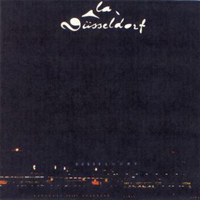
La Düsseldorf, La Düsseldorf (1976) La Düsseldorf, La Düsseldorf (1976). [Wikipedia]
After his collaboration with Michael Rother in Neu! ended, drummer Klaus Dinger formed La Dusseldorf in his hometown with his brother Thomas Dinger and Hans Lampe, both of whom had played the twin drum kit setup on Neu! 75. Their self titled debut was recorded at Conny Plank's studio outside Cologne in late 1975 and released in 1976 on Nova in West Germany and later on Radar in the United Kingdom. Plank co produced with the band and gave the album its enormous, propulsive drum sound.
The opening title track is a brisk pop song built on Dinger's signature motorik beat, while the 13 minute "Rheinita" is a more meditative motorik piece that David Bowie has explicitly cited as a key influence on his Berlin trilogy. Bowie went so far as to call La Dusseldorf "the soundtrack of the eighties" in interviews with the British press in 1979, and Iggy Pop and Brian Eno would both name check the album in the years that followed. The hot pink and red sleeve, designed by Dinger himself with photographer Anno Dittmer, is one of the most striking LP covers of its era.
Original Nova 6.22487 German pressings can be found for 40 to 90 dollars on Discogs in VG plus condition. The 2013 Captain Trip Japanese 180 gram LP reissue and the more recent Gronland editions are excellent modern pressings, both mastered from the original tapes and pressed on quiet vinyl. The album rewards a careful cartridge alignment because the simultaneous twin drum kits demand a tonearm that can handle dense midrange information without smearing.
Essential because La Dusseldorf is the album that carried the motorik beat into the pop era. Without it, Bowie's "Heroes," Joy Division's "Transmission," and arguably the entire post punk rhythmic vocabulary would have evolved differently. A required addition to any serious krautrock vinyl shelf.

Popol Vuh, Aguirre (1976) Popol Vuh, Aguirre (1976). [Wikipedia]
Florian Fricke's Popol Vuh scored Werner Herzog's 1972 film Aguirre, the Wrath of God, but the full soundtrack album was not released until 1976 on the PDU label in Italy and on Ohr in Germany. The album collects the haunting opening theme "Aguirre," in which Fricke layered a self built choir organ that resembles a wordless human chorus, alongside additional pieces from the Aguirre sessions and from the slightly later sessions for Herzog's Nosferatu and Fitzcarraldo.
The opening theme is one of the most instantly recognizable cues in the history of cinema. Critic Roger Ebert has called the opening minutes of Aguirre, the Wrath of God, with the Conquistadors descending the misty mountain to Fricke's choir organ drone, one of the greatest opening scenes in film. The soundtrack album spreads that single sustained mood across both sides, with additional electronic and acoustic pieces by Fricke, Daniel Fichelscher on guitar, and Robert Eliscu on oboe.
Original German Ohr pressings of the Aguirre soundtrack and its various 1980s and 1990s reissues all command around 60 to 150 dollars on Discogs in clean condition. The 2019 SPV/Madacy reissue, supervised by Bettina Fricke, is the standard modern pressing and is widely available for under 30 dollars. On vinyl the very slow attack of the choir organ has a different physical presence than the streaming version; the sound seems to materialize in the room rather than being pushed out of speakers.
Essential because Aguirre is where krautrock meets the cinematic imagination. It is the album that proved German experimental music could carry an entire film's emotional weight, and it stands as a perfect closing record for any krautrock listening session. Put it on after Hosianna Mantra and you will not want to talk to anyone for an hour.
What to buy first
If you are starting from zero, the canonical entry sequence is Kraftwerk's Autobahn, Can's Ege Bamyasi, Neu!'s self titled debut, and Tangerine Dream's Phaedra. Those four records sketch the entire map: the synth pop future of Kraftwerk, the rhythmic editing genius of Can, the motorik foundation of Neu!, and the cosmic sequencer ambition of Tangerine Dream. From there, branch by mood. If you want heavier and more psychedelic, go to Amon Duul II's Yeti and Ash Ra Tempel. If you want pastoral and ambient, go to Future Days, Hosianna Mantra, and Musik von Harmonia. If you want pop hooks, go to Zuckerzeit and La Dusseldorf.
Original pressings on Brain, Ohr, Liberty, and Pilz are fun to chase, especially when the sleeve art is part of the appeal, but condition matters more than label. A noisy original Tago Mago is less useful than a quiet Spoon reissue you will actually play. Bureau B, Gronland, Spoon Records, and ReR Megacorp have all done careful analog reissues of much of this catalog over the past 15 years, and most are available new for around 30 dollars. Keep a play log. What's Spinning helps by turning your turntable sessions into a record of what you actually listen to, not just what you own, which is especially useful for a genre this deep.
FAQ
What is the best krautrock album to start with on vinyl?
Kraftwerk's Autobahn is the historically correct first purchase because it is the album that introduced the genre to the mainstream. If you want something more rhythmic and band oriented, start with Can's Ege Bamyasi. Both are easy to find as quality modern reissues for around 30 dollars and play beautifully on any decent turntable.
Are original German krautrock pressings worth the premium over modern reissues?
For some albums, yes; for most, no. Original Ohr and Brain pressings of records like Ash Ra Tempel's debut and Neu!'s self titled album have genuine collector value because the sleeves and pressings are part of the artifact. For broader catalog like Can's Ege Bamyasi or Klaus Schulze's Timewind, modern Bureau B, Gronland, or Spoon Records reissues are typically quieter and cleaner sounding than typical used originals, and they are far easier on your wallet.
Why do so many krautrock albums sound so good on vinyl specifically?
Most of these records were produced by Konrad Plank or by the bands themselves in custom studios optimized for analog tape. The mixes assume the warmth, slight compression, and continuous dynamics of LP playback, and the side long compositions are structured around the LP side break as a compositional feature. On a turntable the long crossfades, deep stereo separation, and analog modular synth pulses come through with a depth that streaming flattens.
How should I track a growing krautrock vinyl collection?
Keep notes on pressing, label, and condition for each record, because the secondary market for German originals on Brain, Ohr, and Pilz can vary wildly by edition. What's Spinning makes this easier by logging what you play from your turntable, so your collection turns into a listening history with timestamps and frequency data, not just a shelf list. That is particularly useful for a deep genre like krautrock where you will likely accumulate 30 plus records over time.
A spreadsheet tracks what you own. What's Spinning identifies what's playing.
On-device vinyl ID logs your listening history automatically. 7-day free trial.
Looking for Shazam for vinyl?
What's Spinning identifies what's playing on your turntable on-device, logs history, and AirPlays now-playing to your TV.
Comparing vinyl ID apps?
Analog requires Discogs and is iPhone-first (iPad coming). What's Spinning works without Discogs on iPhone and iPad with AirPlay.
Try What's Spinning Free
Turn your iPad into a live now-playing display. Track every record you spin.
START FREE TRIALThen $4.99/mo or $39.99/yr · Cancel anytime
Get it on your iPhone
Open on iPhone