Feature Highlight: Now Playing Share Card for Vinyl
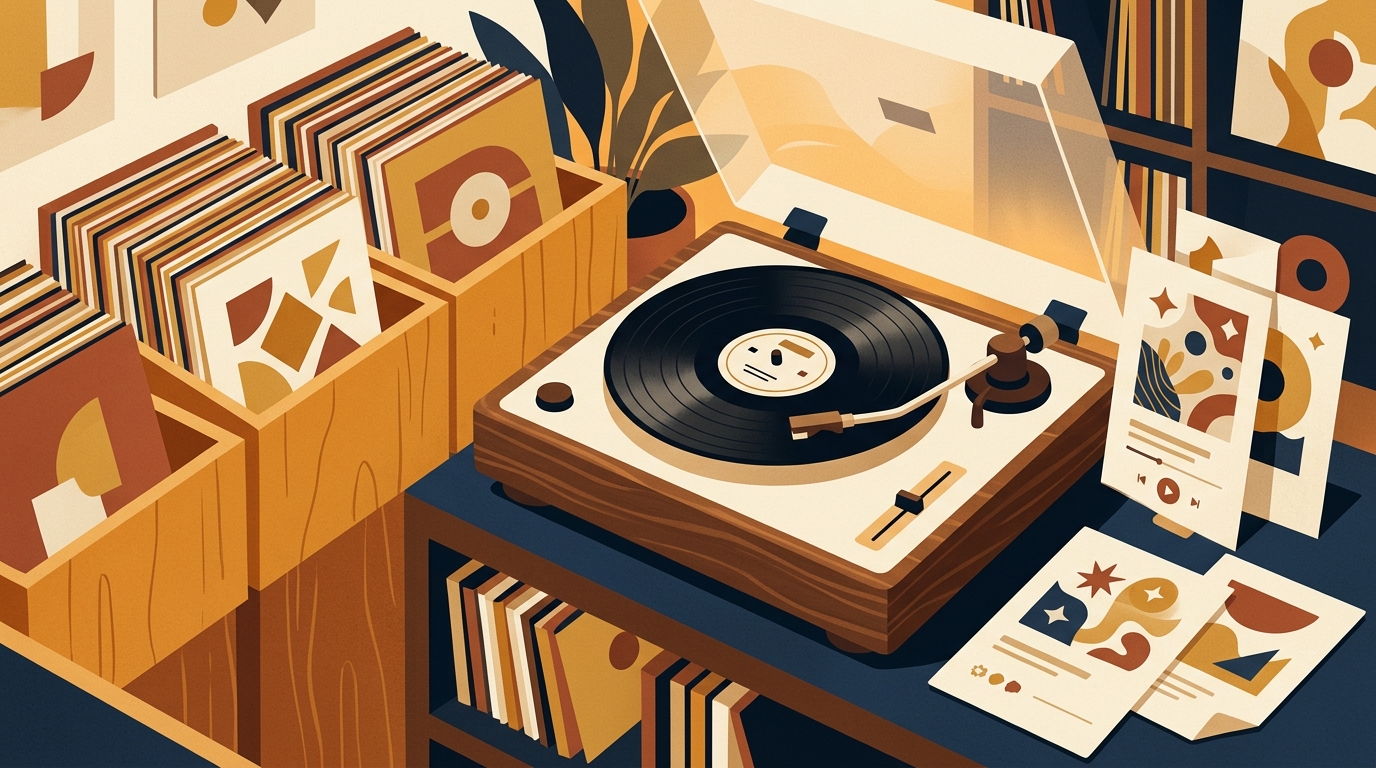
A good record share should feel like holding the jacket up from across the room: instant, specific, and a little bit proud. That is the idea behind the feature now playing share card in What's Spinning. When a record is on the turntable, the share card gives you a clean, ready-to-send snapshot of what is actually playing, without turning the listening moment into a caption-writing chore.
That matters because vinyl is both personal and social. The format asks for attention: you choose the record, pull it from the sleeve, cue the arm, and live with the side for a while. Sharing that moment should preserve the ritual instead of interrupting it. A now playing share card turns “this album is on right now” into something legible for a friend, group chat, listening club, or social feed.
Why vinyl sharing deserves more than a quick photo
Record collectors already share what they play. The problem is that a normal phone photo is often vague. Is the album in the picture a new pickup, a sale listing, or the record currently coming through the speakers? A now playing card solves that ambiguity. It puts the artist, album, and listening context in one frame.
The wider vinyl market makes that behavior worth designing for. Statista, citing RIAA data, reported that U.S. vinyl LP and EP sales reached 46.8 million units in 2025, up from less than a million in 2006. The same chart notes that vinyl accounted for 9 percent of recorded music wholesale revenue in the United States. Vinyl is not replacing streaming. It is doing something different: giving listeners a physical object, a ritual, and a reason to talk about music in a more concrete way.
What the now playing share card does
The now playing share card is built for speed and clarity. While What's Spinning tracks what is on your turntable, the share card packages the current spin into a polished visual that is easy to send. The goal is not to create another social network or force collectors into manual posting. It is to make the moment portable.
That distinction is important. A useful vinyl feature should not pull you away from the room. The best share flow takes seconds. The share card gives the album a clean presentation, then gets out of the way so the record can keep being the point.
Why “now playing” works so well for collectors
Collectors care about ownership, but listening history is where the collection becomes alive. A shelf can tell you what you bought. A now playing log tells you what earned platter time. That difference is huge, especially once a collection grows beyond a few favorite albums.
There is also a discovery angle. The vinyl revival has been fueled partly by identity and community. Discogs built a massive culture around collection tracking, wantlists, marketplace data, reviews, and catalog details because collectors learn from other collectors. A now playing card is a lighter, more immediate version of that exchange. Instead of asking someone to browse your whole collection, you show one record at the exact moment it matters.
It also gives friends a better reason to reply. “Nice copy, which pressing?” “I forgot about that album.” “Play side B next.” Vinyl carries visible choices: jacket art, condition, pressing history, label design, and the fact that somebody physically put it on.
Examples of better now playing shares
The strongest shares usually add one small piece of context. The card handles the basics, then you add the human detail if you want one:
- First listen: Use the card when you finally play a new arrival instead of just photographing the mailer.
- Pressing note: Mention a mono copy, a favorite reissue, a noisy thrift-store find, or a surprisingly good budget pressing.
- Listening night: Share each record as it goes on, so friends can follow the sequence even if they are not in the room.
- Recommendation follow-up: Send the card to the person who told you to buy the album.
- Personal archive: Pair sharing with What's Spinning's listening history so the moment does not disappear after the post fades.
Design principles for a great vinyl share card
A vinyl share card should be readable at a glance. Album title and artist need to be obvious. Artwork should carry the mood without making the text hard to read. The layout should feel warm enough for a record room, but clean enough for a phone screen. Now playing is about immediacy, not database completeness.
That is why the feature fits What's Spinning's broader approach. The app is built around automatic turntable listening, now playing visibility, and collection memory. It is not asking you to become a librarian every time you play a side. It listens, logs, and lets you share the spin when the moment is worth sending.
Why this matters in a streaming world
Streaming made music access effortless, but effort is part of vinyl's charm. IFPI's Engaging with Music 2023 report describes listening across 26 major music markets, from audio streaming to video platforms and purchased formats such as CDs and vinyl. That is why the share card matters. A vinyl post is not competing with a playlist link. It is telling people, “this is the record I chose to spend time with.”
For collectors, that small difference is everything. A now playing share card makes the private ritual visible, helps friends discover records through real listening moments, and turns your collection from a static shelf into a living history of what actually spins.
Sources and further reading
- Statista: Despite Comeback, Vinyl Is Still Far From Its Glory Days, citing RIAA and Luminate data on vinyl sales, revenue share, and record-player ownership.
- Vinyl revival overview, including RIAA-reported 2022 vinyl growth and the first year since 1987 that vinyl albums outsold CDs in units.
- IFPI: Engaging with Music 2023, a 26-market study of global music listening behavior.
- Discogs, for the collector community model around collections, wantlists, reviews, forums, and marketplace discovery.
FAQ
What is a now playing share card for vinyl?
A now playing share card is a clean visual summary of the record currently playing on your turntable. It usually highlights the artist, album, artwork, and listening context so the share is clear without a long caption.
Why use a share card instead of posting a record photo?
A record photo can be beautiful, but it may not show whether the album is actually playing. A share card makes the listening moment explicit, which makes it easier for friends to react, ask about the pressing, or save the recommendation.
Does the share card replace a listening log?
No. The share card is for the moment, while the listening log is for memory. The best setup uses both: share the record when it is interesting now, then keep the spin in your history for later.
What should I add when sharing a now playing card?
Add one specific note if it helps: first listen, favorite side, pressing version, where you found it, or who recommended it. Keep it short. The card should start the conversation, not bury the record under commentary.
Try What's Spinning Free
Turn your iPad into a live now-playing display. Track every record you spin.
START FREE TRIALThen $4.99/mo or $39.99/yr · Cancel anytime