How to Organize Vinyl in Small Spaces: DIY Ideas That Actually Work
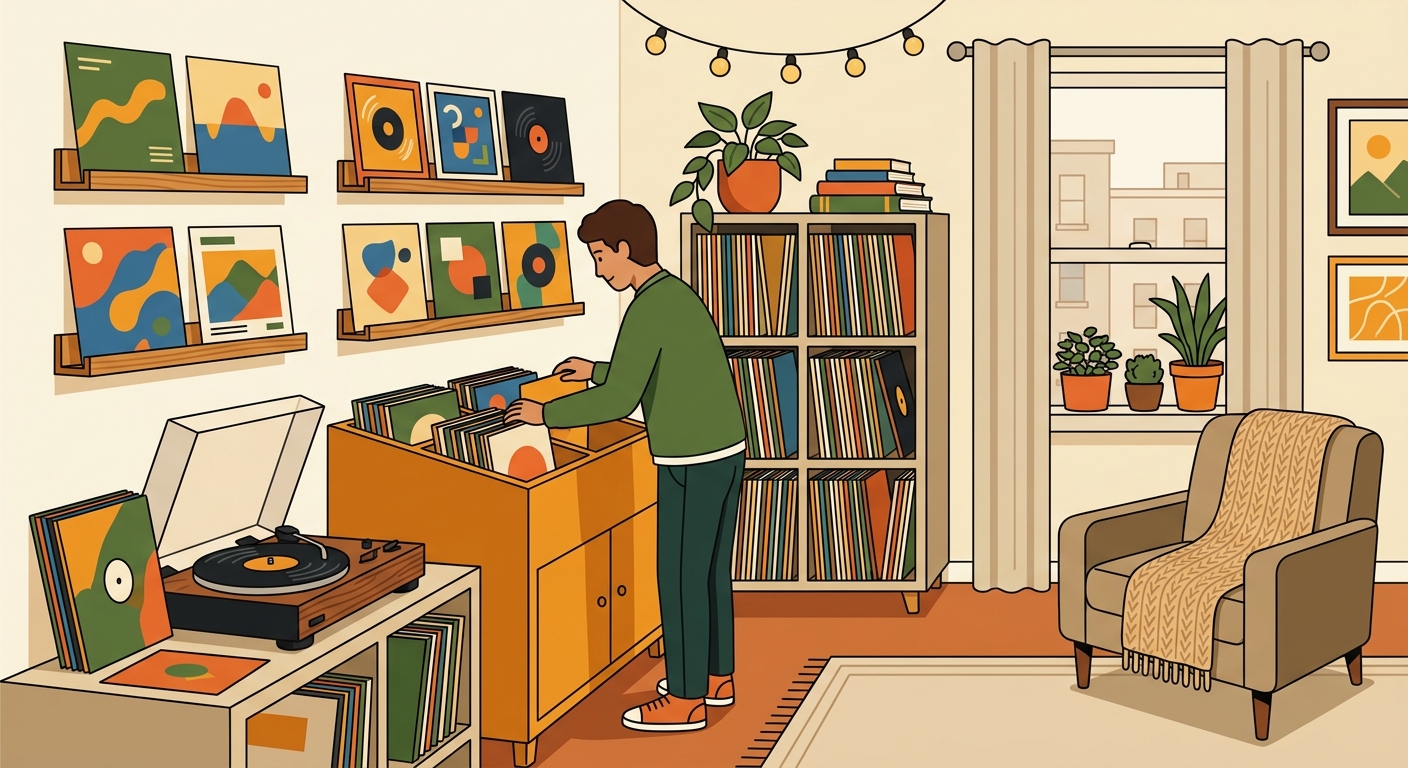
Small-space vinyl organization is a geometry problem with a soundtrack. A 12-inch LP jacket is about 12.375 inches square, so book storage can still be too shallow for albums in outer sleeves. The other constraint is weight. The Library of Congress notes that grooved discs average 35-plus pounds per shelf-foot, which is why flimsy bookcases sag fast. [1]
The good news: you do not need a dedicated listening room. You need vertical support, stable climate, and DIY choices that use walls, corners, and furniture you already own. If you track plays in What's Spinning, a smaller visible setup can work beautifully.
Start with the non-negotiables
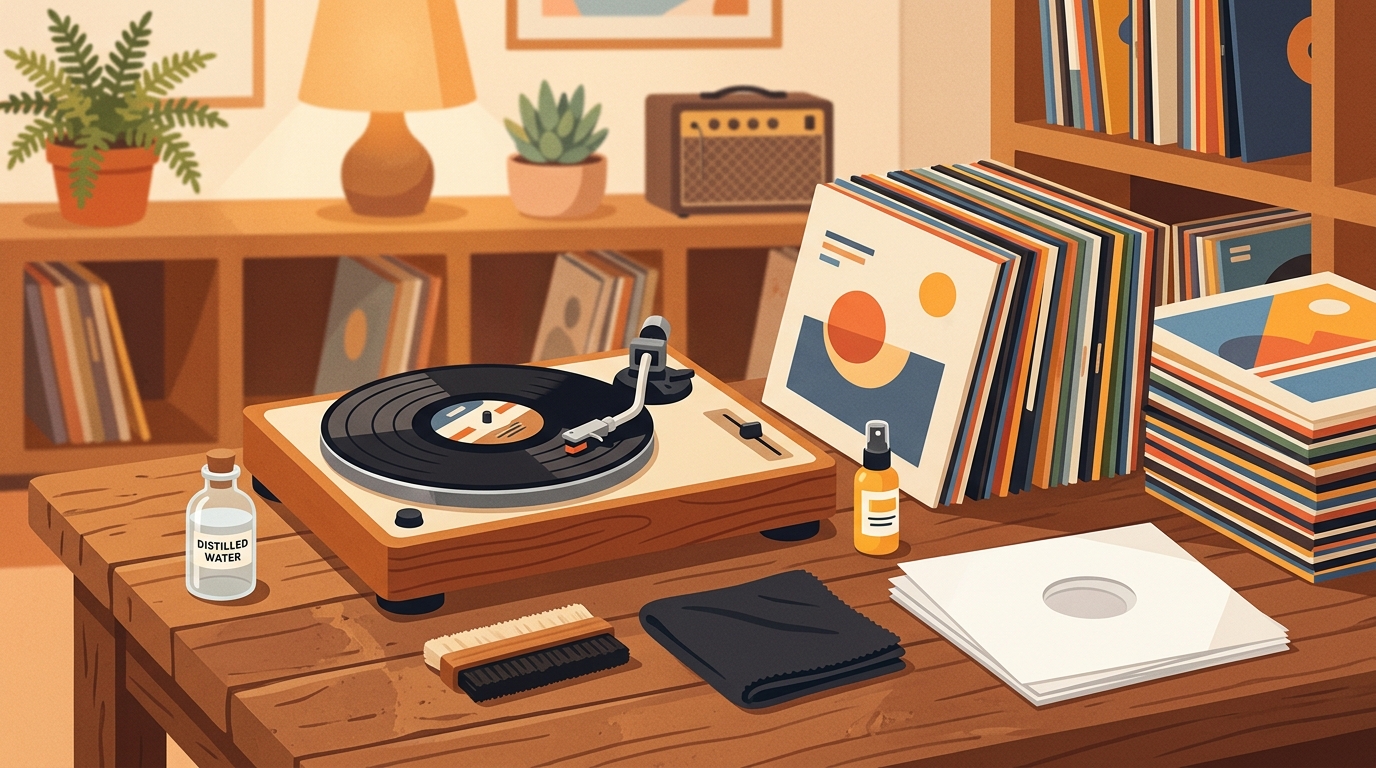
Before the fun hacks, set the rules. Store records upright, not stacked flat. The Library of Congress says all formats should be stored upright, and for grooved discs it recommends sturdy dividers every 4 to 6 inches that support the full face of the disc in its sleeve. [1] Discogs gives the same practical advice: keep records vertical, avoid packing them too tightly, and store them at room temperature or cooler, roughly 59 to 77 degrees Fahrenheit. [2]
Humidity matters too. Discogs recommends a relatively dry room around 35 to 40 percent relative humidity, and warns that high humidity can invite mold, mildew, sleeve sticking, and warping. [2] In a small apartment, that usually means records belong in a living room, bedroom, or hallway, not a bathroom wall or damp storage bin.
DIY idea 1: Build a low crate bench
A low crate bench is one of the most forgiving small-space solutions because it combines seating, browsing, and storage. Use two or three square wooden crates sized for LPs, fasten them side by side, add a plywood top, then finish with a cushion or a narrow slab of butcher block. Keep the crates open-front so spines face outward, or rotate one crate 90 degrees for flip-through browsing.
The key is reinforcement. Records concentrate weight along the centerline of a shelf, not across the whole surface like folded blankets. If each crate holds 50 to 70 LPs, use screws, corner brackets, and a continuous base board rather than relying on decorative crate staples.
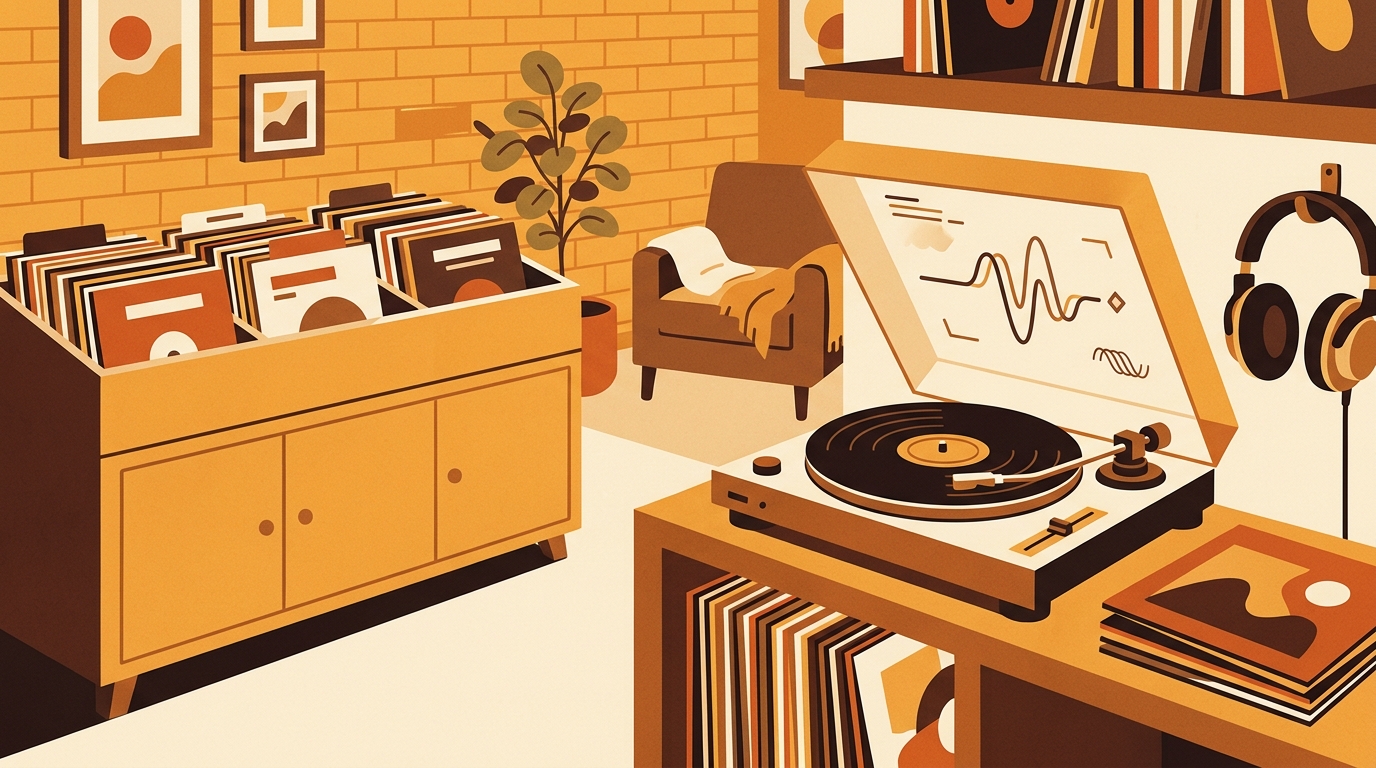
DIY idea 2: Turn one cube into a complete listening station
Cube shelves are popular because their proportions suit LPs. IKEA's KALLAX family, for example, uses cube openings intended for 13-by-13-inch inserts, giving typical 12-inch jackets enough clearance. [5] In a tight room, a 2-by-2 cube can become the whole station: records below, amplifier or cleaning kit in one cube, turntable on top.
Do not overbuild upward just because cubes stack neatly. If you use a tall unit, anchor it to the wall, put the heaviest records low, and keep the turntable on the most rigid surface.
DIY idea 3: Make a wall rail for now-playing records
Wall display can save floor space, but it should not become long-term storage. A picture ledge or shallow rail is great for five to ten jackets: current favorites, new arrivals, or records you want to play this week. It is not a substitute for vertical shelf support. Keep the rail away from direct sunlight, since both the Library of Congress and Discogs warn against intense light exposure for recorded media and jackets. [1] [2]
DIY idea 4: Use vertical dividers inside furniture you already own
If you have a deep cabinet, media console, or sideboard, the cheapest upgrade is internal dividers. Cut 1/4-inch plywood or acrylic sheets to fit the cabinet height and depth, then place them every few inches so partially filled rows cannot slump sideways.
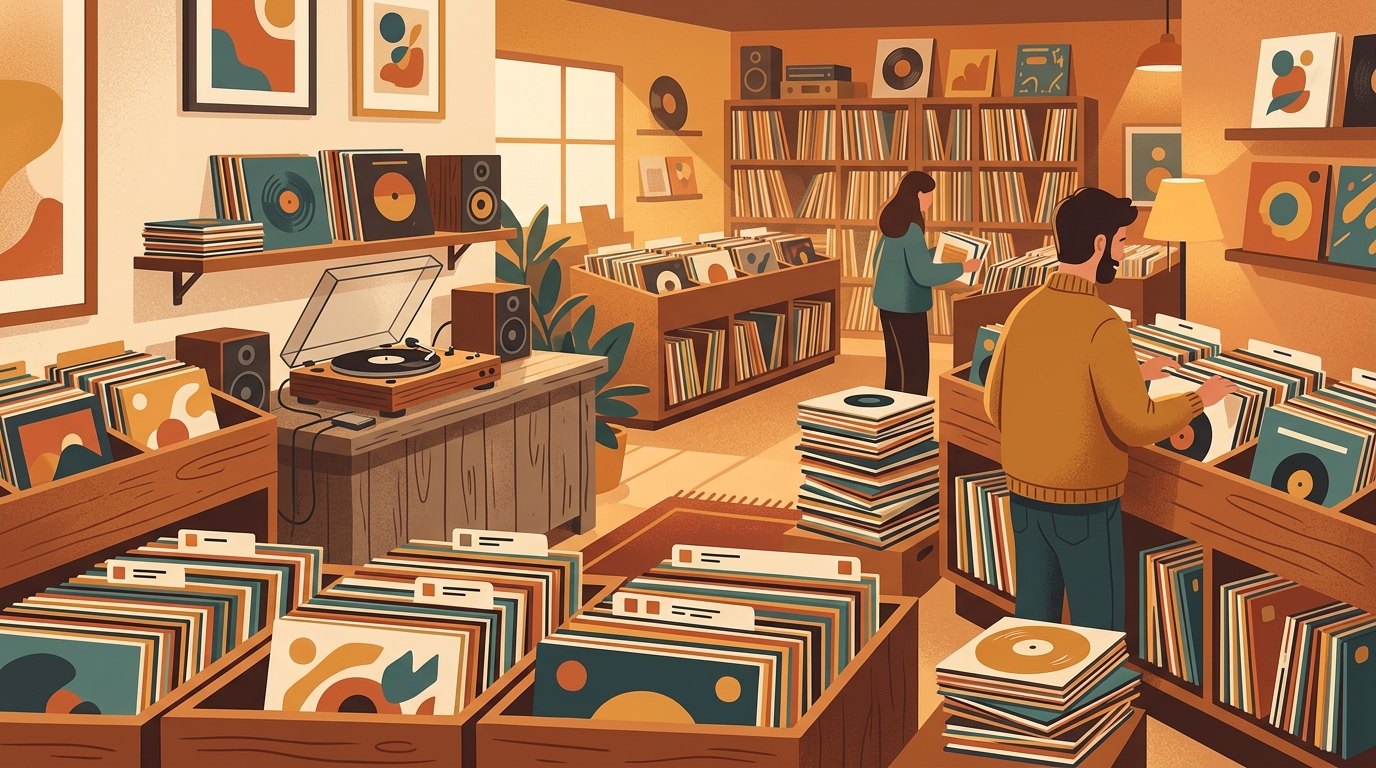
DIY idea 5: Rotate the collection like a record shop bin
Not every album has to be in the prime listening zone. U.S. vinyl revenue grew to about $1.4 billion in 2024, and vinyl albums sold around 44 million units, more than CDs for the third year in a row, according to RIAA figures reported by Billboard. [4] Translation: collections are growing, while apartments are not.
Use a two-tier system. Keep 50 to 100 high-rotation records near the turntable. Store overflow alphabetically in a closet cube, under-window bench, or sturdy hallway cabinet. Every month, swap a batch.
A simple small-space layout
For most apartments, start with this: a low cube unit against an interior wall, speakers on separate stands, a small wall rail above for five now-playing jackets, and one overflow crate in a closet.
The test is simple. Can every record stand upright without leaning? Can you pull one album without scraping both neighbors? Is the shelf deep enough for outer sleeves and away from vents, windows, bathrooms, and speaker vibration? If yes, your DIY solution is doing the job.
FAQ
Should vinyl records be stored vertically or flat?
Vertically. Flat stacks put pressure on the bottom jackets and discs, while leaning rows can encourage warping over time. Use dividers or short cube sections so records stay close to upright.
How much room do I need for a small vinyl collection?
A 50 record collection usually fits in one sturdy crate, one cube, or a narrow side table cabinet. Plan for at least 13 inches of height and enough depth for jackets plus outer sleeves.
Can I keep my turntable on the same furniture as my records?
Yes, if the surface is level, rigid, and isolated from speaker vibration. Put speakers on separate stands when possible, or use isolation pads if everything must share one wall.
What is the best DIY storage idea for renters?
Modular cubes or low crates on a bench are usually safest because they move easily, do not require permanent built-ins, and can scale from 50 records to a few hundred without redesigning the room.
Sources
Comparing vinyl ID apps?
Analog requires Discogs and is iPhone-first (iPad coming). What's Spinning works without Discogs on iPhone and iPad with AirPlay.
Try What's Spinning Free
Turn your iPad into a live now-playing display. Track every record you spin.
START FREE TRIALThen $4.99/mo or $39.99/yr · Cancel anytime