How to Organize Your Vinyl Records
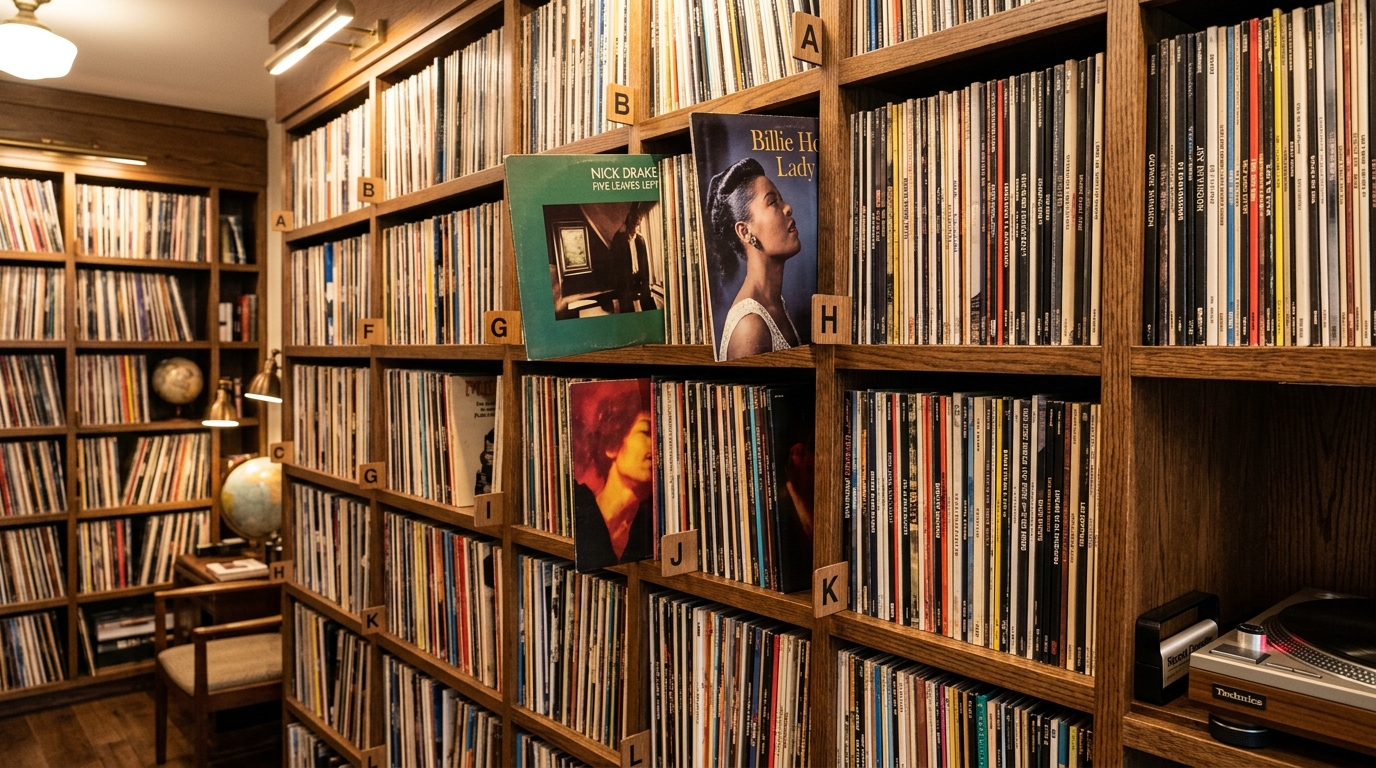
You have been collecting records for a while now. Maybe you inherited a stack from someone. Maybe you have been hitting the local record shop on Saturdays and coming home with something you have never heard but could not resist. Maybe you bought a turntable on a whim during the pandemic and realized too late that you now had a new obsession and a stack of records that was growing faster than your shelf space.
At some point, you have to make a decision. How are you going to organize this thing?
This is not a rhetorical question. The way you organize your records affects how you interact with your collection, how often you discover things you forgot you owned, and how much time you spend looking for a specific record instead of actually playing it. A good system makes your collection feel alive. A bad one makes it feel like an archive.
Start with the Physical: Shelf Space
Before you decide on a sorting system, you need to know your constraints. How many records can you fit? How many shelves do you have, and how are they arranged? Are your shelves deep enough for records to stand upright without being crammed?
These questions matter more than the sorting system you choose. A perfect alphabetical system means nothing if your records are piled three deep on a shelf where you cannot see half of what you own. The physical constraints of your space should drive the organizational system, not the other way around.
As a rough guide, a standard 12-inch vinyl record is about 12 inches tall, 12 inches wide, and a quarter inch thick. A typical three-shelf bookcase can hold roughly 100 to 150 records per shelf depending on how you pack them. If you are nowhere near that limit, you have flexibility. If you are already overflowing, you might need to be more aggressive about what stays and what gets stored.
Common Systems and Why People Choose Them
There are a few approaches that most vinyl collectors end up using, and each has its own logic.
- Alphabetical by artist. This is the most common system and the one most people default to. It is intuitive, it is easy to maintain, and it means you always know where to look for something. The downside is that it breaks down when you have a lot of compilations, soundtracks, or various artists releases. Where does a Best of the 70s go? It is not under B.
- Genre or mood. Some people organize by genre, which works well if you tend to listen by mood rather than by artist. Jazz here, punk there, electronic in the corner. This system requires you to be consistent about how you tag genres, and it falls apart if a record could plausibly belong in multiple categories.
- Color. Yes, some people sort by color. It looks great on Instagram and it works if you have a visually oriented brain. But it is nearly impossible to maintain once your collection grows past a certain size, and it requires you to be very deliberate about how you file new acquisitions.
- Size or format. 7-inches in one place, 10-inches in another, 12-inches elsewhere. This is more of a sub-organization than a primary system, but it matters if you have a lot of singles and EPs.
- Chronological. Organized by the year the record was released. Interesting if you want to see your collection as a timeline of music history. Impractical for browsing by vibe.
The Problem with Purely Physical Organization
Here is the thing about physical organization: it tells you where a record is, but it does not tell you what you actually play. You can have a beautifully sorted collection, every record in its place, and still have no idea which ten records you have played a hundred times versus the ones that have been sitting in the same spot since you bought them.
Most vinyl collectors have this experience. They pull a record off the shelf and realize they have no memory of ever playing it. It might as well be new. That gap between ownership and listening is one of the quiet inefficiencies of a purely physical system.
Digital Tracking: See What You Actually Play
This is where digital tracking changes the game. When you use a tool like What's Spinning to log your plays, you get a view into your actual listening habits that no shelf system can give you. You see play counts. You see which artists you return to most. You see gaps in your collection, places where you keep wanting to hear something but never got around to buying it.
Over time, this data is genuinely interesting. You discover that you have been playing the same three records for the last two months. You realize you have a strong preference for a specific decade or a specific label without having consciously noticed it. You find out that the record you bought because it looked interesting but never played is actually worth spinning.
The Hybrid Approach
The best system is physical organization for browsing and digital tracking for insights. Keep your records sorted in a way that makes sense for how you actually use the space. Alphabetical is fine. Genre is fine. Whatever works for your space and your brain is fine. Then add a layer of digital tracking on top of it.
What's Spinning runs quietly in the background and logs every play. You do not have to do anything. The record spins, the data flows, and over weeks and months you build up a picture of your listening that you could never get from looking at your shelves.
The two systems complement each other. Your physical organization is for discovery and browsing. Your digital tracking is for understanding patterns and making better decisions about what to buy next.
What You Will Learn
One of the surprises of digital tracking is finding your actual favorite artist. Not the one you tell people about, not the one you bought all the records for, but the one you keep returning to without thinking about it. It might be someone you inherited records from. It might be a band whose albums you keep finding at different shops. It might be a genre you did not think you were that into, but your play data tells a different story.
When you can see what you actually play, your relationship with your collection changes. It becomes less of an archive and more of a living thing.
Quick Tips for Protecting Your Records
While we are on the subject of organization, a few quick reminders about keeping your records in good shape:
- Use inner sleeves. Always. The paper sleeves that records come in are not enough. Poly-lined or rice paper inner sleeves prevent the kind of surface noise that comes from the record rubbing against the card stock over time.
- Store records vertically, not flat. Stacking records flat creates pressure on the bottom ones and can warp them over time. Store them upright, like books on a shelf.
- Keep them away from direct sunlight. Sunlight fades the covers and can warp the vinyl. A dark corner of the room is better than a sunny spot near the window.
- Do not overpack your shelves. Records that are crammed together get damaged when you pull them out. Give them room to breathe.
Organizing your records is like organizing your music taste. Both are easier when you can see what you actually have.
Organizing your records is like organizing your music taste. Both are easier when you can see what you actually have.
A spreadsheet tracks what you own. What's Spinning identifies what's playing.
On-device vinyl ID logs your listening history automatically. 7-day free trial.
Looking for Shazam for vinyl?
What's Spinning identifies what's playing on your turntable on-device, logs history, and AirPlays now-playing to your TV.
Comparing vinyl ID apps?
Analog requires Discogs and is iPhone-first (iPad coming). What's Spinning works without Discogs on iPhone and iPad with AirPlay.
Try What's Spinning Free
Turn your iPad into a live now-playing display. Track every record you spin.
START FREE TRIALThen $4.99/mo or $39.99/yr · Cancel anytime