From Elvis to Taylor Swift: The Resurgence of the 7-Inch Single
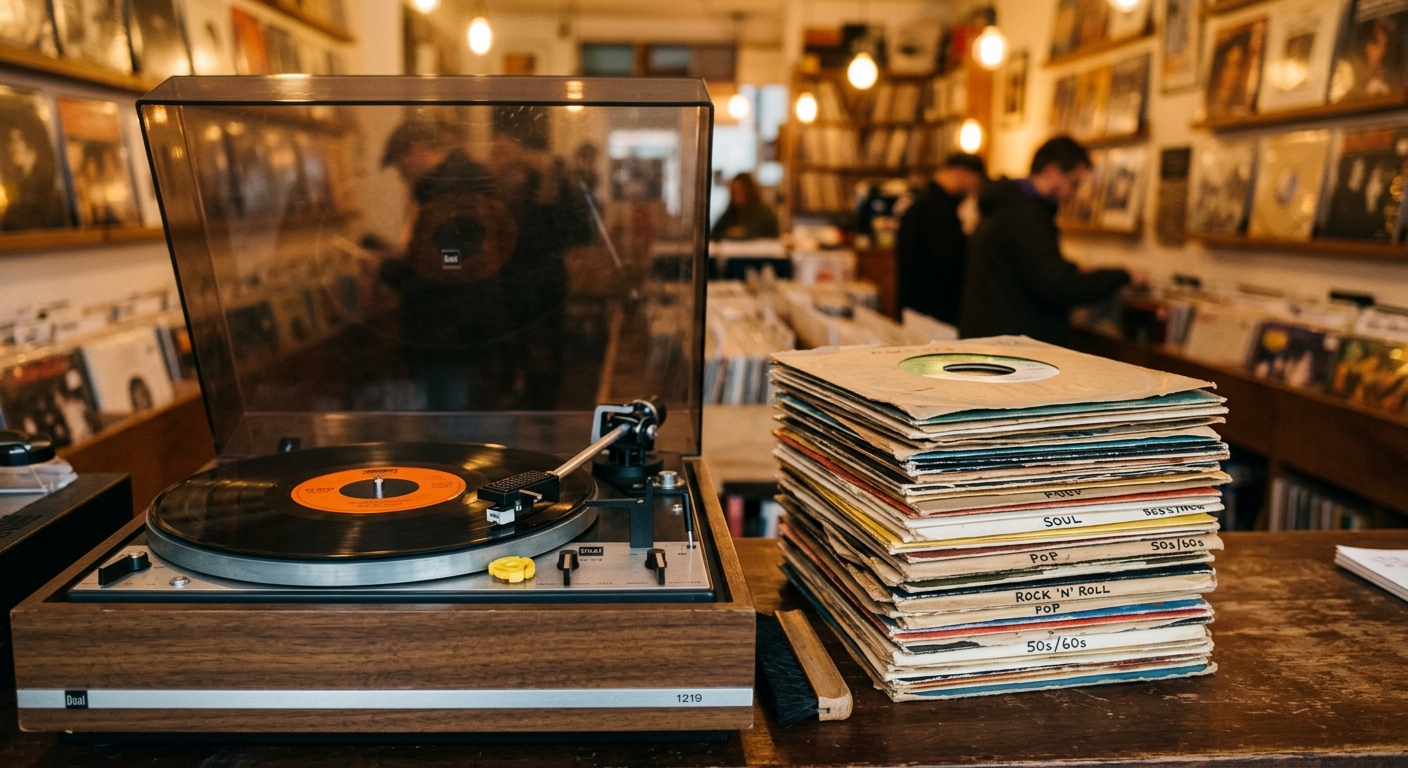
The 7-inch single never disappeared. It just went back underground for a while, living in jukebox memories, DJ boxes, punk bins, soul collector wantlists, and Record Store Day queues. Now it is popping back into mainstream vinyl culture for a simple reason: in a streaming world where every song is instantly available, a small record with one song per side feels surprisingly powerful.
That is the funny thing about the 7 inch vinyl single resurgence. It is not only nostalgia. Yes, the format carries a direct line from Elvis Presley 45s, Motown sides, Beatles picture sleeves, and punk singles. But the current revival also fits how modern fans collect music: limited editions, alternate covers, colored vinyl, exclusive B-sides, and physical objects that mark a specific moment in an artist’s story.
The 45 was built for the hit single
RCA Victor introduced the 7-inch 45 rpm record in 1949 as part of the postwar format battle with Columbia’s 33 1/3 rpm LP. The format used microgrooves, usually carried one song per side, and quickly became the natural home of the pop single. The Museum of Obsolete Media notes that the 12-inch LP won the album market, while the 7-inch 45 became the dominant singles format, with EP versions arriving in 1952 for three to six songs at lower volume.
Why collectors care again
The modern vinyl boom has mostly been measured in albums, but singles are benefiting from the same collector psychology. According to the RIAA’s 2024 year-end report, U.S. physical music revenue rose 5% to $2.0 billion, while vinyl revenue grew 7% to $1.4 billion, marking the eighteenth consecutive year of vinyl growth. Vinyl LPs and EPs also outsold CDs in units for the third straight year, 43.6 million to 32.9 million.
Those numbers are album-heavy, but they create the conditions for the single to matter again. More people own turntables. More labels have pressing relationships. More fans understand limited runs. A 7-inch release can sell as a souvenir, a fan-club reward, a tour-table item, a Record Store Day exclusive, or a deliberately scarce piece of an album campaign.
Official Charts data from the UK shows how mixed the audience has become. Its 2024 vinyl singles list was led by Liam Gallagher and John Squire’s “Just Another Rainbow,” followed by Chappell Roan’s “Good Luck, Babe!” and Noah Kahan’s “Stick Season.” Heritage releases sat right alongside current pop: Oasis’s “Supersonic” ranked fourth, Wham!’s “Last Christmas” ranked fifth after a zoetrope vinyl release, and the Beatles’ “Now and Then” still appeared in the Top 40.
The Taylor Swift effect, even when the format is bigger than one artist
Taylor Swift’s role in the vinyl comeback is mostly discussed through LPs, but the impact spills into singles culture. Official Charts reported that The Tortured Poets Department sold 112,000 vinyl units in the UK in 2024, the highest yearly figure for a vinyl album this century there. Billboard, citing Luminate’s 2024 year-end data, reported that U.S. vinyl album sales rose 4.3% and that Swift’s album was the top-selling title across CD, vinyl, cassette, and digital download album formats.
Why does that matter for 7-inch records? Because big pop campaigns have trained fans to think physically again. Variants, bonus tracks, alternate sleeves, colored pressings, and timed drops are now part of the language of fandom. Once a fan has bought a special LP, a 7-inch single no longer feels like an oddity. It feels like the next artifact.
Record Store Day made the small record feel special again
Record Store Day has been especially important because it turns small-format releases into destination objects. In the UK’s 2024 vinyl singles chart, Olivia Rodrigo and Noah Kahan’s BBC Radio 1 Live Lounge double A-side ranked sixth. Official Charts noted that the 7-inch, with Rodrigo covering “Stick Season” and Kahan covering “Lacy,” was first released for Record Store Day on cream vinyl, then reissued on teal vinyl later in the year.
That kind of release is exactly where the 7-inch shines. It is compact, collectible, easy to display, and tied to a specific story. It can commemorate a radio session, a charity single, a tour, an anniversary, or a collaboration that would feel too slight as a full LP but perfect as a physical single.
What makes a 7-inch different from a streaming save?
A saved song is convenient. A 7-inch asks you to participate. You pull it from a sleeve, put it on the platter, cue the stylus, and flip it a few minutes later. That friction is the point. It makes a song feel chosen.
For collectors, the format is also wonderfully readable. A crate of 7-inches tells a story in quick flashes: label logos, sleeve art, radio edits, jukebox centers, regional pressings, promo copies, and B-sides that never became playlist fodder. The format rewards curiosity. Sometimes the flip side is better. Sometimes the sleeve matters more than the song. Sometimes the pressing is the story.
That is also where tracking your collection becomes useful. If you collect singles, details pile up fast: pressing country, label, catalog number, sleeve condition, vinyl grade, color variant, and whether you bought it at a store, show, or fair. What’s Spinning is built around the listening side of collecting, so it helps turn those objects into a play history too. When a 7-inch gets played, it should not vanish into memory. It should become part of the story of your collection.
The resurgence is really about moments
The 7-inch single is not coming back because it is the most practical way to hear a song. Streaming already won that argument. It is coming back because practicality is not the only reason people love records.
A 45 turns a song into a keepsake. It gives a hit a front and back. It gives fans something to line up for, trade, frame, file, and play. From Elvis-era jukeboxes to Taylor-era variant culture, the best singles have always done the same thing: capture a pop moment before it floats away.
Sources
- Museum of Obsolete Media, “7-inch single (1949)”
- RIAA 2024 Year-End Music Industry Revenue Report
- Official Charts, best-selling vinyl albums and singles of 2024
- Billboard summary of Luminate’s 2024 year-end music report
FAQ
What is a 7-inch vinyl single?
A 7-inch vinyl single is a small record, usually played at 45 rpm, that typically holds one song per side. Some 7-inch EPs fit more songs by cutting at lower volume or with narrower grooves.
Are 7-inch singles worth collecting?
They can be, especially if you enjoy picture sleeves, rare B-sides, jukebox pressings, colored vinyl, Record Store Day editions, or singles tied to a favorite artist’s campaign. Condition, scarcity, and demand matter more than format alone.
Can every turntable play 7-inch singles?
Most turntables can play 7-inch records if they support 45 rpm. Some U.S. 45s have a large center hole and need a small adapter, often called a 45 adapter or spider.
Why are artists releasing 7-inch singles again?
They are affordable collectibles, useful for limited drops, and perfect for special songs, covers, live sessions, charity releases, or anniversary reissues. They give fans a physical object without requiring a full album purchase.
A spreadsheet tracks what you own. What's Spinning identifies what's playing.
On-device vinyl ID logs your listening history automatically. 7-day free trial.
Looking for Shazam for vinyl?
What's Spinning identifies what's playing on your turntable on-device, logs history, and AirPlays now-playing to your TV.
Comparing vinyl ID apps?
Analog requires Discogs and is iPhone-first (iPad coming). What's Spinning works without Discogs on iPhone and iPad with AirPlay.
Try What's Spinning Free
Turn your iPad into a live now-playing display. Track every record you spin.
START FREE TRIALThen $4.99/mo or $39.99/yr · Cancel anytime