Why Mobile Fidelity Pressings Command Premium Prices
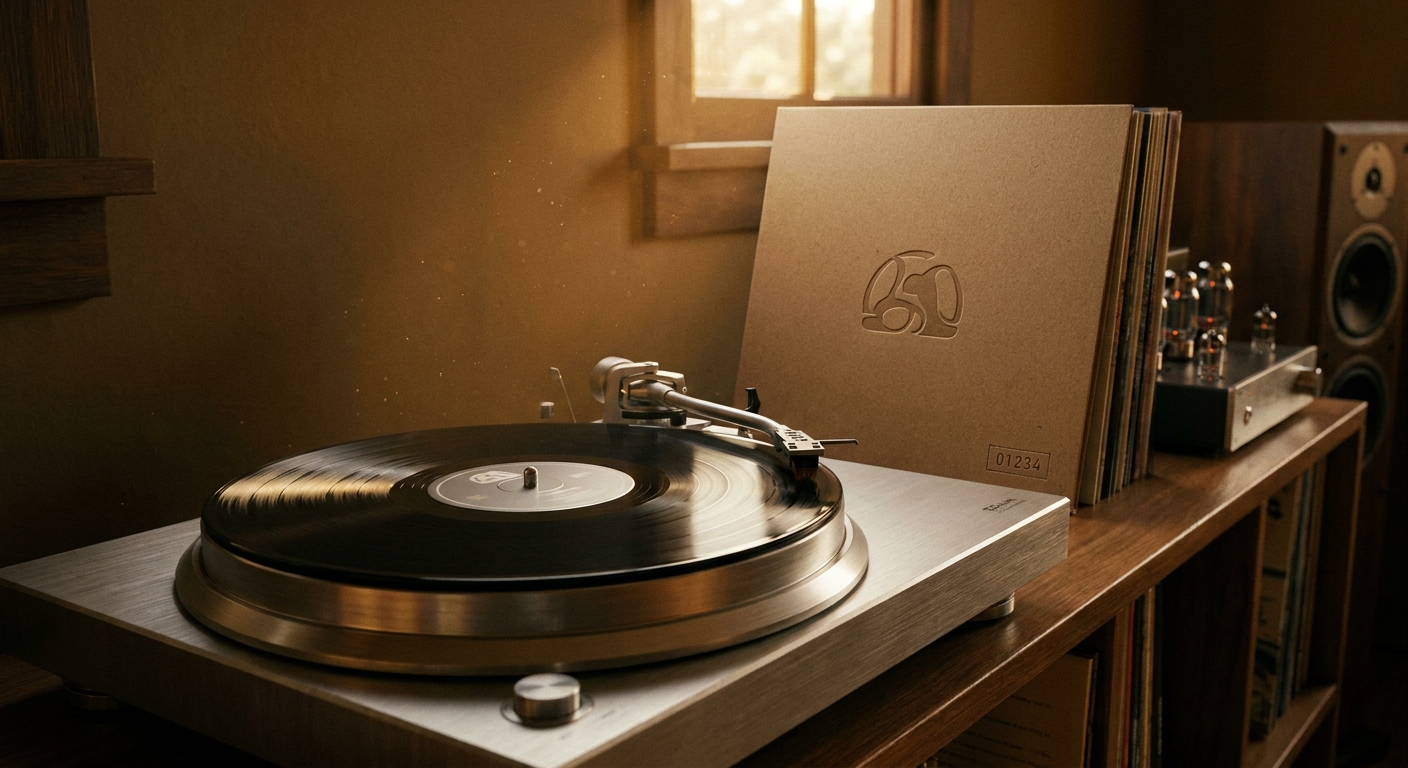
Mobile Fidelity Sound Lab, usually shortened to MoFi or MFSL, occupies a strange and fascinating corner of vinyl collecting. To some buyers, the silver stripe across the top of a jacket signals the closest they may ever get to a master tape. To skeptics, it signals clever audiophile branding and a very expensive way to rebuy music they already own. The truth sits somewhere more interesting: Mobile Fidelity pressings command premium prices because they combine licensing, mastering labor, limited production, collector psychology, and a long history of genuinely desirable records.
The phrase collectors search for is often Mobile Fidelity half speed mastering, but the premium is really about the whole system around it: source selection, mastering choices, pressing quality, packaging, scarcity, and reputation.
What half speed mastering actually does
Half speed mastering means the master source and the cutting lathe both run at half their normal speed while the lacquer is cut. A 10,000 Hz musical signal becomes a 5,000 Hz signal at the cutting head, which gives the lathe an easier job when tracing fast high frequency information. SonicScoop explains the basic mechanical advantage clearly: at half speed, the lathe has to oscillate half as fast for the same musical content, reducing stress on the cutting system and making difficult high frequency passages easier to engrave (SonicScoop).
Sound Matters quotes mastering engineer Barry Grint on a similar point: cutting at half speed can move problematic high frequency information away from the point where a cutting head's feedback system becomes unstable, which can help produce a more open and accurate top end (Sound Matters). That does not mean every half speed record is magic. Bass management, tape condition, EQ decisions, and the skill of the mastering engineer still matter. But it explains why the process became attractive for audiophile reissues, especially records with dense arrangements, inner groove challenges, or delicate treble detail.
Why Mobile Fidelity became the name collectors remember
Mobile Fidelity's reputation goes back decades. The company says Brad Miller founded Mobile Fidelity in 1958, and that it evolved into Mobile Fidelity Sound Lab in 1977 when it pivoted into reissuing major mainstream albums. MoFi also says its catalog now spans more than 650 releases and that it remasters from original master tapes whenever available (Mobile Fidelity, Our Story).
That matters because collectors do not pay only for sound. They pay for trust, story, and identification. The horizontal "Original Master Recording" banner, numbered jackets, and premium inserts made a MoFi record instantly recognizable in a bin. Even before you played it, the package told you this was meant to be the serious copy.
The premium is partly manufacturing cost
Modern Mobile Fidelity pricing reflects real production choices. On MoFi's current vinyl shop pages, many standard audiophile LPs list around $39.99 to $59.99, while numerous UltraDisc One-Step box sets list at $125.00 (MoFi vinyl catalog, MoFi UltraDisc One-Step catalog). That is already well above a mass market new LP, and it happens before scarcity or resale demand enters the picture.
The One-Step process is a big reason. MoFi says UltraDisc One-Step bypasses two stages in the traditional three-step plating process, skipping the father and mother plates and making stampers directly from the lacquer. The tradeoff is brutal for efficiency: each lacquer yields only one stamper, so multiple lacquers must be cut for a run. MoFi argues the benefit is the lowest possible noise floor and fewer generational losses (MoFi, Our Technology). Whether you hear that difference on your system is a fair debate, but the production economics are not imaginary.
The premium is also collector behavior
The second price engine is scarcity. A limited audiophile pressing of a canonized album can behave less like a normal record and more like a collectible object. Buyers are not just asking, "Does this sound good?" They are asking, "Is this the copy everyone will want later?" That dynamic is strongest for titles by artists like Miles Davis, Bob Dylan, Santana, The Beatles, Joni Mitchell, Dire Straits, and other acts that already have deep collector markets.
The 2022 DSD controversy changed the conversation
No article about MoFi premiums is complete without the 2022 sourcing controversy. The short version: collectors had long assumed many MoFi vinyl releases were cut in an all analog chain. In 2022, after questions from record store owner and YouTuber Michael Esposito, MoFi staff confirmed that many titles used Direct Stream Digital copies of master tapes in the vinyl mastering chain. Wikipedia's summary notes that staff said at least 60 percent of all titles used this process by the end of 2011, including UltraDisc One-Step releases (Mobile Fidelity Sound Lab summary).
So, are Mobile Fidelity pressings worth it?
Sometimes, yes. A great MoFi pressing can be quiet, dynamic, beautifully packaged, and easier to find in clean condition than a vintage original. Half speed mastering can offer real technical benefits, especially when the engineer uses it well. One-Step releases can reduce plating generations at the cost of more labor and lower output. Those are valid reasons for premium pricing.
But the smart collector separates three kinds of value. First is sonic value: does this pressing improve the listening experience on your setup? Second is practical value: is it clean, flat, quiet, and easier to buy than an original? Third is collectible value: is it limited, desirable, and likely to remain liquid if you sell it later?
What's Spinning is useful here because premium records deserve more than a vague memory. Track the exact pressing, play history, condition, purchase price, and listening notes. If a Mobile Fidelity copy becomes your go-to version of an album, you will know. If it sits untouched because your original has more life, you will know that too.
FAQ
Are all Mobile Fidelity records half speed mastered?
No. Half speed mastering is strongly associated with Mobile Fidelity's Original Master Recording era, but the modern catalog also includes different production approaches such as GAIN 2 Ultra Analog, SuperVinyl, SACD, and UltraDisc One-Step releases. The specific jacket, product page, and insert matter.
Does half speed mastering always sound better?
Not automatically. It can help the cutting system trace difficult high frequency information with less stress, but the source tape, mastering choices, pressing quality, playback setup, and listener preference still decide whether a particular copy sounds better.
Why did the MoFi DSD controversy matter to collectors?
Collectors believed some premium records were all analog from tape to lacquer. In 2022, MoFi staff confirmed that many titles used a DSD copy of the master tape in the chain. The records can still sound excellent, but the disclosure changed how buyers evaluated transparency and value.
Should I buy a MoFi pressing if I already own an original?
Compare the exact title, condition, and price. A clean original can be more historically authentic, while a MoFi can offer lower noise, careful mastering, premium packaging, and a more consistent modern pressing. If possible, listen before paying a collector premium.
A spreadsheet tracks what you own. What's Spinning identifies what's playing.
On-device vinyl ID logs your listening history automatically. 7-day free trial.
Looking for Shazam for vinyl?
What's Spinning identifies what's playing on your turntable on-device, logs history, and AirPlays now-playing to your TV.
Comparing vinyl ID apps?
Analog requires Discogs and is iPhone-first (iPad coming). What's Spinning works without Discogs on iPhone and iPad with AirPlay.
Try What's Spinning Free
Turn your iPad into a live now-playing display. Track every record you spin.
START FREE TRIALThen $4.99/mo or $39.99/yr · Cancel anytime