How to Organize Vinyl in Small Apartments
Learning how to organize vinyl in a small apartment is really a space-management problem with a music habit attached. Records are beautiful, but they are also heavy, awkward, and easy to turn into decorative clutter if every new purchase lands in a random stack beside the turntable.
The good news: you do not need a record room. You need one sturdy storage zone, one filing rule, a small incoming area, and a limit that tells you when the shelf is full. That matters more than ever because vinyl is not slowing down. The RIAA's 2024 year-end report said vinyl albums outsold CDs in units for the third year in a row, at roughly 44 million vinyl albums versus 33 million CDs. More releases mean more temptation, so apartment collectors need a system before the shelf starts negotiating with gravity.
Start with the weight, not the aesthetic
Before picking bins or dividers, ask whether the furniture can safely hold records. The Library of Congress notes that grooved discs average more than 35 pounds per shelf-foot and recommends sturdy shelving because audio formats concentrate weight along the centerline of a shelf. That is a serious load in a rental apartment, especially on narrow bookcases or decorative cabinets built for candles and paperbacks.
If you use cube storage, read the actual load rating. IKEA's official KALLAX guidance, for example, lists a 13 kg, about 28.7 pound, shelf load. That does not mean every cube shelf is doomed, but it does mean you should avoid overpacking, anchor tall units, keep the heaviest sections low, and skip flimsy shelving with thin adjustable pins.
Choose one main vinyl zone
Small apartments punish scattered systems. If half your records live under the console, ten sit by the sofa, and new arrivals pile up in a milk crate near the door, you do not have a collection, you have vinyl confetti. Pick one main wall, cabinet, or cube unit as the home base. Put the turntable close enough that choosing a record is easy, but not so close that speaker vibration, foot traffic, or a wobbly stand interferes with playback.
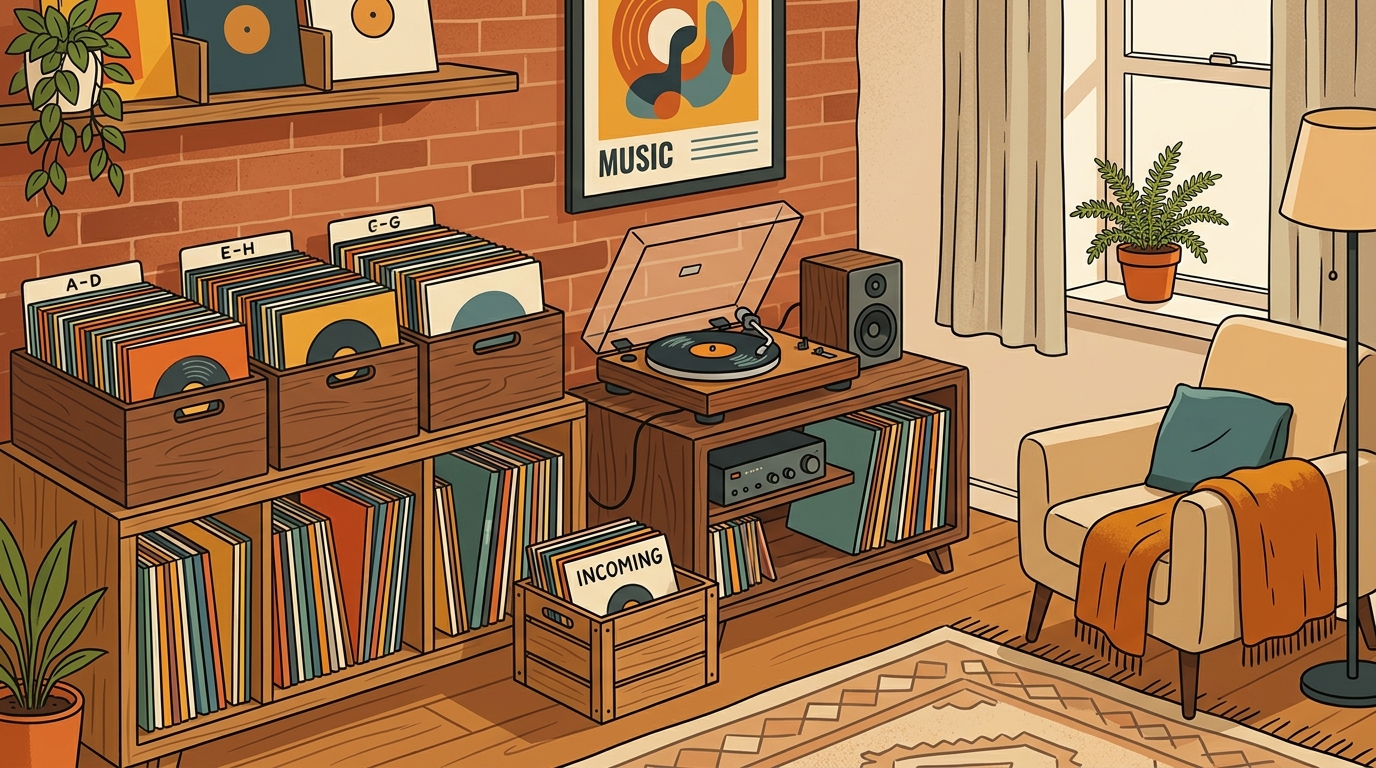
A strong apartment layout is usually: records below, turntable on a separate rigid surface, speakers isolated from the turntable, cleaning brush and inner sleeves in a small drawer or basket. That keeps the ritual compact without asking one piece of furniture to do every job.
Use zones instead of perfect cataloging
In a small space, organization should make browsing faster, not turn your living room into a library internship. Start with three physical zones: active listening, main collection, and incoming records. Active listening is a small front-facing crate or shelf for records you play often this month. Main collection is the permanent filing area. Incoming is the quarantine zone for purchases that still need cleaning, inspection, or logging.
This is where What's Spinning can make the system feel less fussy: let the app build listening history from what actually plays on your turntable, then use the shelf zones to support that behavior. The app tracks the listening life; the apartment system keeps the physical records findable.
Pick a filing rule you will actually follow
Alphabetical by artist is the safest default. It scales from 50 records to 1,000, and visitors understand it. Genre-based organization works beautifully if your collection has clear sections, such as jazz, punk, soul, electronic, country, soundtracks, and classical. The danger is creating too many micro-genres. If you have a “post-punk but not goth” section in a studio apartment, the filing system may be winning the argument.
Use simple dividers every 25 to 40 records. Leave space at the end of each row so you can pull records without bending jackets. A shelf packed to 100 percent looks satisfying for one afternoon, then becomes annoying every time you shop, alphabetize, or want the record in the middle.
Make a one-in, one-review rule
Small-apartment collecting works best with a review habit, not a hard buying ban. When the main shelf reaches about 85 percent full, stop adding blind. For every new batch, review duplicates, records you never play, and “maybe someday” albums that have been maybe-someday for three years. Sell, trade, gift, or store offsite the records that no longer earn apartment space.
This is not anti-collecting. It is pro-listening. A tight collection that gets played is more satisfying than a wall of records you cannot reach, clean, or remember buying.
Protect records from apartment hazards
The Library of Congress recommends keeping audiovisual materials upright in a cool, dry, clean, stable environment and avoiding attics, basements, leaks, and environmental extremes. Apartment translation: avoid radiators, sunny windows, bathroom walls, damp closets, and exterior corners that swing between hot, cold, and humid. Store records vertically, support partially full rows with bookends or filler boxes, and keep food and drinks away from the turntable area.
Outer sleeves help in tight spaces because jackets rub more when storage is dense. Replace rough paper inners on records you play often, keep a carbon fiber brush nearby, and do not let “temporary” floor stacks become permanent furniture. Floor stacks are how corner dings, dust, and mystery footprints happen.
A simple weekend setup plan
- Measure the wall, floor footprint, and shelf depth before buying furniture.
- Check the shelf load rating and anchor tall furniture if the design calls for it.
- Create three zones: active listening, main collection, and incoming records.
- File the main collection alphabetically or by broad genre, not both.
- Add dividers and leave growth space in every cube or shelf section.
- Review the collection whenever storage reaches about 85 percent full.
The goal is not to make your apartment look like a record store. The goal is to make playing records easier than ignoring them. When every album has a safe place, every new arrival has a short workflow, and every shelf has breathing room, even a small apartment can hold a collection that feels intentional instead of crowded.
FAQ
What is the best way to organize vinyl in a small apartment?
Use one sturdy upright shelf, divide it into simple zones, and keep only a small incoming crate for new or unfiled records. Alphabetical by artist works for most collections, while genre zones help if you listen by mood or scene.
Can I store records flat if I am short on space?
No. Store records upright with enough support to keep them vertical. Flat stacks put pressure on the lower jackets and make warping, ring wear, and browsing problems more likely.
How many records should I keep in each cube or shelf section?
Leave room for fingers and dividers instead of packing each cube tight. A practical small-apartment target is about 70 to 85 percent full, then start a new cube, sell duplicates, or move low-play records elsewhere.
Where should a turntable go in a small apartment?
Put the turntable on a rigid, level surface away from speakers, radiators, sunny windows, and foot-traffic vibration. If space is tight, use a separate small stand beside the record shelf rather than placing everything on an overloaded unit.
A spreadsheet tracks what you own. What's Spinning identifies what's playing.
On-device vinyl ID logs your listening history automatically. 7-day free trial.
Looking for Shazam for vinyl?
What's Spinning identifies what's playing on your turntable on-device, logs history, and AirPlays now-playing to your TV.
Comparing vinyl ID apps?
Analog requires Discogs and is iPhone-first (iPad coming). What's Spinning works without Discogs on iPhone and iPad with AirPlay.
Try What's Spinning Free
Turn your iPad into a live now-playing display. Track every record you spin.
START FREE TRIALThen $4.99/mo or $39.99/yr · Cancel anytime