How to Spot a Vinyl Reissue vs Original Pressing: 7 Checks That Actually Work
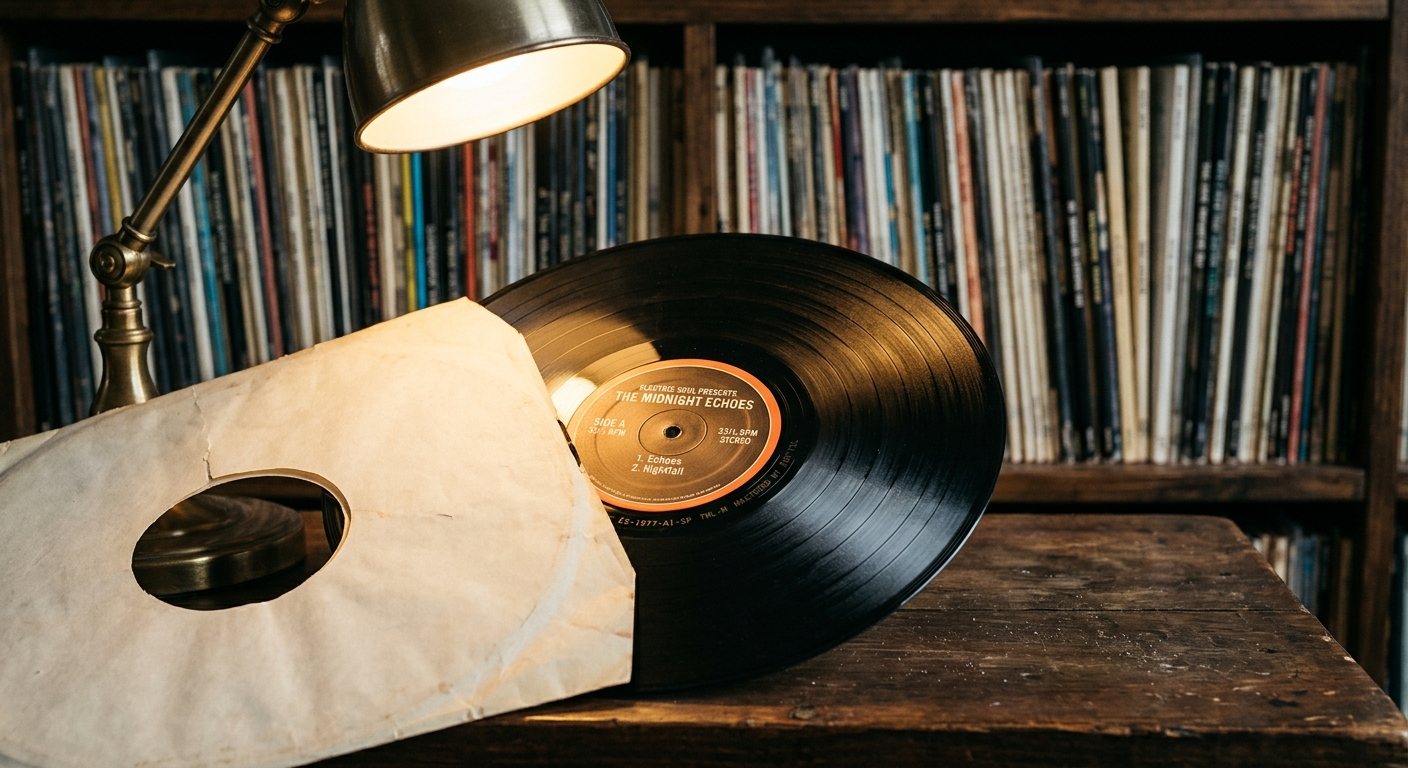
Two copies of the same album can look almost identical on the shelf and differ by hundreds of dollars. A 1972 first pressing of a popular rock record and a 1995 reissue might share the same cover, the same label art, and even the same catalog number on the spine, but the deadwax usually tells a different story. Use these seven checks in order. The first three settle most cases in under a minute; the rest confirm what they suggest.
1. Check the runout matrix in the dead wax
The smooth band between the final track and the paper label is called the runout, the dead wax, or simply the matrix. This is where the binding identifier lives. Tilt the record under a phone flashlight at about 30 degrees and rotate slowly. Most markings are shallow and only show under raking light.
Look for two things in the etched string:
- Cut number: a trailing
-1Aor1A/1Bon each side is the first stamper pulled from the first mother. Higher numbers or letters further down the alphabet (-3A,-G,-4) signal later manufacturing runs. - Mastering engineer initials:
RL(Robert Ludwig),RVG(Rudy Van Gelder),BG(Bernie Grundman),PORKYat Exchange or Metropolis, andSTERLING(Sterling Sound) are all hand-etched tags collectors recognize on sight. A modern reissue of a 1970s album will not carry RL or RVG; it will have current mastering marks instead.
If you find -RE, RE1, or RE2 anywhere in the runout, you are looking at a recut, not the original metalwork.
2. Match the catalog number and prefix
The catalog number appears on the label, the spine, and usually the back cover. First pressings typically have the earliest catalog format for their country and lack a reissue suffix.
Watch for these suffixes that almost always indicate a later pressing:
-2or-3after the catalog number (a second or third version)- A new prefix that does not match the original label family (a Capitol reissue on a different prefix, or a 1990s Columbia reissue with a modern prefix)
- Reissue-only series codes (Columbia's
Legacy, Blue Note'sRVG Edition, Mobile Fidelity'sMFSLnumbers)
If the catalog number matches the earliest documented pressing on Discogs for that country and year, you are on solid ground.
3. Inspect the label design
Major labels used era-specific label designs. A 1960s Columbia first pressing might show a six-eye Columbia logo; a 1970s reissue switches to a ring of orange CBS logos. A Lion-era Blue Note (pre-1967) carries the 47 West 63rd address; post-1966 Liberty-era reissues list New York USA or a Liberty imprint. If the label does not match the era of the album, you are looking at a later pressing.
4. Look for a barcode on the sleeve
Universal Product Codes became common on commercial record sleeves in roughly the early 1980s. If the album was first released in the 1950s, 1960s, or 1970s and the sleeve has a printed retail barcode, you are almost certainly looking at a reissue, not a true first-era copy. The absence of a barcode on a pre-1980 title is consistent with an original pressing.
5. Heft the record
Era-appropriate vinyl weight is a useful supporting signal.
- 1950s to mid-1960s jazz and classical pressings: typically 130 to 150 grams
- 1970s rock and pop: commonly 110 to 130 grams
- Modern reissues marketed as audiophile: 180 grams or more
If a record is advertised as a 1965 original and weighs 180 grams, it is almost certainly a modern reissue or a deliberate counterfeit. A 1970s pressing that feels unusually heavy is either an audiophile-targeted release or a later reissue.
6. Read the runout for pressing plant codes
Many records carry a pressing plant identifier etched alongside the matrix. The most recognizable is the ear-shaped PR mark on Lion-era Blue Note releases, which indicates Plastylite in New Jersey. All Lion-era Blue Note originals (pre-1967) were Plastylite pressed; the absence of the ear means a different plant and a later pressing. Other common plant codes include MO (Monarch, used by Columbia, Capitol, Reprise), SRC (Specialty Records Corp, club editions and some standard runs), and PRC on later Capitol releases.
7. Cross-check on Discogs
Discogs is the standard reference for pressing histories. On any release page, click the Versions tab to see every documented pressing variant of the album. Click into the entry that matches your country and year; the Versions Details section often lists the documented matrix codes for that specific pressing. For very popular releases, individual collectors have uploaded photos of their deadwax, which you can compare to your own markings directly.
If your matrix, label, catalog number, and sleeve all agree with the earliest documented pressing, you are almost certainly holding an original.
FAQ
How can I check a vinyl record without removing it from the sleeve?
You cannot read the matrix through the inner sleeve, but you can check the barcode, the catalog number on the spine, and the label design visible through the center hole. If all three are consistent with a first-era pressing, it is worth pulling the record to confirm the matrix.
Are reissues always lower quality?
No. Audiophile reissues from labels like Mobile Fidelity, Analogue Productions, and Speakers Corner are often pressed on 180-gram vinyl with new mastering by respected engineers and can sound excellent. They are just not originals and do not carry the same collector value.
What is the difference between a repress and a reissue?
A repress is another manufacturing run of an existing release, sometimes reusing the original metal parts. A reissue is a new edition, often with a new catalog number, revised packaging, and a fresh cut from remastered audio. In practice collectors use both terms loosely; the physical clues in the runout, label, and sleeve are what matter.
A spreadsheet tracks what you own. What's Spinning identifies what's playing.
On-device vinyl ID logs your listening history automatically. 7-day free trial.
Looking for Shazam for vinyl?
What's Spinning identifies what's playing on your turntable on-device, logs history, and AirPlays now-playing to your TV.
Comparing vinyl ID apps?
Analog requires Discogs and is iPhone-first (iPad coming). What's Spinning works without Discogs on iPhone and iPad with AirPlay.
Try What's Spinning Free
Turn your iPad into a live now-playing display. Track every record you spin.
START FREE TRIALThen $4.99/mo or $39.99/yr · Cancel anytime