How to Store Vinyl in a Small Apartment Space
Small apartments are great for rent checks and terrible for hobbies that arrive in 12-inch squares. A vinyl collection looks charming as a tidy row beside the turntable. It looks less charming when overflow leans against a radiator, lives under a desk, or forms a tiny LP landslide every time you pull out one Blue Note reissue.
The good news: you do not need a dedicated listening room to store vinyl well. You need upright support, stable temperature, a little humidity awareness, and a plan for growth. Records punish bad habits slowly: heat can warp discs, leaning rows can bend jackets, and dusty sleeves scuff with every pull. In a small space, the trick is to make the safe choice also the easiest choice.
Start with the non-negotiables
The Library of Congress recommends handling grooved discs by the edge and label only, storing collections in a cool, dry, stable environment, avoiding attics and basements, and keeping materials away from direct or intense light, radiators, vents, and vibration sources (Library of Congress preservation guidance). For home collections, it suggests room temperature or below and about 35 to 40 percent relative humidity; institutional guidance often targets 65 to 70°F and 45 to 50 percent RH for materials kept at least ten years.
Translated for apartment life, that means three simple rules. Store records vertically, not flat. Keep them out of hot sunlight and away from heaters. Give every row enough side support that the records stand straight instead of slumping diagonally. If you follow only those three rules, you avoid most of the preventable damage small-space collectors run into.
Measure before you buy storage
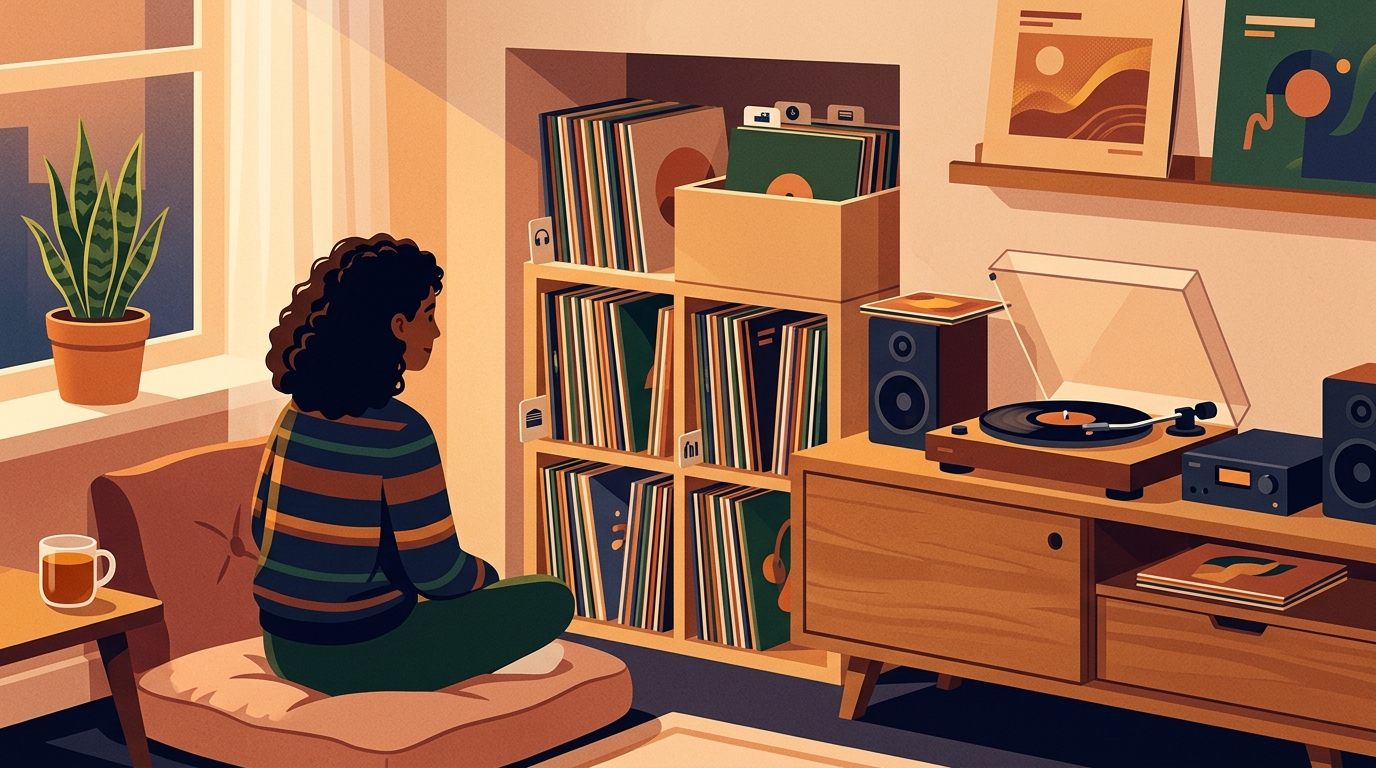
A 12-inch LP jacket is roughly 12.375 inches square, and protective outer sleeves add a little more width. That is why cube shelving became the default solution. IKEA lists the popular 2-by-2 KALLAX shelf unit at 30 1/8 by 30 1/8 inches, with cube openings large enough for LPs (IKEA KALLAX dimensions). In a studio or one-bedroom apartment, a low 2-by-2 unit can double as a media bench, plant stand, printer stand, or sideboard, which matters when every piece of furniture needs a second job.
Before ordering anything, measure the wall space and the path to it. Include baseboards, outlets, door swings, and the depth needed to flip through records comfortably. If a shelf fits but forces you to pull records out against a sofa arm, you will stop using it neatly. Leave a few inches of finger room in front of the cube.
Use vertical zones, not one giant wall
Apartment storage works best when the collection is split by use. Keep your daily plays near the turntable in one or two cubes. Put less-played records higher, lower, or in a nearby closet. Store box sets and oversized jackets together so they do not distort the rows around them. If you track listening with What's Spinning, your recent-play history can help you decide which records deserve the prime spot beside the deck and which can move to secondary storage.
Choose furniture that can handle real weight
Vinyl gets heavy fast. Exact weight varies by pressing, jacket, sleeve, and whether you own a lot of gatefolds, but a shelf full of LPs can weigh far more than a shelf full of paperbacks. Avoid flimsy decorative bookcases with thin backs, wobbly legs, or long unsupported spans. Choose cube shelving, purpose-built record cabinets, sturdy benches, or wall-anchored modular systems. If you use a tall shelf, anchor it to the wall. Records are not worth a tip-over risk, especially in homes with kids, pets, or earthquakes.
Keep records away from heat, sunlight, and damp corners
The worst apartment storage spots are usually the ones that seem convenient: beside a radiator, under a sunny window, next to a bathroom wall, in a damp closet, or directly against an exterior wall that gets cold and humid. Heat is the obvious enemy because warped vinyl may never play correctly again. Moisture is sneakier. Jackets can develop musty smells, paper sleeves can wrinkle, and mold risk climbs in stagnant corners.
If your apartment has inconsistent climate control, buy a small digital hygrometer. They are cheap, they take up almost no room, and they tell you whether a closet is actually safe. If one corner sits above roughly 55 to 60 percent relative humidity for long stretches, move the records, improve airflow, or use a dehumidifier. Do not seal records in plastic tubs with trapped moisture and hope for the best. That can turn storage into a tiny greenhouse.
Sleeves save space by preventing churn
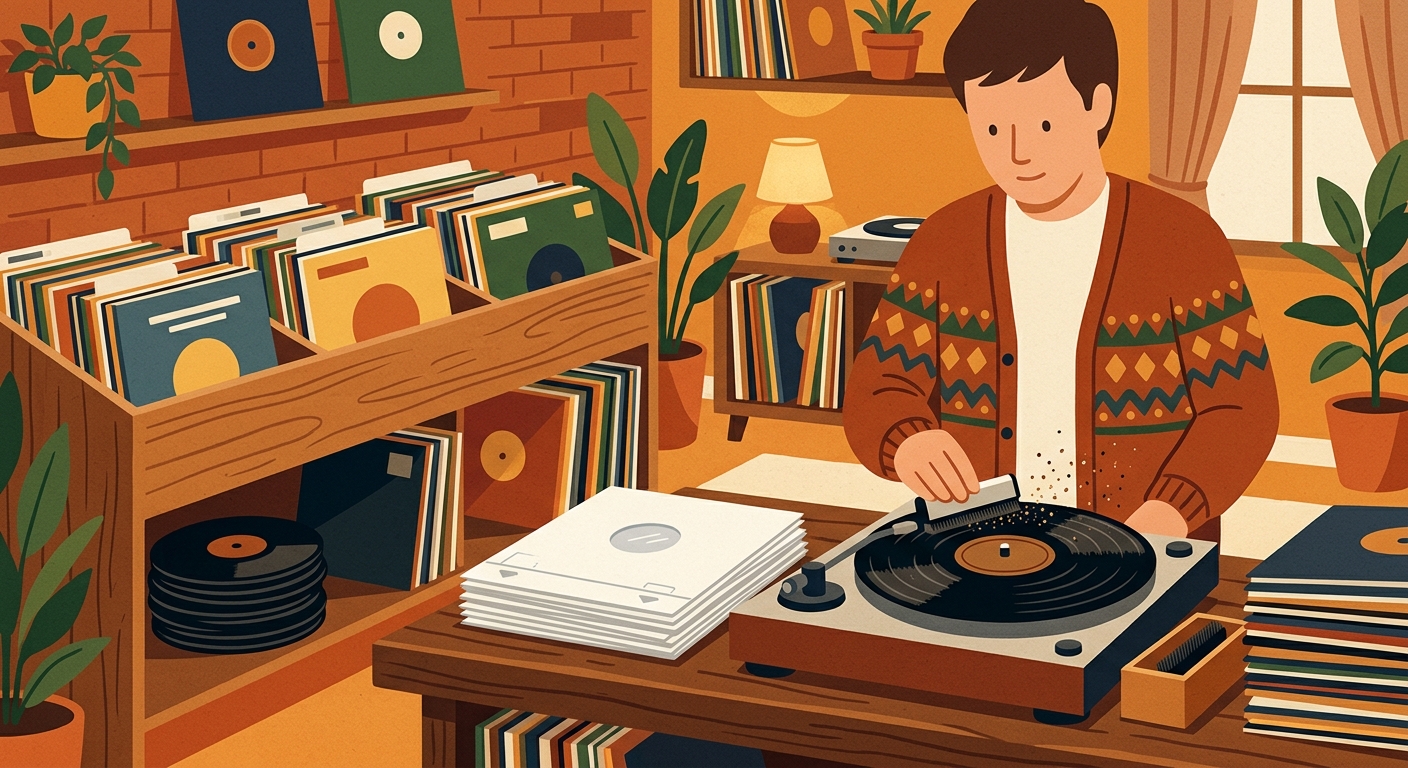
Outer sleeves feel like an extra thickness problem, but they often save space over time because they reduce jacket wear and slow the urge to rebuy damaged copies. Use anti-static inner sleeves for records you play often, especially if the original paper sleeves shed dust. Keep the original inner sleeve inside the jacket if it has lyrics, art, or collector value, then put the disc in a better inner sleeve behind it.
Make overflow intentional
Vinyl sales are not exactly shrinking. RIAA reported that U.S. vinyl revenue grew 10 percent to $1.4 billion in 2023, the format's seventeenth consecutive year of growth, and vinyl albums outsold CDs in units, 43 million versus 37 million (RIAA 2023 year-end revenue report). Translation: if you collect records, your collection will probably grow unless you create a rule.
Try a one-cube buffer. When it fills, upgrade storage, sell a few records, or move lower-priority titles elsewhere. Apartment collecting works better when the limit is visible. A shelf that is 90 percent full feels curated. A shelf that is 130 percent full becomes a record-care problem and a daily annoyance.
FAQ
Can I store vinyl in a closet?
Yes, if the closet is dry, cool, and stable. Avoid closets that share a wall with a bathroom, exterior brick, heating equipment, or plumbing. Use a hygrometer for a week before moving valuable records in, and keep records upright with firm side support.
Is it okay to stack records flat?
A few records flat for a short time is not a disaster, but it should not be your storage method. Flat stacks create uneven pressure, make records hard to access, and can contribute to jacket and disc problems over time. Store LPs vertically like books, with enough support to prevent leaning.
How many records fit in a small apartment?
It depends on your furniture and floor plan, but a 2-by-2 cube shelf can hold a useful starter collection while doubling as living-room furniture. The smarter question is how many records you can access without overpacking. If removing one LP requires force, the storage is too full.
Should the turntable sit on the same shelf as the records?
It can, as long as the furniture is sturdy, level, and isolated from speaker vibration. Do not place speakers on the same surface as the turntable if you can avoid it. In a tiny apartment, stands, isolation pads, or speaker shelves can help keep vibration away from both playback and storage.
A spreadsheet tracks what you own. What's Spinning identifies what's playing.
On-device vinyl ID logs your listening history automatically. 7-day free trial.
Looking for Shazam for vinyl?
What's Spinning identifies what's playing on your turntable on-device, logs history, and AirPlays now-playing to your TV.
Comparing vinyl ID apps?
Analog requires Discogs and is iPhone-first (iPad coming). What's Spinning works without Discogs on iPhone and iPad with AirPlay.
Try What's Spinning Free
Turn your iPad into a live now-playing display. Track every record you spin.
START FREE TRIALThen $4.99/mo or $39.99/yr · Cancel anytime
Get it on your iPhone
Open on iPhone