Vinyl Record Cleaning Methods: Pros & Cons
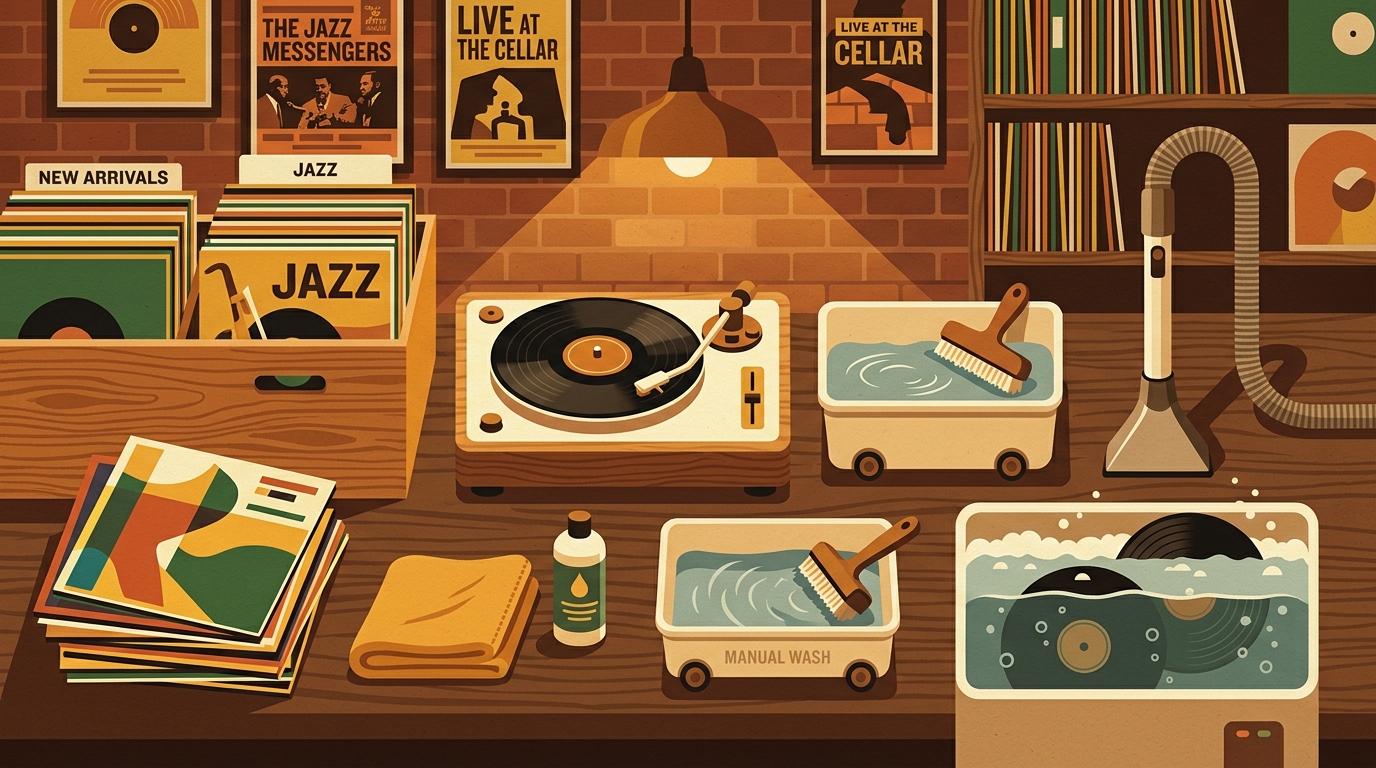
Ask ten collectors about vinyl record cleaning methods and you will get twelve opinions. The useful answer is simpler: match the method to the problem. Loose dust, fingerprints, moldy yard-sale finds, and crackle from dried residue are not the same enemy.
Records are physical media. The Library of Congress tells handlers not to touch playing surfaces and to hold grooved discs by the edge and label area only. It also recommends clean, stable home storage, roughly 35 to 40 percent relative humidity, because dust, moisture, and poor handling compound over time. Cleaning will not repair groove wear, but it can reduce noise from contamination and protect your stylus from dragging grit through the groove. If you log plays in What's Spinning, note when a problem record was cleaned so you know whether noise is dirt, damage, or pressing quality.
1. Dry brushing before every play
A carbon-fiber or conductive anti-static brush is the lowest-risk cleaning tool in a vinyl setup. Use it while the platter turns, hold it lightly across the groove for a rotation or two, then sweep dust off the edge. The upside is speed: thirty seconds can remove paper fibers, sleeve lint, and surface dust before the stylus finds them. It also helps tame static, especially in dry rooms.
The downside is that dry brushing is not deep cleaning. It will not remove fingerprints, smoke residue, old cleaning fluid, or mildew. Push too hard and you can drag grit across the surface. Use it as preventive maintenance, not rescue work.
2. Microfiber cloths and record-safe fluid
The hand-cleaning method is the budget route: a clean microfiber pad, distilled water, and a purpose-made record cleaning solution. It is cheap, portable, and good for spot cleaning fingerprints near the lead-in or outer edge.
The weakness is consistency. Too much pressure can grind particles into the groove, tap water can leave minerals behind, and household cleaners can leave surfactants or solvents that were never meant for PVC. Avoid alcohol-heavy DIY recipes unless you know exactly what is in them, and keep liquid away from the label. The safest version is gentle, groove-following motion, then a distilled-water rinse and air drying in a clean rack.
3. Manual bath systems such as Spin-Clean
Manual bath cleaners are the sweet spot for many collectors with growing shelves. The Spin-Clean system has been around since 1975, and its official product page says the current MKII Complete Kit cleans both sides of a record simultaneously without using your turntable. At the time researched, the kit was listed at $79.99 and included brushes, rollers, a basin, alcohol-free concentrate, and lint-free drying cloths.
The pros are obvious: batch cleaning is faster than hand wiping, the brushes reach both groove walls, and the cost is reasonable compared with powered machines. The cons are practical. The bath water gets dirtier as you clean, drying depends on cloth technique, and dirty paper inners can recontaminate a clean record.
4. Vacuum record cleaning machines
Vacuum machines add one important step: they remove dirty fluid instead of letting it evaporate. A good workflow is fluid application, light brushing, dwell time, then vacuum extraction. The result is often quieter playback because residue leaves the disc instead of drying in place.
The trade-off is cost, noise, and maintenance. Vacuum wands need to stay clean, tanks need emptying, and some machines are loud. For collections in the hundreds, the time saved can be worth it. For a crate of twenty LPs, it may be overkill.
5. Ultrasonic record cleaning
Ultrasonic machines use cavitation, tiny bubbles created by high-frequency sound waves, to loosen contamination in the groove. The appeal is reach. A non-contact method that gets into tight spaces is attractive for used records with stubborn crackle.
The best purpose-built machines manage the variables. Degritter says its Mark II uses four transducers, emits 120 kHz ultrasonic vibrations, sweeps between 120 and 125 kHz, filters water, monitors temperature, and runs at an average output of 240 watts. HumminGuru's site lists its ultrasonic cleaner at HK$3,100. That range tells the story: ultrasonic can be superb, but price and implementation vary wildly.
The main con is that generic ultrasonic tanks need caution. Records should rotate, water temperature should stay controlled, chemistry should be mild, and drying still matters. Ultrasonic cleaning also will not repair groove wear.
6. Wood glue and other extreme methods
The internet is full of wood-glue peels, sink washes, dish soap rituals, and miracle sprays. The problem is risk. Glue can leave residue, tap water can deposit minerals, labels can stain, and aggressive cleaning can hurt value. Reserve experiments for dollar-bin records.
What should you actually do?
For most collectors, the best stack is simple. Brush before every play. Wet clean used purchases before filing them. Use a manual bath if you buy in batches. Step up to vacuum or ultrasonic only when the size or value of your collection justifies the money. Replace dirty paper inners with anti-static sleeves after cleaning.
Most important, separate dirt from damage. A dirty record often has random ticks, hazy noise, or visible residue. A damaged record may have repeating distortion or loud passages that break up no matter how clean the surface looks. Cleaning is maintenance, not resurrection.
Sources
- Library of Congress, Care, Handling, and Storage of Audio Visual Materials
- Spin-Clean MKII Complete Kit product details
- Degritter Mark II product specifications
- HumminGuru ultrasonic cleaner product listings
FAQ
What is the safest record cleaning method for most collectors?
Use a carbon-fiber brush before each play, plus occasional wet cleaning with distilled water and record-safe fluid. That handles loose dust first, then fingerprints and groove grime only when needed.
Can ultrasonic cleaning damage vinyl records?
A purpose-built ultrasonic cleaner should control heat, time, and frequency. Risk rises with generic tanks, aggressive chemistry, long cycles, or water that gets too warm.
Should I clean brand-new records?
Often, yes. New records can carry paper dust, static, and release residue. A brush may be enough, but noisy new pressings can benefit from gentle wet cleaning.
How often should I deep clean my records?
Clean when a record is visibly dusty, newly purchased used, fingerprinted, or noisier than its condition suggests. After wet cleaning, store it in a clean inner sleeve.
A spreadsheet tracks what you own. What's Spinning identifies what's playing.
On-device vinyl ID logs your listening history automatically. 7-day free trial.
Looking for Shazam for vinyl?
What's Spinning identifies what's playing on your turntable on-device, logs history, and AirPlays now-playing to your TV.
Comparing vinyl ID apps?
Analog requires Discogs and is iPhone-first (iPad coming). What's Spinning works without Discogs on iPhone and iPad with AirPlay.
Try What's Spinning Free
Turn your iPad into a live now-playing display. Track every record you spin.
START FREE TRIALThen $4.99/mo or $39.99/yr · Cancel anytime