Vinyl Record Cleaning Methods: Research and Tips
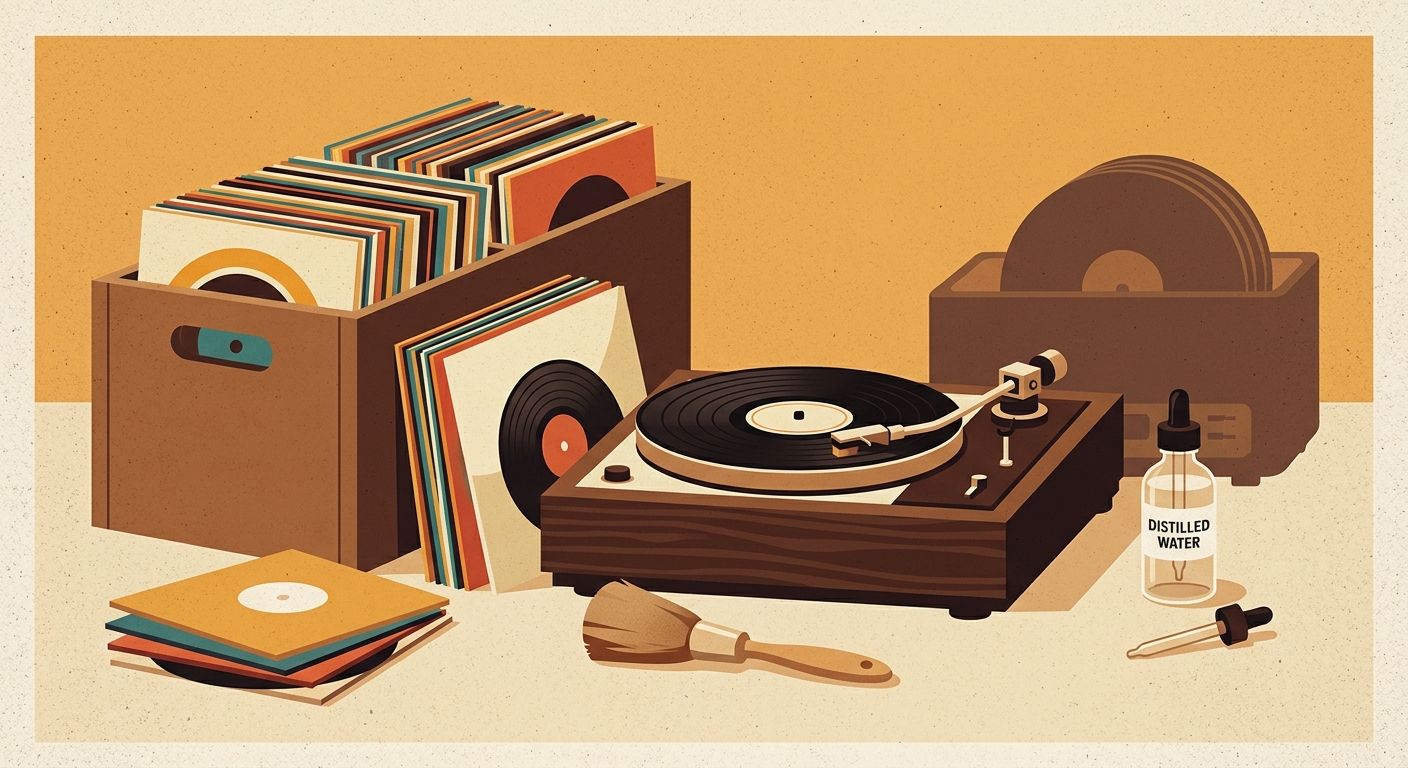
If a used record sounds like breakfast cereal, cleaning may help, but it is not magic. Good cleaning removes loose dust, oily fingerprints, paper sleeve debris, dried residue, and mold contamination. It cannot repair groove wear, scratches, non-fill, or a damaged pressing. That distinction matters because the best research vinyl record cleaning methods treat cleaning as preservation first and sound improvement second.
The stakes are higher now because vinyl is not a tiny nostalgia corner anymore. RIAA year-end data for 2025 reported 46.8 million vinyl units in the United States, up 7.9% from 2024, with vinyl value rising 9.3% to $1.04 billion.1 More people buying used records means more records with unknown storage history, old paper sleeves, and mystery grime. If you use What's Spinning to track what actually gets played, a simple cleaning routine also keeps those listening sessions from becoming a running log of which albums need rescue.
Start with handling, not fluid
The Library of Congress frames care as the easiest preservation win: wash and dry your hands, keep food and drink away, avoid touching playing surfaces, and handle LPs by the edge and label only.2 That sounds basic, but it prevents the hardest contamination to remove. Fingerprints are not just smudges; they contain oils that bind dust, attract microorganisms, and can become audible after storage.
Storage affects cleaning, too. The Library recommends upright disc storage, sturdy dividers every 4 to 6 inches, and a stable home room around 35 to 40% relative humidity.2 Too dry encourages static; too damp encourages mold.
Dry brushing: useful, but limited
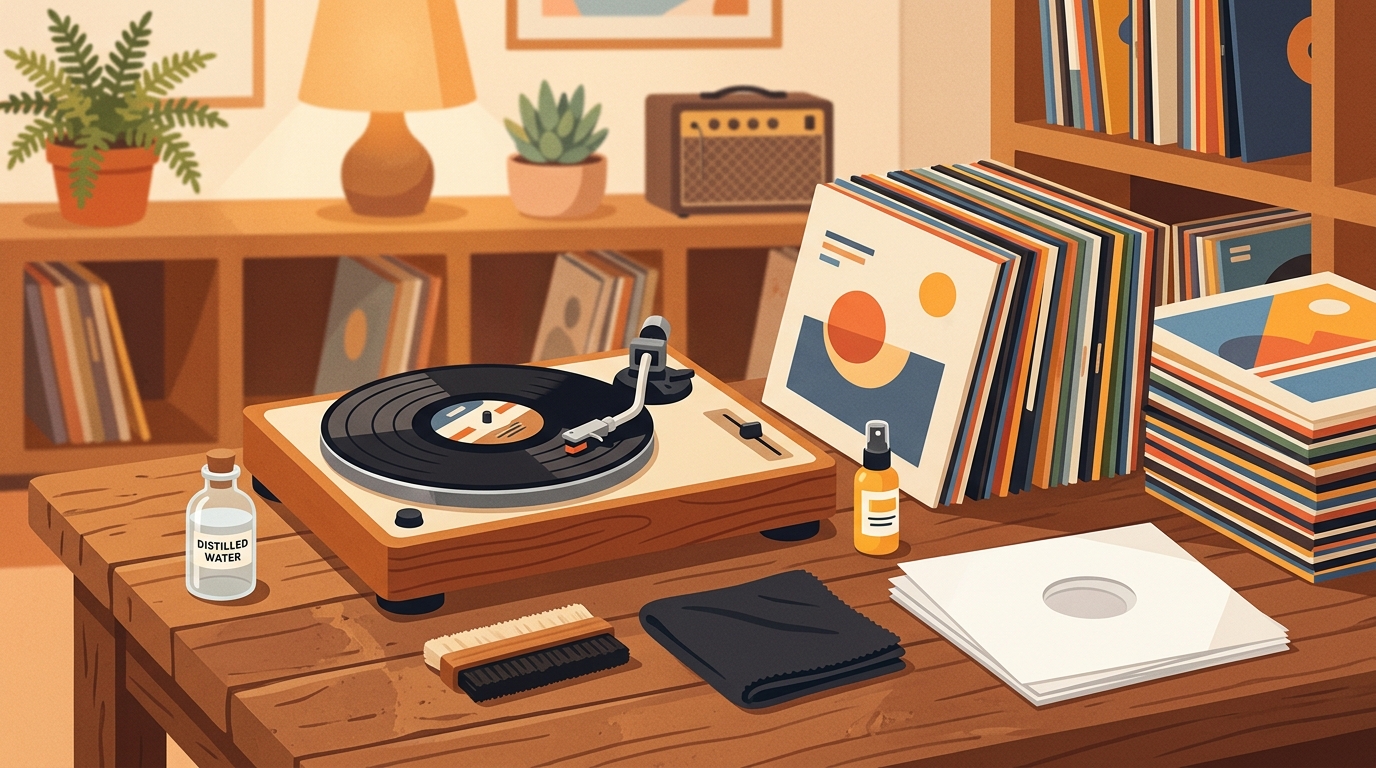
A carbon fiber or anti-static brush is the right tool for loose surface dust before playback. Discogs' consumer guide starts with brushing, then inspecting, spot-cleaning where needed, wiping in the groove direction, and storing records properly afterward.3 Use light pressure.
Dry brushing is maintenance, not deep cleaning. Archival guidance from Gilles St-Laurent, published by CLIR, is blunt about why: dust is abrasive, and the stylus can permanently etch groove walls when dust is trapped between diamond and vinyl.4 If a record has fingerprints, mildew, smoke residue, or decades of sleeve dust, a dry brush mostly rearranges the problem.
Wet manual cleaning: the best first deep clean
For most collectors, wet manual cleaning is the best cost-to-result method. The idea is simple: suspend contaminants in a safe fluid, brush along the groove, rinse with purified water, and dry without lint. The Library-linked archival tradition uses water plus a surfactant because water alone does not wet the groove well or lift oily contamination effectively. In an interview about Library of Congress practice, Larry Miller explained that enough fluid is needed to put contaminants into suspension so they can be removed, and that a rinse is intended to remove cleaning fluid residue.5
For home use, distilled or deionized water is the baseline. Avoid tap water, household cleaners, scented dish soap, alcohol wipes, window cleaner, and anything that leaves scent, gloss, or residue. A purpose-made record solution is easiest. If you mix your own, follow a reputable formula precisely and use a separate rinse step.
Vacuum record cleaning machines: faster drying, cleaner removal
Vacuum machines improve wet cleaning by removing dirty fluid instead of letting it evaporate. The Vinyl Press interview notes that vacuum-type machines can use and remove more fluid than most hand-held approaches, which helps when contamination needs to be lifted into suspension.5 The tradeoff is cost, noise, and workflow.
Ultrasonic cleaning: powerful, not automatically perfect
Ultrasonic cleaners use high-frequency sound waves in a fluid bath to create cavitation bubbles. Sound Matters describes the appeal well: cavitation can reach groove areas that brushes may miss, with less direct contact on the playing surface.6 That makes ultrasonic cleaning attractive for valuable used records and stubborn contamination.
The catch is that ultrasonic cleaning is a system, not a button. Neil Antin's 2024 third edition of Precision Aqueous Cleaning of Vinyl Records runs 192 pages and expands ultrasonic guidance around standing waves, water height, spacing, degassing, filtration, and cooling.7 The science is real, but sloppy ultrasonic cleaning can still leave residue.
What cleaning cannot fix
A useful 2024 What Hi-Fi test compared manual washing, peel-off film cleaning, and ultrasonic cleaning. All three reduced surface noise and groove debris on dirty records, but no method was universally superior, and physical groove damage remained permanent noise.8
If one passage ticks every rotation, inspect for a scratch or pressing flaw. If distortion blooms near the inner groove on a visibly worn used LP, cleaning might lower grit noise but will not rebuild the groove. Save aggressive repeated cleaning for records that show signs of removable contamination, not records that are simply worn out.
A practical routine for collectors
- Before every play: use a carbon fiber brush for loose dust, check the stylus, and handle the record by the edge and label.
- For new records: inspect for paper dust and pressing residue. Many new LPs benefit from one wet clean and a better inner sleeve.
- For used records: assume the sleeve is contaminated. Wet clean before filing the record with the rest of your collection.
- For valuable or stubborn records: use a vacuum or ultrasonic process with a pure-water rinse and careful drying.
- After cleaning: resleeve in HDPE or anti-static sleeves, keep jackets dry, and store vertically in a stable room.
The best method is the least aggressive method that solves the actual problem. Brush for loose dust. Wet clean for fingerprints and sleeve debris. Vacuum for repeatable fluid removal. Ultrasonic for deep groove contamination and batch work. Then stop touching the record and enjoy the thing.
FAQ
Should I clean every new vinyl record?
Not always, but it is worth inspecting every new record. New LPs can carry paper dust, factory residue, static, or debris from inner sleeves. If the record looks dusty or sounds noisy on first play, a gentle wet clean and a fresh sleeve are reasonable.
Is alcohol safe for cleaning vinyl records?
Small amounts of alcohol appear in some record-cleaning formulas, but casual alcohol wipes or strong DIY mixes are a bad idea. The safer collector advice is to use a purpose-made record solution or a carefully documented archival-style formula, then rinse with distilled or deionized water.
Do ultrasonic cleaners work better than vacuum machines?
They solve related problems differently. Vacuum machines are excellent at removing dirty fluid after a wet clean. Ultrasonic machines can reach groove contamination with less surface contact, but they require careful setup, clean bath management, rinsing, and drying. A good vacuum routine can outperform a careless ultrasonic routine.
How often should I deep clean a record?
Once a record is properly cleaned, dried, and placed in a clean inner sleeve, it should not need repeated deep cleaning unless it gets contaminated again. For normal playback, brushing before play and keeping the stylus clean are usually enough.
Sources
- RIAA, Year-End Recorded Music Revenue Report 2025
- Library of Congress, Care, Handling, and Storage of Audio Visual Materials
- Discogs, How to Clean Vinyl Records
- CLIR, The Care and Handling of Recorded Sound Materials
- The Vinyl Press, Cleaning and Archival Standards of Care
- Sound Matters, Ultrasonic Cleaning for Vinyl Records
- Neil Antin, Precision Aqueous Cleaning of Vinyl Records, Third Edition Change 1
- What Hi-Fi?, I tested 3 vinyl record cleaning systems
Comparing vinyl ID apps?
Analog requires Discogs and is iPhone-first (iPad coming). What's Spinning works without Discogs on iPhone and iPad with AirPlay.
Try What's Spinning Free
Turn your iPad into a live now-playing display. Track every record you spin.
START FREE TRIALThen $4.99/mo or $39.99/yr · Cancel anytime