Using Vinyl Records as Wall Art Displays
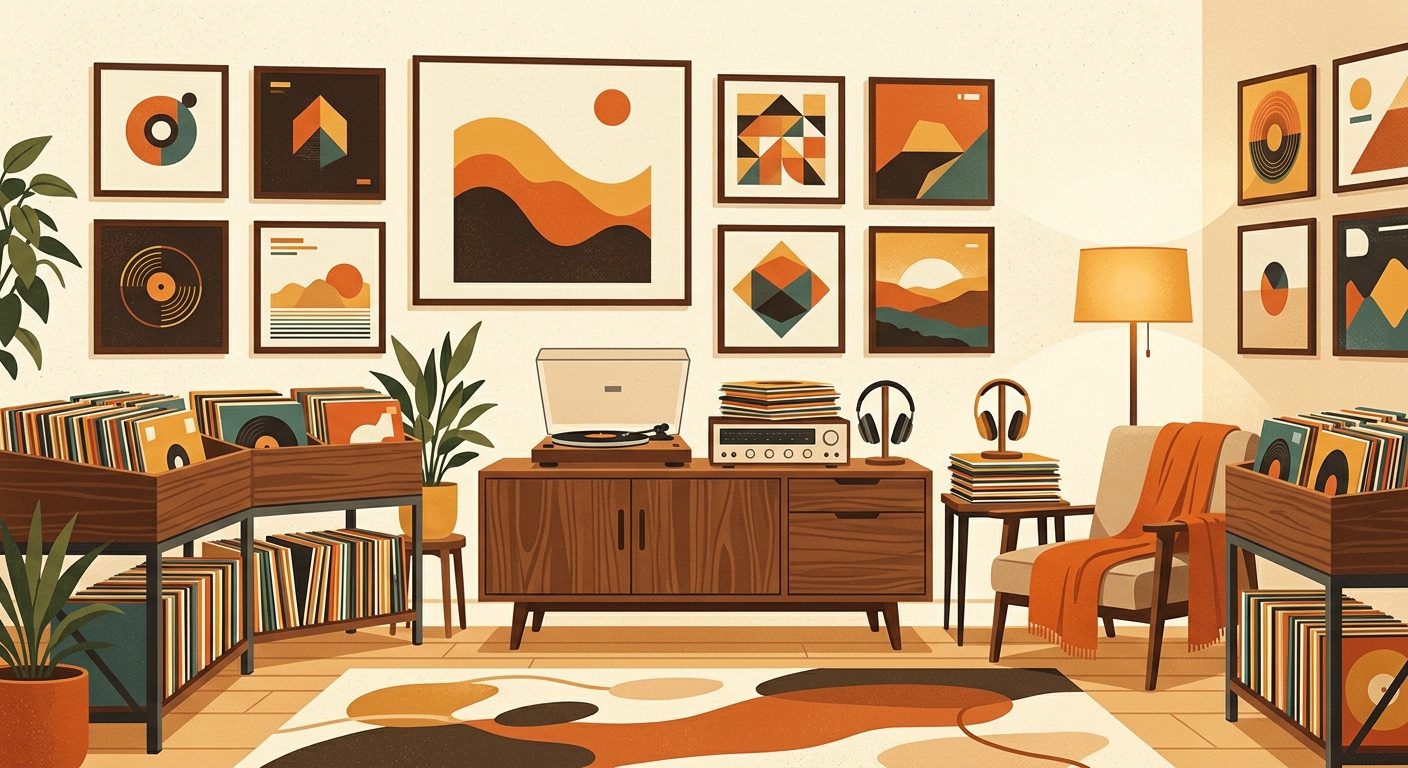
There is a practical reason the use case vinyl art display idea keeps showing up in listening rooms: records are already designed to be seen. A 12-inch LP jacket is big enough to read from across the room, small enough to group into a grid, and personal enough to say something more interesting than a generic print. If your shelves are full of music you love, your walls are probably holding a better art collection than you think.
The vinyl revival makes this more than a decorating trend. RIAA's 2023 year-end revenue report found that U.S. vinyl revenue grew 10% to $1.4 billion, vinyl accounted for 71% of physical format revenue, and vinyl albums outsold CDs in units for the second time since 1987, 43 million to 37 million [1]. In other words, people are not just streaming albums and forgetting them. They are bringing music back into rooms as objects, rituals, and, yes, visual culture.
Why album jackets work so well as wall art
Album design has always lived between packaging and poster art. Wikipedia's history of the album cover notes that Columbia Records hired Alex Steinweiss as its first art director in 1938 and credits him with popularizing designed album covers in place of plain paper sleeves [2]. That matters because the best jackets were not afterthoughts. Think of Blue Note's typography and photography, the prism on The Dark Side of the Moon, Patti Smith's Horses, Grace Jones' Island Life, or the collage chaos of classic punk seven-inches. They were built to sell the record, define the artist, and give the listener a visual doorway into the sound.
A vinyl wall display also solves a collector problem. Shelves are excellent for storage, but they hide the art edge-on. Pulling a few jackets forward gives the room a rotating exhibition without treating the whole collection as decor. What's Spinning fits neatly here because it can log what you actually play from your turntable, so the records on the wall can change with your listening instead of becoming a static shrine.
Choose display records with a collector's eye
Start with three categories. First, choose sleeves with graphic strength: high contrast colors, bold type, portraits, or simple symbols. Second, choose records with personal context: the first copy you bought on vacation, the album that got you into jazz, the LP your kid now recognizes from weekend mornings. Third, choose playable records you want to keep in rotation, not museum pieces you will worry about every time sunlight hits the wall.
Condition matters. A sleeve with ring wear, corner dings, or a price sticker can still look fantastic if the wear tells a story. For expensive first pressings, signed sleeves, fragile tip-on jackets, or records with sentimental value, consider displaying a later reissue, a duplicate jacket, or a high-quality print instead. The goal is to make the room feel alive, not to turn your rarest record into a conservation experiment.
Protect the records, not just the look
The Library of Congress gives simple guidance that applies directly to home displays: handle grooved discs by the edge and label only, keep food and drink away, avoid direct or intense light, and store audiovisual materials in a cool, relatively dry, stable environment around room temperature or below and about 35% to 40% relative humidity for home collections [3]. That is the unglamorous part of a good wall display, but it is what keeps the records playable.
Use frames or ledges that support the jacket evenly. Avoid pinning sleeves, clamping them hard at the corners, or hanging bare vinyl on hooks. A frame made for LP jackets, such as the flip-style record frames sold by Art Vinyl, is useful because it treats the sleeve as a display object while still making rotation easy [4]. If you prefer ledges, keep them level, shallow, and away from radiators, vents, sunny windows, kitchens, and bathrooms.
Design ideas that do not look like a dorm room
The simplest layout is a three-by-three grid above a turntable cabinet. Keep the spacing consistent, align the frames, and choose jackets that share one visual idea: all black-and-white portraits, all warm soul records, all bright synth-pop sleeves, or all local finds from one record store. A grid feels intentional even when the albums are eclectic.
For a looser room, try a listening rail. Mount one or two narrow picture ledges above the record shelf and rotate five to seven jackets every week. Put the record you are playing now in the center, then surround it with related albums: the producer's other work, records from the same label, or albums from the same year. It becomes a visual listening queue rather than permanent decoration.
Another strong approach is the conversation corner. Place one iconic jacket at eye level near a chair or turntable, then surround it with smaller objects: a ticket stub, a record store bag, a postcard, or a framed setlist. This works especially well for albums with a story behind them. The display becomes less about proving taste and more about remembering why the record matters.
What not to do
Do not display records in direct sunlight. Do not put bare discs on the wall unless you are comfortable retiring them from serious playback. Do not stack framed records so tightly that you cannot remove one without scraping the sleeve. Do not display every valuable record at once. And do not forget that a wall display should help you listen more, not replace listening with collecting theater.
The best vinyl wall is a rotation system. Pick a few records, enjoy how they change the room, play them, then swap in the next batch. Your wall becomes part of the listening habit: a record store bin, a memory board, and a tiny gallery all at once.
FAQ
Is it safe to hang playable vinyl records on the wall?
Yes, if you treat the record like a playable object, not a poster. Keep it vertical, protected in an inner sleeve and jacket, away from direct sun, heat, humidity swings, and tight pressure points.
Should I display the record itself or just the album cover?
For valuable or frequently played records, display the jacket and keep the disc safely sleeved inside. Exposing a bare record looks dramatic, but it also invites dust, scratches, light, and handling damage.
What records work best as wall art?
Start with sleeves that have strong graphic impact, personal meaning, or a color palette that fits the room. Blue Note jazz covers, punk singles, bold 1980s pop sleeves, and gatefold rock albums all work well.
How do I keep a wall display from becoming cluttered?
Use a limited grid, repeat frame sizes, leave breathing room between jackets, and rotate a few records seasonally. Treat the wall like a listening-room gallery, not overflow storage.
A spreadsheet tracks what you own. What's Spinning identifies what's playing.
On-device vinyl ID logs your listening history automatically. 7-day free trial.
Looking for Shazam for vinyl?
What's Spinning identifies what's playing on your turntable on-device, logs history, and AirPlays now-playing to your TV.
Comparing vinyl ID apps?
Analog requires Discogs and is iPhone-first (iPad coming). What's Spinning works without Discogs on iPhone and iPad with AirPlay.
Try What's Spinning Free
Turn your iPad into a live now-playing display. Track every record you spin.
START FREE TRIALThen $4.99/mo or $39.99/yr · Cancel anytime
Get it on your iPhone
Open on iPhone