Use Case: Vinyl Records for Unique Interior Design
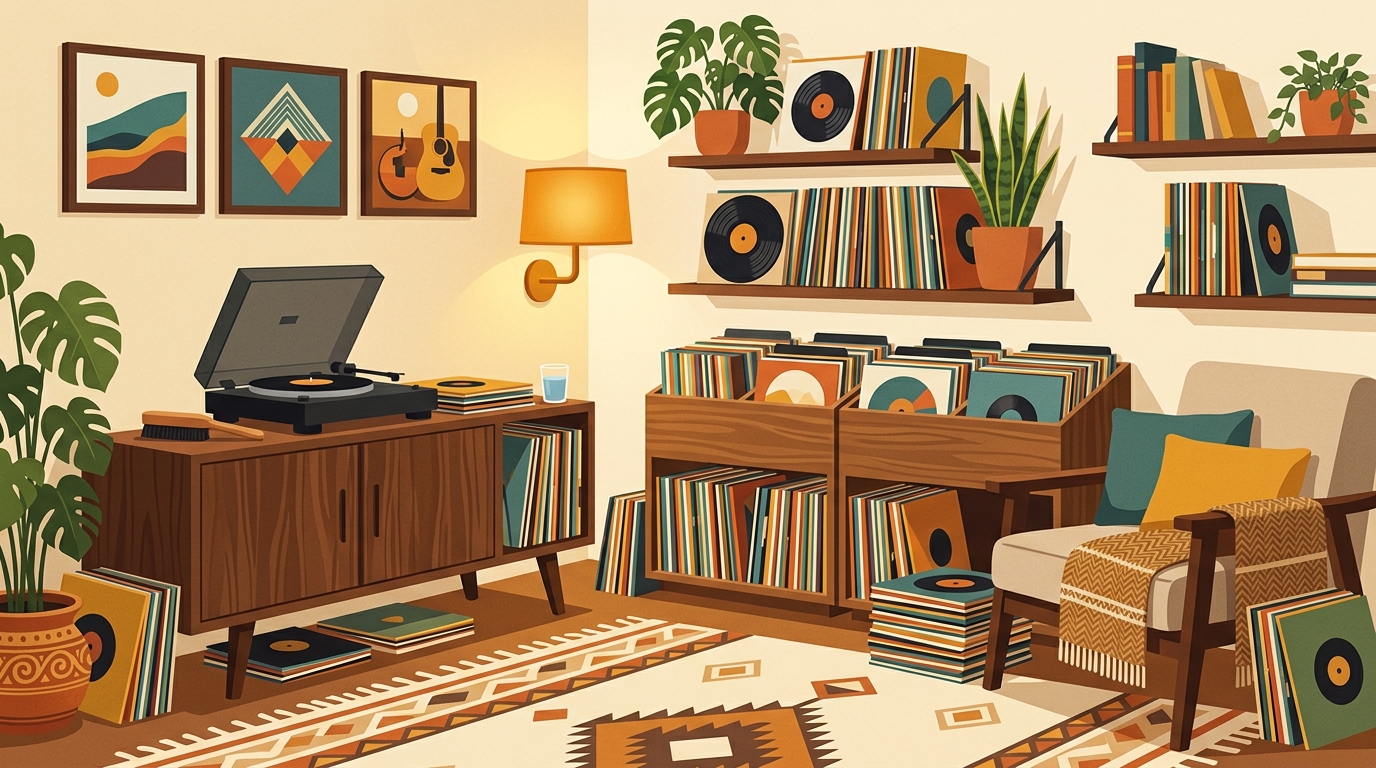
Using vinyl for interior design works because records are not generic decor. They bring scale, color, typography, texture, and a real point of view into a room. A framed sleeve can read like graphic art, a wall of spines can soften a modern space, and a turntable setup can become the social center of a living room without feeling staged.
The key is to treat records as both objects and media. They need to look good, but they also need to stay playable. That balance matters more now because vinyl is no longer a tiny niche. The RIAA reported that U.S. vinyl revenue grew 7 percent to $1.4 billion in 2024, the format's eighteenth consecutive year of growth, and vinyl albums outsold CDs in units for the third year in a row, 44 million to 33 million. In other words, those shelves are not just nostalgia, they are a design language people are actively bringing back into their homes.
Start with the listening zone, not the wall
A strong vinyl room starts with the place where music actually happens. Put the turntable somewhere stable, visible, and easy to use, then build the design around it. A low console, a pair of speakers, a small lamp, and a few currently spinning records can create a better focal point than a blank media cabinet. It signals that the room is for listening, not just scrolling.
Keep the setup practical. Records are heavy, and the Library of Congress notes that grooved discs average 35 or more pounds per shelf-foot. It also recommends storing discs upright on edge, with sturdy dividers, and keeping them away from direct light, vibration, radiators, vents, attics, and damp basements. That advice sounds archival, but it is also good design. The best record walls look intentional because they are supported, upright, and easy to browse.
Use album covers as rotating art
Album covers are unusually good decor because the format is large enough to hold a room. A 12-inch sleeve gives you a square composition, readable color, and a built-in story. Jazz Blue Note covers, post-punk minimalism, psychedelic rock, soul photography, metal logos, and modern indie illustration all create very different moods.
This is not a new idea. Alex Steinweiss, Columbia Records' first art director, is widely credited with helping invent the illustrated album cover around 1939 and 1940, replacing plain record packaging with designed sleeves that could sell music visually. That history is why records feel at home on walls. They were made to be seen as well as heard.
For a living room, try a small rail or ledge that holds three to five sleeves and rotate them weekly. For a hallway, use a tight grid of frames with covers from one color family. In a music corner, display the record currently playing and let the room change with your listening habits. If you use What's Spinning to log plays automatically from your turntable, your listening history can even tell you which records deserve the spotlight each month.
Design with storage as furniture
The most common mistake is hiding the collection in a way that makes it hard to use. Vinyl looks best when the storage invites browsing. Cube shelving, open crates, and low credenzas all work because they let the spines create texture. IKEA's KALLAX shelf unit is popular with collectors for a reason: one current U.S. product listing shows a depth of 15 3/8 inches and a max load of 29 pounds per shelf, dimensions that are naturally close to LP storage needs. Whatever you buy, check the load rating, not just the look.
Think about rhythm. A full wall of records can be beautiful, but it can also feel heavy. Break it up with plants, speakers, books, framed art, or a lamp. Leave a few empty inches so new finds have somewhere to go. If the room already has a lot of pattern, show mostly spines. If the room is minimal, face out a few statement covers to add color without repainting anything.
Match records to the room's mood
Vinyl decor works best when the records belong to the people who live there. A stack of thrift-store sleeves bought only for color can look flat. A collection that reflects actual taste feels warmer because guests can ask about it and you can put one on.
Use genres as design cues. Soul, funk, and disco covers bring rich color and portrait photography. Classical box sets can make a study feel calm and architectural. Punk and new wave sleeves add tension, humor, and graphic bite. Ambient and electronic records often suit cleaner, more modern rooms. You do not need a perfect theme, but choosing a point of view keeps the room from becoming a random collage.
Protect the records you display
The only wrong way to decorate with vinyl is the way that ruins the records. Avoid pinning sleeves, taping jackets, or leaving LPs where sun can hit them. Display duplicate covers, inexpensive copies, or records in proper frames if they will stay on a wall for months. Keep playable records in inner sleeves, handle them by the edges and label area, and do not leave discs leaning at steep angles on a shelf.
Finally, make it usable. Put cleaning supplies nearby. Keep a small "now playing" spot by the turntable. Give new arrivals a temporary section before they join the main shelves. Good vinyl design is not frozen. It changes as you listen, collect, trade, and rediscover albums you forgot you owned.
FAQ
Is it safe to hang vinyl records on the wall?
It can be safe if you frame the jacket or display the sleeve without puncturing it. Avoid hanging bare playable discs, exposing records to direct sunlight, or using tape, pins, or adhesives on valuable jackets.
What is the best way to store records in a living room?
Store records upright, on sturdy furniture with enough load capacity, away from heat, direct light, vibration, and moisture. Open cubes, low consoles, and record crates work well when they support the full sleeve and make browsing easy.
Can vinyl records work in a minimalist interior?
Yes. Use a limited color palette, a small number of face-out covers, and clean storage. A minimalist room often benefits from the warmth of wood, black vinyl, paper sleeves, and amber lighting around a turntable.
Should I display rare records?
Display rare records carefully, or use a less valuable copy for decor. If a record has serious collector value, keep the disc and jacket protected and consider displaying a reissue, duplicate sleeve, or framed print instead.
Sources
A spreadsheet tracks what you own. What's Spinning identifies what's playing.
On-device vinyl ID logs your listening history automatically. 7-day free trial.
Looking for Shazam for vinyl?
What's Spinning identifies what's playing on your turntable on-device, logs history, and AirPlays now-playing to your TV.
Comparing vinyl ID apps?
Analog requires Discogs and is iPhone-first (iPad coming). What's Spinning works without Discogs on iPhone and iPad with AirPlay.
Try What's Spinning Free
Turn your iPad into a live now-playing display. Track every record you spin.
START FREE TRIALThen $4.99/mo or $39.99/yr · Cancel anytime