See What is Spinning on Your Turntable Right Now
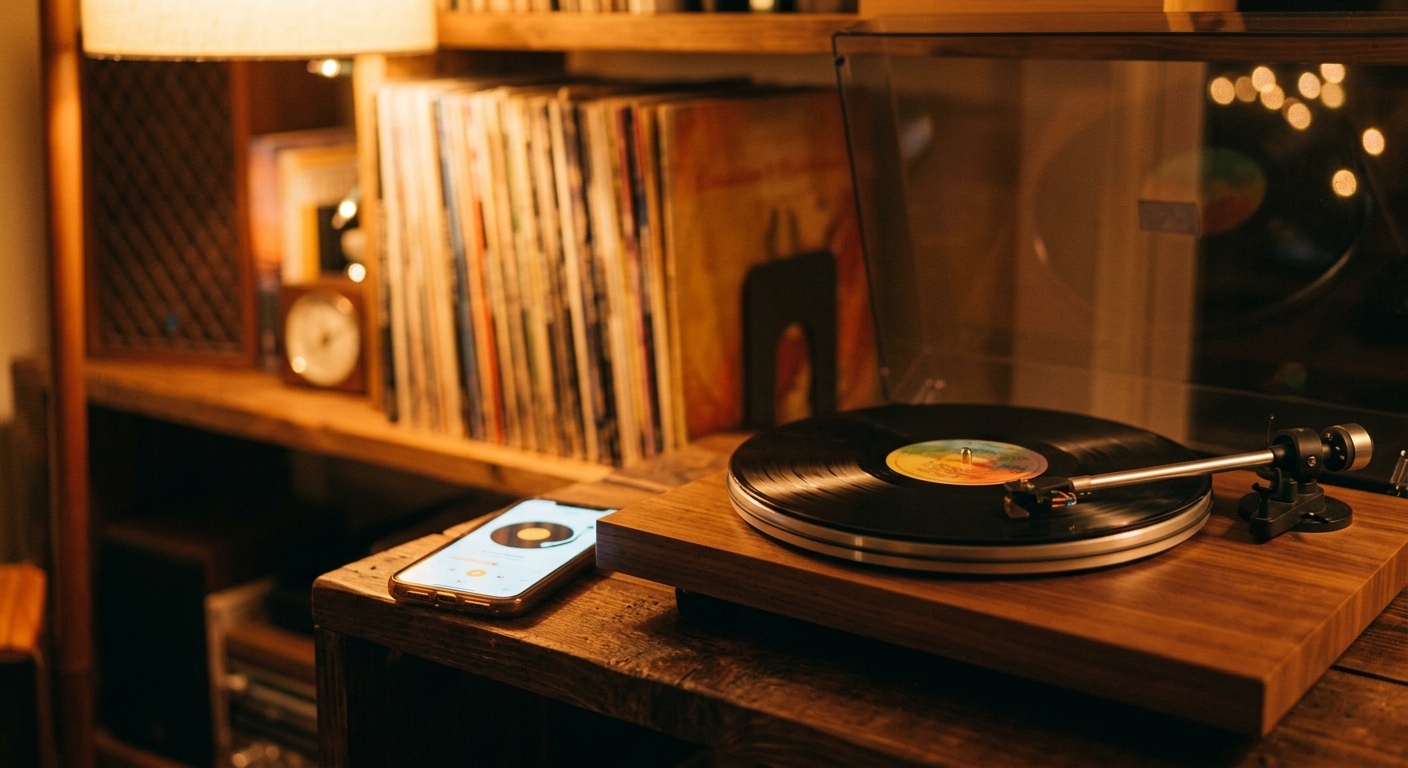
There is something quietly thrilling about the moment a needle drops. The soft crackle that precedes the music, the slow widening of the soundstage, the sense that time has just tilted sideways and you are now inside the album rather than just listening to it. When that moment happens, one of the first things vinyl lovers want to do is tell someone about it. Not because they need validation, but because the experience feels too vivid to exist only in their own head. The question that follows naturally is, what is spinning right now?
The habit of announcing what you are listening to is older than digital culture. Radio DJs have been asking it of their listeners since the golden age of FM, and mixtape culture turned the question into a small art form. "Currently spinning" became a fixture of online music communities in the early 2000s, appearing in forum signatures and blog sidebars alongside album art and tracklists. It was a way of saying, here is what matters to me today, and maybe it matters to you too. The format was loose, almost conversational, and it carried an implicit invitation to dialogue.
Streaming services supercharged this impulse. Spotify, Apple Music, and their peers made "now playing" a persistent ambient signal across apps and social feeds. Your friends could see what you were listening to in real time, and algorithms used that signal to suggest what you might love next. The functionality was slick and frictionless, but something was lost in the translation. A Spotify notification saying "Brian is listening to Kind of Blue" does not quite capture the same weight as someone telling you they just placed the needle on a pristine 1959 pressing in their living room.
Vinyl has always been a different kind of experience, and the difference shows in what "now playing" means for vinyl listeners. When you are tracking your vinyl collection in real time, you are not just logging a song title. You are marking a ritual. You are noting which record you reached for on a particular afternoon, whether it was a rainy Sunday record or a Monday morning record, and what it felt like to hear it on actual speakers rather than earbuds. The context that surrounds a vinyl listening session is part of the story, and a good now-playing tracker tries to capture at least some of that texture.
Turntable technology has caught up with this desire in interesting ways. Modern smart turntables can detect which record is on the platter and push that information to your phone automatically. QR code systems let you log a record by scanning a label you have placed on your shelf. Some enthusiasts have built elaborate setups where the act of placing the record on the turntable is itself the trigger for a log entry. The technology varies, but the impulse behind it is consistent: vinyl collectors want the moment of playing to be recorded, shared, and remembered.
The social dimension is real and often undervalued. Sharing what is spinning right now is a low-stakes way to start a conversation about music that goes deeper than a thumbs-up reaction. When someone posts that they are listening to a specific pressing of a specific album, other vinyl enthusiasts can respond with context, memories, or recommendations. The record you chose becomes a window into your taste and your mood, and the people who see it can learn something about you that a playlist alone would not convey.
There is also a journaling aspect that vinyl fans find surprisingly valuable. Tracking your spins over weeks and months reveals patterns. You might discover that you always reach for certain records in the winter, or that a particular pressing has become your go-to when you need to think. Over time, your log becomes a diary of your listening life, searchable and sortable, showing you which albums have mattered most to you and when. For collectors with large libraries, it is also a practical tool: a now-playing log can help you remember which records you have already listened to recently, so you do not fall into the same small rotation over and over.
What makes the vinyl now-playing experience distinct from its streaming counterpart is the intentionality it implies. Streaming services log everything passively, and the now-playing signal is always on by default. With vinyl, every entry represents a deliberate act. You chose to put that record on. You placed the needle yourself. The act of logging it is an extension of the ritual, not a side effect of the technology. That distinction sounds subtle, but vinyl collectors tend to feel it strongly.
Apps designed around this idea are starting to catch up with the breadth of what vinyl listeners actually want. The best ones do not just show what is playing; they let you add context like which turntable you used, what speaker system you played it through, and what you thought of the session. They make it easy to browse your own history and rediscover albums you have not spun in months or years. And they make it social in a way that feels voluntary rather than algorithmic, driven by your own choices rather than a platform is engagement metrics.
The question "what is spinning now" sounds simple, and that is part of its appeal. It is a question that invites a story, not just an answer. When you ask a vinyl lover, you are asking them to share the album they are inside right now, at this exact moment, in this exact room, with this exact feeling in the air. And the answer is almost always more interesting than you expected, because vinyl listeners tend to have good reasons for every spin. They chose that record, that day, that moment, and there is a whole small world behind that choice waiting to be shared.
A spreadsheet tracks what you own. What's Spinning identifies what's playing.
On-device vinyl ID logs your listening history automatically. 7-day free trial.
Looking for Shazam for vinyl?
What's Spinning identifies what's playing on your turntable on-device, logs history, and AirPlays now-playing to your TV.
Comparing vinyl ID apps?
Analog requires Discogs and is iPhone-first (iPad coming). What's Spinning works without Discogs on iPhone and iPad with AirPlay.
Try What's Spinning Free
Turn your iPad into a live now-playing display. Track every record you spin.
START FREE TRIALThen $4.99/mo or $39.99/yr · Cancel anytime