Your First Vinyl Setup: Turntable, Speakers, and Records
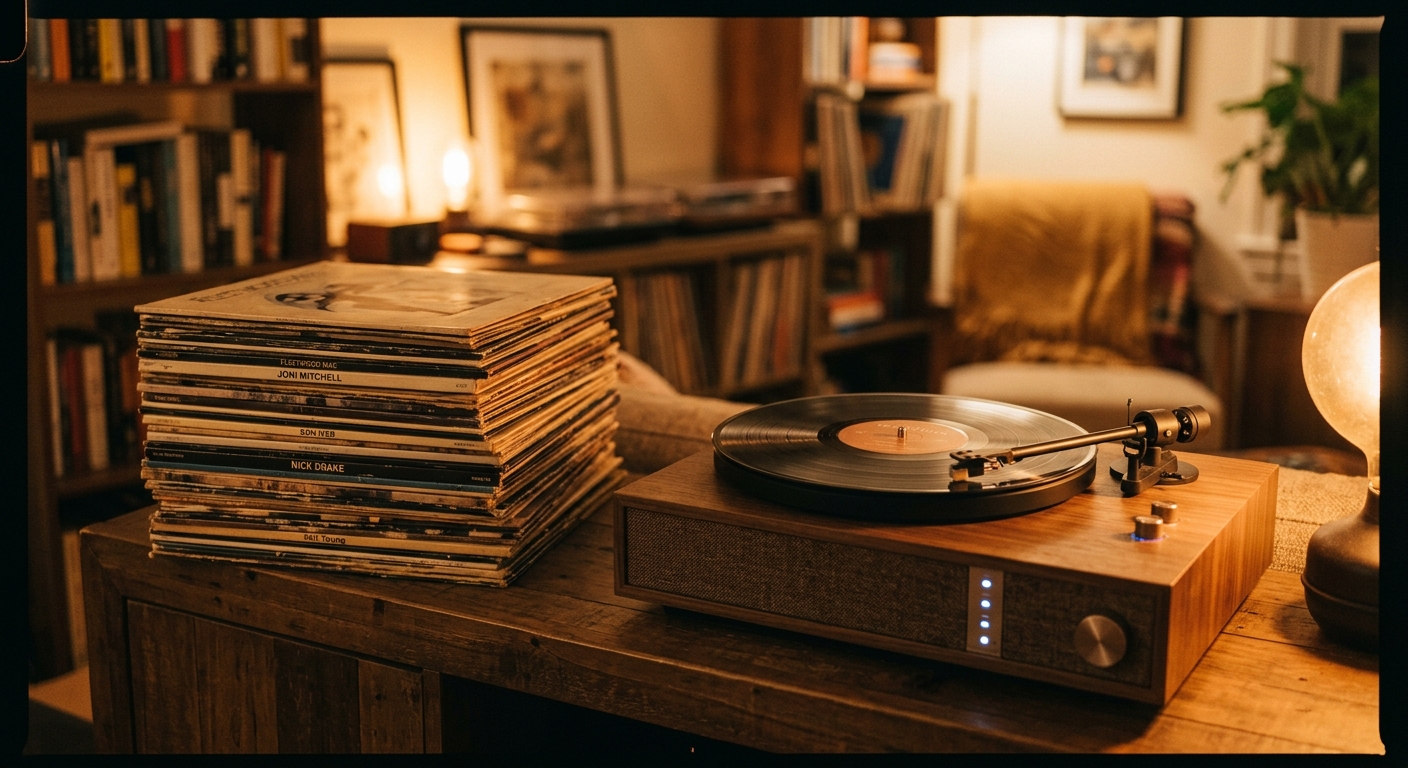
So you are thinking about getting into vinyl. Maybe you have been lurking on r/vinyl, or your parents have a dusty receiver in the basement that suddenly seems interesting. Either way, you are in the right place. Building your first vinyl setup does not have to be confusing or expensive, and once you hear your first record on a real system, you will understand why people spend decades perfecting this hobby.
The good news is that you can get started with a solid, enjoyable setup for under $500. Here is everything you need to know about choosing the right gear and putting it together the right way.
The Three Parts of Any Vinyl Setup
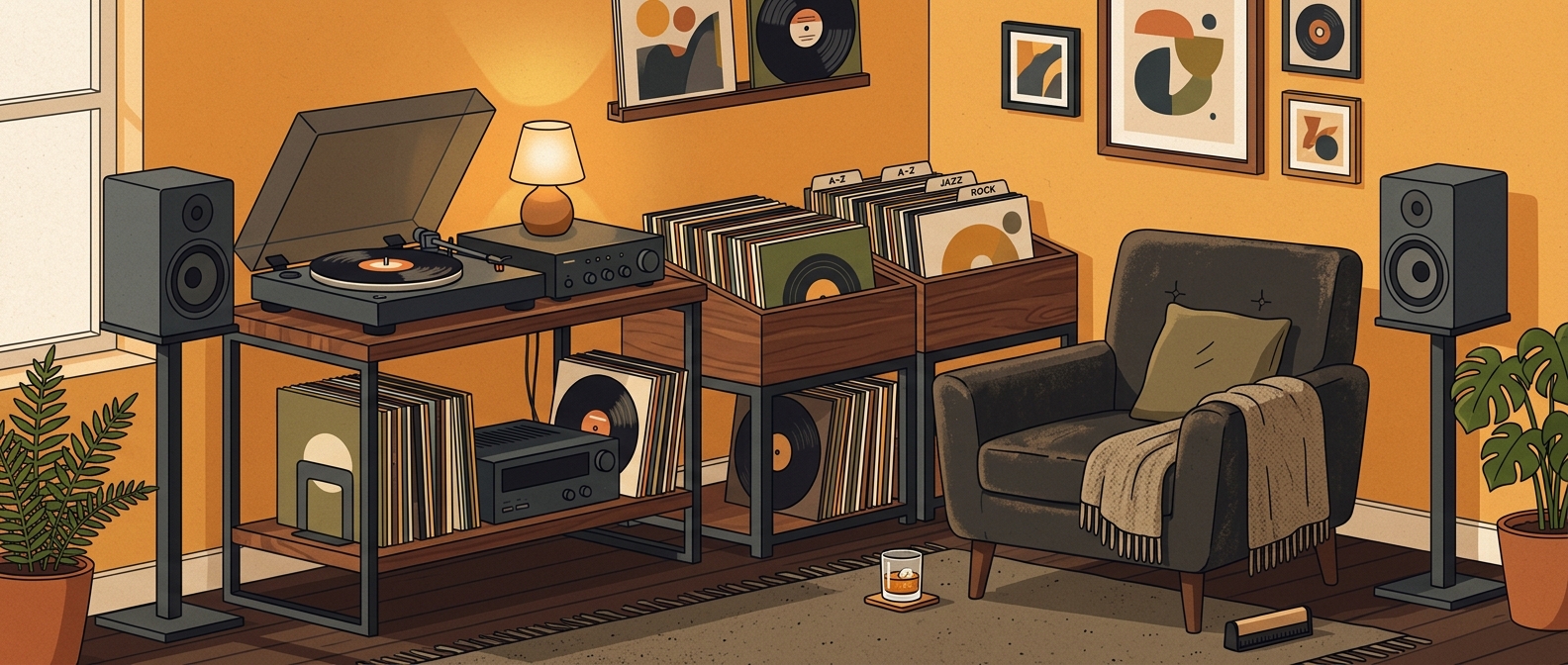
Every vinyl system has three core components. The turntable reads the grooves and sends a signal. The amplifier or receiver powers the speakers and shapes the sound. The speakers themselves convert that electrical signal into the music you hear. Getting each piece right matters, and understanding what each does will save you from making expensive mistakes.
The turntable is the heart of the system. It spins the record at either 33 1/3 or 45 revolutions per minute, and the cartridge at the end of the tonearm reads the groove and converts mechanical vibration into a tiny electrical signal. That signal is what the amplifier amplifies, and what the speakers finally turn into sound waves in the air.
Choosing a Turntable
If you are just starting out, buy a new turntable from a reputable brand rather than hunting for a vintage one. The math is simple: a new Audio-Technica AT-LP60 costs around $169 and will sound great out of the box. A vintage Dual or Technics from 1975 might be a better long-term investment, but only if you know what to look for and how to service it. For your first system, new is the safer choice.
The AT-LP60 is a belt-drive turntable, which means the motor spins the platter through a rubber belt. Belt-drive designs isolate the motor from the platter, which reduces vibration and results in cleaner sound. They are the standard for home listening at this price point. Direct-drive turntables, where the motor spins the platter directly, are more common in DJ setups because they offer instant start and rock-solid speed stability under heavy use. You do not need direct-drive for home listening.
Most entry-level new turntables, including the AT-LP60, come with a pre-mounted cartridge and headshell. You do not need to calibrate anything before you start playing records. That said, after a few years you might want to upgrade the cartridge to something like an Ortofon Red, which costs around $129 and makes a noticeable improvement in detail and clarity. Consider it a future upgrade path rather than a first-purchase decision.
Look for a turntable with a built-in phono preamp if your receiver or amplifier does not have a phono input. Many newer turntables include this, and it makes the setup dramatically simpler. You can plug a turntable with a built-in preamp directly into any auxiliary input on your stereo or powered speakers, no special wiring required.
Speakers: Powered vs Passive
This is where most first-timers get confused, and it is worth taking a moment to understand the difference. Passive speakers need an external amplifier or receiver to power them. They have no built-in power supply. Powered speakers, also called active speakers, have amplification built in and simply need a line-level signal to play music.
If you buy passive speakers, you need a receiver or a separate amplifier to drive them. A receiver is the more practical choice for most people because it typically includes a built-in phono preamp, multiple inputs for your other devices, and enough power to drive most bookshelf speakers comfortably. Yamaha and Sony make solid entry-level receivers in the $200-$300 range that work beautifully for vinyl.
If you want to keep things minimal and avoid a receiver entirely, buy powered bookshelf speakers and a turntable with a built-in phono preamp. The Kanto YU6 is a popular choice around $349 per pair; it has Bluetooth, an optical input, and a built-in phono preamp, making it one of the simplest routes into vinyl. You plug the turntable directly into the speakers, and you are playing records.
What About That Hissing Sound?
All vinyl systems produce some amount of audible hiss or background noise. This is normal and inherent to the format. A well-maintained record on a good system will have a quiet background, but you will still hear the faint texture of the medium between tracks. This is not a flaw; it is a character of the format, and longtime listeners actually find it part of the appeal. If you hear loud buzzing or humming, that typically means your cables are not connected properly or your ground wire is not attached. That is a setup issue, not a vinyl issue.
Connecting Everything
The connections themselves are straightforward. Your turntable needs two cables, usually color-coded red and white, running from the output to the input on your receiver or powered speakers. Many turntables also have a separate ground wire with a small metal spade connector that attaches to a grounding post on the receiver. Do not skip this step; the ground wire prevents the electrical hum that plagues ungrounded setups.
Place your turntable on a stable, level surface. Vibration from your speakers can travel through the table and cause tracking issues, so keep your turntable as far from your speakers as practical. A solid wood shelf or dedicated audio cabinet is ideal, but any stable, flat surface will work for a first setup.
The Records Themselves
Start with records you already love. Do not feel like you need to hunt down rare pressings or expensive audiophile releases to enjoy the format. Most major releases are available new on vinyl, and used record stores are full of affordable classics. A $5 used copy of something you know well will teach you more about vinyl than a $50 specialty pressing, because you will already know what it is supposed to sound like.
Clean your records before playing them, especially used ones. A simple brush and some record cleaning fluid will remove the grime that causes clicks and pops. Your cartridge will also last longer if you keep your records clean.
Start Simple and Build From There
The beauty of a vinyl system is that every component can be upgraded independently. Start with a basic setup that works, then improve one piece at a time as your budget allows and your ears guide you. You might find that your speakers are the limiting factor, or that you eventually want a better cartridge, or that you crave the depth a receiver with more power can provide.
Whatever direction you take, the records you play will sound better than they ever have through any other medium. That is what this hobby is really about, and that is what makes it worth the effort.
A spreadsheet tracks what you own. What's Spinning identifies what's playing.
On-device vinyl ID logs your listening history automatically. 7-day free trial.
Looking for Shazam for vinyl?
What's Spinning identifies what's playing on your turntable on-device, logs history, and AirPlays now-playing to your TV.
Comparing vinyl ID apps?
Analog requires Discogs and is iPhone-first (iPad coming). What's Spinning works without Discogs on iPhone and iPad with AirPlay.
Try What's Spinning Free
Turn your iPad into a live now-playing display. Track every record you spin.
START FREE TRIALThen $4.99/mo or $39.99/yr · Cancel anytime