A Simple Workflow for Adding New Vinyl to Your Collection App
A new record should not disappear into the shelf the minute you bring it home. The best workflow for adding new vinyl to an app starts before the album hits the turntable: inspect it, clean it, play it, confirm it was logged, then put it where future you can actually find it. That sounds fussy until your collection crosses a few hundred records and you start asking dangerous questions like, "Do I already own this pressing?"
The stakes are higher than they used to be. The RIAA's 2023 year-end report said U.S. vinyl revenue grew 10 percent to $1.4 billion, the seventeenth consecutive year of growth, and vinyl albums outsold CDs in units for the second time since 1987. Billboard's summary of Luminate's 2024 data reported that U.S. vinyl album sales increased another 4.3 percent in 2024. In other words, record shelves are getting fuller, and a casual memory is no longer a reliable cataloging system.
1. Create an incoming shelf, not an incoming mystery
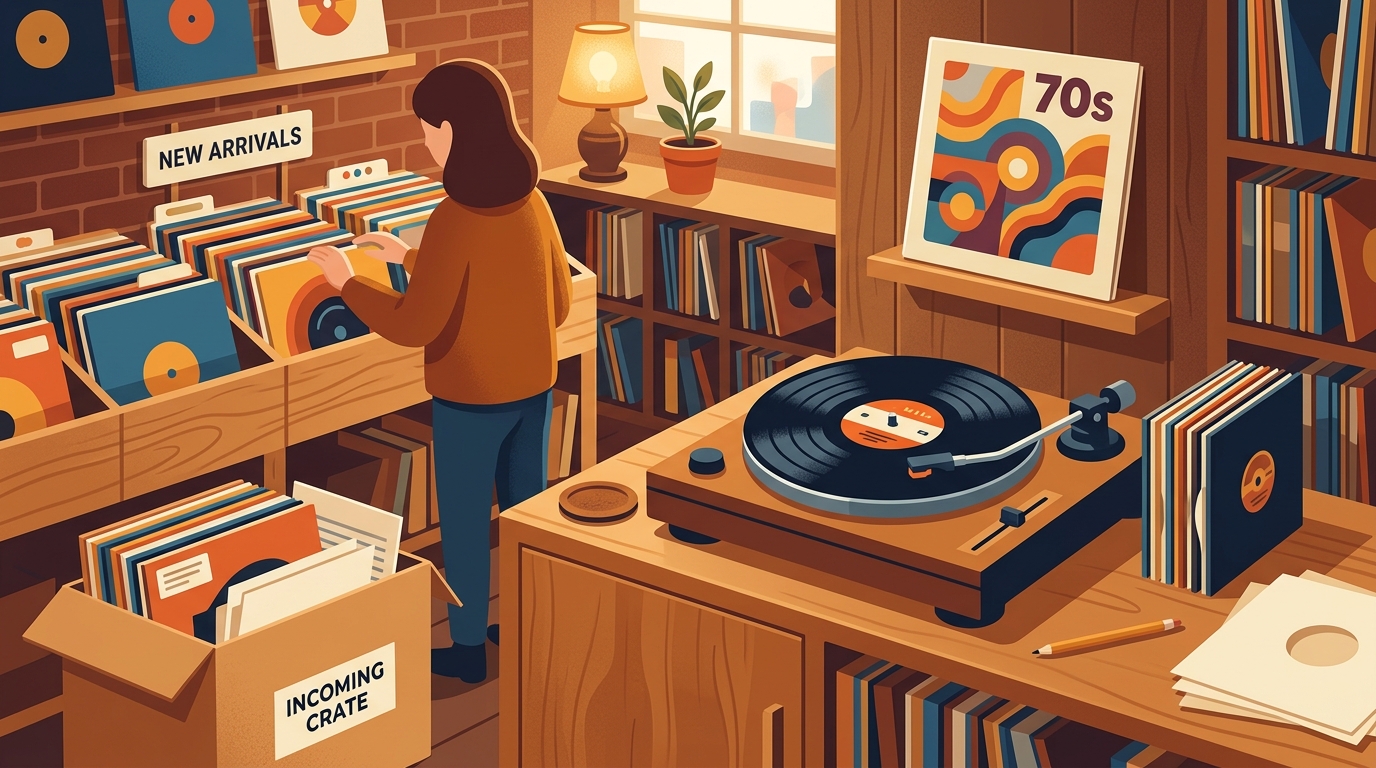
When a record comes home from a shop, mailer, estate sale, or friend, give it one temporary place. A single "new arrivals" cube or crate keeps the workflow honest. Do not immediately merge new purchases into the main collection, because unplayed and unverified records are exactly the ones you will forget. If you bought five LPs on a Saturday, leave all five together until each has been inspected, cleaned, played, and logged.
2. Inspect the exact copy before you play it
Look at the jacket, inner sleeve, labels, and dead wax. You do not need to become a pressing detective every time, but you should know whether the copy is clean, warped, scratched, moldy, or missing inserts. The Library of Congress preservation guidance recommends clean handling, keeping food and drink away, and touching grooved discs only by the edge and label areas. That advice is boring in the best possible way, because boring habits are what keep records playable.
If you track condition, use plain language you will understand later: "VG jacket, light spindle marks, plays clean," beats a cryptic note you copied from a marketplace listing. For valuable records, take a quick photo of the cover and label before shelving. For everyday records, a short condition note is enough.
3. Clean first, then log by listening
Even sealed records can carry paper dust or manufacturing residue. Used records can bring old sleeves, fingerprints, and thrift-store archaeology. A carbon fiber brush before each first play is the minimum. A wet clean is smarter for used finds, especially if the record looked like it spent the 1980s under a dorm-room futon.
This is where What's Spinning fits naturally. Instead of turning new-vinyl day into a typing session, play the record and let the app listen to your turntable. The app is designed to build your vinyl collection around real playback, so the album enters your collection as something you actually heard, not just something you meant to catalog someday. That distinction matters. A shelf inventory tells you what you bought. A listening log tells you what is earning space.
4. Verify the album after the first play
After side A, or after the full album if you have time, check the app and confirm the record appeared the way you expect. This is a small step, but it prevents messy cleanup later. If you are comparing multiple editions of the same album, keep pressing details in your own notes or wherever you track copy-specific metadata. The app's strength is automatic listening history, while pressing minutiae are useful context around that history.
A practical rule: do not shelve a new record until the first play has been captured. That one rule turns collection management from a someday project into part of the listening ritual. Put on the album, pour coffee, flip the side, confirm the log, then file it away.
5. File records in a way your hands can follow
There is no universal filing system. Alphabetical by artist works for most collectors. Genre sections work if your brain thinks in scenes: jazz, soul, punk, country, electronic, soundtracks. Chronological filing is romantic and usually a disaster unless the collection is small. Whatever you choose, leave breathing room. Jam-packed shelves damage jackets, make browsing annoying, and encourage records to live in piles.
Use dividers for large sections and be consistent about artists with "The" in the name, solo artists, and compilations. The best app workflow still needs a physical workflow beside it. Digital memory helps you know what you own; physical order helps you find it before the second drink gets warm.
6. Review new additions once a month
At the end of the month, look back at what you added and what you actually played. This is where collection data becomes useful instead of decorative. Did the bargain-bin soul record get three plays while the expensive reissue got one polite spin? Did a new jazz purchase send you back to older Blue Note titles? Did you buy more than you listened to? Those are the signals that shape better buying.
A good workflow for adding vinyl to an app is not about documenting everything for its own sake. It is about lowering friction until the catalog reflects your real listening life. The record comes in, gets inspected, gets cleaned, gets played, gets logged, and gets filed. Repeat that enough times and your collection stops being a wall of beautiful guesses. It becomes a living record of what your turntable actually does.
FAQ
Do I need to type every new record into What's Spinning?
No. What's Spinning is built around listening based tracking. The cleanest workflow is to put the new record on, play it through your turntable, and let the app recognize and log the album as part of your collection.
Should I clean a new record before playing it for the first time?
Yes, especially if it is used or has paper dust from a new inner sleeve. A quick dry brush before playback, and a deeper wet clean for used copies, reduces noise and protects the stylus.
What information should I keep outside the listening log?
Keep condition, pressing notes, purchase price, and storage location if you care about resale or insurance. The listening log answers what you actually play, while those details answer what exact copy you own.
How soon should I log a new record after buying it?
The same day is ideal. Put it in a small incoming pile, inspect it, clean it, play side A or the full album, then shelve it. If it waits longer than a week, it usually becomes collection clutter instead of listening data.