Vinyl for Relaxation: Your Ultimate Listening Guide
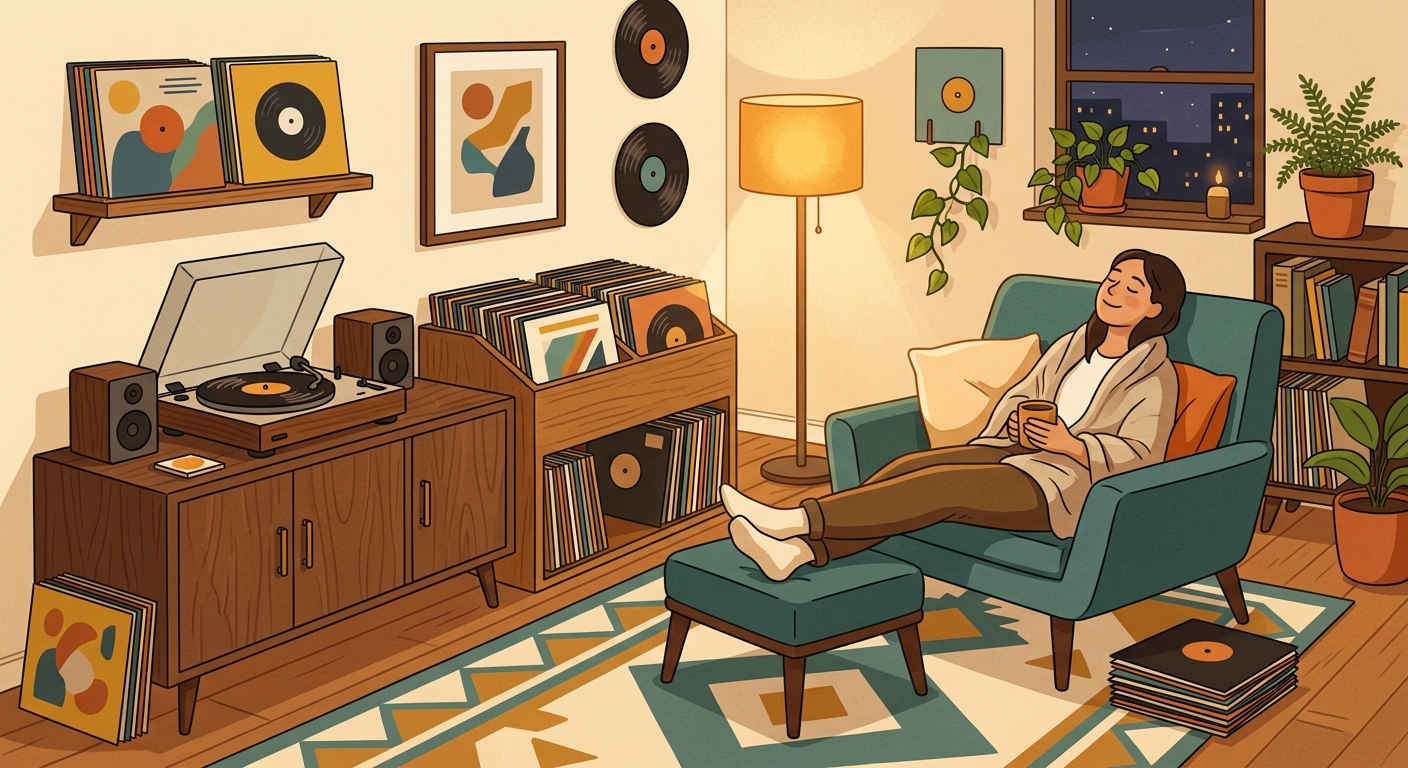
The use case vinyl for relaxation is not about magic dust in the grooves. It is about using a physical format to slow down how you choose, hear, and remember music. Streaming is brilliant for discovery, but it also makes it easy to skip, skim, and let a playlist dissolve into background noise. A record asks for a cleaner decision: pick one album, brush it, cue it, sit nearby, and let twenty minutes belong to one musical idea.
Research on music and stress is promising but nuanced. A 2022 systematic review in PLOS One looked at fourteen randomized controlled experiments with 706 healthy participants and found no single guaranteed stress-recovery effect, partly because genre, tempo, listener choice, and outcome measures varied widely. The useful takeaway is that context and intention matter. Music heard deliberately for recovery behaves differently from music used as sonic wallpaper.
Why vinyl works as a relaxation ritual
Vinyl builds small pauses into the evening. You cannot open five browser tabs inside a Blue Note side. You cannot shuffle from bossa nova to doom metal unless you physically get up and choose that. The friction is the feature. The Library of Congress traces sound recording back to Edison’s 1877 phonograph experiments, a reminder that recorded sound began as something mechanical, visible, and a little miraculous. Modern LP playback still carries some of that visible process: a platter turns, a stylus follows a groove, and the music happens in real time.
The format is also thriving. The RIAA reported that U.S. vinyl revenue grew 7 percent to $1.4 billion in 2024, the eighteenth straight year of growth. Vinyl albums outsold CDs for the third year in a row, 44 million units versus 33 million. For relaxation, the draw is often less about measurable fidelity and more about attention. A record turns listening into an appointment.
Build a calm shelf, not a perfect shelf
Start with eight to twelve records that reliably lower the temperature in the room. Begin with the records that change your breathing, posture, or speed of thought, not the ones you think you are supposed to admire. Ambient classics such as Brian Eno’s Ambient 1: Music for Airports, quiet jazz like Bill Evans’ Waltz for Debby, late-night soul from Sade, gentle folk from Nick Drake, floating spiritual jazz from Alice Coltrane, dub, bossa nova, and minimal piano can all work.
For each candidate, play one full side at a comfortable volume. Put your phone across the room. When the side ends, write one sentence: calmer, unchanged, distracted, energized, or sleepy. After five sessions, keep the albums that produce the result you want and move the rest back to general listening. What’s Spinning can track what your turntable actually plays, helping you notice patterns without spreadsheet cosplay. Nobody needs a pivot table to relax.
Match the record to the moment
Use the time of day as your first filter. Morning relaxation usually benefits from lightness: João Gilberto, Dorothy Ashby, Kankyo Ongaku compilations, harp, acoustic jazz guitar, or soft instrumental records. After work, choose albums with a firmer pulse, like dub, mellow soul, or krautrock that settles into repetition. Before bed, avoid records that make you analyze lyrics or anticipate big crescendos. You are trying to land the plane, not admire the cockpit.
Tempo can help, but it should not become a rulebook. The PLOS One review notes that effects varied by tempo and other variables, and the evidence does not support a universal beats-per-minute prescription. Your personal association with a record can overpower its tempo anyway. A slow breakup album may be technically calm and emotionally terrible.
Make the room do less work
A relaxation setup should reduce fiddling. Put a carbon-fiber brush, stylus brush, clean inner sleeves, and a microfiber cloth where you can reach them. Popular Science’s turntable maintenance guide explains the basic mechanical reality: a stylus rides a real groove, so dust, drag, and poor setup can affect both sound and record life. It also recommends balancing the tonearm, setting anti-skate, cleaning records regularly, and using the cueing lever.
For calm listening, aim speakers at the room, not at your anxieties. If every session becomes a forensic investigation of surface noise, move the chair slightly off-axis, lower the volume, clean the record, and stop evaluating the cartridge like it owes you money. Clean used records before putting them on the calm shelf. Store them vertically. Replace paper inners that shed dust.
A simple 30-minute vinyl relaxation routine
- Choose before you sit. Pick one album side that fits the moment, not your whole identity as a collector.
- Prepare the record. Brush the side, check the stylus, lower the cueing lever gently, and set a moderate volume.
- Give Side A one job. Breathe, stretch, cook, read liner notes, sketch, or simply sit. Do not browse for the next record while this one plays.
- Use the side break. When the music stops, notice your body before you flip the record. If you are calmer, continue. If you are restless, choose silence.
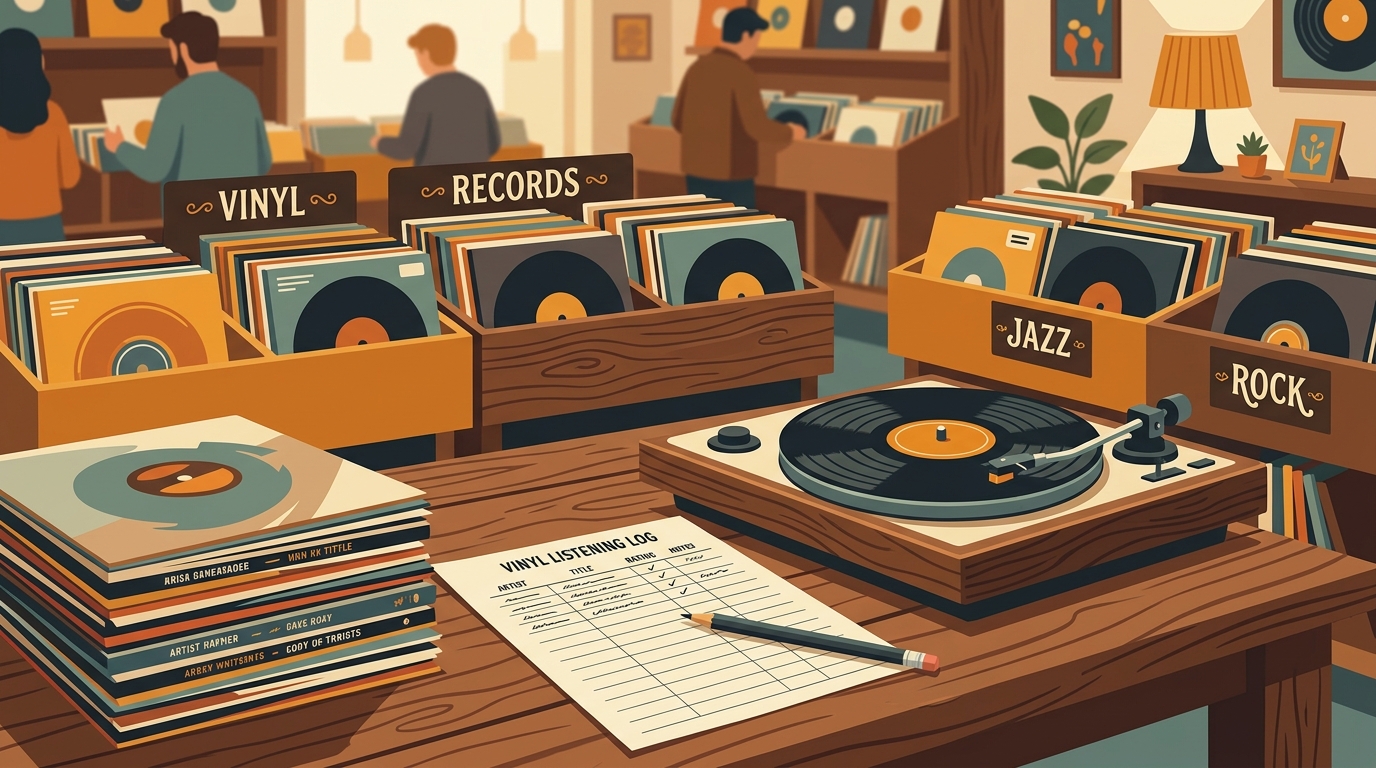
- Log one sentence. A tiny note is enough. Over time, your real relaxation records will reveal themselves.
What to buy first
If you are building from scratch, buy used copies slowly and prioritize condition over rarity. A worn ambient LP with constant crackle is not relaxing, it is a tiny fireplace with copyright issues. Start with one ambient record, one piano or guitar record, one mellow vocal album, one jazz trio LP, one bossa nova record, and one familiar comfort album.
Do not over-optimize the gear. A stable turntable, correctly balanced tonearm, clean stylus, clean records, and comfortable speaker placement will get you further than chasing upgrades every weekend. The goal is a system that disappears for half an hour.
FAQ
What records are best for relaxing on vinyl?
Start with albums that hold one mood for a full side: ambient, mellow jazz, bossa nova, dub, quiet soul, folk, instrumental hip-hop, and restrained classical records. Brian Eno, Bill Evans, Sade, Nick Drake, Alice Coltrane, and Antonio Carlos Jobim are useful starting points.
Is vinyl actually better than streaming for relaxation?
Not automatically. The advantage is behavioral: vinyl makes you choose one record, handle it carefully, and stay with it for about twenty minutes per side. If that ritual helps you stop skipping tracks, vinyl can be a calmer format.
How loud should I play vinyl when I want to relax?
Use a comfortable, conversational level. If you are leaning forward to judge cymbals, cartridge detail, or bass extension, you have turned a relaxation session into a gear test. Save that for another night.
How can I remember which albums actually help me unwind?
Keep a short listening log with the album, time of day, mood before and after, and any distractions. What's Spinning can help because it tracks what you play from your turntable, so your relaxation shelf can be based on real listening, not wishful thinking.
Sources
Research and background for this guide: PLOS One systematic review, RIAA 2024 Year-End Revenue Report, Popular Science record and turntable maintenance guide, Library of Congress history of the phonograph.
A spreadsheet tracks what you own. What's Spinning identifies what's playing.
On-device vinyl ID logs your listening history automatically. 7-day free trial.
Looking for Shazam for vinyl?
What's Spinning identifies what's playing on your turntable on-device, logs history, and AirPlays now-playing to your TV.
Comparing vinyl ID apps?
Analog requires Discogs and is iPhone-first (iPad coming). What's Spinning works without Discogs on iPhone and iPad with AirPlay.
Try What's Spinning Free
Turn your iPad into a live now-playing display. Track every record you spin.
START FREE TRIALThen $4.99/mo or $39.99/yr · Cancel anytime