Albums Better Than Their Reputation: 15 Vinyl Records Worth Reconsidering
Some records arrive with a scarlet letter already stuck to the sleeve. They followed a masterpiece, confused critics, changed direction too fast, sold less than expected, or became shorthand for an artist losing the plot. The funny thing about vinyl is that it gives those albums a second courtroom. When you hold the jacket, flip the side, hear the room tone, and live with the sequencing, the old verdict can start to sound lazy.
This collector-minded guide to albums better than their reputation focuses on records whose reputations have lagged behind their actual rewards. None of these are perfect in the boring sense. They are better than that: strange, ambitious, bruised, overstuffed, under-loved, and often more revealing than the consensus classics beside them.
For each pick, I looked at chart performance, certifications, production context, original pressing notes, and why the album deserves shelf space for vinyl collectors. The goal is not contrarianism for its own sake. It is to find records that still earn another spin after the old jokes have gone stale.
15 albums better than their reputation

1. Tusk, Fleetwood Mac (1979). It reached No. 4 on the Billboard 200 and No. 1 on the UK Albums Chart, and the RIAA certifies it double platinum. The common original U.S. double LP is Warner Bros. 2HS 3350, produced by Fleetwood Mac with Richard Dashut and Ken Caillat at The Village Recorder in Los Angeles. Source.
The reputation problem is simple: almost any album would look strange standing next to Rumours. Tusk was expensive, sprawling, and deliberately unwilling to become Rumours Two, so it picked up a reputation as the difficult Fleetwood Mac record. On vinyl, that reputation starts to feel unfair almost immediately. The two LP layout gives the record room to breathe, and the side changes make its personality shifts feel intentional rather than random. Lindsey Buckingham's dry, nervous home-demo energy rubs against Christine McVie's melodic calm and Stevie Nicks' mystical drama, which is exactly why the album keeps opening up with repeated plays. For collectors, original textured jackets with clean inner sleeves are the fun hunt, but the real reason to own it is the sequencing. Put on Side One and the record moves from pop craft into a scruffier, stranger studio language. By the time the title track arrives, complete with the USC Trojan Marching Band, the album has made its case as a beautifully reckless object. Essential tracks include Sara, Think About Me, Sisters of the Moon, Walk a Thin Line, and Tusk. If your shelf already has Rumours, Tusk is the record that proves the band was more than perfection under pressure; it was also weirdness under pressure.

2. Self Portrait, Bob Dylan (1970). The album reached No. 4 on the Billboard 200 and No. 1 in the UK, and it is RIAA Gold. Original U.S. copies appeared on Columbia as C2X 30050, with Bob Johnston producing material drawn from Nashville, New York, and Isle of Wight recordings. Source.
Self Portrait has one of the most famous bad reputations in rock criticism, helped along by Greil Marcus opening his Rolling Stone review with the now notorious question, What is this? The strange thing is that the album's supposed flaws are also what make it fascinating on a turntable. It is a double LP of covers, country fragments, crooner moves, live cuts, and odd sequencing decisions, which means it behaves less like a formal statement and more like a crate of records Dylan happened to leave open. That can be maddening if you want Blonde on Blonde logic. It can be charming if you listen like a collector. The record has different rooms inside it: the wordless drift of All the Tired Horses, the old-time warmth of Copper Kettle, the battered folk memory of Days of '49, and the Isle of Wight looseness of The Mighty Quinn. The 2013 Bootleg Series set Another Self Portrait helped many listeners hear the period differently, but original Columbia two LP copies still carry the peculiar aura of the 1970 release. Condition matters because quiet passages and acoustic textures expose surface noise. The album is not Dylan at his most concise, and that is exactly why it works as a reconsideration record. It documents an artist trying to slip out of a costume everyone else kept trying to zip back up.

3. Sandinista!, The Clash (1980). Sandinista! reached No. 24 on the Billboard 200 and No. 19 on the UK Albums Chart, with RIAA Gold and BPI Silver certifications. Original U.K. copies were issued by CBS as FSLN 1, while U.S. copies appeared on Epic as E3X 37037. Source.
The knock on Sandinista! is that it should have been a single album. That complaint is understandable, but it misses why vinyl collectors keep coming back to it. The physical triple LP format is part of the argument. The Clash were not just writing punk songs at this point; they were imagining a radio dial that could jump from reggae to dub, funk, rap, gospel, children's voices, calypso, and political street reportage. The band famously took a royalty hit to keep the price lower, a collector detail that still fits the record's communal spirit. Produced by The Clash and recorded across places including Pluto in Manchester, Power Station and Electric Lady in New York, Channel One in Kingston, and Wessex in London, it sounds like a band refusing to stay in one city. A clean complete copy is worth checking carefully because party records often lived hard lives. Make sure all three discs, sleeves, and inserts are present. The Magnificent Seven points toward hip-hop and dance-punk, Hitsville U.K. imagines an independent pop underground, Washington Bullets is one of the band's sharpest political songs, and Police on My Back still hits with punk immediacy. Yes, it sprawls. So does a good record store. Sandinista! rewards the same habit: flipping, noticing, returning, and discovering that the odd corner you skipped last month is suddenly the whole reason you came back.

4. Around the World in a Day, Prince and the Revolution (1985). It went to No. 1 on the Billboard 200, No. 5 in the UK, and is certified double platinum by the RIAA. The common U.S. LP is Paisley Park and Warner Bros. 1-25286, produced by Prince after the Purple Rain explosion. Source.
Around the World in a Day suffers from one of the classic reputation traps: it arrived after an album that turned its maker into a phenomenon. Purple Rain made Prince a global pop monarch, then he followed it with a psychedelic, inward, sleeve-as-world record that refused to serve as a victory lap. Heard on vinyl, that refusal is the pleasure. The album opens like a curtain rising on a private Paisley Park theater, then moves through bright pop, strange balladry, spiritual questioning, and tough funk without begging for approval. Raspberry Beret is the hit everyone knows, but the LP's deeper appeal sits in Paisley Park, Condition of the Heart, Pop Life, Tamborine, and America. The artwork matters here in a way streaming cannot reproduce; original copies with clean jackets and inserts turn the album into an object you can study while the record plays. Production-wise, Prince layers acoustic color, backward-looking psychedelic textures, drum machine snap, and Revolution-era band energy into something that sounds handmade and ornate at the same time. It is not a minor detour. It is the moment Prince proved that superstardom would not make him predictable. For collectors, that makes it a useful shelf test. If you only want the clean narrative of 1980s dominance, it feels messy. If you want the artist's imagination in motion, the reputation looks much too small.
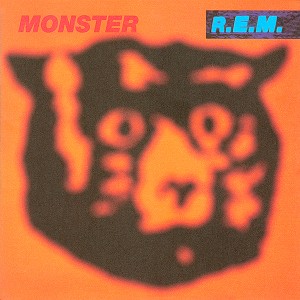
5. Monster, R.E.M. (1994). Monster debuted at No. 1 in the U.S. and UK and is certified four times platinum by the RIAA and three times platinum by the BPI. It was produced by Scott Litt and R.E.M., with sessions at Kingsway, Criteria, Ocean Way, and other studios. Source.
Monster spent years as the R.E.M. album people joked about finding in every used CD bin. That joke hides two vinyl truths. First, original 1994 LP copies come from a CD-dominant era, so they are more interesting to collectors than their old reputation suggests. Second, the music itself makes more sense when it is loud, physical, and allowed to occupy a room. After Out of Time and Automatic for the People, many fans expected more acoustic glow and adult melancholy. R.E.M. instead gave them tremolo guitars, glam-rock poses, distorted surfaces, and Michael Stipe writing about performance, grief, desire, and disguise. What's the Frequency, Kenneth? is still a killer opener, but the album's case gets stronger with Crush With Eyeliner, Strange Currencies, Bang and Blame, Let Me In, and Circus Envy. The 25th anniversary remix reopened the debate because some listeners preferred the clearer alternate view, but that debate itself proves the songs have depth under the fuzz. On vinyl, Monster is a good reminder that 1990s overproduction is not always a flaw. Sometimes the murk is the emotional weather. Clean originals can command collector attention, while reissues are practical for daily listening. Either way, the album is not a failure hiding behind orange cover art. It is a big, wounded, deliberately artificial rock record that knew exactly how uncomfortable fame had become.

6. Presence, Led Zeppelin (1976). Presence reached No. 1 on both the Billboard 200 and UK Albums Chart. It is certified three times platinum in the U.S. and platinum in the UK, produced by Jimmy Page and recorded at Musicland Studios in Munich. Source.
Presence is often called the thin Led Zeppelin album, not because the sound is actually thin, but because it lacks the broad palette fans associate with Physical Graffiti or Led Zeppelin IV. There are no folk reveries, no keyboard-led epics, and not much mythology. Robert Plant was recovering from a serious car accident, the band was under strain, and Jimmy Page pushed the sessions quickly. On vinyl, that compression of circumstance becomes the point. Presence is a hard, focused guitar record with almost no decorative air. Original Swan Song pressings, including U.S. SS 8416 and U.K. SSK 59402 copies, are attractive to collectors partly because the Hipgnosis sleeve concept with The Object remains one of the band's strangest packages. The music is leaner than the reputation suggests. Achilles Last Stand takes up serious real estate and earns it, with layered Page guitars and a galloping rhythm section that still feels enormous. Nobody's Fault but Mine turns blues vocabulary into serrated arena rock. Tea for One revisits slow blues without trying to outdo Since I've Been Loving You. Because the album is compact by Zeppelin standards, condition is crucial; a clean, punchy copy turns the record into a disciplined blast rather than a lesser chapter. Presence is not the first Zeppelin LP to buy, but it might be the one that gains the most when you stop asking it to be every version of the band at once.

7. Ram, Paul and Linda McCartney (1971). Ram reached No. 2 on the Billboard 200 and No. 1 in the UK, and it is certified platinum by the RIAA. Original copies appeared on Apple, including U.S. SMAS-3375 and U.K. PAS 10003, with sessions at Columbia and A&R in New York. Source.
Ram is now so beloved that it is easy to forget how condescending some early responses were. In 1971, plenty of critics heard it as lightweight, domestic, or evasive, especially in the heavy emotional weather after the Beatles split. Vinyl has been central to the album's rehabilitation because Ram is a tactile, colorful, sleeve-friendly record. It moves from Too Many People to Dear Boy to Uncle Albert and Admiral Halsey to Heart of the Country with a homemade confidence that later indie-pop artists would recognize immediately. The songs are not slight; they are overloaded with hooks, voices, animal noises, sudden shifts, and private jokes. Original Apple pressings are desirable, and the U.S. mono promo has become a serious collector item, but even a common clean stereo copy communicates the album's charm. The low end has a farmyard warmth, the vocals are stacked with playful precision, and the arrangements reward repeated spins. Its reputation improved because the world caught up with McCartney's post-Beatles domestic surrealism. The album does not try to win an argument in the style of John Lennon/Plastic Ono Band, and it does not need to. It builds a small world where pop craft, eccentric production, and family-life mythology become inseparable. For a collector, Ram is essential not only because it is great, but because it teaches a useful lesson: sometimes the records dismissed as soft are the ones with the most durable architecture.

8. Their Satanic Majesties Request, The Rolling Stones (1967). The album reached No. 2 in the U.S. and No. 3 in the UK, with RIAA Gold and BPI Silver certifications. It was self-produced, recorded at Olympic Studios in London, and issued on Decca in the UK and London in the U.S. Source.
The lazy version of the story says Their Satanic Majesties Request is the Rolling Stones pretending to be the Beatles. The better vinyl version says it is the Stones getting lost inside 1967 and leaving behind a messy, fascinating psychedelic artifact. Its reputation suffered because it sat near Sgt. Pepper in time and because the Stones soon returned to a rootsier identity with Beggars Banquet. That later pivot made Satanic Majesties look like a costume party. But costume parties can produce great records, especially when you are holding the original lenticular 3D sleeve. Collectors know the cover is a major part of the appeal; original U.K. Decca TXS 103 and U.S. London NPS-2 copies with strong jacket condition are more desirable than later flat-cover versions. Musically, the album has more substance than the jokes allow. She's a Rainbow is luminous pop, 2000 Light Years from Home is genuinely eerie space-rock, Citadel has a serrated riff, and The Lantern glows with odd menace. The recording's crowded textures can be noisy and chaotic, so pressing condition makes a major difference. A good copy turns the album's clutter into color. It is not the definitive Stones album, but it is a crucial counterfactual: the version of the band that briefly chose cosmic confusion over blues authority. That makes it exactly the kind of misunderstood LP collectors should hear through speakers, not through received opinion.

9. Lodger, David Bowie (1979). Lodger reached No. 20 on Billboard's Top LPs and Tape chart and No. 4 in the UK, where it is BPI Gold. It was produced by David Bowie and Tony Visconti and recorded at Mountain Studios in Montreux and Record Plant in New York. Source.
Lodger is the Berlin Trilogy album people sometimes apologize for before playing, which is odd because it is packed with ideas. Low has the shock of reinvention, Heroes has the mythic title track, and Lodger has the reputation of being the smaller, less dramatic sibling. On vinyl, that ranking starts to feel too tidy. Lodger is restless art-pop, a travelogue about movement, displacement, performance, masculinity, and cultural friction. Original RCA copies, including U.K. BOW LP 1 and U.S. AFL1-3254, remain attractive to Bowie collectors because RCA-era vinyl has its own following and because later remixes changed the conversation around the album's sound. Tony Visconti's 2017 remix made some details punchier, but original mix LPs still have value as reference points for the album's strange balance of dryness and tension. Fantastic Voyage is one of Bowie's great openers, African Night Flight is rhythmically twitchy and daring, D.J. skewers celebrity, Boys Keep Swinging turns swagger into theater, and Look Back in Anger snaps with new wave urgency. The collector appeal lies partly in the album's transitional identity. It points backward to Bowie's experimental 1970s and forward to the sharper pop surfaces of the 1980s. If its reputation says minor Bowie, the grooves say something more interesting: a major artist refusing to make the obvious third panel of a trilogy, choosing instead to make an album about instability itself.

10. Berlin, Lou Reed (1973). Berlin reached No. 98 on the Billboard 200 and No. 7 in the UK, where it later earned BPI Silver status. Bob Ezrin produced it, with recording at Morgan Studios in London and Record Plant in New York. Source.
Berlin's reputation problem was never that people missed its mood. They heard the mood and ran from it. After Transformer made Lou Reed commercially visible, Berlin arrived as a bleak concept album about addiction, violence, dependency, and collapse. Early reviews could be brutal, and the album was treated for years as a punishing listen. Vinyl makes its case because the format gives the theatrical structure weight. Side breaks function like act breaks, the orchestrations bloom out of the speakers, and quiet passages make room for dread in a way that compressed casual listening can flatten. Original RCA APL1-0207 copies are not always rare, but clean ones matter because surface noise can intrude on the album's most fragile moments. The Kids, The Bed, Caroline Says II, Lady Day, and Sad Song are not background music; they are scenes. Bob Ezrin's production can feel grandiose, but that grandeur is part of the tragedy. The album is closer to a staged song cycle than to a conventional rock LP, which explains both its initial rejection and its later elevation. Collectors who love records as complete objects should own it for exactly that reason. It demands time, attention, and a room. Berlin is not secretly cheerful, nor is it easy. It is better than its reputation because its reputation confused discomfort with failure. Some records are supposed to leave a mark.
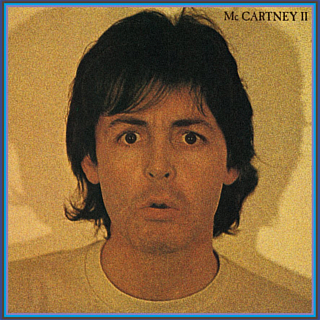
11. McCartney II, Paul McCartney (1980). McCartney II reached No. 3 on the Billboard 200 and No. 1 in the UK, and it is RIAA Gold and BPI Gold. It was produced by McCartney and recorded largely at his home studio, with U.K. copies on Parlophone PCTC 258 and U.S. copies on Columbia FC 36511. Source.
McCartney II used to sound like a superstar messing around alone with machines. Now that sounds like a selling point. Released after Wings, the album confused listeners who wanted polished McCartney craftsmanship in a familiar band setting. Instead, they got homemade synth experiments, odd vocal treatments, minimal grooves, and songs that sometimes feel like sketches wandering into the future. Vinyl collectors have helped push the reappraisal because the LP makes the record's DIY personality feel coherent. It is not a playlist of failed singles; it is a private lab report with a pop genius occasionally opening the door. Coming Up was the hit, Waterfalls is a quietly beautiful ballad, On the Way gives the record a bluesy backbone, and Temporary Secretary has become the cult centerpiece because its stiff electronic pulse now sounds wildly ahead of its time. Original U.K. Parlophone and U.S. Columbia copies are still findable, but condition and completeness matter, especially as the album's reputation has improved. Unlike Ram, which is lush and communal, McCartney II is boxy, playful, and self-contained. That makes it a surprisingly modern record for collectors interested in home recording, synth-pop, and the moment major artists started treating the studio as a personal toy box. Its old reputation says indulgent oddity. The better read says brave reset. McCartney did not predict the future by trying to be cool; he did it by tinkering until the room got weird.

12. Pop, U2 (1997). Pop reached No. 1 on both the Billboard 200 and UK Albums Chart, and it is certified platinum by the RIAA and BPI. It was produced by Flood, Howie B, and Steve Osborne, with sessions at Hanover Quay, Windmill Lane, The Works, South Beach, and The Hit Factory. Source.
Pop is remembered as the U2 album that overpromised the future and then had to tour before it was finished. The band itself has been openly dissatisfied with parts of it, which did not help the reputation. But collectors should be suspicious when a risky 1990s vinyl-era album gets reduced to a punchline. Original 1997 LP copies are much more interesting than the extremely common CD because vinyl was being pressed in smaller quantities at the time. Musically, Pop is messy in a productive way. Discothèque brings dance culture into arena rock with a wink and a bruise. Do You Feel Loved has a heavy groove that deserved more credit. Staring at the Sun and If God Will Send His Angels reveal the older U2 songcraft under the chrome. Gone, Please, and Wake Up Dead Man point toward a darker, more spiritually exhausted band than the marketing campaign suggested. The production can feel unfinished, but that raw edge is part of why the album has gained defenders. It captures a massive rock group trying to process club music, irony, consumer culture, and late-century anxiety without fully solving the equation. On vinyl, the bright cover and late-1990s scarcity add collector appeal. This is not U2's cleanest statement. It may be their last truly dangerous one, and that makes the reputation look lazy.
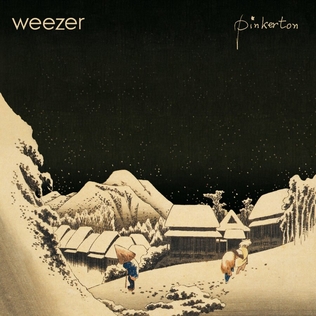
13. Pinkerton, Weezer (1996). Pinkerton reached No. 19 on the Billboard 200 and was later certified platinum by the RIAA. The album was produced by Weezer, recorded around Sound City, Fort Apache, and other sessions, and became one of the definitive critical reappraisals of 1990s alternative rock. Source.
Pinkerton is the rare album whose bad reputation became part of its mythology. After the polished success of Weezer's Blue Album, Pinkerton sounded raw, uncomfortable, and emotionally overexposed. Some reviews were harsh, sales disappointed expectations, and Rivers Cuomo later distanced himself from it. Then the audience changed. Listeners who grew up with internet-era confessional music heard the album less as a mistake and more as a blueprint. On vinyl, Pinkerton's case is especially strong because the abrasive guitars, exposed vocals, and compact sequencing benefit from being played as a single uncomfortable burst rather than scattered tracks. Original 1990s pressings are collectible because the period was not friendly to mass vinyl availability, while later reissues gave a new generation affordable access. The cover, adapted from Hiroshige's Night Snow at Kambara, adds a visual stillness that contrasts with the record's anxious interior. Tired of Sex, Across the Sea, The Good Life, El Scorcho, and Butterfly are not polite songs, but they are memorable and sharply constructed. The reputation problem remains complicated because some lyrics deserve the discomfort they create. Reappraisal should not mean pretending the album is mature in every way. It means recognizing that awkwardness, noise, and emotional risk can define a record's power. Pinkerton is better than its reputation because its reputation once punished it for being exactly what later listeners needed: messy, direct, and impossible to smooth out.
14. Trans, Neil Young (1982). Trans reached No. 19 on the Billboard 200 and No. 29 in the UK. Released on Geffen, it was produced by Neil Young, David Briggs, and Tim Mulligan, and is famous for its vocoder-heavy electronic sound. Source.
Trans was once shorthand for Neil Young losing the plot in the synthesizer age. That reputation is too easy. The album's vocoder textures were baffling to many rock listeners in 1982, especially from an artist associated with ragged guitars, country-rock, and acoustic confession. Heard now, Trans feels less like a failed trend chase and more like a deeply personal experiment with communication, technology, and distance. Young has connected the album's electronic voice treatments to his attempts to communicate with his son Ben, who has cerebral palsy, which gives the sound a human context far removed from novelty. On vinyl, the record is fascinating because its surfaces are so unlike the warm, familiar Neil Young many collectors expect. Computer Age, Transformer Man, We R in Control, and Sample and Hold turn the turntable into a machine speaking through another machine. Original Geffen copies are still part of the fun because this is the kind of record that can sit overlooked in bins until someone realizes how strange and purposeful it is. The production by Young with David Briggs and Tim Mulligan is not always seamless, but seamlessness would almost work against the concept. Trans is better than its reputation because its reputation measured it against the wrong Neil Young. It is not trying to be Harvest with keyboards. It is trying to make technology sound lonely, awkward, and hopeful. That is a very vinyl-worthy kind of strange.
15. Music from The Elder, Kiss (1981). Music from The Elder reached No. 75 on the Billboard 200 and performed far below Kiss' 1970s commercial peak. Released on Casablanca, it was produced by Bob Ezrin, with orchestral and concept-album ambitions that baffled much of the band's hard-rock audience. Source.
Music from The Elder may be the funniest inclusion here, but that does not make it a joke. Kiss making a mystical concept album with Bob Ezrin after disco backlash, lineup instability, and changing rock tastes sounds like a dare no one should have accepted. The reputation was brutal because the band's core audience wanted riffs, swagger, and spectacle, not a quasi-fantasy narrative with choirs, orchestration, and solemn interludes. Yet vinyl collecting has a way of rescuing fascinating miscalculations. The Elder is compelling as an artifact: a major brand trying to become serious in the most overcommitted way possible. Original Casablanca LPs are collector curios because they represent the moment Kiss mythology folded in on itself. The Oath has real force, A World Without Heroes is a genuinely strong ballad, Only You carries theatrical weight, and I gives the record a strange finale. Bob Ezrin's production links it, however oddly, to the grand concept-rock tradition rather than to standard Kiss product. Chart-wise, the album's underperformance is part of its lore, since No. 75 on the Billboard 200 was a shock for a band that had dominated arenas only a few years earlier. Is it secretly the best Kiss album? No. Is it better than its reputation? Absolutely. For collectors, it is the kind of record that proves failure can be more interesting than competence, especially when the gatefold is in your hands and the band sounds completely convinced by a very questionable idea.
What to buy first
If you want the strongest starter stack, begin with Tusk, Ram, Monster, Lodger, and Sandinista!. Those five cover the main reasons reputations go wrong: impossible expectations, critical fashion, format overload, style shifts, and a fan base that wanted a safer sequel. They are also satisfying physical records, with sleeves, side breaks, and production choices that make the turntable matter.
Condition is the recurring lesson. A misunderstood album is only a bargain if the copy is playable. Check double and triple LP sets for missing discs or sleeves, watch for noisy quiet passages on records like Berlin and Self Portrait, and do not assume a first pressing beats a clean reissue for everyday listening. The best copy is the one you will actually play.
FAQ
What makes an album better than its reputation?
Usually it means the first critical story was too simple. Some albums were punished for following a masterpiece, changing style, sounding unfashionable, or arriving in the wrong format era. Time lets collectors hear the production, sequencing, and influence without the original marketing baggage.
Are misunderstood albums good vinyl buys?
Often, yes. Divisive records can be cheaper than consensus classics, and they are fun to collect because pressing, sleeve condition, and historical context matter. The best targets are albums with strong songs, interesting production, and a reputation that scared casual buyers away.
Should I buy original pressings or reissues of these albums?
Buy based on condition and purpose. Original pressings have historical appeal, packaging details, and collector value. Reissues can be quieter and cheaper for everyday listening. If an album has quiet passages, surface noise matters more than first-press bragging rights.
How can What's Spinning help with a reappraisal shelf?
What's Spinning logs what you actually play from your turntable, so it can show whether a so-called difficult album is becoming a real favorite. That is useful for collectors because the best shelf is not just what you own; it is what keeps earning another spin.
A spreadsheet tracks what you own. What's Spinning identifies what's playing.
On-device vinyl ID logs your listening history automatically. 7-day free trial.
Looking for Shazam for vinyl?
What's Spinning identifies what's playing on your turntable on-device, logs history, and AirPlays now-playing to your TV.
Comparing vinyl ID apps?
Analog requires Discogs and is iPhone-first (iPad coming). What's Spinning works without Discogs on iPhone and iPad with AirPlay.
Try What's Spinning Free
Turn your iPad into a live now-playing display. Track every record you spin.
START FREE TRIALThen $4.99/mo or $39.99/yr · Cancel anytime