Best Turntable Brands: A 2024 Comparison

Buying a turntable in 2024 is wonderfully confusing. Vinyl is not a fringe format anymore, but it is still physical, mechanical, and picky in ways streaming never has to be. The RIAA reported 2024 recorded music revenue of $17.7 billion at estimated retail value, up 3 percent, and specifically noted vinyl's nearly 20-year surge. That continued demand means more choices, more reissues, more colored variants, and more people trying to decide which turntable brand actually fits how they listen.
This best turntable brands comparison is written for record collectors, not spec-sheet collectors. A brand can be excellent and still wrong for your room. A DJ deck, a minimalist British belt drive, a Bluetooth automatic table, and a heavy high end American deck all solve different problems. If you use What's Spinning to remember what you actually play, that listening history can also keep your upgrade decisions honest: buy for the records that live on your platter, not the imaginary system in a forum signature.
Below, I compare the major brands by real ownership fit: setup difficulty, upgrade path, convenience, price tier, and the kind of collector each one serves best. Prices and features move, especially as older stock clears and new 2024 models arrive, so treat exact dollars as a snapshot and verify before you buy.
Quick comparison: how to choose a turntable brand
| Brand | Best fit | Typical personality |
|---|---|---|
| Audio-Technica | Beginners and budget upgraders | Practical, widely available, feature rich |
| Rega | Manual belt drive purists | Minimal, musical, setup sensitive |
| Pro-Ject | Style plus upgrade paths | Colorful, modular, hi-fi friendly |
| Technics | Direct drive confidence | Precise, rugged, DJ proven |
| Fluance | Value packed home systems | Good cartridge packages, handsome finishes |
| U-Turn | Simple American assembled decks | Clean, modular, approachable |
| Music Hall | Collectors wanting a sleeper pick | Layered plinths, dealer friendly hi-fi |
| VPI | High end long term systems | Massive, serious, cartridge flexible |
The best turntable brands in 2024
-
Audio-Technica: AT-LP60X and AT-LP120XUSB

Best for: Best broad recommendation for beginners and budget upgraders
Audio-Technica is the safest first stop for most new vinyl listeners because its lineup covers the awkward middle ground between toy record players and hobbyist decks. The AT-LP60X page lists a fully automatic belt drive design, 33 1/3 and 45 RPM playback, and a switchable built-in phono preamp, which means it can plug straight into powered speakers or a normal stereo input. That matters for a first setup because a missing phono stage is one of the most common reasons a new turntable sounds faint or broken. Step up to the AT-LP120XUSB and Audio-Technica moves into a manual direct drive deck with USB output, adjustable anti-skate, selectable preamp, and 33, 45, and 78 RPM playback. It is not the last word in audiophile subtlety, but it is honest, available, repairable enough, and supported by a huge accessory ecosystem. If you are comparing brands in 2024 for a first serious buy, Audio-Technica is the baseline everyone else has to beat.
-
Rega: Planar 1, Planar 2, Planar 3
Best for: Best minimalist audiophile belt drive brand
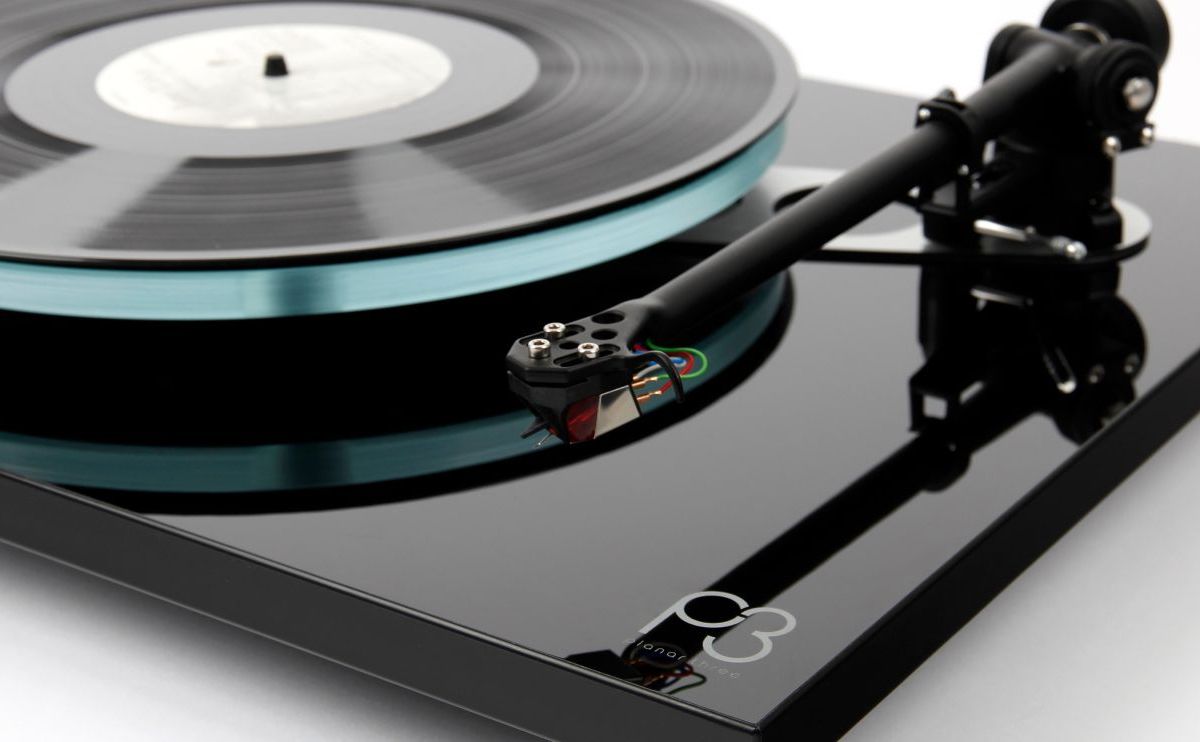
Rega is the brand for listeners who want fewer switches and more engineering discipline. The Planar 3 is a useful example because Rega highlights the RB330 tonearm, the light rigid plinth approach, and UK manufacturing rather than Bluetooth, USB, or app features. That tells you the brand philosophy in one glance: keep the energy path simple, reduce vibration, and do not add circuits that are not needed for playback. In a 2024 comparison, Rega is especially attractive if you already have an amplifier or phono stage and you want a turntable that rewards setup care. The flip side is convenience. Most Rega decks are manual, speed changes can be less convenient on lower models, and built-in preamps are not the main event unless you buy a Plus variant. For collectors who enjoy playing whole sides, cleaning records, and making small alignment improvements over time, that restraint is a feature. For someone who wants Bluetooth and automatic return, it can feel almost stubborn.
-
Pro-Ject: Debut EVO 2 and Debut Carbon family

Best for: Best choice for style options and upgrade paths
Pro-Ject became a default recommendation because it made entry level audiophile turntables feel approachable instead of precious. The company describes itself as building turntables and hi-fi components since 1991, handmade in Europe, and the Debut line has long been the visible proof. The Debut EVO 2 page shows why the brand works so well in shops: clean plinth colors, a carbon tonearm story, and a package that looks like a finished hi-fi product rather than a science project. In 2024, Pro-Ject makes particular sense if you want a belt drive table with more personality than the usual black rectangle. It also gives upgrade-minded collectors a clear ladder: better cartridge, better phono stage, better platter, better isolation. The caution is that Pro-Ject has many similar looking models, and older Debut Carbon EVO stock may sit beside newer Debut EVO 2 stock. Read the exact cartridge, speed control, and included cable details before buying. The brand is excellent, but the model names can make the shelf tag do too much work.
-
Technics: SL-1200MK7 and SL-1500C family
Best for: Best direct drive heritage and DJ proven build
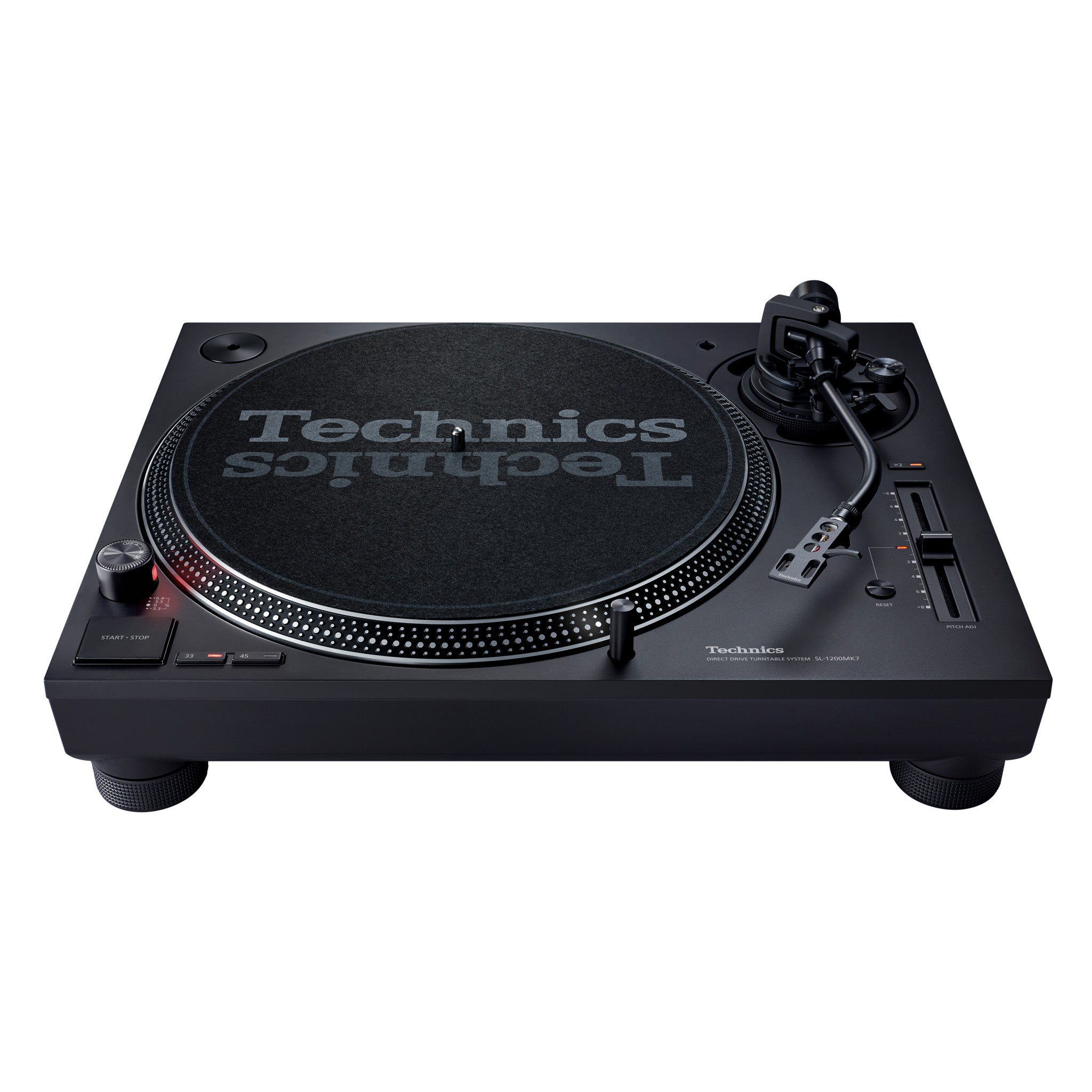
Technics is the turntable brand with the strongest bridge between hi-fi living rooms and club culture. The SL-1200 became a DJ standard because direct drive torque, pitch control, and rugged controls survive abuse that would make many belt drive decks nervous. On the SL-1200MK7 page, Technics calls out a coreless direct drive motor, DJ functions, and a $1,299.99 sale price, positioning it as a serious tool rather than a nostalgia prop. For home collectors, that matters even if you never beatmatch a record. Speed stability, serviceable parts, and a heavy user community give Technics unusual long term confidence. The tradeoff is cost and character. A Technics does not usually deliver the same stripped down belt drive romance as a Rega or Pro-Ject. It feels engineered, precise, and physical. If your collection includes 12-inch singles, electronic music, hip-hop, disco, or anything where pitch stability and cueing confidence matter, Technics is still the reference point.
-
Fluance: RT82, RT83, RT85

Best for: Best value packed home listening package
Fluance built its reputation by bundling the upgrades people usually add later. The RT85 page lists an Ortofon 2M Blue cartridge, acrylic platter, and a $549.99 price, which is why the model appears so often in value discussions. On paper, that combination is hard to ignore because the cartridge alone represents a meaningful part of the budget. For the 2024 buyer, Fluance is compelling if you want a handsome wood look, a strong cartridge from day one, and a turntable that does not require immediate tinkering. It is also a good fit for collectors who are coming from powered speakers and want to assemble a tidy living room system. The caveat is that value packaging is not the same as infinite upgrade depth. Fluance gives you a lot at purchase time, while brands like Rega and Pro-Ject may give you a deeper tweak culture. If your goal is to buy once, listen often, and not spend three weekends reading cartridge forums, Fluance deserves a very serious look.
-
U-Turn Audio: Orbit Basic, Orbit Plus, Orbit Special, Orbit Theory
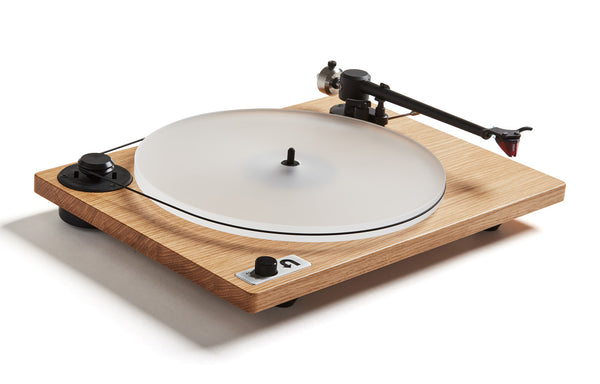
Best for: Best simple American built modular option
U-Turn Audio is appealing because the Orbit line makes customization feel calm. The company's own store lays out the Orbit Basic at $249, Orbit Plus at $399, Orbit Special at $549, and Orbit Theory at $999, so the ladder is easy to understand before you get lost in cartridge names. U-Turn also emphasizes USA assembly, which gives the brand a different identity than the large global electronics names. In practice, Orbit decks are best for listeners who want a clean manual turntable, a manageable number of choices, and the option to add a built-in Pluto phono preamp if the rest of the system needs it. The design is not meant to impersonate a DJ deck, and it is not packed with automation. That is exactly the point. For a collector setting up a small apartment, office, or dedicated listening corner, U-Turn offers a direct path to a nice looking, low fuss system without making the purchase feel like an engineering exam.
-
Music Hall: MMF series and Stealth
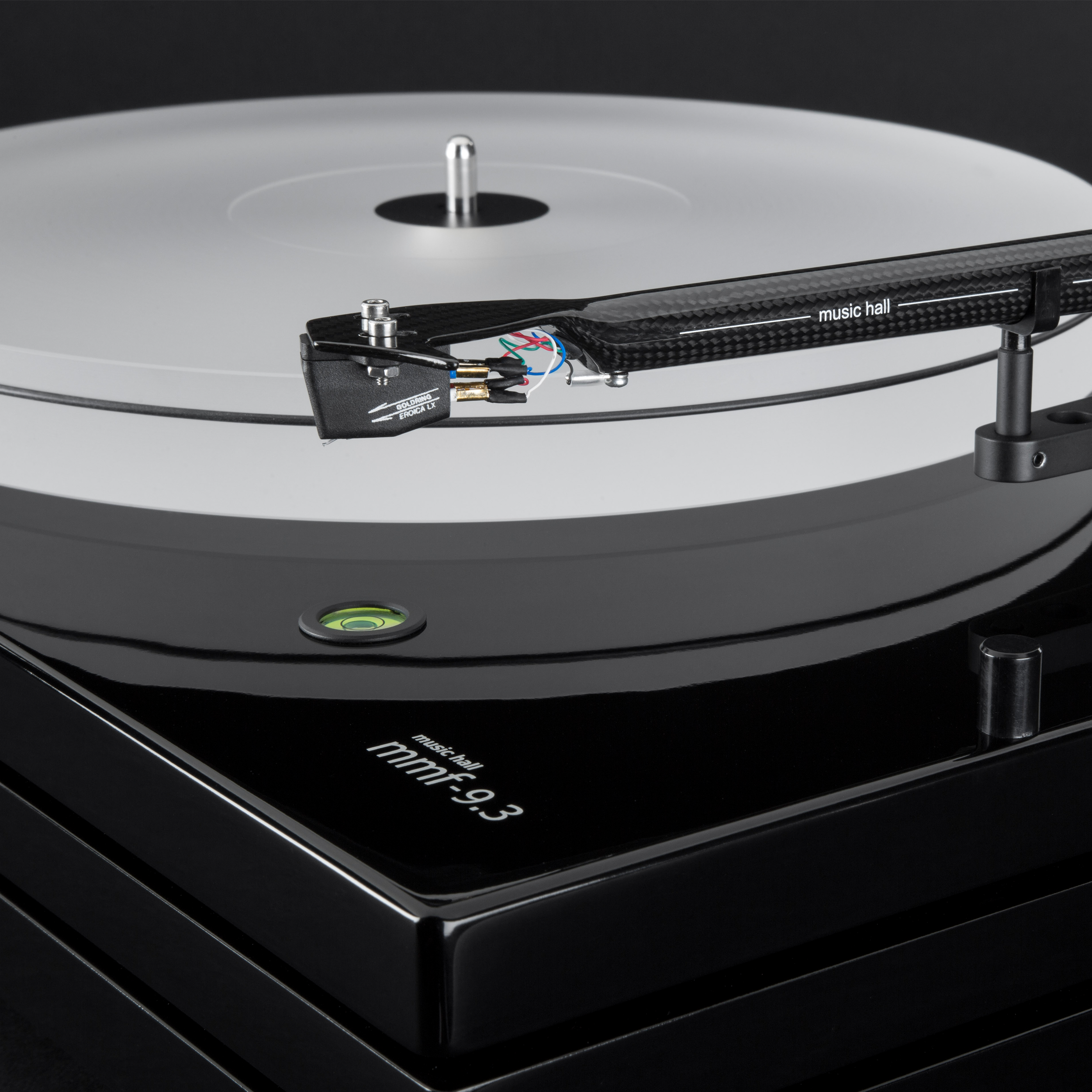
Best for: Best sleeper brand for layered plinth designs
Music Hall is the brand that often gets discovered after someone has already compared the obvious names. The company says it has been bringing music to life since 1985, and its turntable range leans into the MMF identity: separate or layered plinth ideas, serious finishes, and a catalog that runs from approachable decks to more ambitious hi-fi machines. Music Hall is worth considering when you like the belt drive school of thought but want something less common than a Rega or Pro-Ject. The MMF models also tend to look substantial in person, which matters if the turntable is going to live as furniture as much as equipment. The catch is retail availability. Depending on your city, you may see fewer Music Hall units on demo, and model names can be less familiar to new buyers. That means you should buy from a dealer with good setup support or a return policy. For the right listener, Music Hall feels like a collector's pick rather than a mass-market default.
-
VPI: Prime 21 and Scout family

Best for: Best high end American audiophile brand
VPI sits in a different buying conversation than most starter decks. The Prime 21 page talks about a solidly built audiophile quality turntable, a 10 inch 3D printed tonearm, black and walnut finishes, and review quotes that place it around the serious hi-fi tier. This is not the brand you choose because you need Bluetooth before dinner. You choose VPI when the rest of the system is already good enough to expose what a better table, arm, cartridge, and setup can do. In a 2024 comparison, VPI is useful as the high end reference: it shows what happens when mass, machining, tonearm design, and cartridge flexibility become the focus. The downside is obvious. Price rises quickly, setup matters, and small rooms with ordinary speakers will not reveal everything a VPI can do. But for the collector who has already spent years buying records and wants the turntable to become the foundation of the system, VPI is a real destination brand.
-
Sony: PS-LX310BT

Best for: Best mainstream Bluetooth convenience option
Sony's turntable appeal is convenience. The PS-LX310BT became popular because it wraps vinyl playback in the language of mainstream consumer audio: Bluetooth output, automatic operation, a built-in phono preamp, and a design that does not ask a new listener to learn cartridge alignment on day one. That can be the correct answer for a lot of homes. If you are putting a turntable in a living room with wireless speakers or a compact audio system, Sony removes friction that more purist brands deliberately leave in place. The sonic ceiling is lower than a carefully matched manual table with a good external phono stage, and upgrade options are limited. Still, the best brand is the one that fits the household. A record collection that gets played through a simple Sony is healthier than a more serious deck that intimidates everyone into streaming instead. For casual listeners, gifts, and family rooms, Sony belongs in the comparison.
-
Denon: DP-300F and DP-450USB

Best for: Best traditional hi-fi automatic option
Denon is easy to underestimate because it is better known for receivers, cartridges, and broader home audio than for being a turntable culture brand. That is also why it can be such a sensible buy. Denon's automatic and semi-automatic decks make sense for listeners who want vinyl inside a normal hi-fi system rather than a hobby bench. The DP-300F, for example, has long appealed to people who want automatic start and stop with a familiar component look. The DP-450USB adds another practical angle for listeners who want to digitize records without building a separate capture chain. Denon will not satisfy someone chasing the mythology of a stripped manual deck, and it is not the obvious choice for DJ use. It is better for the person who has a Denon, Marantz, Yamaha, or similar receiver and wants a matching, low drama vinyl source. In 2024, that makes it a comfort pick: not flashy, not exotic, but very easy to live with.
-
Crosley and Victrola: C-Series, Eastwood, Stream and portable ranges

Best for: Best if you choose carefully, risky if you buy only for looks
Crosley and Victrola deserve a nuanced spot because they introduce many people to records, but they also sell products serious collectors would avoid. The suitcase player stereotype exists for a reason: tiny built-in speakers, crude tonearms, and limited tracking adjustment are not kind to records or sound quality. But it is unfair to judge every model from either brand by the cheapest portable unit. Both companies also sell more conventional component style turntables, some with better cartridges, Bluetooth features, and real RCA outputs. In a best brands comparison, the buying rule is simple: avoid anything where the speaker, amp, tonearm, and platter are all crammed into a fashion object. Consider their better component models only if the features fit your room and you understand what can and cannot be upgraded. For a collector, these brands are not first recommendations. For a teenager, dorm room, kitchen, or gift, a carefully chosen model can be the spark that leads to a better system later.
-
Clearaudio: Concept, Performance, Innovation families

Best for: Best precision German high end option
Clearaudio is for the buyer who enjoys precision as an aesthetic. The German brand's lineup stretches from the approachable Concept family into elaborate Innovation and Statement territory, and the design language is unmistakably machined, polished, and exacting. In a 2024 comparison, Clearaudio is not competing with an Audio-Technica starter deck. It is competing for listeners who want a turntable to be a long term instrument and a visual centerpiece. The brand is also a reminder that high end vinyl is not only about warmth. Better platters, bearings, arms, and cartridges can make records sound cleaner, quieter, and more stable, especially on revealing systems. The tradeoff is that Clearaudio ownership should involve a knowledgeable dealer or a patient owner. Setup quality matters, cartridge matching matters, and the price of mistakes rises with the hardware. If you are building a dream listening room around jazz, classical, experimental music, or pristine reissues, Clearaudio belongs on the shortlist.
What to buy first
If I were helping a friend choose without knowing their room, I would start with three questions. Do you need the turntable to be automatic? If yes, begin with Audio-Technica, Sony, or Denon. Do you want a manual deck that can stay with you for years? Compare Fluance, U-Turn, Pro-Ject, and Rega. Are you already deep into hi-fi, with speakers and amplification that reveal small differences? Then audition Technics, VPI, Clearaudio, higher Rega models, and higher Pro-Ject models in person.
For most collectors, the sweet spot is not the cheapest player or the most expensive object. It is the table that makes you play more records. Spend enough to get stable speed, a non-destructive tonearm, a replaceable stylus, and a clean path into your speakers. Then put money into record cleaning, inner sleeves, and the albums you will actually play. A $500 to $1,000 setup that gets used every night beats a $4,000 monument that makes every listening session feel like a calibration ritual.
FAQ
What is the best turntable brand for beginners in 2024?
Audio-Technica is the easiest general recommendation because the AT-LP60X is inexpensive, automatic, and has a built-in phono preamp, while the AT-LP120XUSB gives budget upgraders direct drive, USB output, and more setup control. Fluance and U-Turn are also excellent if you want a more traditional manual deck.
Are expensive turntable brands worth it?
They can be, but only when the rest of the system is ready. A VPI, Clearaudio, Rega Planar 6, or Technics SL-1200GR will not fix dirty records, bad speakers, or careless setup. Spend first on stable playback, a good cartridge, clean records, and speakers you enjoy.
Should I buy belt drive or direct drive?
Choose belt drive if you want quiet, simple home listening and like brands such as Rega, Pro-Ject, Fluance, U-Turn, or Music Hall. Choose direct drive if you value torque, pitch stability, DJ heritage, or easier speed control, especially from Technics or Audio-Technica.
Which turntable brands should collectors avoid?
Avoid brands only when the model is poorly built, not because of the logo alone. The biggest warning signs are suitcase style designs with tiny built-in speakers, no adjustable tracking force, very light platters, and no real upgrade path. Better component models from mainstream brands can still be useful.
Sources
A spreadsheet tracks what you own. What's Spinning identifies what's playing.
On-device vinyl ID logs your listening history automatically. 7-day free trial.
Looking for Shazam for vinyl?
What's Spinning identifies what's playing on your turntable on-device, logs history, and AirPlays now-playing to your TV.
Comparing vinyl ID apps?
Analog requires Discogs and is iPhone-first (iPad coming). What's Spinning works without Discogs on iPhone and iPad with AirPlay.
Try What's Spinning Free
Turn your iPad into a live now-playing display. Track every record you spin.
START FREE TRIALThen $4.99/mo or $39.99/yr · Cancel anytime