Alternatives to Turntables for Playing Vinyl: What Actually Works?
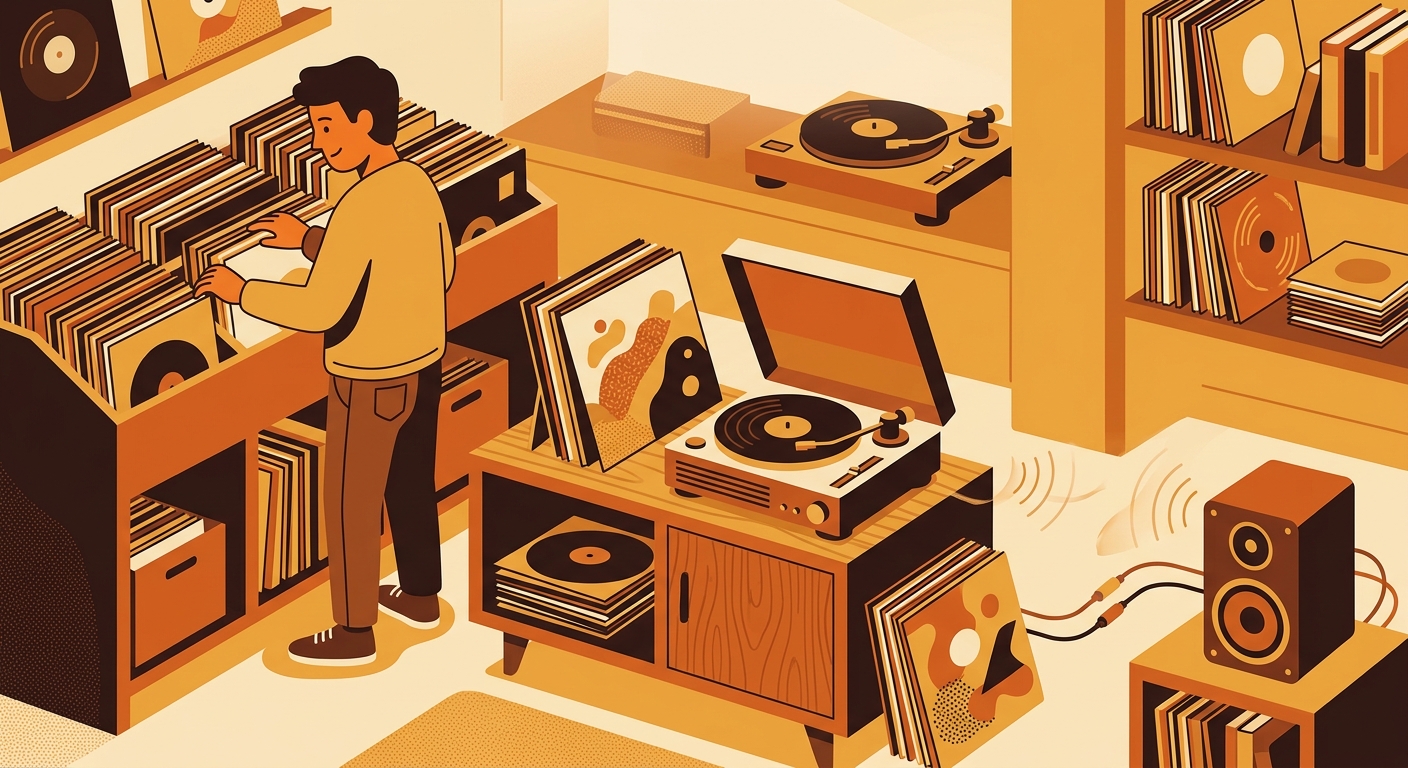
If you are searching for an alternative to turntable for vinyl playback, the honest answer is slightly annoying: vinyl still needs turntable mechanics. To hear a record, a stylus has to sit in the groove, move with the groove walls, and send that movement through a cartridge as an electrical signal. There is no app or magic speaker that makes an LP play like a file.
What people usually mean is more practical: "I want to play records without building a full old-school stereo system." That is a very reasonable goal. Vinyl has grown well beyond the hobbyist basement. The RIAA's 2023 year-end revenue report said U.S. vinyl revenue grew 10 percent to $1.4 billion, marking the seventeenth consecutive year of growth, and LP/EP shipments rose to 43.2 million units. More people are buying records, but not everyone wants a receiver, passive speakers, a phono preamp, cable runs, and three Saturday afternoons of setup.
So the useful question is not whether you can replace a turntable completely. You cannot. The useful question is which simplified vinyl playback path gets closest to the experience you want, with the fewest compromises.
1. All-in-one record players
The most obvious alternative is the all-in-one player: platter, tonearm, cartridge, amplifier, and speakers in one box. This is the suitcase-player category, but also includes nicer tabletop units. The appeal is obvious. You buy one object, plug it into the wall, and play a record five minutes later.
The tradeoff is equally obvious once you have heard a good system. Small built-in speakers cannot move much air, and the cabinet has to fight its own vibrations because the speakers and stylus live in the same enclosure. Budget models may also use fixed tracking force and inexpensive ceramic cartridges. If you choose this path, look for a replaceable stylus, line output for future speakers, and a platter that supports the record.
2. Bluetooth turntables
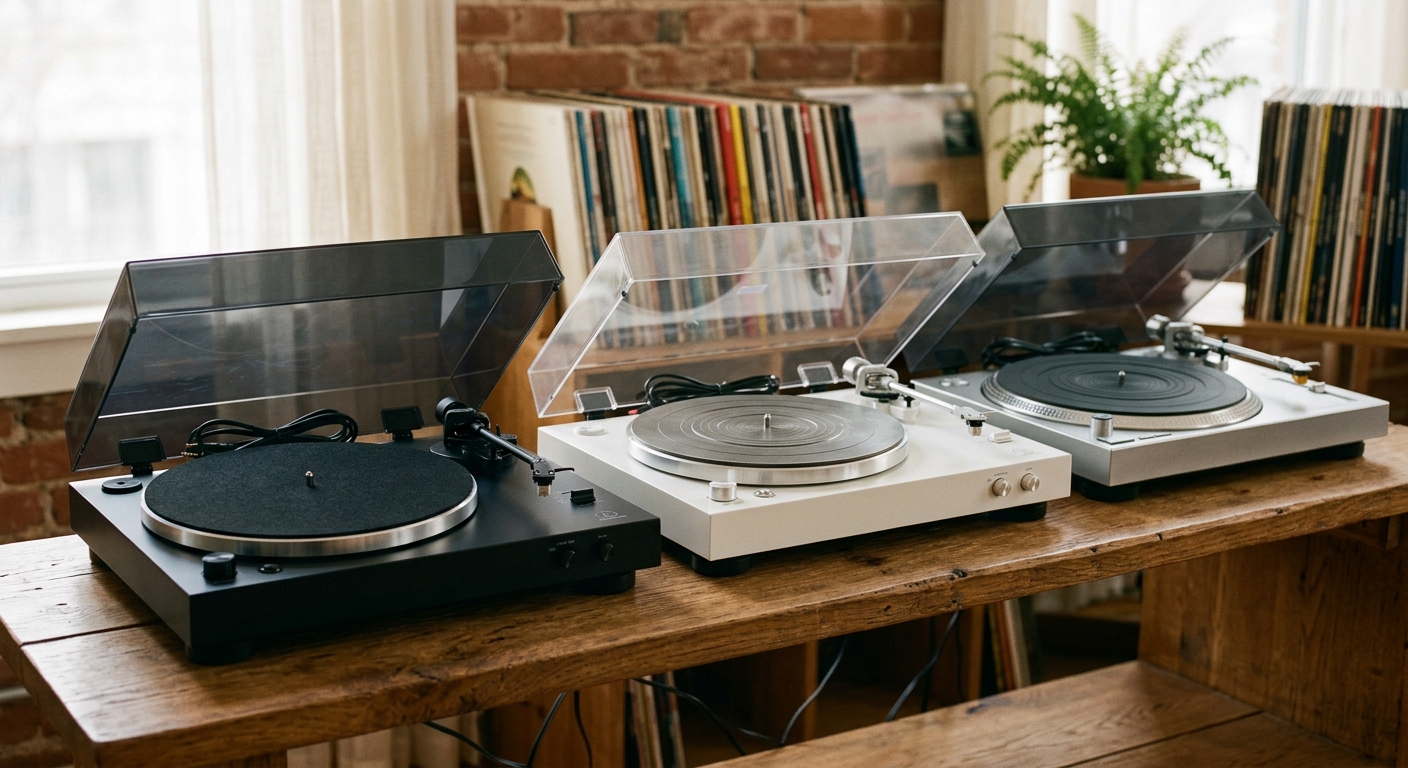
Bluetooth turntables are probably the best modern answer for listeners who want less gear without giving up the basic turntable format. Models like the Audio-Technica AT-LP60XBT pair a turntable with Bluetooth output, so you can send audio to wireless speakers or headphones. You still have a platter, arm, cartridge, and stylus, but you skip the receiver and speaker cable.
The compromise is signal path. Vinyl begins as analog movement, then the turntable converts it to digital audio for Bluetooth transmission, then your speaker converts it back to analog sound. Bluetooth's Advanced Audio Distribution Profile is built for stereo audio streaming, not for preserving every last bit of an analog chain. For casual listening, that may be completely fine. For serious listening, wired powered speakers usually sound better and avoid pairing hassles.
3. Wi-Fi and multi-room vinyl systems
Wi-Fi turntables are a more ambitious version of the same idea. The Victrola Stream Carbon, for example, is marketed for wireless playback through Sonos, Bluetooth, Roon, and UPnP speakers. Yamaha's MusicCast VINYL 500 similarly promises wireless connection to MusicCast speakers, with Wi-Fi, Bluetooth, AirPlay 2, Spotify Connect, and a built-in phono preamp.
This is the cleanest solution if your house already runs on Sonos, MusicCast, or another multi-room platform. You can put a record on in one room and hear it elsewhere without dragging RCA cables through the house. The downside is philosophical as much as technical: you are playing vinyl through a networked digital system. That is not wrong, but it means the ritual of vinyl and the signal purity of vinyl are no longer the same thing. If your goal is convenience and whole-home listening, Wi-Fi makes sense. If your goal is the shortest possible analog path, it does not.
4. Turntables with built-in phono preamps plus powered speakers
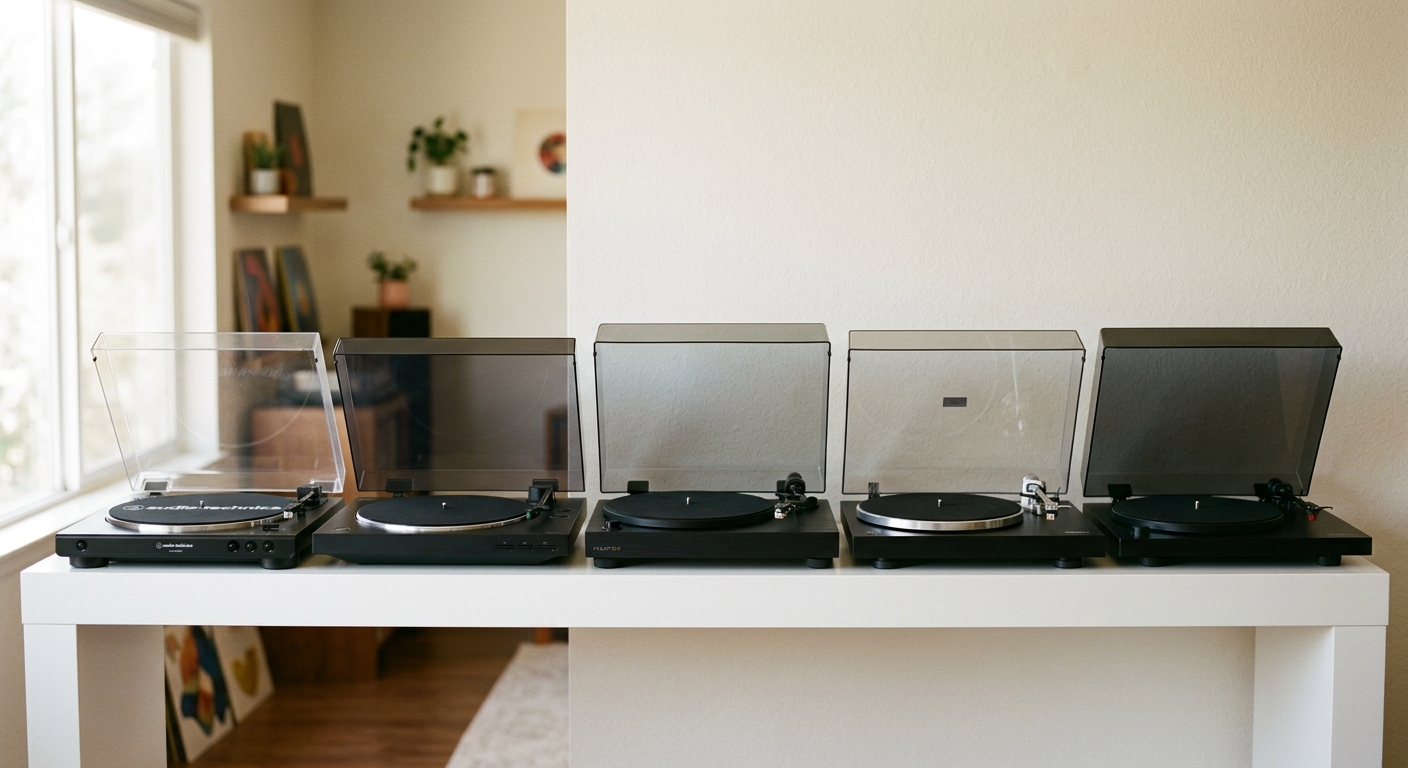
For most new collectors, this is the sweet spot. A turntable with a built-in phono preamp can connect directly to powered speakers. No receiver. No separate preamp box. No passive speaker matching. You still get real stereo separation, better speaker quality than a suitcase player, and a system that can grow later.
This setup is not technically an alternative to a turntable, but it is an alternative to the intimidating hi-fi stack people picture when they think "vinyl setup." It also keeps the record-care fundamentals in place. You can choose a turntable with a proper magnetic cartridge, reasonable tracking force, and an upgradeable stylus. If you use What's Spinning while you listen, this kind of setup is also easy for automatic listening-based collection tracking because the record is still playing naturally in the room.
5. Integrated vinyl systems
Some products split the difference between component hi-fi and one-box simplicity. Pro-Ject's Juke Box E1 set packages a turntable with built-in amplification and matching speakers, while Andover's SpinBase 2 is a powered speaker base designed to sit under a turntable.
These systems can be excellent for people who want something clean and more serious than a toy player. They are not eliminating the turntable. They are eliminating the rack of supporting equipment.
6. Digitizing your records
A USB turntable lets you record LPs to a computer, then listen later without touching the record again. That can be useful for rare singles, DJ practice libraries, or albums that are not on streaming. It is not really vinyl playback after the transfer, though. It is file playback sourced from vinyl, and it takes real-time recording, track splitting, tagging, and backups.
What should you choose?
If you want the cheapest way to hear a thrift-store LP, an all-in-one player works. If you want an apartment setup with fewer cables, choose Bluetooth or powered speakers. If you already use Sonos or MusicCast, Wi-Fi vinyl can be convenient. If you care about condition and sound, avoid ultra-cheap players and buy the most stable, upgradeable system you can afford.
The key is to stop thinking in binary terms. The best alternative to a full turntable setup is still a turntable, just paired with smarter, simpler supporting gear.
FAQ
Can you play a vinyl record without a turntable?
Not in the literal sense. A vinyl record needs a platter, motor, tonearm, cartridge, and stylus to trace the groove. Most so-called alternatives are compact systems that hide those parts inside a simpler package.
Are Bluetooth record players bad for vinyl?
Bluetooth itself does not damage records. The record-care questions are tracking force, stylus quality, alignment, and whether the platter supports the disc. Bluetooth only affects how the audio reaches your speakers.
What is the easiest turntable alternative for a small apartment?
A quality all-in-one system or a turntable with powered speakers is usually the cleanest option. You avoid a separate receiver, phono preamp, and speaker wire while keeping upgrade options open.
Is a suitcase player a good alternative to a turntable?
It can be fine for casual, low-cost listening, but it is rarely the best long-term choice for records you care about. Look for adjustable tracking force, a replaceable stylus, and better speakers if you plan to play records often.
A spreadsheet tracks what you own. What's Spinning identifies what's playing.
On-device vinyl ID logs your listening history automatically. 7-day free trial.
Looking for Shazam for vinyl?
What's Spinning identifies what's playing on your turntable on-device, logs history, and AirPlays now-playing to your TV.
Comparing vinyl ID apps?
Analog requires Discogs and is iPhone-first (iPad coming). What's Spinning works without Discogs on iPhone and iPad with AirPlay.
Try What's Spinning Free
Turn your iPad into a live now-playing display. Track every record you spin.
START FREE TRIALThen $4.99/mo or $39.99/yr · Cancel anytime