The History of Picture Discs and Their Collectibility
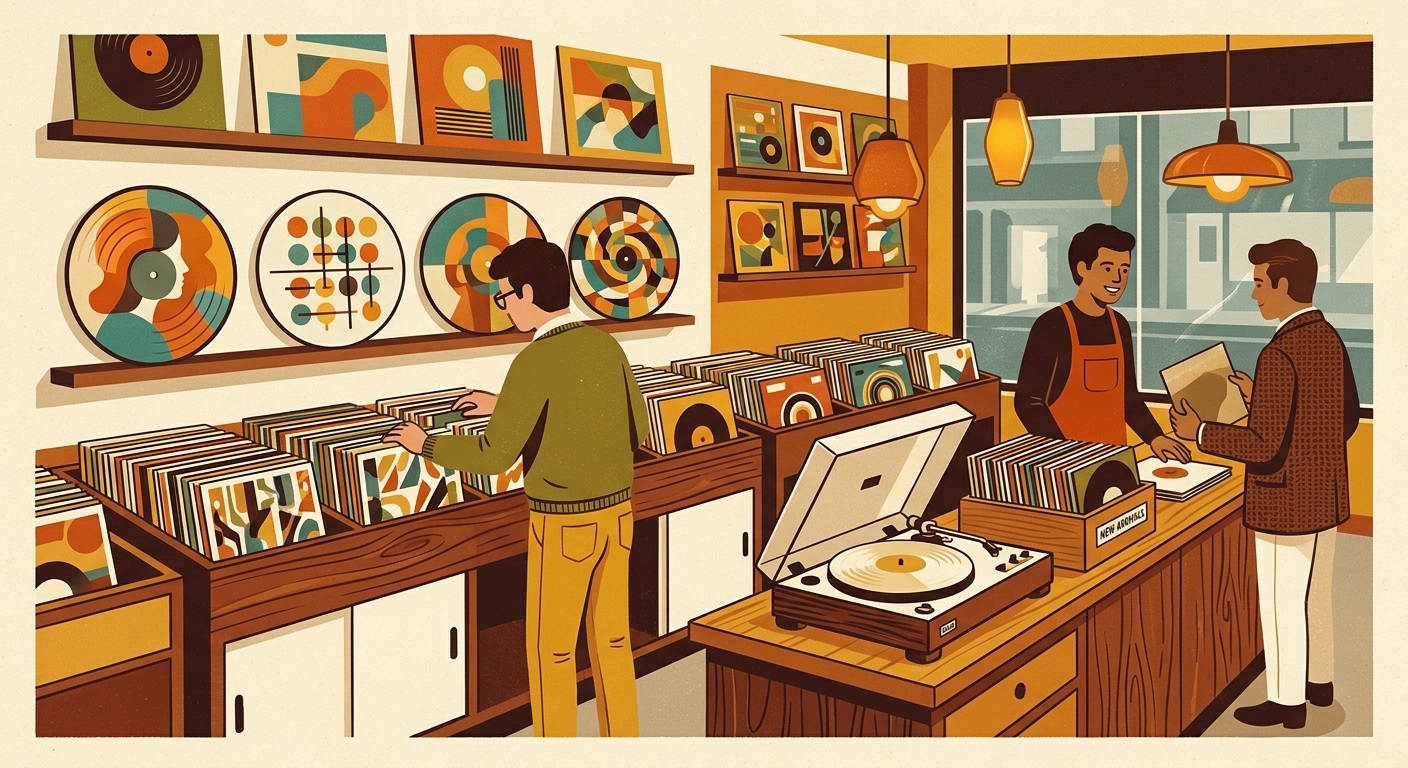
A picture disc turns a record into two objects at once: a playable sound carrier and a piece of visual merchandise. That combination has made the format irresistible to collectors for nearly a century. It has also created a persistent misconception that any record with artwork pressed into it must be rare. The real story of picture discs history and collectibility is more interesting. Some were cheap novelties made in huge runs, while others were tiny promotional editions that now rank among an artist's most elusive releases.
Before the rock-era picture disc
The basic idea predates the LP. In the early 1930s, RCA Victor issued illustrated records featuring country star Jimmie Rodgers, including the 1931 release Cowhand's Last Ride. These early examples placed printed imagery beneath a clear playing surface, establishing the layered construction that later picture discs would refine. Specialist dealer Rare Records notes that commercially issued picture records appeared decades before the format became associated with rock merchandise.
The first sustained American series came from Vogue Records, a Detroit-area label active in 1946 and 1947. Vogue produced 10-inch 78 rpm discs with vivid illustrations surrounding the center label. The Smithsonian's National Museum of American History describes them as records built around an aluminum core, with printed paper artwork sealed under clear vinyl. About 74 numbered Vogue releases are generally recognized, although alternate artwork and variations give completists more to chase. Their catalog included artists such as Art Mooney, Charlie Shavers, and The Hour of Charm All Girl Orchestra.
From novelty to mass-market collectible
Picture discs never disappeared completely after Vogue, but they became far more visible during the 1970s vinyl boom. Progressive rock band Curved Air issued Air Conditioning as an illustrated LP in 1971. A bigger commercial turning point arrived with Heart's Magazine picture disc in 1978. A contemporary Billboard report said Mushroom Records planned 100,000 numbered copies, an enormous run that showed labels believed fans would buy an album again for its visual format.
Major artists quickly followed. The late 1970s and 1980s brought picture editions by The Beatles, David Bowie, Pink Floyd, Blondie, Iron Maiden, Madonna, and many others. Labels also experimented with shaped discs, interview records, promotional singles, and country-specific variants. The format became especially effective for artists with strong iconography. Heavy metal mascots, glam-rock portraits, punk graphics, and pop-star photography all translated naturally to a disc that could be displayed on a wall.
That history continues in the modern vinyl revival. Picture discs regularly appear as anniversary editions, soundtrack releases, Record Store Day exclusives, and direct-to-fan variants. Modern manufacturing can produce sharper artwork than earlier processes, but the basic appeal has not changed: the image makes the record feel like a limited artifact rather than another black-vinyl pressing.
How picture discs are made, and why sound can suffer
A conventional record is pressed from a solid puck of PVC. A modern picture disc typically uses a printed image placed on each side of a core, then covered with thin transparent PVC films that contain the playable grooves. Manufacturer Key Production describes the image as being sandwiched between transparent layers during pressing.
This construction explains the format's reputation for higher surface noise. The grooved playing layer can be thinner than the groove-bearing material on a standard record, and the printed layer beneath it can contribute texture or noise. Results vary by plant, cut, and playback system, so a picture disc is not automatically unlistenable. Still, collectors who care most about fidelity often keep a standard black-vinyl copy for listening and the picture version for display or catalog completeness.
What actually makes a picture disc collectible?
Scarcity matters, but documented scarcity matters more. A numbered edition of 100,000, such as Heart's Magazine, may look limited without being difficult to find. A radio-only promotional disc, withdrawn release, test pressing, or edition made for one country can be genuinely scarce. Look for reliable pressing quantities, catalog numbers, and label documentation rather than trusting a seller's use of the word “rare.”
Artist demand drives the market. A scarce disc by an obscure act can remain inexpensive, while a less scarce Beatles, Bowie, or Taylor Swift variant may attract intense competition. Goldmine's overview of notable picture discs highlights how collector interest clusters around major artists and visually distinctive releases, not simply the oldest examples.
Completeness and condition count. Original die-cut sleeves, hype stickers, backing cards, numbered certificates, and custom stands can be as important as the disc. Clear playing surfaces reveal scratches easily, while sunlight can fade the artwork. Collectors should also be cautious with soft PVC outer sleeves. Conservation guidance from the Northeast Document Conservation Center warns that unstable PVC enclosures can release plasticizers and damage stored media. Keep the original sleeve for provenance, but place the record in an archival polyethylene or polypropylene sleeve and store any suspect PVC packaging separately.
Identification prevents expensive mistakes. Check the catalog number, country, speed, matrix information, image orientation, and whether the release contains music or only an interview. Discogs listings and label discographies are useful starting points, but compare multiple details because bootlegs and unofficial reproductions exist.
Should you buy one?
Buy a picture disc because its artwork, story, or place in an artist's catalog appeals to you. Treat investment claims cautiously. The best collecting candidates combine authentic scarcity, strong demand, complete packaging, and excellent condition. If you play it, use a clean stylus and handle it by the edge. If you mainly display it, limit direct sunlight and heat. What's Spinning can help you log the exact variant, catalog number, condition, and listening history, which is useful when two visually similar editions have very different collector significance.
Sources
- Smithsonian National Museum of American History, Vogue Picture Records
- Rare Records, Picture Discs
- Billboard, Heart picture disc report, 1978
- Goldmine, Top 10 Picture Discs
- Key Production, Picture Disc Manufacturing
- Northeast Document Conservation Center, enclosure and PVC guidance
FAQ
They often have more surface noise because the playable transparent PVC layer is thinner and sits above printed artwork. Some modern pressings sound respectable, but standard black vinyl is usually the safer choice for maximum fidelity.
No. Value depends on pressing quantity, artist demand, official status, condition, and original packaging. A mass-produced numbered edition may be easier to find than an unnumbered promotional release.
Illustrated commercial records appeared by the early 1930s, including RCA Victor releases by Jimmie Rodgers. Vogue Records then created the best-known early American series in 1946 and 1947.
Store it vertically in an archival inner sleeve, away from heat and direct sunlight. Retain original packaging separately if it is made from soft PVC, since unstable PVC can haze or chemically damage records over time.
A spreadsheet tracks what you own. What's Spinning identifies what's playing.
On-device vinyl ID logs your listening history automatically. 7-day free trial.
Looking for Shazam for vinyl?
What's Spinning identifies what's playing on your turntable on-device, logs history, and AirPlays now-playing to your TV.
Comparing vinyl ID apps?
Analog requires Discogs and is iPhone-first (iPad coming). What's Spinning works without Discogs on iPhone and iPad with AirPlay.
Try What's Spinning Free
Turn your iPad into a live now-playing display. Track every record you spin.
START FREE TRIALThen $4.99/mo or $39.99/yr · Cancel anytime
Get it on your iPhone
Open on iPhone