Best Turntable Cartridges Under $100: A Buyer's Guide
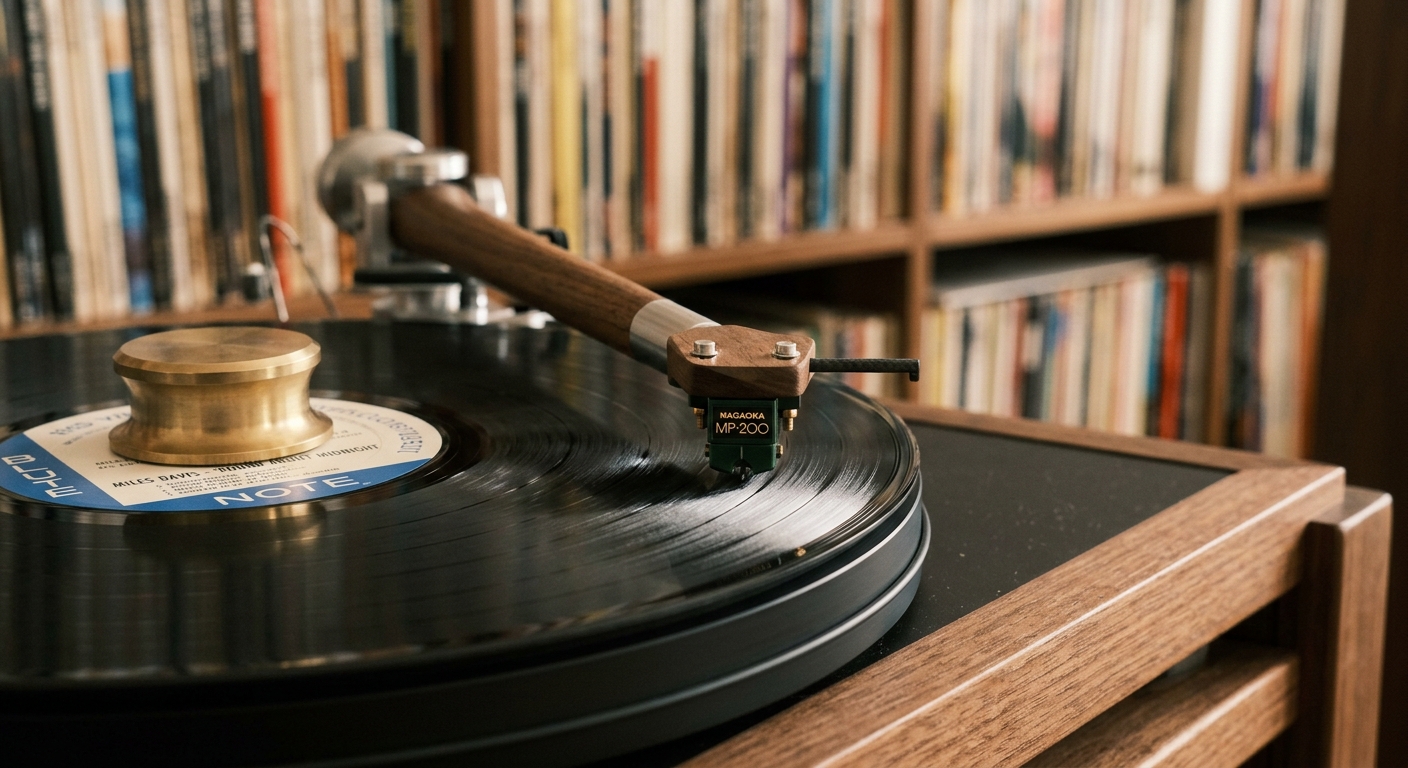
The cartridge is the smallest and cheapest part of a turntable, and the most important one to upgrade first. Most sub-$300 turntables ship with a bonded conical stylus that traces the broad modulations of a record groove adequately but physically cannot follow the fine high-frequency detail that lives in the inner grooves. A sub-$100 moving-magnet cartridge fixes that for the cost of a few new LPs.
This guide covers the three cartridges we recommend to anyone shopping for a clear upgrade under $100: the Audio-Technica AT-VM95E at $79.95, the Ortofon OM10 around $50, and the AT-VM95C at $59.95 for tight budgets. All three are dual moving-magnet designs with published specs that match any MM phono stage, all three fit a standard half-inch mount, and all three have a real upgrade path above them.
The picks at a glance
| Cartridge | Stylus | Output | Tracking | Price | Upgrade path |
|---|---|---|---|---|---|
| AT-VM95E | Bonded elliptical | 4.0 mV | 1.8-2.3 g (2.0 g std) | $79.95 | 5 stylus options, same body |
| Ortofon OM10 | Bonded elliptical | 4.0 mV | 1.25-1.75 g (1.5 g std) | ~$50 | Stylus 20/30/40 |
| AT-VM95C | Bonded conical | 4.0 mV | 1.8-2.3 g (2.0 g std) | $59.95 | Same VM95 ladder |
Best overall: Audio-Technica AT-VM95E ($79.95)
The AT-VM95E is the standard recommendation at its price. It pairs a bonded 0.3 x 0.7 mil elliptical stylus with a 4.0 mV output, a 1.8 to 2.3 gram tracking range, and a published frequency response of 20 to 22,000 Hz on a half-inch mount that fits any turntable with an adjustable counterweight. The housing uses threaded inserts so it bolts to the headshell with two screws and no nuts.
The numbers are fine; what makes the AT-VM95E the pick is the upgrade path. Every stylus in the VM95 series drops into the same body:
- AT-VMN95C ($29) - replacement conical, the cheapest
- AT-VMN95E ($49) - replacement elliptical, the same stylus it ships with
- AT-VMN95ML ($99) - 2.2 x 0.12 mil micro-linear, nude square shank
- AT-VMN95SH ($149) - 2.7 x 0.26 mil Shibata, the top of the range
- AT-VMN95SP/H ($125) - conical for 78 RPM shellac
Buying the VM95E is buying into a system where every future upgrade is a stylus swap and takes no cartridge realignment. Over five years that is worth more than the difference between any two cartridges at this price. The published channel separation is 20 dB at 1 kHz, vertical tracking angle is 23 degrees, and recommended load is 47,000 ohms with 100-200 pF capacitance, which is what every MM phono stage already provides.
Skip the VM95E if your turntable is fully automatic with a fixed tonearm (the AT-LP60X is the common case), if you already run a quality elliptical and want a step up (go straight to the VM95ML micro-linear stylus), or if your speakers cost less than the cartridge (fix the speakers first).
Best ultra-budget: Ortofon OM10 (~$50)
The Ortofon OM10 is the cartridge most budget decks ship with outside the US and the cheapest serious upgrade available. It pairs a bonded elliptical stylus with a 4 mV output, a 20 Hz to 22 kHz frequency response, and a 1.25 to 1.75 gram tracking range with 1.5 grams recommended. The 5 gram body weight sits comfortably on most medium-mass tonearms from Pro-Ject, Rega, and Audio-Technica.
Ortofon's upgrade path runs through the Stylus 20, 30, and 40, all of which snap onto the same OM body without re-alignment. The Stylus 20 is the most common first upgrade: a nude elliptical that pulls more detail from the groove for a moderate cost bump. The OM series has been around long enough that styli are easy to find used if you want to experiment.
Pick the OM10 if your turntable is light on counterweight travel and cannot comfortably reach the 2.0 gram the VM95E wants, if you already own a Pro-Ject or Rega that takes an OM-mount body, or if $50 is the real ceiling. Against the VM95E at $79.95 the OM10 trades a slightly smoother top end for $30 you can spend on a record.
Best on a tight budget: Audio-Technica AT-VM95C ($59.95)
The AT-VM95C is the entry point in the VM95 series: a bonded conical stylus on the same 4.0 mV body as the E. Conical styli ride higher in the groove than elliptical and miss some fine high-frequency detail, so the C is the smallest improvement over a worn-out conical. It is still a real upgrade over the ceramic cartridges that ship on the cheapest turntables, and it accepts every VM95 stylus for later.
Buy the VM95C if you are on the tightest possible budget and need to spend the $20 difference between the C and the E on something else (a record, a cleaning kit). Skip it if you can stretch to the E, which is the same body with a meaningfully better stylus for $20 more.
What to look for in a budget cartridge
- Output around 4 mV. Standard moving-magnet output. Matches every MM phono stage without a gain switch. Anything lower usually means moving-coil territory and an expensive phono stage.
- Tracking force between 1.5 and 2.5 grams. Lighter is gentler on records. The 2.0 gram standard is the sweet spot for most arms.
- Half-inch mount with threaded inserts. Bolts on with two screws, no nuts to drop behind the deck. Skip proprietary mounts unless you own the matching tonearm.
- A stylus ladder on the same body. A single stylus costs less than a new cartridge and takes no setup. The VM95 series is the gold standard here.
- Replaceable stylus, not glued. Styli wear out in 500-1000 hours. A glued stylus means replacing the whole cartridge when the diamond dulls.
Setup basics for a new cartridge
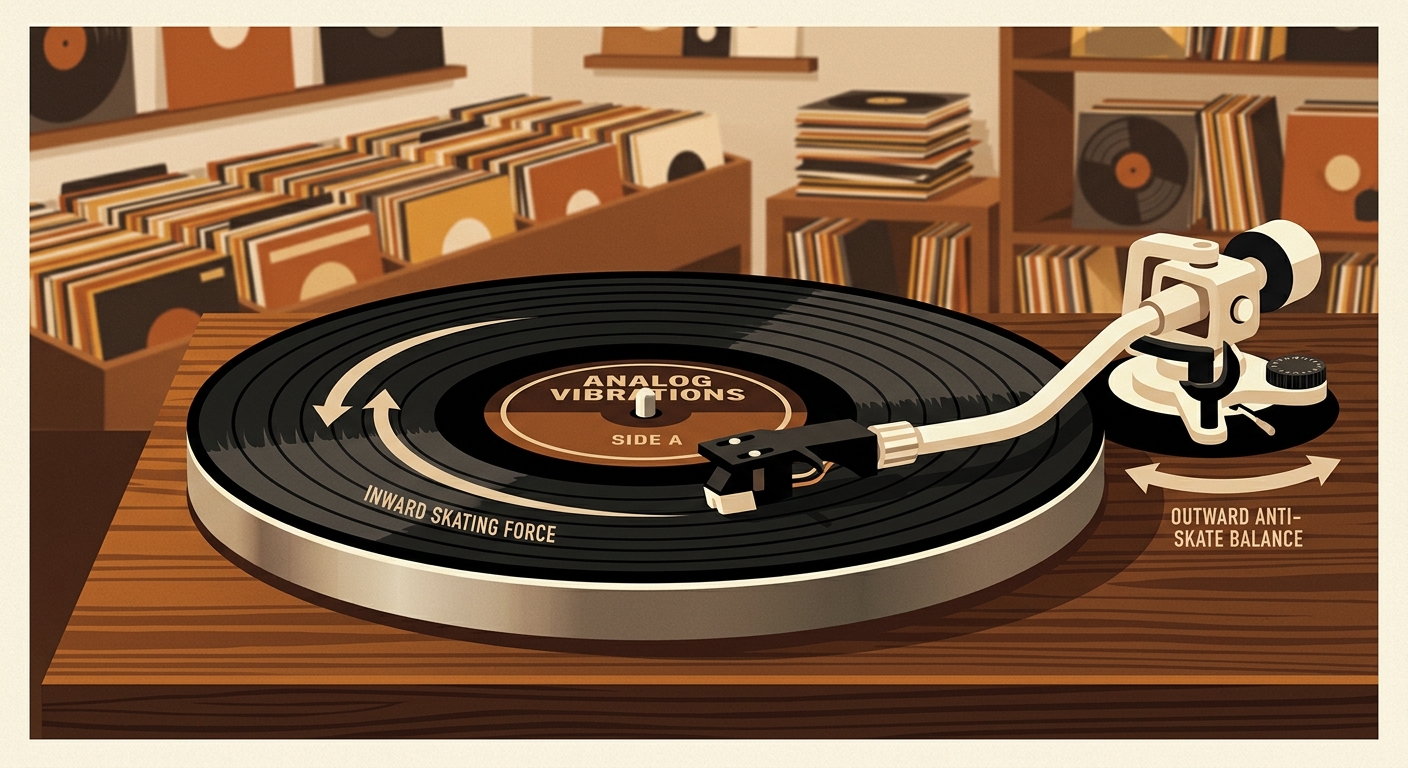
A new cartridge needs three things dialed in before it sounds right: tracking force, anti-skate, and alignment (specifically the tonearm's overhang and the cartridge's azimuth). Tracking force is the easiest: use the manufacturer's recommendation (2.0 grams for the VM95E, 1.5 grams for the OM10) and set it with a stylus force gauge. Anti-skate should match the tracking force at the start; you can fine-tune by ear if the cartridge pulls toward the center of the record.
Alignment matters more than most buyers realize. A protractor that drops over the spindle is $15 and fixes the most common tracking-error issue: the cantilever pointing at the wrong angle across the record. Spend the twenty minutes. The difference between a perfectly aligned cartridge and a sloppy one is the difference between a focused stereo image and a smeared one, and it is free.
How long does a stylus last?
A bonded elliptical stylus like the VM95E or OM10 typically delivers 500 to 1000 hours before the diamond wears enough to soften the high end. A nude micro-linear or Shibata tip doubles that. The signal that a stylus needs replacing is usually a slight dulling of cymbals and sibilance, followed by increased surface noise on records you know well. Replacing the stylus is cheaper than replacing the records you would otherwise damage.
FAQ
Are budget cartridges worth it over the stock one in my turntable?
Yes, almost always. Factory cartridges on sub-$300 turntables are bonded conicals that miss most of the high-frequency detail in the groove. A $50 to $80 elliptical upgrade is the single most audible improvement available for the cost, and it does not require a new turntable or phono stage to hear.
Do I need to replace the whole cartridge or just the stylus?
If your cartridge has a removable stylus (the VM95 and OM series both do), replace the stylus. The cartridge body lasts decades; only the diamond wears. Swapping the stylus on the same body takes seconds and needs no re-alignment.
Will a budget cartridge work with any phono preamp?
Any moving-magnet cartridge with a 3.5 to 5 mV output works with any MM phono input. The VM95E and OM10 both sit at 4 mV, well within range. You only need a moving-coil phono stage for MC cartridges, which start around $100 and run upward.
Can I install a new cartridge myself?
Yes, with a $15 stylus force gauge and a $15 alignment protractor. The four screws (two mounting, two electrical leads) take about ten minutes. If your turntable has a removable headshell, the swap is even easier: take the headshell off, change the cartridge on a desk, put it back.
Sources
- Audio-Technica AT-VM95E official product page and spec sheet (audio-technica.com)
- Audio-Technica AT-VM95EN spec sheet (audio-technica.com)
- Ortofon OM10 review and spec breakdown (techfixai.com)
- Platter & Plinth AT-VM95E long-term review (platterandplinth.com)
- What Hi-Fi? best cartridges 2025 roundup (whathifi.com)
A spreadsheet tracks what you own. What's Spinning identifies what's playing.
On-device vinyl ID logs your listening history automatically. 7-day free trial.
Looking for Shazam for vinyl?
What's Spinning identifies what's playing on your turntable on-device, logs history, and AirPlays now-playing to your TV.
Comparing vinyl ID apps?
Analog requires Discogs and is iPhone-first (iPad coming). What's Spinning works without Discogs on iPhone and iPad with AirPlay.
Try What's Spinning Free
Turn your iPad into a live now-playing display. Track every record you spin.
START FREE TRIALThen $4.99/mo or $39.99/yr · Cancel anytime