The Best Country Albums on Vinyl: 18 Essential LPs for Collectors
Country music has always been bigger than the stereotype of three chords and a barstool. On vinyl, the genre's range becomes obvious: prison-concert electricity, Appalachian autobiography, western ballads, Nashville polish, Bakersfield bite, cosmic country-rock, and modern Americana all share shelf space. The best country albums on vinyl are not just famous records with nice jackets. They are albums where side breaks, room tone, sequencing, and cover art make the music feel more physical.
The timing is good for collectors. According to the RIAA's 2023 year-end report, U.S. LP and EP shipments reached 43.2 million units and $1.35 billion in value, up from 40.5 million units and $1.22 billion the year before. Billboard's reporting on Luminate's 2024 data found U.S. vinyl album sales up again by 4.3 percent. Country has also remained culturally central, from catalog giants like Johnny Cash and Dolly Parton to modern vinyl favorites like Kacey Musgraves, Sturgill Simpson, and Jason Isbell.
If you use What's Spinning to track what actually gets played, not just what sits pretty on the shelf, country is especially rewarding. These records have personalities. Some are audiophile-friendly. Some are historically essential. Some are cheap if you find the right copy in a local bin. All of them deserve to be heard as albums.
Sources consulted include the RIAA 2023 Year-End Revenue Statistics, Billboard's Luminate 2024 summary, the Library of Congress National Recording Registry, and artist histories from the Country Music Hall of Fame.
The best country albums on vinyl
-
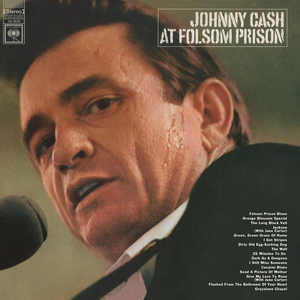
At Folsom Prison, Johnny Cash, 1968
Prison albums can easily turn into gimmicks, but Cash made the room itself part of the rhythm section. Recorded on January 13, 1968, in front of inmates at California's Folsom State Prison, the LP catches every laugh, cheer, and flash of tension before it has time to be polished away. The Country Music Hall of Fame calls it a masterful live album, and the Library of Congress later selected it for the National Recording Registry, noting its songs about imprisonment, separation, loneliness, salvation, crime, and death. On vinyl, the sequencing matters because the crowd response binds the songs together. The original Columbia LP also has that stark cover, Cash looking down in black, which still feels like a warning label. Clean early pressings are desirable, but even a common reissue gets the main point across: this record is not pretending to be dangerous, it is documenting what danger sounded like when Cash turned empathy into showmanship.
-

Red Headed Stranger, Willie Nelson, 1975
A major label country album this quiet should not have worked, which is exactly why it still feels radical. Willie Nelson had moved to Columbia with unusual artistic control, then delivered a sparse concept record built from guitar, piano, harmonica, and negative space. The Country Music Hall of Fame notes that Columbia executives balked at releasing it, partly because it sounded unfinished next to Nashville's polished productions. The Library of Congress later praised its extremely spare arrangements when adding it to the National Recording Registry. For vinyl collectors, that restraint is the selling point. Surface noise matters here because the record leaves so much air around Nelson's voice, so condition is more than cosmetic. The story of the preacher on the run unfolds with the economy of an old western paperback, and the side breaks make the album feel episodic rather than merely short. It is outlaw country as an editing philosophy: remove everything that does not deepen the myth.
-
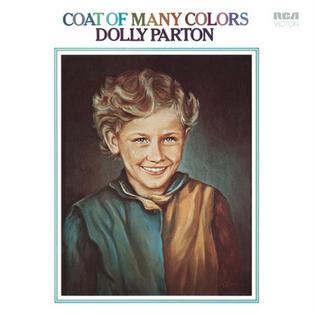
Coat of Many Colors, Dolly Parton, 1971
Dolly Parton did not need a huge arrangement to make a room go still. The title song, drawn from her childhood in Tennessee, became one of her defining statements because it turns poverty, embarrassment, pride, and maternal love into a story almost anyone can understand. The Library of Congress says the song helped establish Parton's credibility as a songwriter, and the full LP shows why that credibility was not built on sentiment alone. The record balances autobiographical detail with commercial country craft, moving between tender ballads and sharper honky-tonk edges. On vinyl, the album's intimacy is helped by its scale; it never tries to overwhelm the speakers. Collectors often come to it through the famous song, then stay for how confidently Parton was shaping her authorial voice before superstardom made her a category of one. It is a reminder that in country music, plain language can be the most sophisticated tool in the room.
-

Will the Circle Be Unbroken, Nitty Gritty Dirt Band, 1972
Three LPs, old masters, young longhairs, and a Nashville studio could have produced a museum piece. Instead, this became one of the great handshakes in American roots music. The Library of Congress describes the sessions as a showcase for traditional songs and country classics, with guests including Mother Maybelle Carter, Doc Watson, Roy Acuff, Jimmy Martin, Merle Travis, and Earl Scruggs. That cast list alone makes the box worth owning, but the real vinyl pleasure is conversational: spoken introductions, studio chatter, and performances that carry the feel of musicians teaching one another in real time. The package also suits the format. A multi-disc set invites flipping, reading, and listening in chapters, which is how traditional music often travels best. For collectors who mostly know country through rock-influenced albums, this is the bridge back to the source without the dryness of an academic anthology.
-
Honky Tonk Heroes, Waylon Jennings, 1973
Waylon Jennings found a co-conspirator in Billy Joe Shaver, then used that partnership to kick against Nashville's house rules. Most of the album draws from Shaver's writing, which gave Jennings a batch of songs tough enough to match his voice without turning him into a cartoon outlaw. The Country Music Hall of Fame points to this record, alongside Lonesome, On'ry and Mean, as a landmark in Jennings's catalog and notes that he fought for the right to record the material he wanted in the studio he wanted. That fight is audible. The drums feel less polite, the guitars have more dust on them, and the singer sounds like he is choosing every phrase because he has lived around men who speak that way. Vinyl copies reward volume, not because the mix is flashy, but because the band locks into a barroom pulse that can feel underpowered on small speakers. This is the outlaw movement as working method, not costume.
-
Pieces of the Sky, Emmylou Harris, 1975
Emmylou Harris's breakthrough works because it treats taste as an instrument. After her work with Gram Parsons, she could have leaned fully into country-rock mythology, but Pieces of the Sky is broader and more disciplined than that. The song choices move from the Louvin Brothers to the Beatles to a devastating reading of "Boulder to Birmingham," her elegy for Parsons. What makes the LP collectible is not rarity, although clean copies with strong jackets are always welcome, but balance. Harris's voice sits above arrangements that respect country tradition while leaving enough folk and rock texture for a new audience to enter. Put it on a turntable and it becomes a study in restraint: steel guitar colors rather than crowds, harmonies that lift instead of decorate, and pacing that makes grief feel composed rather than flattened. Americana as a term came later, but this record already understood the job.
-
The Gilded Palace of Sin, The Flying Burrito Brothers, 1969
The Nudie suits on the cover are funny until the music makes them look prophetic. Gram Parsons and Chris Hillman built a country-rock album that did not simply borrow pedal steel for flavor; it treated country music as a way to talk about sin, class, romance, and bad decisions with psychedelic-era looseness. The record sold modestly at first, which partly explains why early pressings attract serious collector attention, but its influence is wildly out of proportion to its original numbers. On vinyl, the slightly ragged blend is the charm. The band can sound fragile, as if the whole cosmic American music idea might fall apart before the next chorus, and that instability gives the ballads their ache. If Nashville country often prized professional finish and late-60s rock prized expansion, The Gilded Palace of Sin found poetry in the seam between them. A little wear on an old copy almost feels historically appropriate, though your stylus will prefer something cleaner.
-
Sweetheart of the Rodeo, The Byrds, 1968
Rock audiences did not all know what to do with this record in 1968, and that confusion is part of its value now. The Byrds, pushed by Gram Parsons's country obsession, cut an album of traditional material, Dylan songs, and Nashville textures at a moment when psychedelic rock was supposed to be chasing the future. Instead, Sweetheart of the Rodeo looked sideways and backward. The result is not pure country, and purists at the time knew it, but the hybrid created a path that later alt-country bands would travel constantly. For collectors, the album also has a complicated vocal history because some Parsons lead vocals were replaced for contractual reasons, which makes later editions with bonus material especially interesting. The LP's cover art, with its rodeo collage, signals affection rather than irony. It is best heard as a conversion record: musicians discovering that country forms could hold modern doubt without losing their shape.
-
Modern Sounds in Country and Western Music, Ray Charles, 1962
Ray Charles approached country songs as standards, not novelties, and that decision changed the scale of the music. By bringing soul, jazz phrasing, pop orchestration, and gospel feeling to songs associated with country and western repertoire, he made a crossover album with real emotional authority. The strings are lush, the vocals are commanding, and the genre boundaries become less like walls than lighting choices. Vinyl flatters this record because the arrangements were made for spacious listening; the big ballads need room to bloom, while the rhythm sections keep the sentimental material from floating away. Original ABC-Paramount copies are attractive objects, but modern reissues can be a safer route if you want quiet playback. It also belongs on a country list because it reveals how strong the songwriting was when separated from expected accents and instrumentation. Charles did not dilute country music; he proved it could survive, and even thrive, under a different spotlight.
-
Gunfighter Ballads and Trail Songs, Marty Robbins, 1959
Before cinematic country became a playlist mood, Marty Robbins made the West feel like a complete theater of sound. Gunfighter Ballads and Trail Songs is famous for "El Paso," but treating it as a one-song LP misses the craft of the whole package. Robbins sings with almost impossible control, letting the violence, romance, and dust enter through narrative rather than vocal strain. The record's appeal on vinyl starts with the cover, which looks like a pulp western you can play, then deepens through the sequencing. Each song resets the scene without breaking the spell. Collectors should pay attention to condition because older copies often lived hard lives in family consoles and thrift-store stacks. Musically, it is a masterclass in how country albums can build worlds with concise language. You do not need ten-minute tracks when a singer can sketch a town, a horse, a jealous lover, and a fatal mistake before the chorus returns.
-
Guitar Town, Steve Earle, 1986
The snap of this debut still feels like somebody opened the windows in mid-80s Nashville. Steve Earle arrived with a record that respected country songwriting but had the velocity of heartland rock, which made it both commercially legible and slightly too restless to file neatly. The title track, "My Old Friend the Blues," and "Someday" sketch working musicians, small-town escape plans, and romantic damage without wasting syllables. On vinyl, Guitar Town benefits from being lean. It does not overstay its welcome, and the production has enough period brightness to cut through without smothering the songs. Collectors often connect it to the later alt-country movement, but it also belongs to a longer line of country records about cars, bars, jobs, and the dream of somewhere else. The best copies preserve the kick and jangle that made the album feel urgent in the first place.
-
Trio, Dolly Parton, Linda Ronstadt, and Emmylou Harris, 1987
Three famous voices could have turned into a polite summit meeting. Trio works because nobody sings like a guest. Dolly Parton, Linda Ronstadt, and Emmylou Harris blend with the care of musicians who understand that harmony is architecture, not just sweetness. The album reached a wide audience and became a staple for listeners who wanted traditional material presented with immaculate late-80s recording standards. Vinyl highlights the vocal placement beautifully, especially when the harmonies bloom across the stereo image. The repertoire reaches into bluegrass, country, and folk sources, but the production never treats tradition as a sepia prop. It is clean, sometimes almost too clean for listeners who prefer rough edges, yet that polish is also the point. If your system is good at midrange detail, this is one of the easiest country LPs to use when showing someone why vocal records still matter on a turntable.
-
No Depression, Uncle Tupelo, 1990
A basement, a punk record collection, and a stack of country grief can get you surprisingly far. Uncle Tupelo's debut was not polished, and it did not want to be. Its title revived a Carter Family associated phrase and later gave a name to No Depression magazine and the alt-country conversation around it. The songs hit like young musicians discovering that feedback and fiddle-adjacent melancholy could describe the same dead-end towns. Vinyl pressings and reissues vary, so buyers should check edition details if sound quality matters, but the album's real value is historical electricity. It captures a moment before Americana became a festival category, before the rough edges had been sanded into tasteful roots branding. The performances can be blunt, even awkward, and that is part of the document. Country music here is not heritage wallpaper. It is a language for people who inherited few options and plugged in anyway.
-
Car Wheels on a Gravel Road, Lucinda Williams, 1998
Lucinda Williams took years, producers, and a lot of argument to finish this album, and the turbulence left fingerprints in the music. Car Wheels on a Gravel Road is country, blues, folk, and rock by geography rather than committee. The songs are full of towns, highways, motel rooms, screen doors, heat, memory, and desire, but the writing is too specific to become postcard nostalgia. It won the Grammy for Best Contemporary Folk Album, a category label that says more about industry discomfort than about the record's center of gravity. On vinyl, the album's grain matters: Williams's voice can sound frayed at the edges, and the band gives that fray a roadworthy frame. Later pressings made it easier for collectors to own without chasing scarce originals. The LP belongs in a country collection because it shows what happened when storytelling traditions met adult disillusionment without asking permission from radio formats.
-
Time, The Revelator, Gillian Welch, 2001
Few modern records use quiet with this much confidence. Gillian Welch and David Rawlings made Time, The Revelator feel old without faking age, a difficult trick in roots music. The arrangements are minimal, but they are not empty; guitar tone, room feel, and vocal distance do the dramatic work usually assigned to larger bands. Vinyl suits it because the album asks for attentive listening, especially on the long closing title track where repetition becomes revelation rather than drift. Pressing quality is important here because the sparse mix exposes noise quickly. The songs move through American musical memory, but Welch is not curating antiques. She writes as if history is still leaking through the walls. For collectors whose country shelves lean toward honky-tonk or outlaw records, this LP opens another lane: austere, literary, and devastating when the room is quiet enough to meet it halfway.
-
Southeastern, Jason Isbell, 2013
Sobriety records can become self-congratulatory very quickly. Southeastern avoids that trap by making recovery the condition for clearer observation, not the whole subject. Jason Isbell writes about illness, marriage, regret, work, family, and mortality with a precision that brought him from songwriter's songwriter status to a much wider audience. The arrangements are mostly restrained, which gives the lyrics room to land without theatrical underlining. On vinyl, that restraint becomes an advantage. "Cover Me Up" and "Elephant" feel less like performances aimed at a crowd and more like difficult conversations happening close by. The album is also a useful modern collecting marker because it helped define what many listeners now mean when they say Americana with country roots. If your shelf jumps from the 1970s straight to current mainstream country, Southeastern explains a large part of the missing bridge.
-
Metamodern Sounds in Country Music, Sturgill Simpson, 2014
Sturgill Simpson did not revive traditional country by keeping it frozen. Metamodern Sounds in Country Music pairs Waylon-shaped vocal authority with psychedelic questions about consciousness, love, religion, and survival. The title nods toward Ray Charles, but the record's personality is its own: hard country rhythm sections, cosmic language, and a singer who sounds fully aware of the joke without treating the songs as jokes. Vinyl buyers should know that this album became a gateway record for many younger collectors who wanted new country that still sounded connected to older forms. That demand has kept copies circulating through multiple variants and reissues. The format helps the album's dual identity. Side by side, the rougher bar-band moments and the spaced-out meditations feel less like contradiction than weather changes. It is a modern country LP that can sit near Waylon without acting like a museum docent.
-
Golden Hour, Kacey Musgraves, 2018
Country purists argued about Golden Hour because that is what purists do when a record becomes too graceful to dismiss. Kacey Musgraves blended country songwriting with pop atmosphere, disco glints, and soft-focus psychedelia, then won Album of the Year at the Grammys. The official vinyl editions, including anniversary variants, have kept it visible as a modern shelf staple rather than a streaming-era footnote. What makes the LP work is pacing. "Slow Burn" opens like a mission statement, "Space Cowboy" gives the wordplay real emotional weight, and "Rainbow" closes with a directness that could have collapsed into greeting-card writing in lesser hands. On a turntable, the warm production and rounded low end help the album feel less like genre compromise and more like sunset engineering. It is not the only future country can have, but it is one of the prettiest futures that actually arrived.
What to buy first
If you are building a country vinyl shelf from scratch, start with three different listening experiences rather than chasing the most expensive pressings. First, get At Folsom Prison for live energy and historical force. Second, get Red Headed Stranger because it proves how powerful a quiet country concept album can be. Third, choose either Coat of Many Colors or Pieces of the Sky if you want songwriting and vocal detail. After that, add one bridge record, such as Sweetheart of the Rodeo or The Gilded Palace of Sin, then a modern LP like Southeastern or Golden Hour.
For older country records, condition matters more than bragging rights. Many original pressings were party records, family-room records, or console-stereo records, so groove wear can hide behind a jacket that looks fine. If you cannot inspect in person, buy from sellers who grade conservatively and describe playback. For newer albums, check whether the pressing has a good reputation, whether it spreads the music across one or two discs, and whether the label has kept it in print.
FAQ
What country album should I buy first on vinyl?
Start with Johnny Cash's At Folsom Prison if you want a dramatic live record, Willie Nelson's Red Headed Stranger if you want a spare concept album, or Dolly Parton's Coat of Many Colors if songwriting is your priority.
Are original country pressings better than reissues?
Not always. Original pressings can have great mastering and collectible jackets, but many were played hard on older equipment. A clean, well-mastered reissue often beats a noisy original copy.
Why does country music work so well on vinyl?
Country albums often depend on vocal texture, room sound, sequencing, and side-length storytelling. Vinyl encourages front-to-back listening, which helps albums like Red Headed Stranger and Will the Circle Be Unbroken make sense as complete works.
Where can I find country records without overpaying?
Check local record stores, estate sales, Discogs, and label reissues. Common artists can be affordable, but always inspect condition, especially on older LPs that may have lived on console stereos for decades.
A spreadsheet tracks what you own. What's Spinning identifies what's playing.
On-device vinyl ID logs your listening history automatically. 7-day free trial.
Looking for Shazam for vinyl?
What's Spinning identifies what's playing on your turntable on-device, logs history, and AirPlays now-playing to your TV.
Comparing vinyl ID apps?
Analog requires Discogs and is iPhone-first (iPad coming). What's Spinning works without Discogs on iPhone and iPad with AirPlay.
Try What's Spinning Free
Turn your iPad into a live now-playing display. Track every record you spin.
START FREE TRIALThen $4.99/mo or $39.99/yr · Cancel anytime