Best Grunge Albums of All Time on Vinyl: 15 Records That Defined the Sound
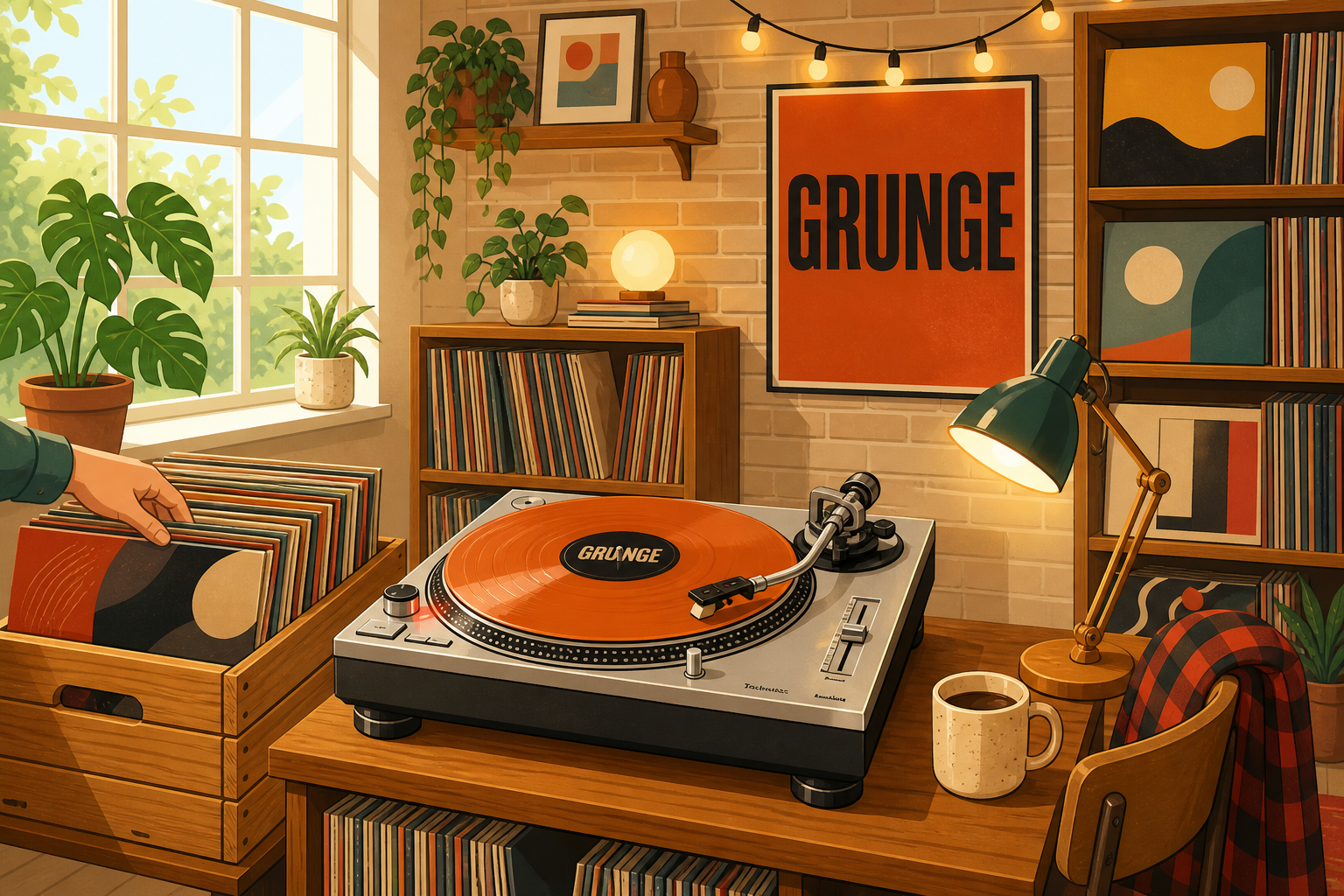
Grunge on vinyl is not a nostalgia costume. It is a short run of records, mostly from 1989 to 1995, where punk weight, Sabbath riffs, and indie-label stubbornness collided with major-label budgets. The best grunge albums of all time are the ones that still earn a needle drop: Nevermind, Superunknown, Dirt, In Utero, Ten, and the records around them that collectors actually replay. Cultural monuments sit on this list only when they also work as LPs.
"Best" here means playable canon, not a dump of every Seattle band. Some titles are overplayed and still essential. Some sit on the edge of the genre, and that is stated plainly. If you already own the 90s alternative starter stack, this ranking goes deeper into the records that defined the sound: Sub Pop beginnings, the 1991 explosion, the darker 1992-1994 albums, and a few adjacent LPs that belong in the same crate.
Nevermind, Nirvana, 1991

Nevermind is overplayed, and it is still the first grunge LP most collectors should own. DGC released it on September 24, 1991. Butch Vig recorded the band at Sound City in Van Nuys and left enough polish for radio without erasing Dave Grohl's drums or Kurt Cobain's scraped vocal. The cultural impact is obvious. The vinyl question is narrower: does the record still hit when you already know every chorus? On a decent pressing, yes. Side one moves with almost no waste, and the louder tracks have physical punch that streaming can flatten. Original DGC copies exist, but 1991 vinyl was not the default format, so clean originals cost real money. Later reissues are the practical play copies. Buy one you will actually spin. A sealed trophy that never leaves the jacket is the wrong version of this album. Source.
Superunknown, Soundgarden, 1994

If Nevermind is the monument, Superunknown is often the record collectors put on again. A&M issued it on March 8, 1994, produced by Michael Beinhorn, and it became Soundgarden's commercial peak without turning into a singles compilation. Chris Cornell's voice has range that most grunge singing does not, and Kim Thayil's guitar writing is weirder than the radio hits suggest. The album is long, which matters on vinyl. A cramped single-LP cut can smear the cymbals and bury the low end; look for editions that give the sides room. The 20th-anniversary sets added extras, but a clean standard 2LP of the album itself is the one to play. This is grunge with psychedelic stretch, drop-D heaviness, and songs that still surprise after the famous ones. Source.
Dirt, Alice in Chains, 1992

Dirt is the bleakest essential on this list, and one of the strongest full-album listens. Columbia released it on September 29, 1992, with Dave Jerden producing most of it after sessions at Eldorado, London Bridge, and One on One. Jerry Cantrell's riffs carry the weight, and Layne Staley's voice sits in a harmony blend that still sounds unlike anyone else in the Seattle wave. The record peaked at number 6 on the Billboard 200 and later went 5x platinum in the U.S., but those numbers are not why it belongs here. It belongs because the sequencing holds. Early U.S. pressings moved "Down in a Hole" later in the running order; later editions restore the band's intended fourth-track placement, so check the track list before you buy. The 30th-anniversary reissue brought the album back onto charts in 2022. A quiet, heavy copy is worth more than a noisy original. Source.
In Utero, Nirvana, 1993

In Utero is the Nirvana studio album many collectors play more than Nevermind once the novelty of the hits wears off. DGC released the U.S. vinyl on September 14, 1993, in a limited first run, with the wider CD street date a week later. Steve Albini recorded it at Pachyderm Studios in Cannon Falls, Minnesota, in February 1993, chasing room sound instead of radio gloss. Scott Litt later remixed the singles, so edition notes matter. The album still debuted at number 1 on the Billboard 200, which tells you how large the band had become even while trying to sound smaller and harsher. On vinyl, listen for Grohl's kit in the room and whether Cobain's vocal sits inside the band rather than on top of a compressed wall. The 20th- and 30th-anniversary editions are elaborate. For regular play, a standard LP that keeps the Albini body intact is enough. Source.
Ten, Pearl Jam, 1991

Ten did not explode in the same week as Nevermind, which is part of why it still plays differently. Epic released it on August 27, 1991, produced with Rick Parashar, after Stone Gossard and Jeff Ament came out of Mother Love Bone and Eddie Vedder arrived through a demo tape. The songs became classic-rock furniture. The album is better than that fate. "Once" through "Jeremy" is a real LP arc if you stop treating the tracks as isolated radio events. Vinyl buyers should be careful with later remixes. Brendan O'Brien's 2009 remix is a different record: louder, clearer, and controversial among people who grew up with the original sheen. If you want the 1991 album, look for the original mix. Early U.S. LPs are not casual finds because the format was already fading. A clean original-mix reissue is the sane collector move. Source.
Vs., Pearl Jam, 1993

Vs. is the Pearl Jam album to drop when Ten feels too familiar. Epic released it on October 19, 1993, with Brendan O'Brien producing, and it debuted at number 1 on the Billboard 200. The band sounds tighter, more physical, and less interested in making another set of arena ballads. Guitar parts lock instead of blooming, and the rhythm section has more snap. That makes it a better vinyl rock record for some systems than Ten, especially if your setup likes punch more than gloss. Original 1993 copies can be pricey because LP runs were small. Later reissues are widely available. Check deadwax and notes if you care about the original sequence versus expanded anniversary extras. For a ranked grunge shelf, this is the Pearl Jam studio LP that still feels like a band in a room rather than a greatest-hits rehearsal. Source.
Badmotorfinger, Soundgarden, 1991

Badmotorfinger is the Soundgarden record to own before Superunknown, not after you get bored of it. A&M released it on October 8, 1991, produced by Terry Date, right as the Seattle wave went national. The riffs are stranger and more metallic than the later hits. Matt Cameron's drumming is the hidden reason the album still works: odd meters that feel physical instead of academic. Vinyl copies from the early 90s are finite, and later reissues (including deluxe sets) are easier to live with. This is not the friendliest first Soundgarden purchase if you only know the 1994 singles, but it is the one that explains why the band was never just a grunge radio act. Play it loud enough for the low end to move. A thin pressing will make the record sound smaller than it is. Source.
Temple of the Dog, Temple of the Dog, 1991

Temple of the Dog is the Seattle document that is more than a side-project curiosity. A&M released it on April 16, 1991, produced by Rick Parashar, as a tribute to Mother Love Bone singer Andrew Wood. Chris Cornell wrote much of it; Stone Gossard, Jeff Ament, Mike McCready, Matt Cameron, and a then-unknown Eddie Vedder completed the circle. That personnel list is why collectors keep it next to both Soundgarden and Pearl Jam. The record is warmer and more open-hearted than Dirt or In Utero, which makes it a useful contrast on a grunge shelf. Original A&M vinyl is collectible. The 25th-anniversary editions made the album easy to find again. Buy a copy for "Hunger Strike" if you must, then keep it on for the rest. The full LP is the point, not the famous duet in isolation. Source.
Bleach, Nirvana, 1989

Bleach is the Sub Pop origin story, and it still sounds like a band that had not been invited into the mainstream yet. The label released it on June 15, 1989, produced by Jack Endino at Reciprocal Recording in Seattle for a famously small studio bill. Chad Channing is on drums for most of it; Grohl had not arrived. That matters. The record is slower, sludge-heavier, and less hook-driven than Nevermind. Vinyl collectors should start with later Sub Pop remasters if they want a clean play copy, then chase early green-label or first-press variants only if the object itself is the goal. Playback-wise, this is not the polished 1991 band. It is the reason "grunge" had a local meaning before it became a clothing aisle. If your shelf only has the DGC titles, Bleach is the missing first chapter. Source.
Live Through This, Hole, 1994

Live Through This is the non-Seattle grunge record that still belongs in the canon. DGC released it on April 12, 1994, produced by Paul Q. Kolderie and Sean Slade. Courtney Love's songs are sharper and more hook-heavy than the tabloid story that followed the album. Eric Erlandson's guitar keeps the songs serrated without burying the melodies. The timing, one week after Cobain's death, still distorts how people hear it. Ignore that enough to judge the LP. It is concise, angry, and better sequenced than many bigger-budget 1994 rock records. Original vinyl is not the copy most people owned, so later reissues do the collecting work. This is the title that stops a grunge shelf from becoming five Seattle men and a poster. It also plays. That is the ranking test. Source.
Core, Stone Temple Pilots, 1992

Core was easy to sneer at in 1992 if you wanted scene purity, and it is still easy to play in 2026 if you want songs. Atlantic released it on September 29, 1992, produced by Brendan O'Brien. Scott Weiland's voice and Dean DeLeo's guitar parts made the band sound more classic-rock trained than the Sub Pop groups, which is why some writers called them copyists. The record does not need that argument. "Wicked Garden," "Sex Type Thing," "Plush," and "Creep" were radio fixtures, but the album has more body than a hits disc. Early vinyl is scarce. Modern reissues are the normal path. On a good pressing the low end is thicker than the CD-era memory of it. File this as grunge-adjacent if you need a clean border. Leave it off a ranked list of the era's best LPs and you are ranking press clippings instead of records. Source.
Siamese Dream, The Smashing Pumpkins, 1993

Siamese Dream is not a Seattle record, and it is not pure grunge. It still belongs near this crate. Virgin released it on July 27, 1993. Billy Corgan and Butch Vig stacked guitars until distortion behaved like an orchestra, with Jimmy Chamberlin's drumming keeping air in the mix. The result sits between alt-rock, shoegaze scale, and the heavier radio of 1993. That edge is the honest reason it is here. Collectors should care about mastering. A bright, dense cut turns the album into glare. A good LP separates the overdriven layers and leaves the quieter songs vulnerable instead of merely soft. Original vinyl from the CD-dominant years can be expensive. Later remasters are easier, but read notes before assuming every reissue is an upgrade. If your grunge shelf has no room for Chicago ambition, skip it. If you buy records to play, this one earns the space. Source.
Meantime, Helmet, 1992

Meantime is the New York cousin: drop-D, clipped, and unsentimental. Interscope released it on June 23, 1992, after Helmet had already made a name on Amphetamine Reptile. Page Hamilton's riffs are mathematical compared with Seattle sludge, which is exactly why the album belongs on a grunge-adjacent shelf. Radio and MTV treated it as part of the same early-90s heavy-alternative wave, and collectors still file it next to Dirt and Badmotorfinger. The songs are short. The grooves are stubborn. Vinyl is useful because the record depends on tight low end rather than atmosphere. A bloated bass or a noisy original will wreck it. Later reissues are often the better play copies. If you think grunge only means flannel and long hair, this LP is the corrective. It is heavy music with no interest in being a folk tale. Source.
Above, Mad Season, 1995

Above is the side project that became canon. Columbia released it on March 14, 1995, with Brett Eliason producing. Mike McCready, Layne Staley, Barrett Martin, and John Baker Saunders made a bluesier, more open record than Pearl Jam or Alice in Chains usually allowed on official albums. Staley's vocal on this one is the reason people keep paying for copies. The playing has space. That makes vinyl a good format if the pressing stays quiet, because the record is not trying to crush the room at every second. Original Columbia LPs exist in smaller numbers than the CDs. Later reissues, including expanded editions, are easier to find. This is not a beginner grunge purchase, and it should not be your only Alice-related LP. After Dirt, it is the extra record that still gets requested when someone wants the era's mood without another radio single. Source.
MTV Unplugged in New York, Nirvana, 1994

A live album has to earn a ranked studio-heavy list. This one does. DGC released MTV Unplugged in New York on November 1, 1994, recorded at Sony Music Studios on November 18, 1993. The set is famous for the covers, the dress, and the after-the-fact myth. The vinyl reason is simpler: it is a complete performance with a different mix of touch and space than the studio records. Cellos, quiet dynamics, and the Meat Puppets songs make it a different Nirvana LP, not a hits recap. Original copies were part of the mid-90s CD world more than the LP world, so later vinyl editions are how most collectors hear it now. The 25th-anniversary sets added more of the show. For a first copy, the standard album sequence is enough. Play it when you want the band without the Sound City or Pachyderm armor. Source.
What to buy first
Start with Superunknown, Dirt, and In Utero if you want the records that still get played after the mythology thins out. Add Nevermind because the query is incomplete without it, then Ten only if you want the original mix and not a later remix by accident.
If you already own those, buy Bleach, Badmotorfinger, and Live Through This next. That second pass adds the Sub Pop beginning, Soundgarden before the 1994 singles, and a non-Seattle record with its own spine. Save Meantime, Above, and Unplugged for when the core shelf is in rotation.
Condition beats folklore. Early-90s originals can be scarce because CDs were the default. A quiet reissue is the better purchase when the music is loud, dense, or dynamic. Read the track list on Dirt, the mix notes on Ten and In Utero, and the side count on Superunknown before you spend.
FAQ
What is the best grunge album to buy first on vinyl?
Buy Superunknown if you want the strongest full-album play, Dirt if you want the darkest essential, or Nevermind if you want the record everyone is actually searching for. Get a clean copy you will play. Do not start with a fragile original.
Are original 1990s grunge pressings worth it?
Sometimes, especially for early Sub Pop Bleach variants and first-run In Utero LPs. Most of the time a well-cut reissue is the smarter listening copy. Vinyl was a secondary format in 1991-1994, so scarcity is common and sound quality is not guaranteed.
Is Siamese Dream a grunge album?
Not strictly. It is a 1993 alternative rock record with grunge-adjacent weight, stacked guitars, and the same collector crate as Nevermind and Core. It is on this list because people look for it next to those records, and because it still plays like a major LP from the same years.
A spreadsheet tracks what you own. What's Spinning identifies what's playing.
On-device vinyl ID logs your listening history automatically. 7-day free trial.
Looking for Shazam for vinyl?
What's Spinning identifies what's playing on your turntable on-device, logs history, and AirPlays now-playing to your TV.
Comparing vinyl ID apps?
Analog requires Discogs and is iPhone-first (iPad coming). What's Spinning works without Discogs on iPhone and iPad with AirPlay.
Try What's Spinning Free
Turn your iPad into a live now-playing display. Track every record you spin.
START FREE TRIALThen $4.99/mo or $39.99/yr · Cancel anytime