Best Albums for Late Night Listening
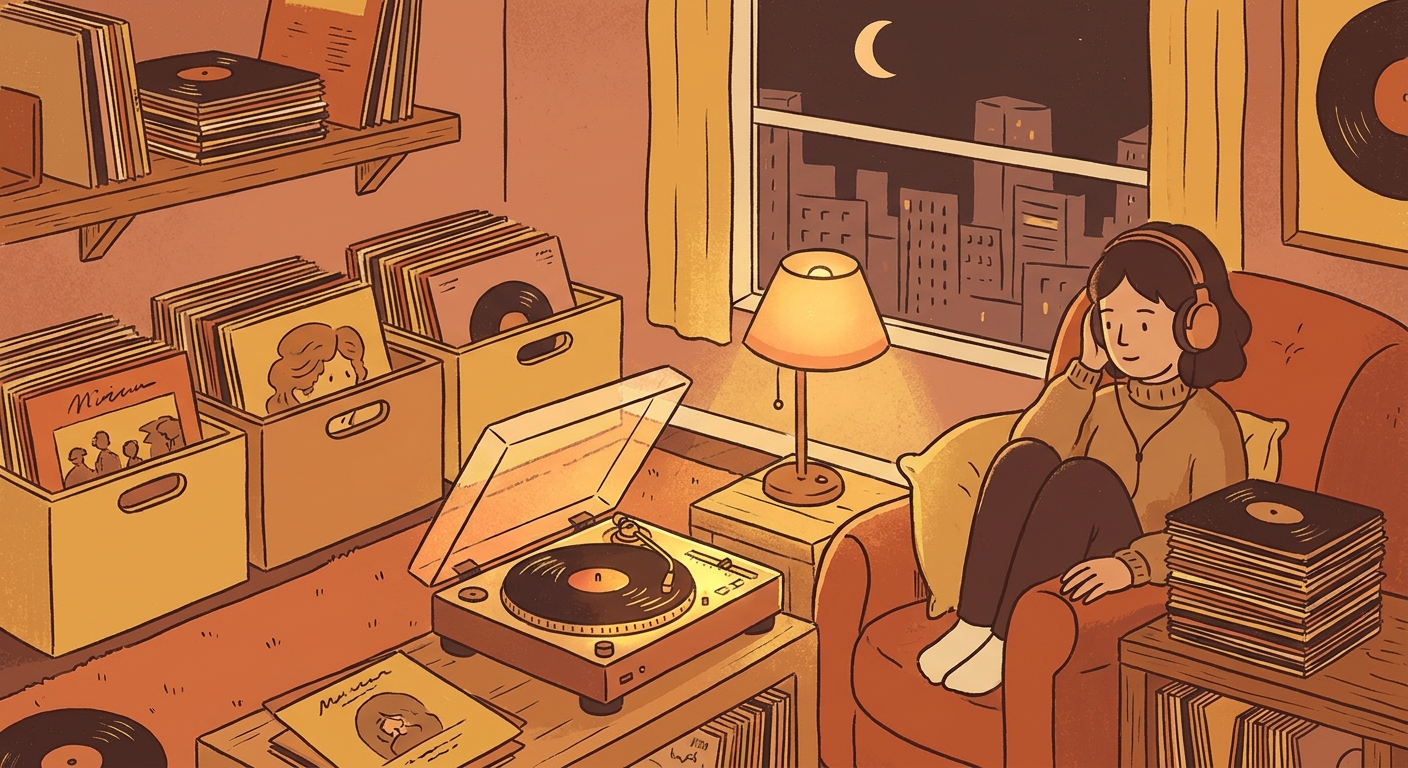
The best albums for late night listening are not always the quietest records in the collection. They are the ones that change the room. Some are spare enough to let the refrigerator hum become part of the atmosphere. Some are deep, bass-heavy, and cinematic. Some are emotionally direct in a way that feels too exposed at two in the afternoon but exactly right after everyone else has gone to bed.
Vinyl makes that ritual feel especially intentional. You choose a side, brush the record, lower the stylus, and commit to twenty minutes instead of letting an algorithm drift into the next thing. For collectors, late-night albums also reveal what a pressing is really made of: quiet vinyl, centered holes, good mastering, and healthy grooves matter when the music is built from breath, fades, room tone, and low-end patience. Here are fifteen essential albums that deserve a permanent place on the midnight shelf.
-

Kind of Blue by Miles Davis (1959)
Released by Columbia on August 17, 1959, Kind of Blue was recorded at Columbia's 30th Street Studio in New York during sessions on March 2 and April 22, with Irving Townsend producing and a sextet that included John Coltrane, Cannonball Adderley, Bill Evans, Paul Chambers, Jimmy Cobb, plus Wynton Kelly on Freddie Freeloader. Wikipedia summarizes its RIAA status as 5x Platinum in the United States, which is extraordinary for an acoustic jazz LP. Album source.
The reason it belongs at the top of a late-night list is not just fame. The modal writing leaves space around every phrase, so the record breathes at low volume. So What and Blue in Green reward nearfield listening because the cymbal shimmer, piano voicings, and horn placement feel like people thinking in the same room. On vinyl, the 30th Street Studio ambience gives the music a soft halo without turning it blurry.
Original six-eye Columbia pressings are blue-chip collectibles, but many later Columbia, Mobile Fidelity, and audiophile reissues make more practical listening copies. The main collector question is not whether the album is canonical; it is which mastering lets the bass stay round and the trumpet stay human when the volume is modest. If you want one jazz record for the midnight shelf, start here because it is calm without being sleepy and famous without feeling overplayed when the stylus drops. For collectors, this is also where condition matters more than usual. Late-night records live on quiet passages, long fades, and room tone, so groove wear, non-fill, off-center pressings, and noisy used copies become obvious fast. If you are buying used, ask about play grading rather than relying only on visual grading; a glossy record can still carry ticks through the softest moments. Clean the record, check cartridge alignment, and log the pressing in your collection app so you remember which copy actually delivered the midnight magic.
That is also why this kind of record is a natural fit for a listening log. When the house is quiet, you notice the records you return to for different moods, and a tool like What's Spinning can quietly track those plays from the turntable without turning the ritual into spreadsheet work. Over time, the late-night shelf stops being a vague vibe and becomes a real pattern in your collection. Cover reference: MusicBrainz and Cover Art Archive.
-

Pink Moon by Nick Drake (1972)
Pink Moon was released by Island in the United Kingdom on February 25, 1972. It was recorded at Sound Techniques in London on October 30 and 31, 1971, with John Wood producing. The arrangement is famously severe: Drake's voice and acoustic guitar carry almost everything, with only a small piano figure added to the title track. Album source.
That austerity is exactly why it works after midnight. There is no band to fight the room, no grand production to announce itself, and no wasted gesture. Place a clean copy on a turntable and you hear fingers, breath, string attack, and silence doing equal work. Pink Moon, Place to Be, and From the Morning feel less like performances for an audience than private notes that happened to be cut into lacquer.
Original UK Island copies are expensive and heavily scrutinized, which makes well-cut reissues important for people who actually want to play the record. Quiet vinyl is crucial because the album is only about twenty-eight minutes long and has nowhere to hide surface noise. Collectors often chase the intimacy of the recording rather than a dramatic bass or treble upgrade. The best copy is the one that lets Drake remain small, centered, and close, which is the entire late-night point. For collectors, this is also where condition matters more than usual. Late-night records live on quiet passages, long fades, and room tone, so groove wear, non-fill, off-center pressings, and noisy used copies become obvious fast. If you are buying used, ask about play grading rather than relying only on visual grading; a glossy record can still carry ticks through the softest moments. Clean the record, check cartridge alignment, and log the pressing in your collection app so you remember which copy actually delivered the midnight magic.
That is also why this kind of record is a natural fit for a listening log. When the house is quiet, you notice the records you return to for different moods, and a tool like What's Spinning can quietly track those plays from the turntable without turning the ritual into spreadsheet work. Over time, the late-night shelf stops being a vague vibe and becomes a real pattern in your collection. Cover reference: MusicBrainz and Cover Art Archive.
From a setup perspective, Pink Moon rewards a slightly ritualistic approach: clean the side, lower the lights, keep the volume below conversation level, and let the album's pacing do the work. That is the difference between owning a respected record and actually understanding why collectors keep recommending it for nights when attention is softer but hearing is sharper.
-

Dummy by Portishead (1994)
Portishead's debut arrived on Go! Beat in 1994 after sessions at State of Art and Coach House Studios in Bristol. Wikipedia notes that it reached number two on the UK Albums Chart, was certified triple platinum in the United Kingdom in 2019, and had sold 920,000 UK copies by September 2020. The production credit belongs to Portishead and Adrian Utley. Album source.
Dummy is late-night music for city windows, low lamps, and the moment when the room feels more cinematic than domestic. The beats are dusty but deliberate, Beth Gibbons sings as if she is stepping carefully through fog, and the scratches and samples make the vinyl format feel conceptually right. Sour Times, Roads, and Glory Box are obvious entry points, but the whole album plays like one noir-lit side after another.
On vinyl, Dummy tests a system in a different way than an audiophile jazz title. You want bass weight without smearing the vocal, surface quietness through the intro of Roads, and enough top-end restraint that the record stays smoky rather than sharp. First pressings and earlier European copies have collector appeal, but the album has been reissued often enough that buyers can be patient. The key is to avoid copies abused at parties, because this record sounds best when the grooves still have their shadows intact. For collectors, this is also where condition matters more than usual. Late-night records live on quiet passages, long fades, and room tone, so groove wear, non-fill, off-center pressings, and noisy used copies become obvious fast. If you are buying used, ask about play grading rather than relying only on visual grading; a glossy record can still carry ticks through the softest moments. Clean the record, check cartridge alignment, and log the pressing in your collection app so you remember which copy actually delivered the midnight magic.
That is also why this kind of record is a natural fit for a listening log. When the house is quiet, you notice the records you return to for different moods, and a tool like What's Spinning can quietly track those plays from the turntable without turning the ritual into spreadsheet work. Over time, the late-night shelf stops being a vague vibe and becomes a real pattern in your collection. Cover reference: MusicBrainz and Cover Art Archive.
From a setup perspective, Dummy rewards a slightly ritualistic approach: clean the side, lower the lights, keep the volume below conversation level, and let the album's pacing do the work. That is the difference between owning a respected record and actually understanding why collectors keep recommending it for nights when attention is softer but hearing is sharper.
-

Mezzanine by Massive Attack (1998)
Mezzanine was released by Circa and Virgin in April 1998, produced by Neil Davidge and Massive Attack. It entered the UK Albums Chart at number one, reached number sixty on the Billboard 200, and was certified double platinum by the BPI. Its darker mix of trip hop, dub, post-punk, and industrial texture changed the group's center of gravity. Album source.
Late at night, Mezzanine feels enormous without demanding brightness. Angel is a subwoofer check and a mood statement, Teardrop turns a harpsichord-like loop into suspended animation, and Inertia Creeps makes rhythm feel physical but still contained. A good vinyl playback chain gives the album depth, making the low end pressurize the room while Elizabeth Fraser's vocal on Teardrop floats above it.
Collectors care about this one because it can sound either huge or congested depending on pressing and setup. The sides are dense, the bass is central to the experience, and the album runs long enough that mastering choices matter. Clean copies of desirable editions are worth seeking, but even then cartridge tracking and speaker placement can decide whether the record becomes a black cloud or a beautifully layered night drive. It is essential because it proves late-night listening does not have to be gentle; it can be heavy, patient, and hypnotic. For collectors, this is also where condition matters more than usual. Late-night records live on quiet passages, long fades, and room tone, so groove wear, non-fill, off-center pressings, and noisy used copies become obvious fast. If you are buying used, ask about play grading rather than relying only on visual grading; a glossy record can still carry ticks through the softest moments. Clean the record, check cartridge alignment, and log the pressing in your collection app so you remember which copy actually delivered the midnight magic.
That is also why this kind of record is a natural fit for a listening log. When the house is quiet, you notice the records you return to for different moods, and a tool like What's Spinning can quietly track those plays from the turntable without turning the ritual into spreadsheet work. Over time, the late-night shelf stops being a vague vibe and becomes a real pattern in your collection. Cover reference: MusicBrainz and Cover Art Archive.
From a setup perspective, Mezzanine rewards a slightly ritualistic approach: clean the side, lower the lights, keep the volume below conversation level, and let the album's pacing do the work. That is the difference between owning a respected record and actually understanding why collectors keep recommending it for nights when attention is softer but hearing is sharper.
-

Moon Safari by Air (1998)
Moon Safari, the debut album by the French duo Air, was released by Source and Virgin in January 1998. It was recorded between April and June 1997 at Around the Golf and Gang in Paris, with additional work at Abbey Road in London, and produced by Jean-Benoit Dunckel and Nicolas Godin. The album later received anniversary reissues, including expanded editions for its tenth and twenty-fifth anniversaries. Album source.
This is the late-night record for people who want the room to feel warmer, not darker. La femme d'argent has the easy patience of a lamp left on for one more side, Sexy Boy adds a sly pulse, and All I Need turns soft-focus electronics into something surprisingly durable. On vinyl, the bass lines and analog synth pads give the album a plush surface that can make a modest stereo sound expensive.
Moon Safari has become a reliable crate recommendation because it connects electronic music, lounge, pop, and downtempo without belonging completely to any one bin. Collectors should pay attention to side length and pressing quality because the record's charm depends on smooth textures rather than big dynamic shocks. A noisy copy can make the gloss feel cheap, while a clean one feels like polished chrome under amber light. It matters for late-night vinyl because it is social enough for a quiet conversation and detailed enough for solo listening. For collectors, this is also where condition matters more than usual. Late-night records live on quiet passages, long fades, and room tone, so groove wear, non-fill, off-center pressings, and noisy used copies become obvious fast. If you are buying used, ask about play grading rather than relying only on visual grading; a glossy record can still carry ticks through the softest moments. Clean the record, check cartridge alignment, and log the pressing in your collection app so you remember which copy actually delivered the midnight magic.
That is also why this kind of record is a natural fit for a listening log. When the house is quiet, you notice the records you return to for different moods, and a tool like What's Spinning can quietly track those plays from the turntable without turning the ritual into spreadsheet work. Over time, the late-night shelf stops being a vague vibe and becomes a real pattern in your collection. Cover reference: MusicBrainz and Cover Art Archive.
-

Selected Ambient Works 85-92 by Aphex Twin (1992)
Selected Ambient Works 85-92 was released through Apollo, a subsidiary of R&S Records, in 1992. The album collects Richard D. James recordings made between 1985 and 1992, and Wikipedia notes that it entered the UK Dance Albums Chart at number six in December 1992. Its origin story, teenage home recordings becoming a foundational electronic album, is part of its pull. Album source.
For late-night listening, the record is less about ambience as wallpaper and more about memory. Xtal, Tha, and Pulsewidth have enough rhythm to keep the room awake, but the melodies are blurred at the edges, as if remembered from a club you left hours ago. Vinyl suits that slightly weathered character because the format reinforces the sense of machinery, warmth, and distance.
Original Apollo and R&S-related pressings can be serious collector targets, and later reissues vary in how they handle the album's long runtime and low-end pulse. Buyers should not expect showroom hi-fi gloss. The point is the texture: tape hiss, drum machines, synth pads, and imperfect edges all support the mood. A clean pressing gives you the best version of that imperfection, which is exactly what makes the album essential for anyone building a late-night electronic shelf. For collectors, this is also where condition matters more than usual. Late-night records live on quiet passages, long fades, and room tone, so groove wear, non-fill, off-center pressings, and noisy used copies become obvious fast. If you are buying used, ask about play grading rather than relying only on visual grading; a glossy record can still carry ticks through the softest moments. Clean the record, check cartridge alignment, and log the pressing in your collection app so you remember which copy actually delivered the midnight magic.
That is also why this kind of record is a natural fit for a listening log. When the house is quiet, you notice the records you return to for different moods, and a tool like What's Spinning can quietly track those plays from the turntable without turning the ritual into spreadsheet work. Over time, the late-night shelf stops being a vague vibe and becomes a real pattern in your collection. Cover reference: MusicBrainz and Cover Art Archive.
From a setup perspective, Selected Ambient Works 85-92 rewards a slightly ritualistic approach: clean the side, lower the lights, keep the volume below conversation level, and let the album's pacing do the work. That is the difference between owning a respected record and actually understanding why collectors keep recommending it for nights when attention is softer but hearing is sharper.
-

Ambient 1: Music for Airports by Brian Eno (1978)
Brian Eno's Ambient 1: Music for Airports was released through E.G. and Polydor, with recording in London and Cologne and Eno producing. It is widely cited as the first Eno album released explicitly under the ambient label. Eno's own formulation, quoted often in discussions of the record, was music that could induce calm and a space to think while remaining as ignorable as it is interesting. Album source.
That idea can sound academic until you play the record late at night. Then the slow loops, voices, and piano tones become practical. They lower the temperature of a room without making it empty. Side one is especially useful for the moment when you want music but not narrative, melody but not hooks, presence but not interruption. On vinyl, the act of flipping the record also becomes part of the piece, a quiet reset rather than a break.
Collectors should be realistic: this is not a record that impresses with slam or frequency extremes. It impresses by letting your system disappear. Surface noise can be charming in small amounts, but loud ticks undermine the suspended effect, so condition is central. Original pressings have historical appeal because they sit at the birth of ambient as a named genre, while modern reissues can be better everyday copies. It is essential because it defines one entire branch of late-night listening: music that keeps you company without asking you to explain yourself. For collectors, this is also where condition matters more than usual. Late-night records live on quiet passages, long fades, and room tone, so groove wear, non-fill, off-center pressings, and noisy used copies become obvious fast. If you are buying used, ask about play grading rather than relying only on visual grading; a glossy record can still carry ticks through the softest moments. Clean the record, check cartridge alignment, and log the pressing in your collection app so you remember which copy actually delivered the midnight magic.
That is also why this kind of record is a natural fit for a listening log. When the house is quiet, you notice the records you return to for different moods, and a tool like What's Spinning can quietly track those plays from the turntable without turning the ritual into spreadsheet work. Over time, the late-night shelf stops being a vague vibe and becomes a real pattern in your collection. Cover reference: MusicBrainz and Cover Art Archive.
-

Spirit of Eden by Talk Talk (1988)
Spirit of Eden was released by Parlophone in 1988 after a long process at Wessex Sound in London, with Tim Friese-Greene producing. The band recorded many hours of improvised performances, often working in darkness, then edited those performances into long-form pieces. Commercially, it spent five weeks on the UK Albums Chart and peaked at number nineteen. Album source.
This is one of the great records for the hour when normal song structure starts to feel too loud. The Rainbow, Eden, and I Believe in You move in slow reveals, with harmonica, organ, guitar, percussion, and silence arriving like changes in weather. On vinyl, the dynamic range is the drama. You lean in during the quiet sections, then the band blooms, and the room suddenly feels bigger than it did a minute earlier.
For collectors, Spirit of Eden is a lesson in why pressing quality and playback noise matter to post-rock and art-rock records as much as jazz or classical. The quiet-to-loud transitions make groove condition obvious, and the album's reputation has pushed clean copies into more serious territory. It also matters historically because it helped open a path for post-rock, slowcore, and experimental rock that treated the studio as an instrument. Late at night, that history matters less than the feeling that the record is listening back. For collectors, this is also where condition matters more than usual. Late-night records live on quiet passages, long fades, and room tone, so groove wear, non-fill, off-center pressings, and noisy used copies become obvious fast. If you are buying used, ask about play grading rather than relying only on visual grading; a glossy record can still carry ticks through the softest moments. Clean the record, check cartridge alignment, and log the pressing in your collection app so you remember which copy actually delivered the midnight magic.
That is also why this kind of record is a natural fit for a listening log. When the house is quiet, you notice the records you return to for different moods, and a tool like What's Spinning can quietly track those plays from the turntable without turning the ritual into spreadsheet work. Over time, the late-night shelf stops being a vague vibe and becomes a real pattern in your collection. Cover reference: MusicBrainz and Cover Art Archive.
From a setup perspective, Spirit of Eden rewards a slightly ritualistic approach: clean the side, lower the lights, keep the volume below conversation level, and let the album's pacing do the work. That is the difference between owning a respected record and actually understanding why collectors keep recommending it for nights when attention is softer but hearing is sharper.
-

Love Deluxe by Sade (1992)
Love Deluxe was released by Epic in 1992, recorded across Condulmer in Venice, Ridge Farm in Surrey, The Hit Factory in London, and Image Recording in Los Angeles. Wikipedia lists the album at number ten on the UK Albums Chart and number three on the Billboard 200, with BPI Gold certification in the UK and RIAA 4x Platinum certification in the United States. Album source.
This is late-night elegance without stiffness. No Ordinary Love stretches past seven minutes and never wastes the space, Kiss of Life glows, and Pearls shows how much emotional weight Sade can carry without raising the temperature too high. The production is modern for 1992 but not brittle, with bass, percussion, and vocal reverb arranged for depth rather than spectacle.
Sade albums have become dependable vinyl staples because they combine mainstream recognition with adult, room-friendly sound. Love Deluxe is especially useful in a collection because it works for focused listening, dinner cleanup, quiet company, and solitary after-hours reflection. Clean original pressings can be attractive, but the practical buyer should prioritize low noise and centered playback. When the groove is quiet, the album feels luxurious in the literal sense: not flashy, just beautifully controlled. For collectors, this is also where condition matters more than usual. Late-night records live on quiet passages, long fades, and room tone, so groove wear, non-fill, off-center pressings, and noisy used copies become obvious fast. If you are buying used, ask about play grading rather than relying only on visual grading; a glossy record can still carry ticks through the softest moments. Clean the record, check cartridge alignment, and log the pressing in your collection app so you remember which copy actually delivered the midnight magic.
That is also why this kind of record is a natural fit for a listening log. When the house is quiet, you notice the records you return to for different moods, and a tool like What's Spinning can quietly track those plays from the turntable without turning the ritual into spreadsheet work. Over time, the late-night shelf stops being a vague vibe and becomes a real pattern in your collection. Cover reference: MusicBrainz and Cover Art Archive.
From a setup perspective, Love Deluxe rewards a slightly ritualistic approach: clean the side, lower the lights, keep the volume below conversation level, and let the album's pacing do the work. That is the difference between owning a respected record and actually understanding why collectors keep recommending it for nights when attention is softer but hearing is sharper.
-

Blue by Joni Mitchell (1971)
Blue was released by Reprise on June 22, 1971, written and produced by Joni Mitchell and recorded at A&M Studios in Hollywood. It reached number fifteen on the Billboard 200, number three on the UK Albums Chart, and number nine on Canada's RPM Albums Chart. In the United Kingdom, it has been certified double platinum by the BPI. Album source.
Blue is a late-night record because it refuses to decorate loneliness. The arrangements are simple, but they are not small. A Case of You, River, and The Last Time I Saw Richard place voice, piano, dulcimer, and guitar so plainly that every change of phrasing becomes a major event. At low volume, the intimacy survives, which is one of the highest compliments a record can earn.
Collectors chase early Reprise copies, audiophile editions, and quiet reissues because the music exposes everything. Sibilance, inner-groove wear, and groove noise are easy to hear when Mitchell's vocal is this present. The album also works as a reminder that late-night listening is not only about mellow sound. Sometimes the best midnight record is emotionally direct enough to make you stop organizing shelves and just sit with it. Blue is essential because it turns vulnerability into form, and vinyl makes that form feel physically present. For collectors, this is also where condition matters more than usual. Late-night records live on quiet passages, long fades, and room tone, so groove wear, non-fill, off-center pressings, and noisy used copies become obvious fast. If you are buying used, ask about play grading rather than relying only on visual grading; a glossy record can still carry ticks through the softest moments. Clean the record, check cartridge alignment, and log the pressing in your collection app so you remember which copy actually delivered the midnight magic.
That is also why this kind of record is a natural fit for a listening log. When the house is quiet, you notice the records you return to for different moods, and a tool like What's Spinning can quietly track those plays from the turntable without turning the ritual into spreadsheet work. Over time, the late-night shelf stops being a vague vibe and becomes a real pattern in your collection. Cover reference: MusicBrainz and Cover Art Archive.
From a setup perspective, Blue rewards a slightly ritualistic approach: clean the side, lower the lights, keep the volume below conversation level, and let the album's pacing do the work. That is the difference between owning a respected record and actually understanding why collectors keep recommending it for nights when attention is softer but hearing is sharper.
-

Agaetis byrjun by Sigur Ros (1999)
Sigur Ros released Agaetis byrjun in 1999 through Smekkleysa in Iceland, with wider FatCat attention following. It was recorded between August 1998 and April 1999 in Reykjavik with producer Ken Thomas. Wikipedia notes that the band's label reported 10,000 copies sold in Iceland during the first year, earning platinum status there. Album source.
Few records make a room feel as wide after midnight. Svefn-g-englar and Staralfur stretch time with bowed guitar, organ-like textures, strings, and Jonsi's voice hovering between language and pure tone. The album is long, but that length is part of the appeal. It gives the listener permission to stop checking the clock and let the sides unfold at their own glacial speed.
On vinyl, Agaetis byrjun is about scale and quiet surfaces. Post-rock crescendos are only powerful if the small sounds before them are intact, so a noisy copy cuts the emotional arc in half. Collectors should look for editions that spread the music comfortably and avoid compromised dynamics. It matters historically because it helped bring Icelandic post-rock to a global audience, but for late-night listening it matters because it can make a living room feel like a landscape. For collectors, this is also where condition matters more than usual. Late-night records live on quiet passages, long fades, and room tone, so groove wear, non-fill, off-center pressings, and noisy used copies become obvious fast. If you are buying used, ask about play grading rather than relying only on visual grading; a glossy record can still carry ticks through the softest moments. Clean the record, check cartridge alignment, and log the pressing in your collection app so you remember which copy actually delivered the midnight magic.
That is also why this kind of record is a natural fit for a listening log. When the house is quiet, you notice the records you return to for different moods, and a tool like What's Spinning can quietly track those plays from the turntable without turning the ritual into spreadsheet work. Over time, the late-night shelf stops being a vague vibe and becomes a real pattern in your collection. Cover reference: MusicBrainz and Cover Art Archive.
From a setup perspective, Agaetis byrjun rewards a slightly ritualistic approach: clean the side, lower the lights, keep the volume below conversation level, and let the album's pacing do the work. That is the difference between owning a respected record and actually understanding why collectors keep recommending it for nights when attention is softer but hearing is sharper.
-

In a Silent Way by Miles Davis (1969)
In a Silent Way was released by Columbia in 1969 and recorded on February 18 of that year at CBS 30th Street Studio in New York. Teo Macero produced, edited, and arranged material from a single session into the album's final shape. The record marks the beginning of Davis's electric period and was nominated for the 1970 Grammy Award for Best Jazz Instrumental Album. Album source.
Where Kind of Blue is blue-hour clarity, In a Silent Way is midnight suspension. The electric keyboards, gentle pulse, and Macero edits make the music feel circular, almost ambient, while Davis's trumpet remains unmistakably human. Shhh / Peaceful and the title suite are ideal for low light because they do not rush toward resolution. They hover, gather, recede, and return.
The vinyl appeal is partly sonic and partly structural. Because the album was shaped in the edit, side-length flow and mastering choices affect how naturally the pieces breathe. Early Columbia copies have obvious collector cachet, but clean later pressings can deliver the liquid electric texture beautifully. It is essential for late-night shelves because it connects jazz, fusion, ambient thinking, and studio composition without losing the feel of musicians listening closely to one another. For collectors, this is also where condition matters more than usual. Late-night records live on quiet passages, long fades, and room tone, so groove wear, non-fill, off-center pressings, and noisy used copies become obvious fast. If you are buying used, ask about play grading rather than relying only on visual grading; a glossy record can still carry ticks through the softest moments. Clean the record, check cartridge alignment, and log the pressing in your collection app so you remember which copy actually delivered the midnight magic.
That is also why this kind of record is a natural fit for a listening log. When the house is quiet, you notice the records you return to for different moods, and a tool like What's Spinning can quietly track those plays from the turntable without turning the ritual into spreadsheet work. Over time, the late-night shelf stops being a vague vibe and becomes a real pattern in your collection. Cover reference: MusicBrainz and Cover Art Archive.
From a setup perspective, In a Silent Way rewards a slightly ritualistic approach: clean the side, lower the lights, keep the volume below conversation level, and let the album's pacing do the work. That is the difference between owning a respected record and actually understanding why collectors keep recommending it for nights when attention is softer but hearing is sharper.
-

Sea Change by Beck (2002)
Sea Change was released by Geffen in 2002, recorded at Ocean Way in Hollywood and Record One in Los Angeles with Nigel Godrich producing. It peaked at number eight on the Billboard 200 and was certified Gold by the RIAA in 2005. The record replaced much of Beck's sample-heavy irony with live instrumentation and direct heartbreak. Album source.
Late at night, that directness lands differently. The Golden Age opens with a tired horizon, Lost Cause is devastating because it never overacts, and Round the Bend shows Godrich's ability to make strings and acoustic guitar feel weightless but not thin. On vinyl, the album benefits from warmth and body, especially if your system can keep the low end full without clouding the vocal.
Sea Change has a strong collector story because certain vinyl editions, including audiophile-oriented releases, have become reference points for fans who want the album's space and low-level detail. Buyers should treat it like a quiet singer-songwriter record with studio depth, not like background pop. Pressing quality, flatness, and noise floor all matter. It earns its place here because it is sad without being melodramatic, beautifully produced without being slick, and reliable for the hour when the party version of Beck is not the one you need. For collectors, this is also where condition matters more than usual. Late-night records live on quiet passages, long fades, and room tone, so groove wear, non-fill, off-center pressings, and noisy used copies become obvious fast. If you are buying used, ask about play grading rather than relying only on visual grading; a glossy record can still carry ticks through the softest moments. Clean the record, check cartridge alignment, and log the pressing in your collection app so you remember which copy actually delivered the midnight magic.
That is also why this kind of record is a natural fit for a listening log. When the house is quiet, you notice the records you return to for different moods, and a tool like What's Spinning can quietly track those plays from the turntable without turning the ritual into spreadsheet work. Over time, the late-night shelf stops being a vague vibe and becomes a real pattern in your collection. Cover reference: MusicBrainz and Cover Art Archive.
From a setup perspective, Sea Change rewards a slightly ritualistic approach: clean the side, lower the lights, keep the volume below conversation level, and let the album's pacing do the work. That is the difference between owning a respected record and actually understanding why collectors keep recommending it for nights when attention is softer but hearing is sharper.
-

Heaven or Las Vegas by Cocteau Twins (1990)
Heaven or Las Vegas was released by 4AD in 1990, recorded at September Sound in London, and produced by Cocteau Twins. Wikipedia lists it at number seven on the UK Albums Chart and number ninety-nine on the Billboard 200, making it the band's most commercially successful release. It also arrived during 4AD's classic visual and sonic era. Album source.
For late-night listening, the album offers light rather than shadow. Cherry-Coloured Funk, Pitch the Baby, and the title track turn guitar processing, bass movement, drum programming, and Elizabeth Fraser's voice into something that feels almost backlit. The words often slip beyond literal meaning, which can be perfect when you want emotion without explanation. Vinyl helps because the high frequencies feel less like a digital glare and more like a soft mist when the pressing is right.
Collectors love the 4AD aura, the sleeve art, and the dream-pop influence, but the practical concern is whether the pressing keeps the dense treble beautiful. A bright or worn copy can turn shimmer into fatigue. A good one makes the album feel weightless without losing rhythm. It is essential because it proves late-night records do not all need to be hushed; some should glow. For collectors, this is also where condition matters more than usual. Late-night records live on quiet passages, long fades, and room tone, so groove wear, non-fill, off-center pressings, and noisy used copies become obvious fast. If you are buying used, ask about play grading rather than relying only on visual grading; a glossy record can still carry ticks through the softest moments. Clean the record, check cartridge alignment, and log the pressing in your collection app so you remember which copy actually delivered the midnight magic.
That is also why this kind of record is a natural fit for a listening log. When the house is quiet, you notice the records you return to for different moods, and a tool like What's Spinning can quietly track those plays from the turntable without turning the ritual into spreadsheet work. Over time, the late-night shelf stops being a vague vibe and becomes a real pattern in your collection. Cover reference: MusicBrainz and Cover Art Archive.
From a setup perspective, Heaven or Las Vegas rewards a slightly ritualistic approach: clean the side, lower the lights, keep the volume below conversation level, and let the album's pacing do the work. That is the difference between owning a respected record and actually understanding why collectors keep recommending it for nights when attention is softer but hearing is sharper.
-

Blonde by Frank Ocean (2016)
Blonde was released in 2016 through Boys Don't Cry after the visual album Endless. It was recorded between 2013 and 2016 at studios including Abbey Road in London, Electric Lady in New York, and Henson Recording in Los Angeles. Wikipedia reports that it debuted at number one on the Billboard 200 with 276,000 album-equivalent units, including 232,000 copies sold, and that it was later certified Platinum by the RIAA. Album source.
Blonde is a modern late-night classic because it sounds like memory being edited in real time. Nikes, Ivy, Nights, Self Control, and White Ferrari shift between R&B, avant-soul, psychedelic pop, guitar fragments, pitch-shifted voices, and negative space. It is intimate but unstable, which is exactly how a lot of after-midnight thinking feels. On vinyl, the album's scarcity and quiet passages make the listening session feel like an event rather than a stream.
The collector story is impossible to ignore: official vinyl copies have been limited, reissues have been watched closely, and secondary-market prices have often reflected demand far beyond a normal pop release. That does not mean every buyer should chase the most expensive copy, but it does explain why Blonde sits at the intersection of music culture and collecting culture. If you own a playable copy, it is not just shelf value. It is a record that rewards an uninterrupted hour and a room quiet enough to notice every fracture. For collectors, this is also where condition matters more than usual. Late-night records live on quiet passages, long fades, and room tone, so groove wear, non-fill, off-center pressings, and noisy used copies become obvious fast. If you are buying used, ask about play grading rather than relying only on visual grading; a glossy record can still carry ticks through the softest moments. Clean the record, check cartridge alignment, and log the pressing in your collection app so you remember which copy actually delivered the midnight magic.
That is also why this kind of record is a natural fit for a listening log. When the house is quiet, you notice the records you return to for different moods, and a tool like What's Spinning can quietly track those plays from the turntable without turning the ritual into spreadsheet work. Over time, the late-night shelf stops being a vague vibe and becomes a real pattern in your collection. Cover reference: MusicBrainz and Cover Art Archive.
What to buy first
If you are building a late-night vinyl shelf from scratch, start with three moods rather than one genre. Buy Kind of Blue for acoustic calm and modal space, Dummy or Mezzanine for shadowy urban bass, and Blue or Pink Moon for intimate songwriting. After that, add one true ambient record, either Ambient 1: Music for Airports or Selected Ambient Works 85-92, and one dreamier record such as Heaven or Las Vegas or Moon Safari. That small stack covers quiet focus, emotional reset, background warmth, and serious headphone listening.
Condition is the hidden rule. Late-night listening punishes noisy copies because the records are often played softly and the arrangements leave space. If the choice is between a collectible pressing with groove wear and a less glamorous reissue that plays clean, choose the clean copy unless you are buying purely as an investment.
FAQ
What makes an album good for late-night listening?
The best late-night albums usually have space, mood, and enough detail to stay interesting at low volume. Quiet surfaces matter on vinyl because ticks and groove wear are easier to hear when the music relies on silence, fades, and atmosphere.
Should I buy original pressings or modern reissues for these albums?
Original pressings can be collectible, but they are not always the best everyday listening copies. For late-night records, prioritize clean playback, centered pressings, and mastering that preserves dynamics. A quiet modern reissue often beats a noisy original.
Are ambient and trip-hop records better for night listening than rock records?
They are obvious fits, but not the only ones. Ambient, jazz, trip-hop, folk, dream pop, and restrained R&B all work because they leave room for the listener. The real test is whether the album still feels complete when played softly.
How can I track which records I play most at night?
A listening log helps you see patterns that memory misses. What's Spinning can listen to your turntable and track plays automatically, which is useful if you want to know which records keep returning during late sessions without manually entering every spin.
Sources: Album release, recording, chart, and certification facts were checked against the album pages linked above, plus MusicBrainz and Cover Art Archive release data for cover references. Chart and certification figures can change as new certifications are issued, so use the cited sources for the latest status before making high-value collector purchases.
A spreadsheet tracks what you own. What's Spinning identifies what's playing.
On-device vinyl ID logs your listening history automatically. 7-day free trial.
Looking for Shazam for vinyl?
What's Spinning identifies what's playing on your turntable on-device, logs history, and AirPlays now-playing to your TV.
Comparing vinyl ID apps?
Analog requires Discogs and is iPhone-first (iPad coming). What's Spinning works without Discogs on iPhone and iPad with AirPlay.
Try What's Spinning Free
Turn your iPad into a live now-playing display. Track every record you spin.
START FREE TRIALThen $4.99/mo or $39.99/yr · Cancel anytime
Get it on your iPhone
Open on iPhone