Best Slipmats for Turntables: A Comparison Guide
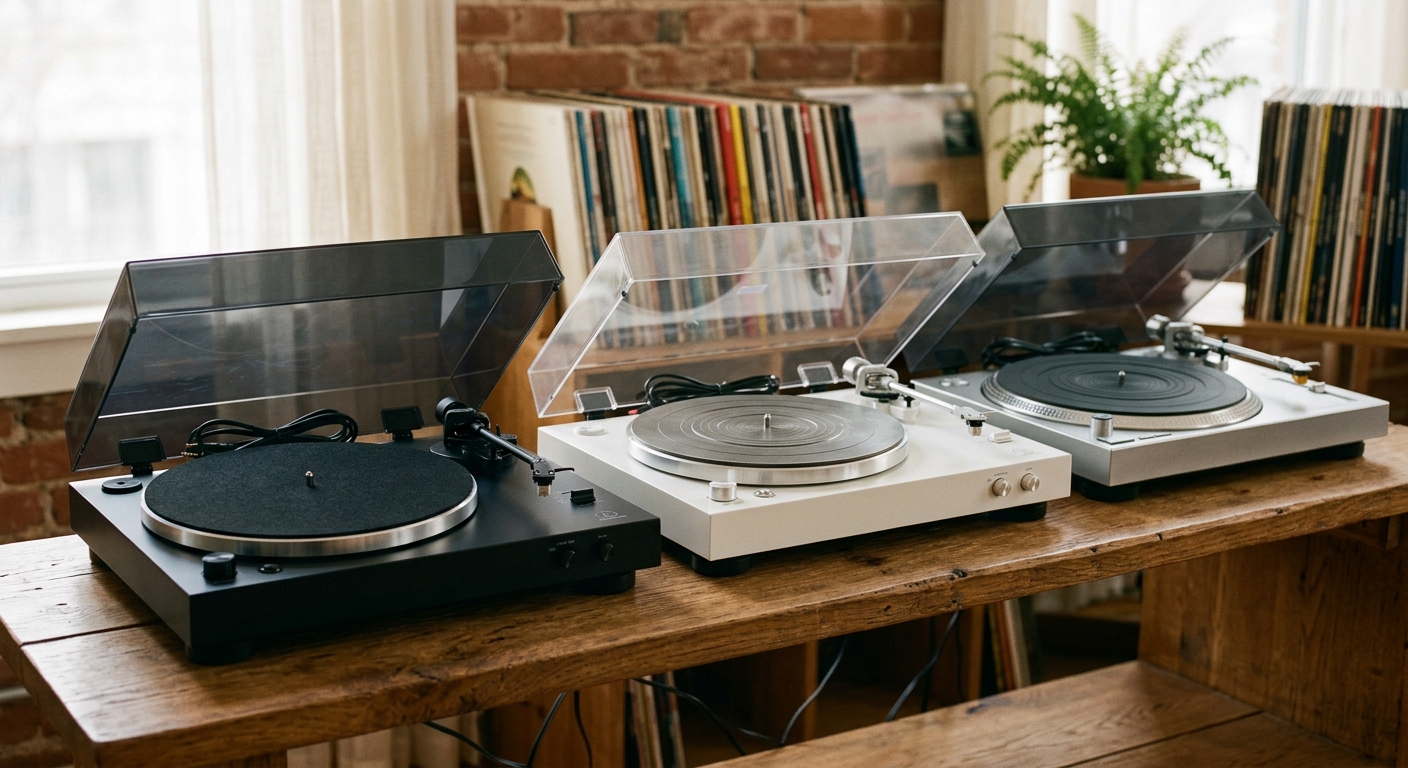
The best slipmat for your turntable depends on what you actually do when you spin. A DJ scratching on a Technics SL-1200 needs a felt slipmat with reliable back-cue grip. A listener focused on audiophile sound will get more out of a cork, leather, or felt-rubber hybrid slipmat that absorbs platter vibration. The wrong slipmat won't ruin your records, but it can hold back the analog warmth you bought a turntable for in the first place.
This guide compares the slipmat materials, lists the specific products that deliver on each material's promise, and closes with a buying checklist. Prices are in USD and reflect 2026 retail, including Amazon, Sweetwater, and the manufacturers' direct stores.
What a slipmat actually does
A slipmat sits between the platter and the record. Its three jobs:
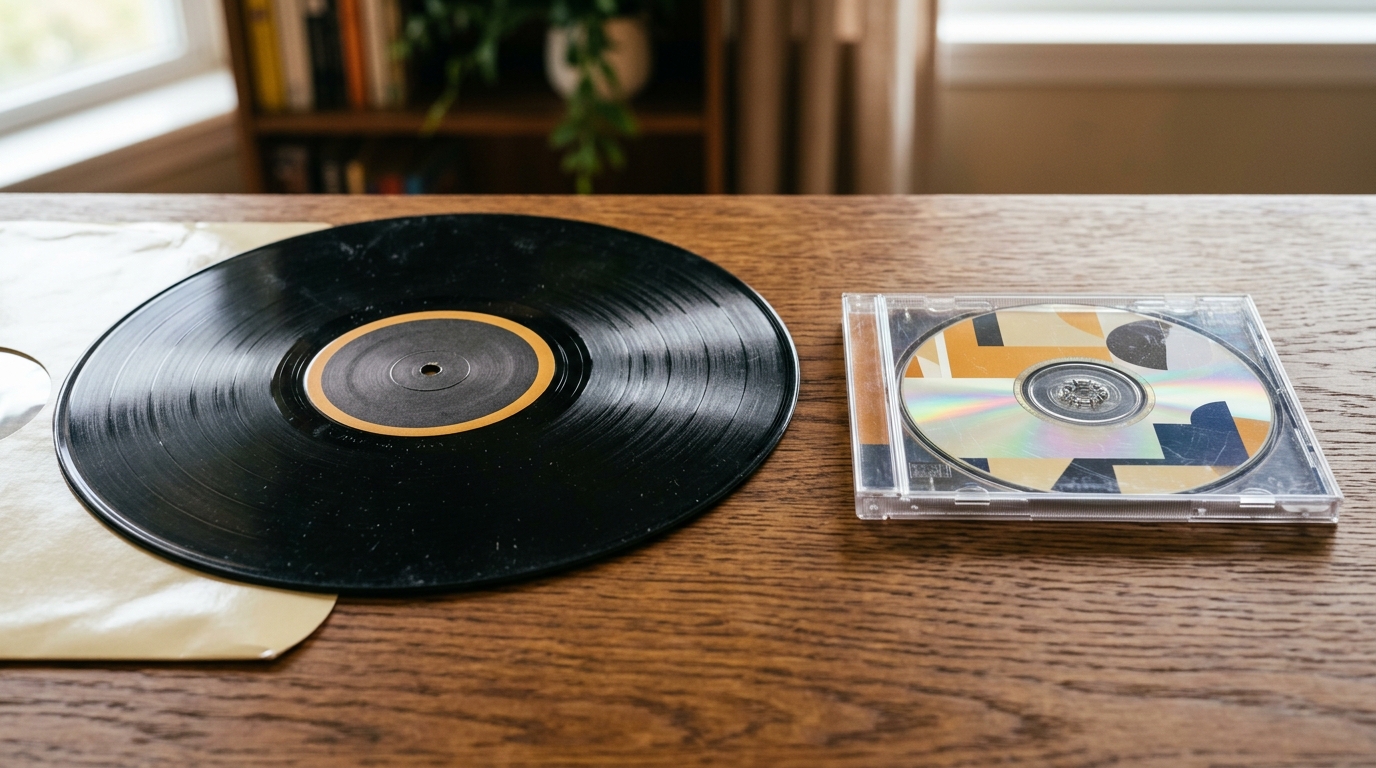
- Protect the record surface from the metal or acrylic platter underneath.
- Damp platter vibration from the motor and bearing so it doesn't reach the stylus.
- Provide friction during cueing for DJs, or full slip for a free-spinning platter for listeners.
A bare metal platter has none of these qualities. Even a felt mouse pad makes a surprising difference on a stock turntable, because it adds the dampening layer the platter needs.
Felt vs cork vs leather vs synthetic
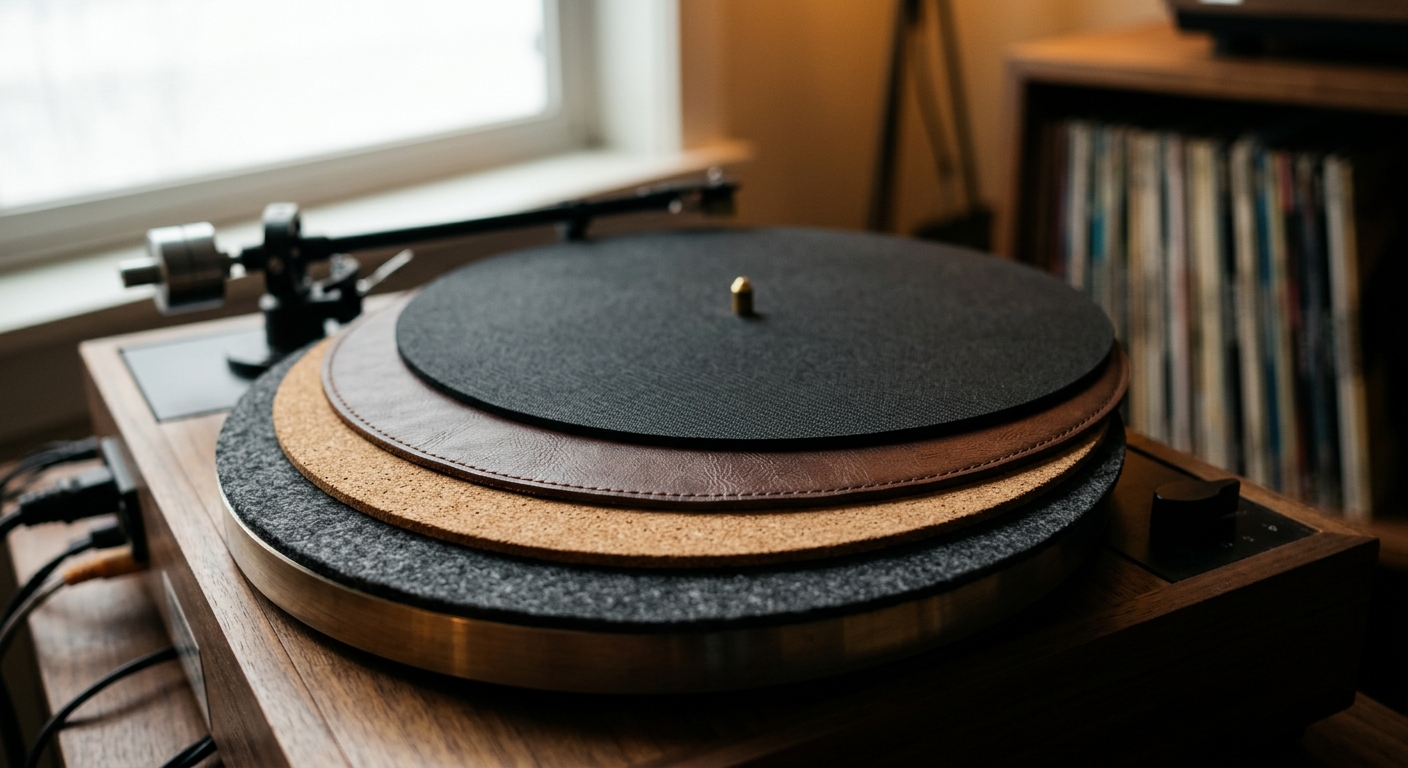
These four materials represent the bulk of consumer slipmat choices. None is universally best.
Felt
Pros: Cheap, available everywhere, true DJ back-cueing resistance, easy to clean with a lint roller. Cons: Absorbs some high-frequency detail (a minor issue at most), can shed fibers on a new mat. Best for: Beginners, DJs, anyone with a Technics SL-1200 or comparable direct-drive deck. Price range: $5–$25.
Cork
Pros: Excellent vibration damping, neutral sound, natural material that pairs well with mass-loaded plinths. Cons: Higher friction means DJs can't back-cue without a slip sheet under it. Best for: Audiophile listening on a belt-drive deck (Rega, Pro-Ject, Music Hall). Price range: $25–$60.
Leather
Pros: Higher mass than felt or cork, warmest top-to-bottom sound signature by most measurements, premium feel. Cons: Expensive, can dry out and crack if the room is dry, doesn't back-cue well. Best for: Mid- to high-end belt-drive turntables where tonal richness matters. Price range: $35–$90.
Synthetic (rubber, silicone, microfiber)
Pros: Often slipperier than felt for listeners who want a free-spinning platter, sometimes washable. Cons: Inconsistent across brands — some cheap synthetic mats sound bright and detached. Best for: Audiophile listeners who prefer a freer idler feel, and home turntables with plastic platters that benefit from added mass. Price range: $10–$40.
Specific products worth considering
These recommendations pair material type with price tier and use case:
- Big Fudge Slipmat (felt, $8–$12) — Heavyweight felt about 5 mm thick. Smooth to the touch, doesn't shed. The default upgrade from any stock mat. Sold as a 2-pack on Amazon. Best for first-time buyers who want one mat for the bedroom deck and one for a second location.
- Leatheroid Slipmat (synthetic leather, $15–$22) — A bonded-leather mat that gets you 80% of the sound signature of a real leather mat at one-third the price. Hits the midrange sweet spot many listeners prefer. Best for mid-tier belt-drive decks (Fluance, Audio-Technica AT-LP60X, entry-level Crosley replacements).
- Dr. Suzuki Smokestop XL (felt, $20–$28) — Slips over a 12-inch record without removing it from the platter. Useful for DJs with turntables that don't have a fully removable mat. Best for vintage direct-drive decks.
- Pure Cue Slipmat (leather, $40–$55) — Tanned leather mat with a stitched edge. About 3 mm thick. Adds tangible mass and warm tonal balance. Pairs especially well with Rega Planar 3 and entry-level Pro-Ject decks.
- AudioQuest Anti-Stat (synthetic, $25–$35) — Carbon-loaded synthetic mat that drains static charges during play, reducing the pops heard on quiet passages. Best for listeners with dry-climate listening rooms in winter or any setup prone to static buildup.
- SOTA Slate Audio Mat (synthetic, $70–$110) — A composite polymer mat heavier than the platter itself on most decks, with a textured surface to grip the record underside. Best for owners of mid- to high-mass plinth turntables (VPI, Clearaudio, SOTA) chasing the most neutral sound possible.
Felt vs cork — which one sounds better
The honest answer: cork, for most audiophile listeners on a belt-drive deck. Felt adds a touch of softness that some call "warmth" and others call "smear" depending on the cartridge and preamp. Cork damps without adding a tonal signature of its own. If you listen at night for long sessions, cork wins. If you mostly spin 45s at parties and want the deck to feel "loose," felt is the better pick.
For a Rega Planar 3 or Pro-Ject T1 with the stock felt mat, swapping to cork is one of the most cost-effective upgrades available — typically $30–$50 for a noticeable improvement in midrange clarity.
Buying checklist before you checkout
- Match the mat to the deck. Belt-drive audiophile decks want cork or leather; direct-drive DJ decks want felt.
- Check the platter lip. Some mats are 290 mm, some are 295 mm. A mat that's too small exposes the platter underneath; a mat too big bunches.
- Read the thickness. 2–3 mm is standard. Anything over 5 mm raises the record height and may affect VTA (vertical tracking angle) on a fixed-mount tonearm.
- Prefer materials without glue. Some cheap mats are layers of felt glued to a foam core. The glue can outgas in warm rooms and add a chemical smell. Untreated single-layer is best.
- Buy two. A backup mat is faster than waiting for a delivery when the first one gets gummy with dust.
Verdict
For most people, leather or cork will deliver a meaningful upgrade over the stock felt mat that ships with most turntables. If your deck is a Technics or a DJ-style direct drive, felt or synthetic with a back-cue ring is the right call. Avoid the cheapest bonded-foam mats sold in five-packs — they wear out fast and shed grit.
A $30 cork mat paired with a $300 turntable is one of the best dollar-for-dollar upgrades in vinyl listening.
FAQ
Do slipmats really change the sound?
Yes, though the change is subtle on cheaper turntables and more audible on higher-end decks. Vinyl enthusiasts typically describe cork as the most neutral, leather as the warmest, and felt as the softest. Your room and cartridge will also shape how audible the difference is.
How often should you replace a slipmat?
A quality felt or cork mat can last 5–10 years with light care. Leather mats should be conditioned once a year if your home humidity drops in winter. Synthetic mats vary widely — cheap rubber or foam-backed versions can deteriorate in 12–24 months.
Is a record weight better than a slipmat?
They do different jobs. A record weight clamps the record to the platter to reduce vibration in the disc itself. A slipmat provides the dampening layer between platter and record. High-end setups often use both — a cork slipmat with a 1 lb record weight on top of the LP.
Will a slipmat damage the record?
No, as long as the mat is clean and free of grit. Lint-roll or wash the mat when you wash the record, and rotate the mat a quarter-turn every few listens to even out wear.
What's the best slipmat for a Rega Planar 3?
A 3 mm cork mat. Rega's stock felt mat is a known compromise; aftermarket cork is the most common upgrade owners make. The Linn Kande or Pure Cue are strong picks.
A spreadsheet tracks what you own. What's Spinning identifies what's playing.
On-device vinyl ID logs your listening history automatically. 7-day free trial.
Looking for Shazam for vinyl?
What's Spinning identifies what's playing on your turntable on-device, logs history, and AirPlays now-playing to your TV.
Comparing vinyl ID apps?
Analog requires Discogs and is iPhone-first (iPad coming). What's Spinning works without Discogs on iPhone and iPad with AirPlay.
Try What's Spinning Free
Turn your iPad into a live now-playing display. Track every record you spin.
START FREE TRIALThen $4.99/mo or $39.99/yr · Cancel anytime