Why Colored Vinyl and Limited Editions Command Collector Prices
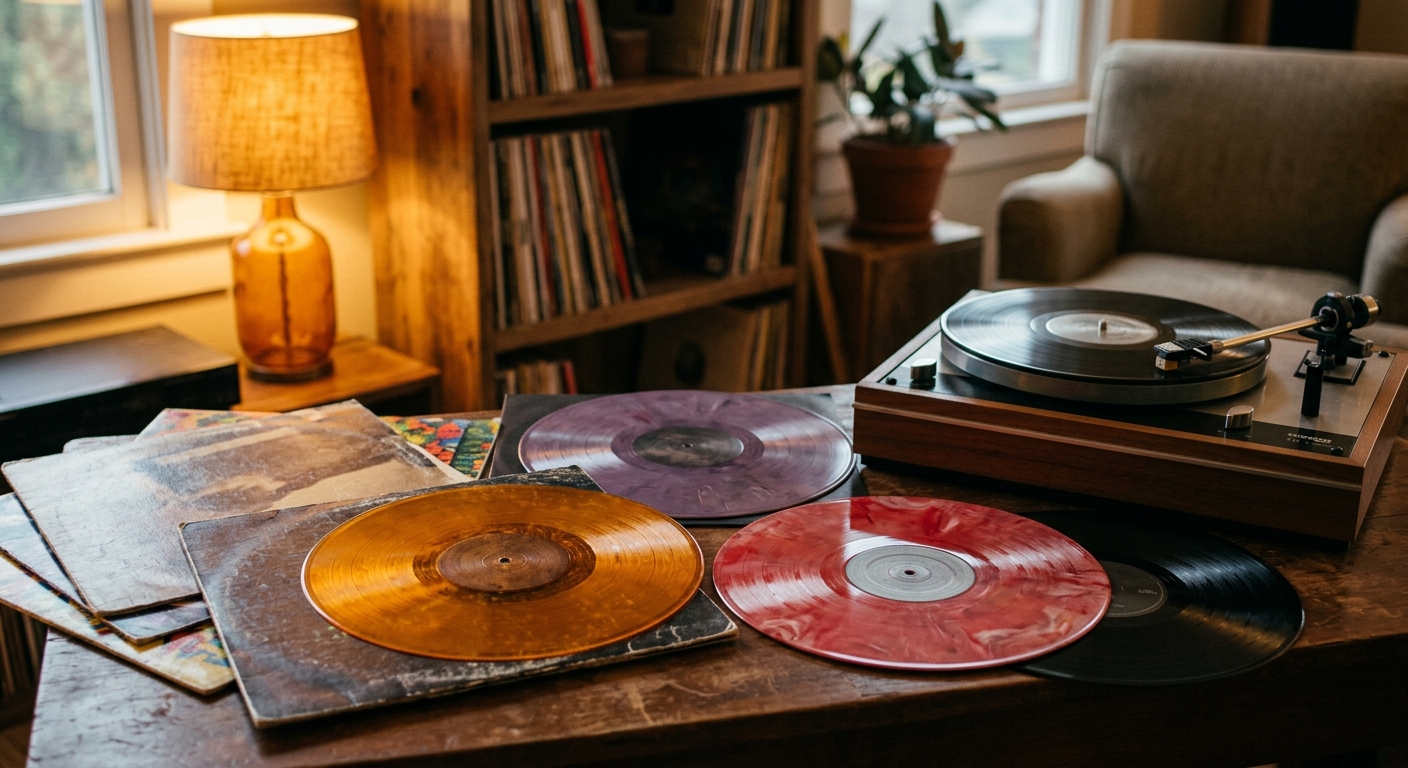
Colored vinyl used to be a novelty. Now it is one of the main engines of modern record collecting. Walk into a record shop on release day and the standard black LP may sit on the shelf while the translucent blue indie exclusive, coke-bottle clear webstore variant, or numbered splatter pressing disappears before lunch. That is supply, identity, display value, and collector psychology all meeting in one object.
The short version: colored vinyl limited editions collector prices rise when a pressing is distinct, scarce, tied to an artist or era, and easy to identify later.
Vinyl is already a premium market
The broader vinyl market gives variants room to matter. RIAA’s 2024 year-end revenue report showed U.S. vinyl revenue reaching roughly $1.4 billion, with vinyl accounting for about three quarters of physical music revenue. New vinyl is now a major physical product category where labels can design multiple editions for different buyers.
Discogs’ 2024 collecting data makes the variant effect even clearer. In its most-collected albums of 2024, Discogs noted that variants were one of the year’s main themes, especially in pop. Taylor Swift’s The Tortured Poets Department had 73 versions across formats, including 17 vinyl versions. Discogs also reported that more than 133,000 users had the album in their collections, while first-week sales included 700,000 vinyl copies. Those numbers explain why variants are not just decoration. They are a release strategy.
Scarcity has to be specific
“Limited edition” by itself does not guarantee value. Collectors pay more when the limitation is concrete: 500 copies, one-store exclusive, one-tour-only pressing, numbered jacket, special cover, or a variant that never gets repressed. A red LP pressed in unlimited runs is still red, but it is not especially scarce. A red LP limited to 300 copies and sold only at a 2019 tour table has a completely different market.
That is why pressing details matter. Two copies of the same album can look similar in a crate but trade in different price bands online. The variant color, country, label, catalog number, barcode, hype sticker, matrix/runout, and jacket notes help prove which edition you actually own. Serious collectors are not paying a premium for “a copy of the album.” They are paying for a specific object with a specific history.
Color turns a record into a display object
Black vinyl can be beautiful, but colored vinyl adds a second layer of appeal before the needle drops. A smoky clear pressing, neon green LP, or marble swirl variant photographs well, looks good in a “now spinning” post, and feels connected to the album artwork. When the colorway matches the record’s visual world, the variant becomes part of the album experience.
That visual appeal is especially powerful for artists with highly engaged fan communities. Fans may buy a favorite cover, then a second version with a bonus track, then an indie-store variant because it feels like a small badge of belonging. Discogs’ 2024 list pointed to the same pattern with releases from Taylor Swift, Charli XCX, Sabrina Carpenter, Chappell Roan, Beyoncé, and others. Modern collecting is not only about the audio. It is also about the artifact.
Variants create micro-markets
A standard black pressing and a limited color pressing can have different demand curves. The black pressing may be the reliable listener copy. The color variant may become the collector copy. That split creates micro-markets inside the same album release.
Record Store Day is the clearest example. The official model is built around exclusive and limited releases that appear at independent shops on a particular date. Some titles settle back to retail after the rush. Others climb because the pressing quantity was low, demand was underestimated, or the artist’s fanbase moved faster than shops expected.
Does colored vinyl sound worse?
The old rule was that black vinyl was safest because carbon black can make the compound more durable and easier to inspect during manufacturing. Today, the answer is more nuanced. Modern colored vinyl can sound excellent when the mastering, plating, pressing plant, and quality control are good. House of Marley’s guide to black vs. colored vinyl notes that PVC is naturally transparent and black records are deliberately colored with carbon black. In other words, every record is “colored” in a manufacturing sense.
Collectors should still be practical. Picture discs, glow-in-the-dark vinyl, and very complex effects can be noisier than a well-pressed standard LP. But color alone is not the villain. A clean color pressing from a good plant will usually beat a noisy black pressing from a rushed run.
What actually drives collector prices?
Most valuable variants share five traits:
- Documented scarcity: a known pressing count, numbered sleeve, or credible exclusive source.
- Artist demand: the bigger and more active the fanbase, the faster scarce variants disappear.
- Edition clarity: collectors can identify it later through Discogs, runouts, stickers, or jacket differences.
- Condition: sealed or near-mint copies command more because jackets, inserts, and hype stickers matter.
- Story: tour-only, canceled release, early pressing, misprint, or culturally important moment.
The lesson is simple: do not buy every color variant because it might become valuable. Buy the one you actually want to own, then document it properly. If it becomes a collector piece later, great. If not, you still have a record you like.
How to track variants without losing your mind
Variant collecting gets messy fast. A single album might have a webstore color, Target color, indie exclusive, international pressing, signed jacket, deluxe gatefold, and later repress. Keep notes on color, pressing source, purchase price, condition, and whether the copy is sealed or opened. In What’s Spinning, you can keep track of what you own and what you actually play, so the shelf does not turn into a mystery stack of nearly identical editions.
Collector value is fun, but the best record is still the one you reach for. Colored vinyl and limited editions command prices because they compress music, scarcity, visual design, and fan identity into one physical thing. Make sure it is something you want to spin, not only something you hope someone else will want later.
FAQ
Is colored vinyl always more valuable than black vinyl?
No. Colored vinyl can command a premium when it is scarce and desirable, but a common color repress may be worth less than an early black pressing, audiophile cut, or historically important edition.
Should I keep limited edition vinyl sealed?
If resale value is your top priority, sealed copies usually bring higher prices. If listening is the point, open it carefully, keep the hype sticker and inserts, and store the jacket properly.
How do I know which colored vinyl variant I own?
Check the barcode, catalog number, hype sticker, country, label, matrix/runout etching, and the exact color description. Compare those details against Discogs release pages, not just the album title.
Do limited editions always go up in price?
No. Many limited editions cool off after release day. Prices rise when real demand remains higher than available supply, especially for artists with durable fanbases or variants that were genuinely hard to get.
A spreadsheet tracks what you own. What's Spinning identifies what's playing.
On-device vinyl ID logs your listening history automatically. 7-day free trial.
Looking for Shazam for vinyl?
What's Spinning identifies what's playing on your turntable on-device, logs history, and AirPlays now-playing to your TV.
Comparing vinyl ID apps?
Analog requires Discogs and is iPhone-first (iPad coming). What's Spinning works without Discogs on iPhone and iPad with AirPlay.
Try What's Spinning Free
Turn your iPad into a live now-playing display. Track every record you spin.
START FREE TRIALThen $4.99/mo or $39.99/yr · Cancel anytime