Import Your Wishlist: Never Miss a Record
The most dangerous record on your wishlist is not the expensive one. It is the one you forget about until someone else buys it first.
Every vinyl collector knows the cycle. You hear an album at a friend's house, spot a reissue announcement, save a Discogs listing, make a note from a record store bin, then tell yourself you will remember it later. Two months pass. The limited color variant is gone, the clean first pressing has doubled, and the note is buried somewhere between grocery reminders and a half-finished playlist.
That is why Wishlist Import exists in What's Spinning. Instead of rebuilding your want list by hand, you can bring your saved records into the place where your listening history already lives. The feature is simple on purpose: collect the albums you are hunting, import the list, then let your wishlist sit next to the records you actually play. It turns "I should buy that someday" into a working collector system.
Why wishlists matter more than ever
Vinyl is no longer a sleepy niche where everything waits patiently in the used bin. According to the RIAA's 2023 year-end report, U.S. vinyl revenue grew 10 percent to $1.4 billion, marking the seventeenth consecutive year of growth. Vinyl also accounted for 71 percent of physical format revenue, and albums outsold CDs in units for only the second time since 1987, 43 million vinyl albums versus 37 million CDs.
That growth is great for stores, labels, and collectors, but it also means competition. A restock can disappear while you are at work. Record Store Day exclusives can turn into a weekend scavenger hunt. Older pressings with the right mastering, the right plant, or simply the right condition do not always come around twice. In that environment, a wishlist is not just a shopping list. It is your collecting memory.
Collector platforms have understood this for years. Discogs describes its Wantlist as a way to track releases you want for your collection, and its marketplace can notify users when matching items are listed for sale. Music metadata ecosystems also matter because vinyl is specific by nature. The Cover Art Archive, a joint effort from MusicBrainz and the Internet Archive, exists because album art and release level metadata are part of how collectors identify the right edition. A wishlist that only says "Blue Train" is vague. A good wishlist knows whether you mean the Blue Note Classic reissue, a mono copy, or a specific catalog number.
What Wishlist Import does
Wishlist Import is built around a common collector problem: your wants are scattered. Some are in Discogs, some are in notes, some are screenshots from Instagram, some are handwritten on the back of a receipt from the local shop. The feature gives you one place to start from that existing mess rather than pretending everyone begins with a blank, perfectly organized database.
Once imported, your wishlist becomes part of your What's Spinning library context. That matters because a want list should not be separated from how you listen. If your history shows that you keep returning to Japanese city pop, 1970s soul, or second wave punk, your wishlist starts to tell a more honest story about where your collection should go next. You are not just chasing hype, you are connecting possible purchases to your own listening habits.
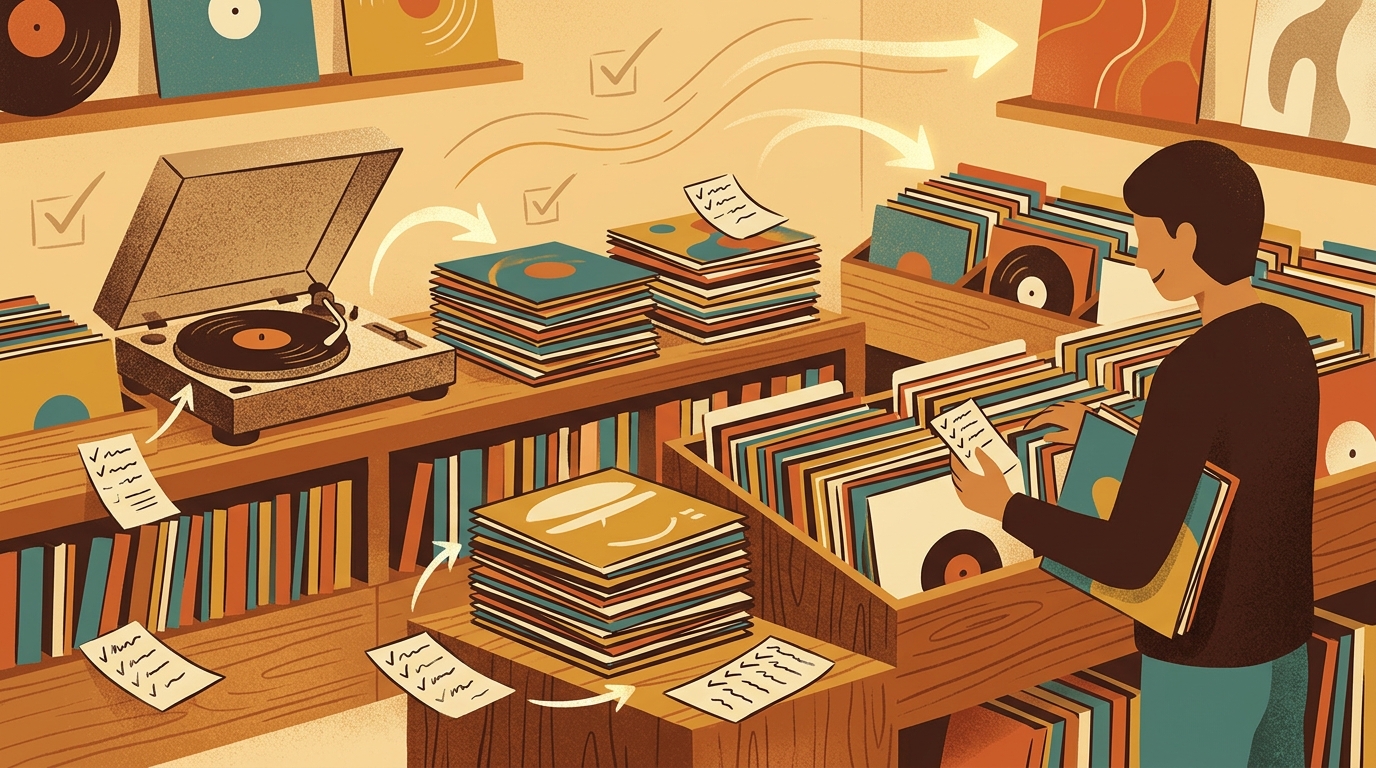
The best use case is simple. Before you visit a shop, import or update the albums you are looking for. When you are flipping through bins, you have a focused list instead of a vague sense that there was "some Rhino reissue" you meant to check. At home, you can compare wants against what you have actually been playing.
Examples collectors will recognize
Say you are hunting a clean copy of Sade's Love Deluxe. A casual note with the album title is better than nothing, but a collector wishlist should capture the edition you care about, price range, and condition floor. The goal is not to make buying feel clinical. The goal is to prevent panic buying when you finally see the title.
Or think about Record Store Day planning. The official lists can be long, stores receive uneven allocations, and not every title deserves the same urgency. Importing a narrowed wishlist lets you rank must-buys against nice-to-haves before the morning rush. That makes the experience calmer, and it helps you avoid walking out with three records you barely wanted because the one you came for was gone.
How to make an imported wishlist useful
Start with fewer records than you think. A wishlist with 40 carefully chosen titles is more actionable than 400 albums you vaguely admire. Add notes for pressing details only when they matter. For many new records, the standard black vinyl copy may be the smartest buy. For older jazz, punk, reggae, electronic, and indie releases, edition details can change the sound, price, and availability.
Use three practical fields in your own notes: priority, condition, and ceiling price. Priority keeps your real targets visible. Condition prevents you from settling for a noisy copy of a record you wanted for quiet late-night listening. Ceiling price is the adult in the room, and every record shelf needs one.
Most importantly, revisit the list after you listen. What's Spinning is strongest when your collection is tied to actual plays, not just ownership. If a wishlist item keeps connecting to what you are spinning, it probably belongs on the short list. If it does not, that is useful too.
The collector benefit
Wishlist Import is not about turning vinyl into a spreadsheet hobby. It is about reducing the friction around the human parts of collecting: memory, taste, patience, and timing. You still get the thrill of discovery. You still get the fun of walking into a shop with no plan and finding something strange. You just stop losing the records you already knew mattered.
For collectors, that is the sweet spot. Let the list remember the hunt, let What's Spinning remember the listening, and let your next purchase be guided by both.
FAQ
Can I import a wishlist from Discogs?
Wishlist Import is designed for collectors who already keep wants in places like Discogs, notes, or spreadsheets. The cleanest workflow is to start with your most important titles, include artist and album names, and add pressing notes where they matter.
Should my wishlist include exact pressings?
Sometimes. If mastering, country, label, catalog number, or condition changes the experience or the value, be specific. If you simply want a playable copy of a new release, keeping the entry broader may help you avoid overthinking the purchase.
How often should I clean up my vinyl wishlist?
A monthly review works well for active collectors. Remove impulse adds, raise or lower priorities, and update price expectations. Your wishlist should reflect your current taste, not every record that looked interesting once.
Does a wishlist make collecting less spontaneous?
No. It gives you a safety net for the records you already care about. You can still browse freely, take chances, and discover surprises. The wishlist simply keeps the important targets from disappearing from memory.
A spreadsheet tracks what you own. What's Spinning identifies what's playing.
On-device vinyl ID logs your listening history automatically. 7-day free trial.
Looking for Shazam for vinyl?
What's Spinning identifies what's playing on your turntable on-device, logs history, and AirPlays now-playing to your TV.
Comparing vinyl ID apps?
Analog requires Discogs and is iPhone-first (iPad coming). What's Spinning works without Discogs on iPhone and iPad with AirPlay.
Try What's Spinning Free
Turn your iPad into a live now-playing display. Track every record you spin.
START FREE TRIALThen $4.99/mo or $39.99/yr · Cancel anytime
Get it on your iPhone
Open on iPhone