Organize Vinyl in Small Spaces: Practical Tips
If your vinyl collection has outgrown the cute milk crate phase, but your apartment has not grown a spare room, you are in good company. RIAA reported that U.S. vinyl revenue grew 7 percent to $1.4 billion in 2024, and vinyl albums outsold CDs for the third year in a row, 44 million units versus 33 million.[1] More records means more shelf pressure, more duplicate buys, and more temptation to stack albums wherever they fit. The goal is a system that protects records, keeps browsing easy, and leaves your turntable area pleasant enough to use.
Start with the rule that matters most: store records vertically
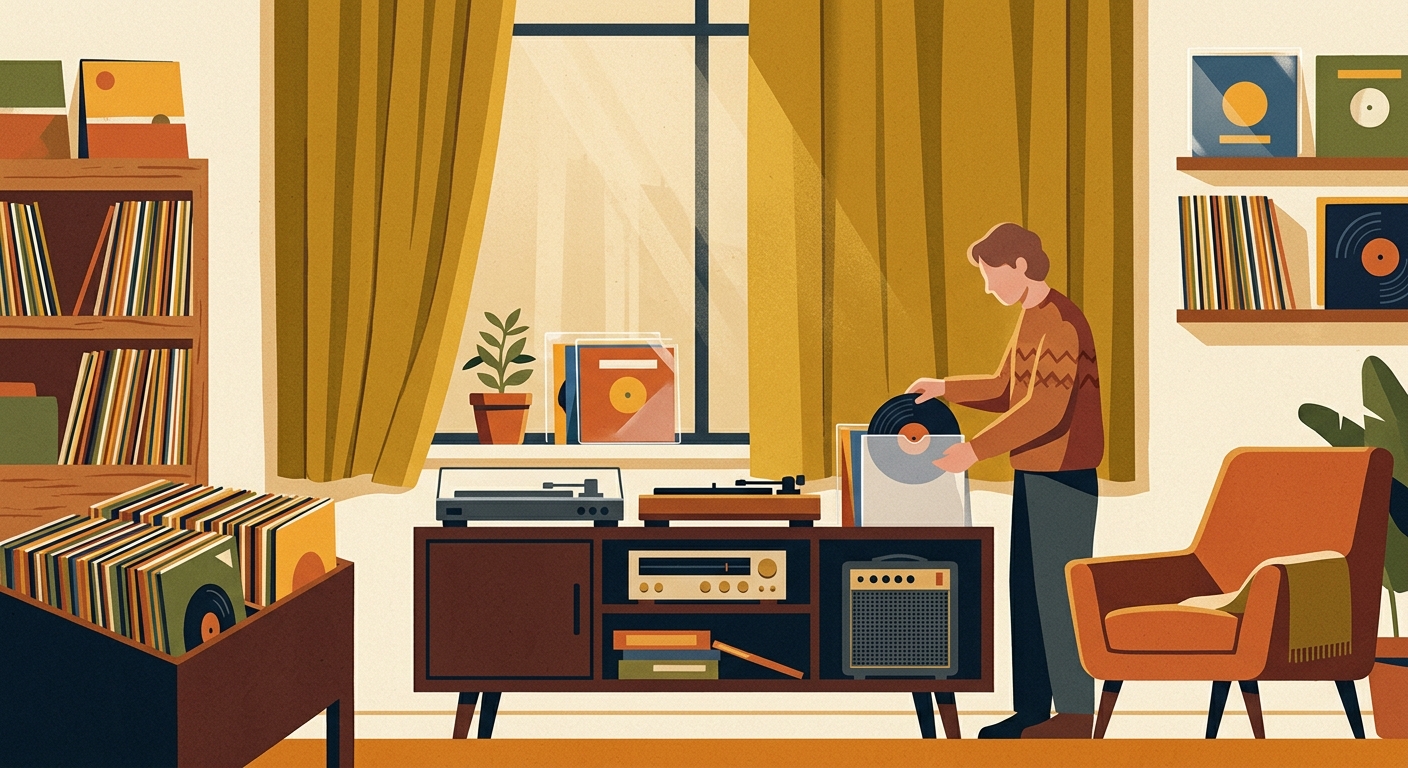
The Library of Congress recommends storing all audio formats upright and specifically notes that grooved discs should be supported by sturdy shelving and dividers.[2] The National Archives is even more direct: shelve LPs, 45s, and 78s vertically in their sleeves or albums, and do not stack discs on top of one another.[4] In a small space, the pile beside the turntable is temporary only. Use a now-playing bin or short crate for records you are actively playing, then return them to vertical storage when the session ends.
Measure by weight, not just by record count
Vinyl is deceptively dense. The Library of Congress says grooved discs average 35-plus pounds per shelf-foot, and Discogs gives the same 35 pounds per shelf-foot figure for planning record shelving.[2][5] That is why a cheap bookcase can look fine for six months, then start bowing in the middle. Before buying furniture, check three things: shelf load rating, unsupported span, and depth. IKEA lists a KALLAX shelf unit at 15 3/8 inches deep with a maximum load of 29 pounds per shelf, plus 55 pounds on top for the model cited here.[3] That depth works for LPs, but the load rating matters.
Use cube storage, but leave breathing room
Cube storage works because short spans resist sagging better than one long shelf. For small rooms, a low 2-by-2 cube can double as a sideboard, hold a turntable on top if the manufacturer allows the load, and keep roughly one listening wall under control. Do not pack every cube until the jackets scrape. Leave enough space to flip with two fingers. That small gap prevents corner wear, helps air move, and makes it less annoying to file records back correctly. If you already own a long bookcase, add vertical dividers every few inches so the entire sleeve face is supported, matching the Library of Congress guidance for sturdy, immovable dividers.[2]
Zone your collection instead of alphabetizing everything
Pure A-to-Z is elegant, but it can be clumsy in a studio apartment where the jazz is in one cube, new arrivals are on a side table, and 7-inches live in a drawer. Try zones first: frequent plays, new arrivals, party records, deep catalog, and archive. Then alphabetize within each zone. This keeps your most-used albums close to the turntable while letting less-played titles move higher, lower, or farther away. In What's Spinning, keep a digital collection log so you can search the whole library even when the physical shelf is organized by real-life listening habits instead of database purity.
Make vertical space do useful work
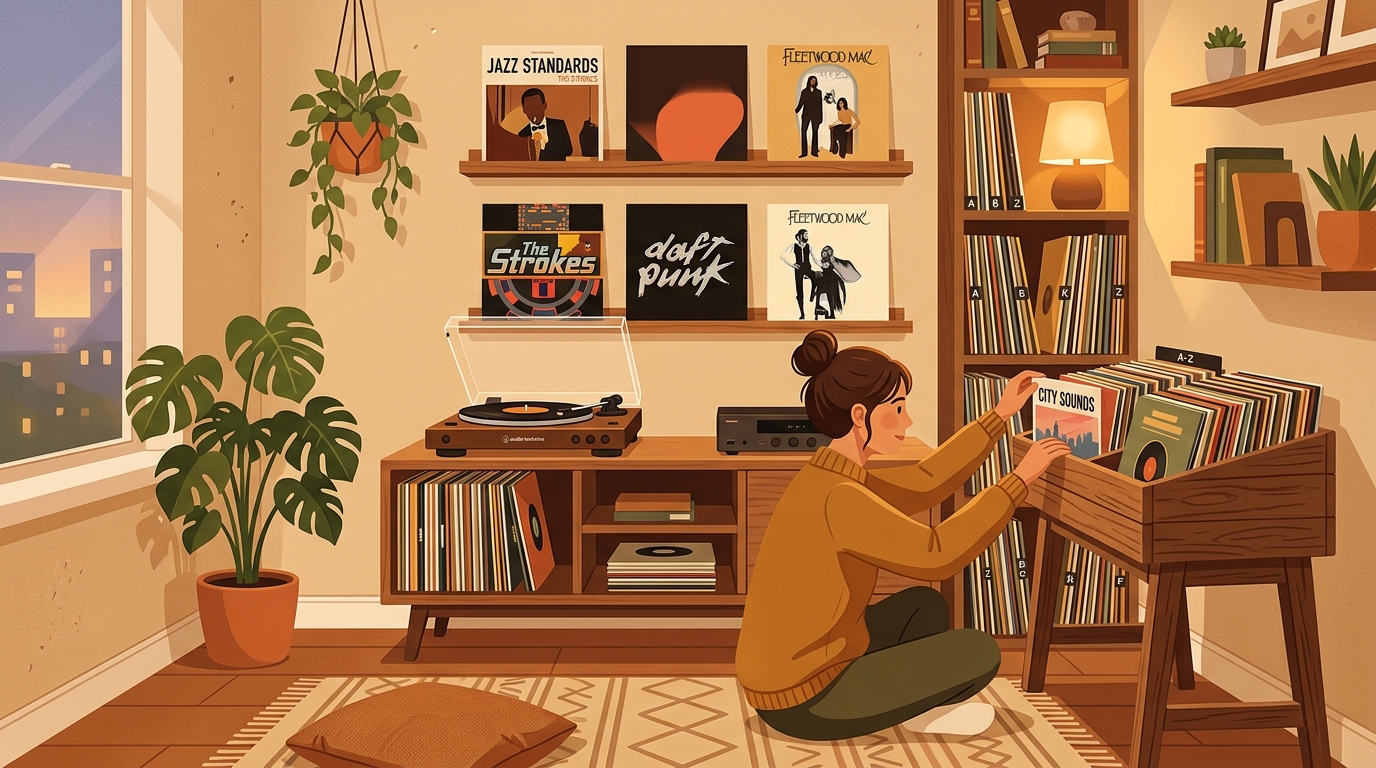
Walls are best for display, not bulk storage. A picture ledge or three front-facing shelves can hold current favorites, recent buys, or the record that is actually spinning, but hundreds of LPs belong on properly rated furniture close to the floor. Use the wall as a rotating visual index: one row for this week's listens, one for records to clean, one for sleeves that need outer protectors. The payoff is psychological as much as practical. In a tight room, seeing five intentional covers feels curated; seeing fifty records leaning in random stacks feels like homework.
Protect the climate, especially in closets and corners
The National Archives recommends stable storage between 55 and 70 degrees Fahrenheit and 30 to 55 percent relative humidity.[4] The Library of Congress suggests a cool, relatively dry home environment around 35 to 40 percent relative humidity, away from attics, basements, leaks, radiators, vents, and direct light.[2] For small apartments, the danger spots are predictable: sunny windows, heater-adjacent shelves, exterior-wall closets, and damp lower cabinets. If you must use a closet, keep records off the floor, add a simple hygrometer, and avoid sealing everything in plastic bins where trapped moisture can linger.
Store by format so odd sizes do not damage LPs
The Library of Congress advises not storing grooved discs of different diameters together.[2] That matters in tiny rooms because mixed-format boxes seem efficient until 7-inch singles slide down, 10-inch jackets disappear, and LP corners take the abuse. Give each format its own container: LP cubes for 12-inch records, a small upright box for 7-inches, and a dedicated slot for 10-inches or box sets. Box sets are heavy and awkward, so store them upright when possible, supported on both sides, and avoid letting them lean against standard single LP jackets.
A small-space setup that actually works
For a 150 to 250 record collection, try one low cube unit on the strongest wall, a separate stable turntable stand if vibration is a problem, speakers on stands, a 20-record inbox crate, and a narrow wall ledge for five display covers. Keep the floor clear in front of the shelves so browsing does not require moving furniture. If the collection grows, add another cube rather than overfilling the first one.
FAQ
How do I organize vinyl records in a small apartment?
Use vertical, weight-rated storage close to the floor, then divide records into practical zones such as frequent plays, new arrivals, party records, and archive. Alphabetize inside each zone if you want fast lookup without turning the room into a warehouse.
Can I stack vinyl records flat if I do not have enough shelf space?
Do not use flat stacks for normal storage. The National Archives says LPs, 45s, and 78s should be shelved vertically and not stacked on top of one another.[4] A tiny temporary pile beside the turntable is fine during a listening session, but file records upright afterward.
What furniture is best for vinyl in small spaces?
Short-span cube storage is usually the safest budget-friendly choice because each compartment supports the load better than a long open shelf. Check the manufacturer's load rating, depth, anchoring instructions, and top-load rating before putting records or a turntable on it.
Should I keep vinyl records in a closet?
A closet can work if it is cool, dry, stable, and above floor level. Avoid exterior-wall closets with moisture swings, heater closets, garages, and attics. Add a hygrometer if you are unsure, because stable humidity matters more than hiding records out of sight.
Sources
A spreadsheet tracks what you own. What's Spinning identifies what's playing.
On-device vinyl ID logs your listening history automatically. 7-day free trial.
Looking for Shazam for vinyl?
What's Spinning identifies what's playing on your turntable on-device, logs history, and AirPlays now-playing to your TV.
Comparing vinyl ID apps?
Analog requires Discogs and is iPhone-first (iPad coming). What's Spinning works without Discogs on iPhone and iPad with AirPlay.
Try What's Spinning Free
Turn your iPad into a live now-playing display. Track every record you spin.
START FREE TRIALThen $4.99/mo or $39.99/yr · Cancel anytime