Protect Vinyl from Sunlight Damage: Essential Guide
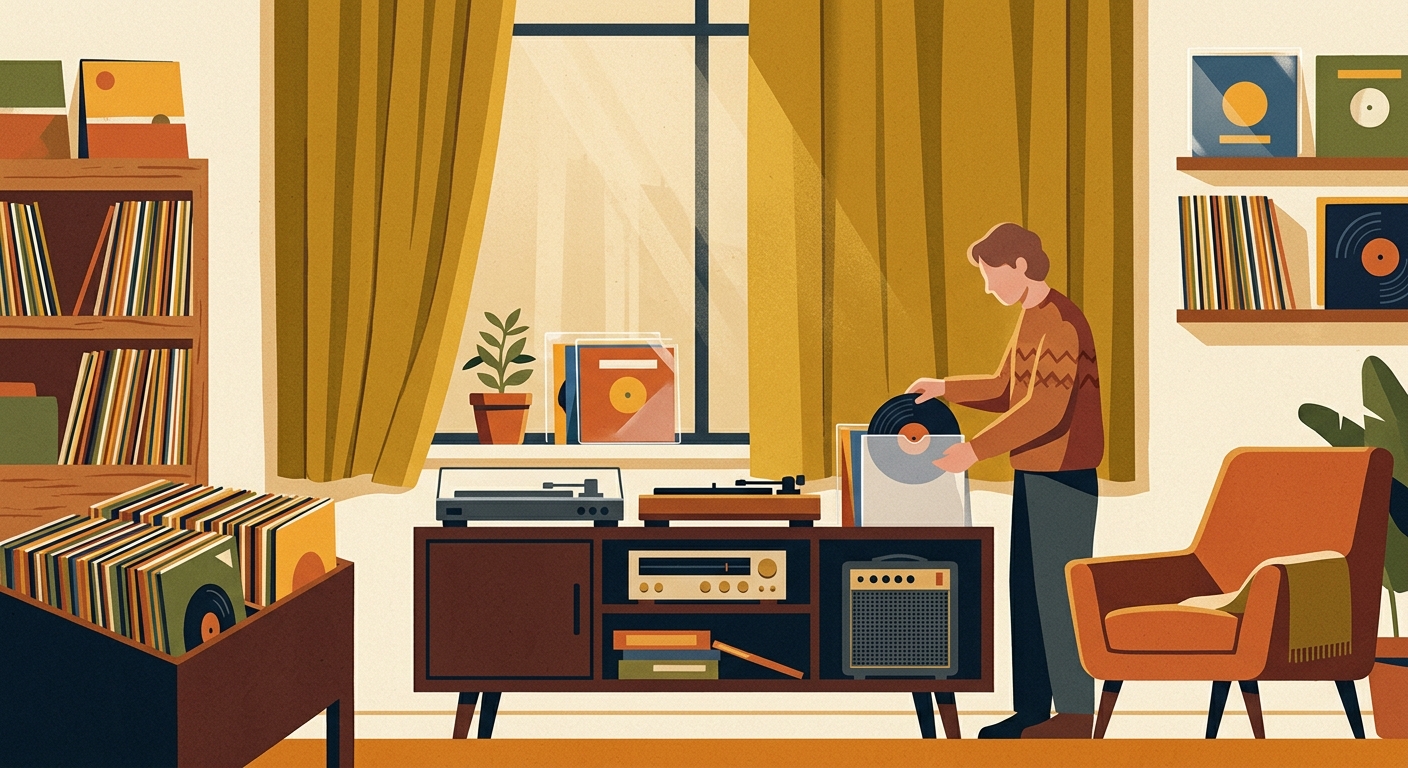
If you are wondering how to protect vinyl from sunlight, the short answer is simple: remove direct sun from the equation. Sunlight damages a record collection in two ways at once. Ultraviolet light fades jackets and labels, while radiant heat softens PVC enough to encourage warps, edge waves, and dish shapes. The cruel part is that the room can feel comfortable while the shelf, jacket, or record sitting in a sunbeam is running much hotter.
This matters because vinyl is not just a sound carrier. It is a piece of plastic housed in paper artwork, usually stored vertically under pressure from neighboring records. The Library of Congress tells home collectors to keep audiovisual materials in a cool, relatively dry, clean, stable environment, with minimal light exposure and no direct or intense light [1]. That is the whole strategy in one sentence: stable, shaded, upright, and away from heat.
Why sunlight is different from normal room light
A lamp across the room is rarely the problem. Direct sun is more intense, carries ultraviolet energy, and adds infrared heat. Gaylord Archival notes that vinyl is particularly vulnerable to ultraviolet light and heat exposure, and recommends clean, dark storage at 65 to 70 degrees Fahrenheit with relative humidity under 50 percent [2]. The same guidance says temperature and RH should not swing more than about 10 degrees or 10 percent in 24 hours. That last bit is useful for real homes, because the shelf by the bright window may be cycling every afternoon.
Heat is the faster threat to the disc itself. Breed Media, a vinyl manufacturing specialist, explains that PVC based records gradually soften as temperatures rise. It advises avoiding prolonged exposure above about 86 degrees Fahrenheit when possible, and says the real danger begins as the record approaches about 113 degrees Fahrenheit, where it becomes much more susceptible to permanent deformation [3]. A parked car or sunny windowsill can reach that range shockingly fast.
Step 1: Audit your shelf at the brightest hour
Do not check the room at night and declare victory. Watch the shelf around the time the sun is strongest in that room. For many homes, the risky window is late afternoon, when a low sun reaches deeper across the floor and directly onto Kallax cubes, crates, or display ledges. Put your hand on the jacket spine, the shelf top, and the wall behind the records. If they feel warm, move the collection.
The best shelf location is an interior wall, away from windows, radiators, HVAC vents, fireplaces, and exterior walls that heat up. The National Archives recommends stable low temperatures, low humidity, and protection from sunlight, and gives 55 to 70 degrees Fahrenheit with 30 to 55 percent RH as a good storage range for audio materials [4]. It also warns against attics and garages, which are exactly where seasonal heat and light swings get ugly.
Step 2: Block light before it reaches the records
Physical shade beats wishful thinking. Use curtains, blinds, UV window film, opaque cabinet doors, or record boxes. Clear outer sleeves are still worth using, since they reduce shelf rub, dust, fingerprints, and ring wear, but they do not make direct sunlight harmless. If you can see a stripe of sun across a jacket, that jacket is being faded.
For valuable albums, think like a museum and separate display copies from keeper copies. Hang a common thrift-store jacket if you want color on the wall. Keep signed sleeves, rare originals, imports, obi strips, and sentimental records in the shaded shelf. Rotate displayed covers monthly, not yearly, and never display the bare disc. A record in a frame near a window may look beautiful until it has a permanent ripple.
Step 3: Store records upright with support
Sunlight gets worse when combined with pressure. The Library of Congress says grooved discs should be stored upright, on edge, with sturdy dividers every 4 to 6 inches that support the whole face of the disc in its sleeve [1]. It also notes that grooved discs average more than 35 pounds per shelf foot, which is a good reminder that cheap bowing shelves are not neutral. They change pressure across the stack.
Keep records vertical, not leaning like a tired row of books. Do not mix 7-inch, 10-inch, and 12-inch records in the same unsupported run, because uneven heights create uneven pressure. If a cube is half empty, use a divider or spacer. If it is crammed so tight that you have to wrestle a record out, lighten the load.
Step 4: Build simple daily habits
Never leave new purchases in the car while you run another errand. Bring mail-order records inside as soon as possible. Let a cold or hot package acclimate indoors before opening and playing it. Keep the turntable area shaded too, since a record sitting on the platter in direct sun can heat unevenly while you answer the door or make coffee.
A small hygrometer near the collection is cheap insurance. If you already use What's Spinning to track what you play from the turntable, add a quick note when you move shelves, add curtains, or retire a sunny display spot. Future you will know why a treasured copy still looks crisp five summers later.
Quick protection checklist
- Move records off any shelf that receives direct sunlight.
- Aim for 65 to 70 degrees Fahrenheit when practical, with RH under 50 percent.
- Use curtains, blinds, UV film, opaque cabinets, or boxes to block light.
- Store LPs vertically with dividers or side support.
- Keep valuable jackets out of long-term wall displays.
- Never leave records in a parked car, on a windowsill, or beside a radiator.
FAQ
Can sunlight warp vinyl records through a window?
Yes. Window glass may reduce some ultraviolet exposure, but sunlight still adds radiant heat. A record or shelf in direct sun can become much hotter than the room, especially beside a south or west facing window.
Are outer plastic sleeves enough to protect album covers from fading?
Clear sleeves help with handling wear and dust, but they are not a substitute for shade. Use curtains, opaque doors, boxes, or an interior wall if the shelf receives direct light.
What temperature should I aim for when storing vinyl?
For a home collection, keep records in a stable, cool living space. Archival guidance commonly points to about 65 to 70 degrees Fahrenheit, with relative humidity below 50 percent for vinyl storage.
Is it safe to display records on the wall?
Yes, if you display inexpensive or replaceable jackets, keep them out of direct sun, and rotate them. Do not hang rare originals where they receive daily window light.
A spreadsheet tracks what you own. What's Spinning identifies what's playing.
On-device vinyl ID logs your listening history automatically. 7-day free trial.
Looking for Shazam for vinyl?
What's Spinning identifies what's playing on your turntable on-device, logs history, and AirPlays now-playing to your TV.
Comparing vinyl ID apps?
Analog requires Discogs and is iPhone-first (iPad coming). What's Spinning works without Discogs on iPhone and iPad with AirPlay.
Try What's Spinning Free
Turn your iPad into a live now-playing display. Track every record you spin.
START FREE TRIALThen $4.99/mo or $39.99/yr · Cancel anytime