Does Sunlight Warp Vinyl Records? How to Protect Them
If you want to protect vinyl from sunlight, start with one simple rule: sunlight is not just light. It is light plus ultraviolet radiation plus heat, and vinyl records dislike all three. A few minutes of sun while you flip a side is not a disaster. A shelf that gets an hour of afternoon sun every day is a slow-motion problem for the records, the jackets, and your future mood.
Sun damage usually shows up in two ways. The vinyl can warp when heat builds unevenly, and the jacket can fade when UV and visible light break down inks and paper. Collectors notice warps first because they affect playback, but a sun-bleached spine can be painful too.
Why sunlight is hard on vinyl
Most modern LPs are made from polyvinyl chloride, usually called PVC. The record is stable in normal living-room conditions, but it is still a thermoplastic material. That means heat can soften it enough for pressure, gravity, or uneven support to change its shape. Direct sun through glass can create a small greenhouse effect on a shelf, in a car, or beside a window. If the record is leaning, tightly packed, or lying flat under weight, that softened moment can become a permanent dish warp or edge warp.
Preservation institutions focus on the same forces. The Library of Congress advises home collectors to store audiovisual materials in a cool, relatively dry, clean, stable environment, about 35 to 40 percent relative humidity, with minimal exposure to all kinds of light and no direct or intense light [1]. Its light-damage guidance also notes that UV and infrared radiation fuel deterioration, and that sunlight is generally avoided for display because it is too intense, high in UV, and difficult to control [2].
Pick the right shelf location first
The best fix is boring, which is good news because boring fixes actually happen. Put record shelves on an interior wall or a wall that never gets direct sun. Check the room at the brightest time of day, not just when you are usually listening.
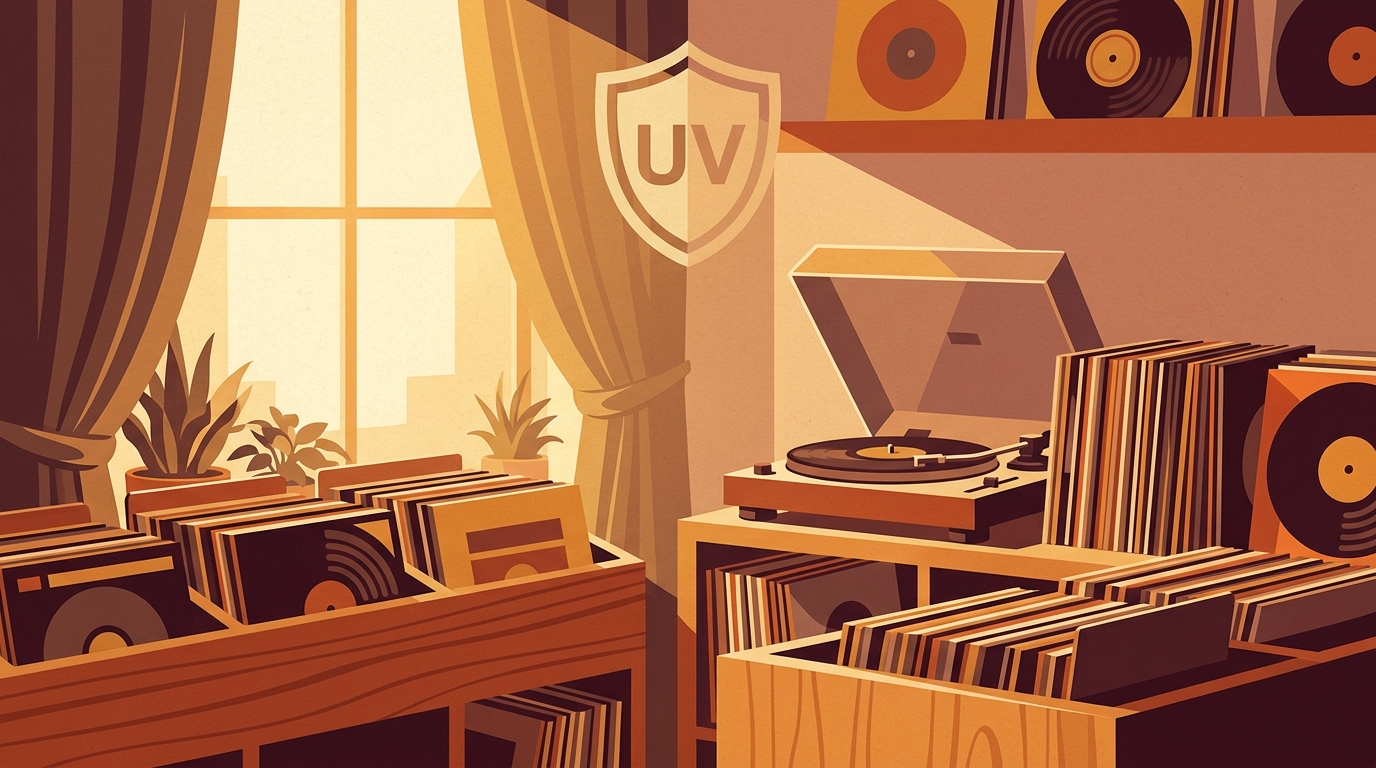
If the only good wall is near a window, add layers of protection. Blackout curtains, cellular shades, UV-filtering window film, or opaque shelf doors can cut the risk dramatically. Do not rely on ordinary glass as your whole plan. It may reduce some UV, but it does not stop heat, and heat is the part that warps records.
Control heat, humidity, and pressure
For everyday record storage, think stable and moderate. Gaylord Archival recommends a clean, dark environment for vinyl, says vinyl is vulnerable to ultraviolet light and heat exposure, and suggests 65 to 70 degrees Fahrenheit with relative humidity under 50 percent. It also recommends keeping temperature and RH swings within about 10 degrees or 10 percent over 24 hours [3]. Those are practical home targets, not museum fantasy.
Pressure matters because heat rarely acts alone. Store LPs vertically, like books, with enough support that they do not lean at a steep angle. Gaylord also recommends vertical storage, keeping same-size records together, and using fillers when a box is only partly full so records do not slump [3]. Avoid stacking records flat for long periods, especially near a sunny spot.
Protect jackets as well as the records
A record jacket is often more light-sensitive than the disc. Red ink fades, dark spines go gray, and glossy lamination can age unevenly. If you display sleeves, treat them like prints. Use UV-filtering acrylic or glass, keep frames away from direct sun, and rotate what is on the wall.
Outer sleeves help with abrasion and handling, but a clear polyethylene or polypropylene sleeve does not magically block all damaging light. For shelf storage near brightness, physical shade is better than a prettier plastic sleeve. Opaque boxes, doors, or curtains do more because they remove the light exposure instead of trying to make it harmless.
Be careful with cars, windowsills, and listening setups
The fastest sunlight damage often happens outside the record room. A record left on a car seat can warp quickly because cars heat up far above outdoor temperature. When buying records on a hot day, make the shop your last stop, keep records upright in the cabin rather than the trunk, and bring them inside first when you get home.
Turntable placement deserves the same attention. A deck in a sunny bay window looks beautiful, but it exposes the record, mat, cartridge, and dust cover to heat. If the record or platter gets warm to the touch, move the setup or block the sun. You can track what you actually play in What's Spinning, then use that history to decide which records deserve premium shelf space away from heat and light.
A quick sunlight-proofing checklist
- Check the shelf at the brightest hour of the day, not only at night.
- Move valuable records to an interior wall or shaded shelf.
- Use curtains, blinds, UV film, or opaque doors where windows are unavoidable.
- Store LPs vertically with firm side support and no severe leaning.
- Keep the room around 65 to 70 degrees Fahrenheit when possible, with RH under 50 percent.
- Never leave records in a hot car, on a windowsill, or beside a radiator.
- Rotate displayed jackets and keep rare originals out of direct light.
Bottom line
To protect vinyl from sunlight, do not overcomplicate it. Keep records cool, shaded, vertical, and stable. Sunlight damage is cumulative for jackets and sometimes sudden for discs, so the goal is to remove the obvious risks before they become expensive lessons. A darker shelf, a curtain, and better vertical support will do more for your collection than any miracle accessory.
FAQ
Can sunlight actually warp a vinyl record?
Yes. Direct sunlight can heat a record unevenly, especially near windows, inside cars, or on a turntable by a bright patio door. The risk is highest when heat combines with pressure, such as a leaning stack or a jacket squeezed on one side.
Is indirect window light safe for record shelves?
Indirect light is much safer than direct sun, but it is still best to keep valuable records away from bright windows. UV-filtering film, curtains, and opaque shelf doors reduce both jacket fading and heat buildup.
What temperature should vinyl records be stored at?
For a home collection, aim for normal room temperature or cooler, with stable conditions. The Library of Congress recommends room temperature or below and about 35 to 40 percent relative humidity for home audiovisual collections, while Gaylord Archival recommends 65 to 70 degrees Fahrenheit and under 50 percent RH for vinyl records.
Should I display records on the wall?
You can, but avoid direct sunlight and use UV-filtering acrylic or glass if the jacket matters. Rotate display copies, keep rare originals in storage, and never display a record where the sleeve gets warm to the touch.
A spreadsheet tracks what you own. What's Spinning identifies what's playing.
On-device vinyl ID logs your listening history automatically. 7-day free trial.
Looking for Shazam for vinyl?
What's Spinning identifies what's playing on your turntable on-device, logs history, and AirPlays now-playing to your TV.
Comparing vinyl ID apps?
Analog requires Discogs and is iPhone-first (iPad coming). What's Spinning works without Discogs on iPhone and iPad with AirPlay.
Try What's Spinning Free
Turn your iPad into a live now-playing display. Track every record you spin.
START FREE TRIALThen $4.99/mo or $39.99/yr · Cancel anytime