Turntable Cleaning Kit Comparison: Top Picks for Cleaner Vinyl
If your records sound noisy, the problem is not always the pressing, cartridge, or mastering. Sometimes it is simpler: dust in the groove, static on the surface, or a stylus carrying debris. A good turntable cleaning kit comparison should ask what cleaning problem you actually have.
Here are the top picks, based on official product details, collector use cases, and how each kit fits a real record shelf.
Quick comparison: which cleaning kit should you buy?
| Pick | Best for | Typical strength | Main limitation |
|---|---|---|---|
| Carbon fiber brush kit | Daily dust control | Fast before every play | Does not deep clean residue |
| Velvet pad plus fluid kit | Low-cost wet wiping | Good starter upgrade | Technique matters, can leave residue if overused |
| Spin-Clean Record Washer MKII | Batch cleaning used records | Cleans both sides in a manual bath | Needs drying space and fresh solution discipline |
| Pro-Ject VC-E2 | Serious collectors | Vacuum removes fluid quickly | Far more expensive than hand kits |
| Stylus cleaning kit | Cartridge care | Targets the playback tip directly | Does nothing for dirty records |
Best everyday pick: carbon fiber brush plus stylus brush
A carbon fiber brush is the least glamorous winner here, which is exactly why it belongs on every turntable stand. It is quick, cheap, and habit-forming. Use it before playback to sweep loose dust while the record spins, then return the record to a clean inner sleeve. If you only buy new vinyl and already store records carefully, this may be the kit you use most often.
The key is not to expect miracles. Dry brushing removes surface dust and can help reduce static, but it will not dissolve fingerprints, smoke film, or old paper-sleeve residue. Think of it as brushing your teeth, not going to the dentist. Add a small stylus brush or gel cleaner so the cartridge is not dragging compacted debris through the groove.
Best budget wet kit: velvet pad and record-safe fluid
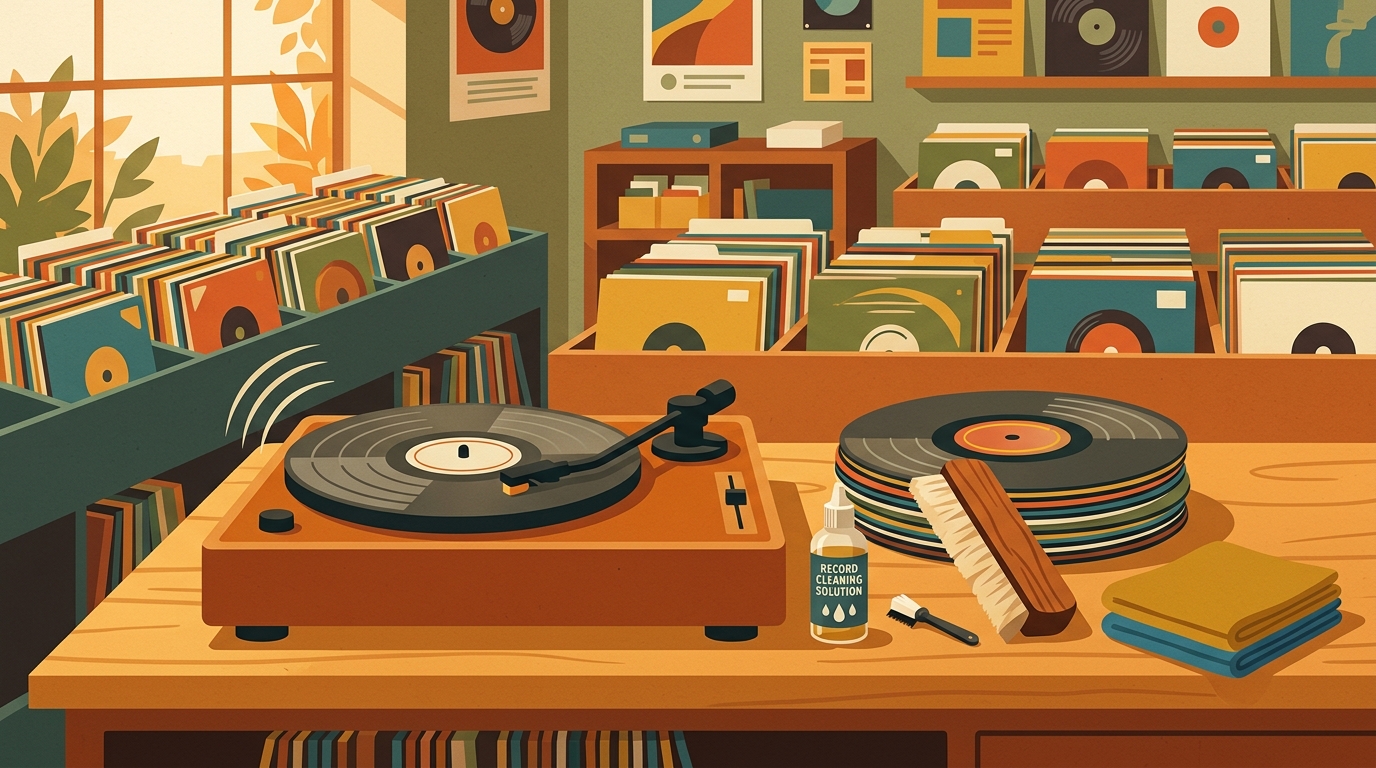
The classic budget kit is a velvet pad or microfiber applicator, a small bottle of record cleaning fluid, and a drying cloth. It is simple, portable, and good enough for light contamination. These kits are useful when a record has a visible fingerprint or a light film that a dry brush cannot touch.
There are two caveats. First, less fluid is usually better than more fluid. Flooding a record by hand can push dirty liquid around rather than remove it. Second, use a clean cloth and keep it clean. A contaminated pad becomes a very small mop full of yesterday's grit.
Best batch cleaner: Spin-Clean Record Washer MKII
The Spin-Clean Complete Kit is the best middle ground for most used-vinyl buyers. Spin-Clean lists the current Complete Kit at $79.99, and the official page says it cleans both sides simultaneously in a manual, non-powered bath. The kit includes the washer basin, a lid, a pair of brushes, rollers for multiple record sizes, a 4 oz alcohol-free concentrate, and lint-free drying cloths.
That design solves the biggest problem with bargain wipe-down kits: consistency. The record rotates through brushes and diluted fluid, so you can clean a stack of thrift-store or record-fair finds in one session. It also avoids the cost, noise, and footprint of a vacuum machine. The tradeoff is workflow. You need a clean drying area, enough cloths, and the discipline to replace dirty bath water. If your weekly ritual includes ten newly bought used LPs, this is the sensible upgrade.
Best premium pick: Pro-Ject VC-E2 vacuum cleaner
The Pro-Ject VC-E2 is not a casual accessory. It is a compact record cleaning machine for collectors who want wet cleaning and quick fluid removal in one device. Pro-Ject says dry brushing is useful for rough dust removal, but wet cleaning is needed to clean the grooves effectively. Its VC-E2 page lists a 30 RPM cleaning speed, a 0.5 liter tank for vacuumed cleaning liquid, a magnetic clamp that seals the label, Wash it 2 non-alcoholic fluid, and a claim that records can be completely dry within two rotations.
The appeal is speed and repeatability. Vacuum removal means less waiting and less chance that loosened debris dries back into the groove. The downside is cost. A vacuum machine makes sense if your collection is large, you buy used records constantly, or you sell and grade vinyl.
Best stylus-focused kit: small brush or gel cleaner
Record cleaning gets most of the attention, but stylus care is just as important. The stylus is the only part of your system physically riding the groove. If it carries dust, every record becomes a delivery mechanism for more noise and more buildup. A stylus brush used back-to-front, never side-to-side, is inexpensive and effective. Gel pads can also work when used gently, though some cartridge makers warn against sticky products.
For beginners, the safest rule is simple: clean the record before play, then inspect the stylus regularly. If fuzz appears on the diamond after every side, the record is still dirty or the room is dusty. Solving the source beats cleaning the symptom forever.
What I would buy first
If you are building from zero, buy in this order: carbon fiber brush, stylus brush, clean anti-static inner sleeves, then a wet cleaning method. If you mostly buy new records, stop there until you hear a problem. If you buy used records every month, add the Spin-Clean style bath. If you clean large batches, grade records, or hate air-drying, consider a vacuum machine like the VC-E2.
The best turntable cleaning kit is the one that matches your buying habits. Daily brushing keeps clean records clean. Wet cleaning rescues used records. Stylus care protects the tiny contact point doing the real work. Put those three jobs together and the comparison becomes much easier.
FAQ
Do I need both a record cleaner and a stylus cleaner?
Yes. A record cleaner removes dust and residue from the groove, while a stylus cleaner removes buildup from the diamond tip. One does not replace the other.
Is a carbon fiber brush enough for used records?
A carbon fiber brush is great before each play, but it is not a deep cleaner. Used records with fingerprints, shop dust, or old sleeve residue usually need a wet cleaning method.
How much should a beginner spend on a cleaning kit?
Most beginners should start with a 20 to 40 dollar dry kit and stylus brush, then add a wet cleaner if they buy used records often. A Spin-Clean style bath makes sense when you clean batches.
Can cleaning fluid damage records?
The safest approach is to use fluid made for vinyl and follow the maker's dilution instructions. Avoid household cleaners, abrasive cloths, and improvised alcohol-heavy mixes unless you know exactly what the record material can tolerate.
A spreadsheet tracks what you own. What's Spinning identifies what's playing.
On-device vinyl ID logs your listening history automatically. 7-day free trial.
Looking for Shazam for vinyl?
What's Spinning identifies what's playing on your turntable on-device, logs history, and AirPlays now-playing to your TV.
Comparing vinyl ID apps?
Analog requires Discogs and is iPhone-first (iPad coming). What's Spinning works without Discogs on iPhone and iPad with AirPlay.
Try What's Spinning Free
Turn your iPad into a live now-playing display. Track every record you spin.
START FREE TRIALThen $4.99/mo or $39.99/yr · Cancel anytime