Vinyl Records for Relaxation: A Calmer Way to Listen
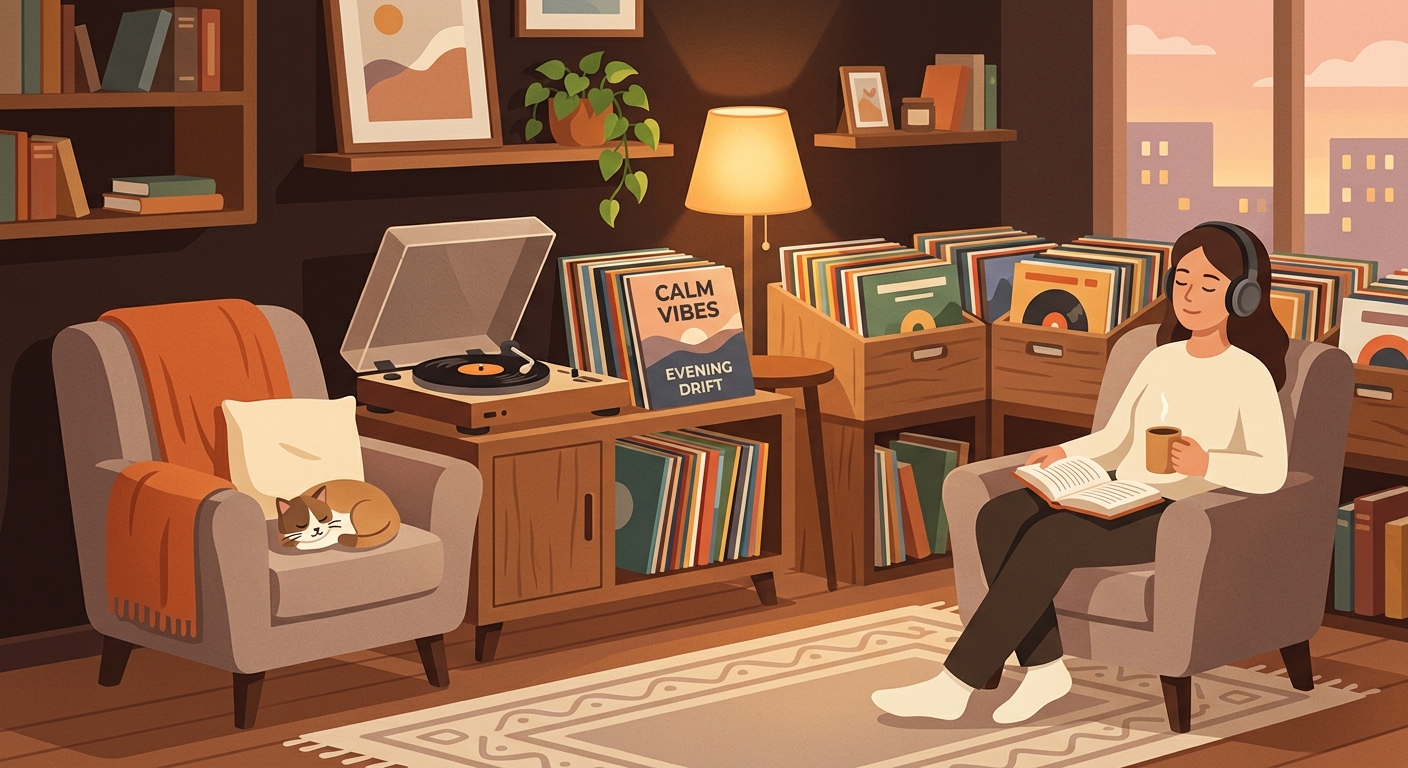
The use case vinyl for relaxation is not nostalgia for its own sake. It is about building a small, repeatable ritual that makes music feel less like background noise and more like a reset button. A record asks you to choose one album, remove it from the sleeve, clean it, cue it, and stay nearby when the side ends. That friction can be exactly what makes it calming.
Vinyl is enjoying that role at a moment when physical listening is still growing. IFPI reported that global recorded music revenue rose 10.2% in 2023, and that physical-format revenue increased 13.4%, the third consecutive year in which both digital and physical revenue grew together [1]. The point is not that records beat streaming on convenience. They do not. The point is that a turntable creates boundaries, and boundaries are useful when your day has been chopped into alerts, tabs, meetings, and half-finished tasks.
Why records can feel calmer than playlists
Streaming is brilliant for discovery, but it also makes skipping effortless. That can turn listening into another decision loop. Vinyl narrows the choice. You pick a record, then the format does some of the discipline for you. The classic LP evolved around roughly twenty-minute sides, a pace music critic Robert Christgau once described as well suited to concentration, and that side length gives a relaxation session a natural container [2]. Twenty minutes is long enough to let your nervous system settle, but short enough to fit between dinner cleanup, bedtime routines, or the last email of the day.
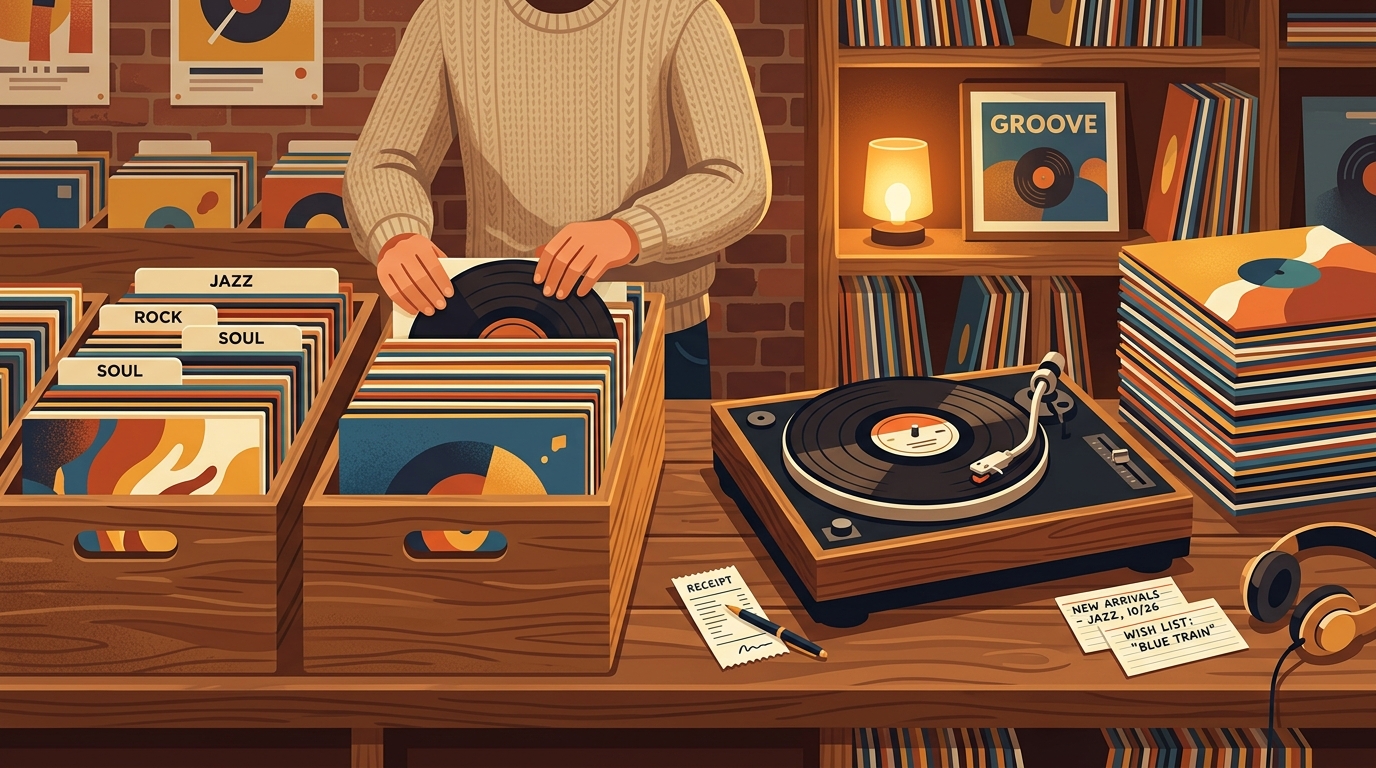
The physical sequence matters too. Pulling a jacket from the shelf, brushing dust from the groove, lowering the tonearm, and sitting down before the first track starts gives your brain transition cues. You are not merely pressing play. You are changing modes. For many collectors, that difference is the whole appeal: a record session feels intentional before the music even begins.
What the health research actually says
Music is not magic medicine, and a record collection is not a substitute for sleep, therapy, exercise, or medical care. Still, there is credible evidence that listening can affect stress physiology. A 2013 PLOS ONE study by Thoma and colleagues assigned sixty healthy women to relaxing music, rippling water, or silence before a standardized stress test. The results were mixed, but one useful finding was clear: after the stressor, salivary alpha-amylase returned to baseline considerably faster in the relaxing-music group than in the silence group, suggesting faster autonomic recovery [3].
Harvard Health also summarizes clinical research showing that music can help people feel calmer in stressful medical settings. In one cataract-surgery study it cites, patients who listened to music had blood pressure that came down rapidly and stayed lower into recovery; the average reduction in recovery was 35 mm Hg systolic and 24 mm Hg diastolic [4]. Home listening is obviously different from surgery, but the practical lesson transfers: self-selected music, heard in a controlled environment, can support calm.
How to build a vinyl relaxation ritual
Start with one shelf, not your whole collection. Choose eight to twelve records that reliably lower the temperature in the room. For some people that means ambient records such as Brian Eno's Ambient 1: Music for Airports, quiet jazz like Bill Evans' Waltz for Debby, mellow soul, folk, bossa nova, dub, instrumental hip-hop, or slow singer-songwriter albums. The genre matters less than the effect. If a record makes you start checking your phone, arguing with the mix, or waiting for one famous track, it is probably not your calm record.
Next, remove small irritations. Put a carbon-fiber brush beside the turntable. Keep inner sleeves easy to reach. Make sure the turntable is level, the stylus is clean, and the speakers are not aimed like studio monitors if your goal is decompression. Warm, even volume usually works better than audiophile scrutiny. The best relaxation setup is the one that lets you stop adjusting things.
Use the side break on purpose. Side A can be the exhale: sit, breathe, cook, stretch, sketch, read liner notes, or simply do nothing. When the side ends, stand up, flip the record, and ask whether you want another twenty minutes or whether the ritual has done enough. That forced pause is one of vinyl's underrated strengths. It gives you a graceful exit instead of an infinite queue.
Where What's Spinning fits
Relaxation listening gets better when you notice what actually works. What's Spinning can turn your turntable plays into a listening history, so your calm shelf is based on real behavior rather than guesses. After a week, you may discover that you return to one ECM jazz record every night, or that the ambient album you thought would help rarely gets played. That feedback is gentle, but useful.
A simple starter routine
Try this for five nights. Pick one record before you sit down. Put your phone across the room. Clean the record. Start Side A at a comfortable volume. Do not browse for the next album while it plays. When the side ends, write one sentence: calmer, unchanged, distracted, energized, or sleepy. After five sessions, keep the records that consistently help and move the rest back to general listening.
The goal is not to make vinyl precious. It is to make listening less disposable. A record gives you a beginning, a middle, a pause, and a small act of care. For relaxation, that structure is not a limitation. It is the feature.
FAQ
Is vinyl actually better than streaming for relaxation?
Not automatically. Streaming can be calming too. Vinyl helps when the physical ritual, album format, and side break reduce choice overload and make you listen more intentionally.
What records are best for calming down?
Choose records with steady dynamics, familiar pacing, and low skip temptation. Ambient, mellow jazz, acoustic folk, dub, bossa nova, quiet soul, and instrumental records are common starting points, but personal association matters most.
How long should a relaxation listening session be?
One LP side is a practical default. Roughly twenty minutes is enough time to settle without turning the session into another obligation. If you feel better after Side A, stopping is allowed.
Do I need expensive turntable gear for relaxing vinyl listening?
No. You need a safe, stable turntable, a clean stylus, decent speakers or headphones, and a setup that does not annoy you. Reliability matters more than upgrading when the goal is calm.
A spreadsheet tracks what you own. What's Spinning identifies what's playing.
On-device vinyl ID logs your listening history automatically. 7-day free trial.
Looking for Shazam for vinyl?
What's Spinning identifies what's playing on your turntable on-device, logs history, and AirPlays now-playing to your TV.
Comparing vinyl ID apps?
Analog requires Discogs and is iPhone-first (iPad coming). What's Spinning works without Discogs on iPhone and iPad with AirPlay.
Try What's Spinning Free
Turn your iPad into a live now-playing display. Track every record you spin.
START FREE TRIALThen $4.99/mo or $39.99/yr · Cancel anytime