How Hip-Hop Producers Dig for Vinyl Breaks and the Art of Crate Digging
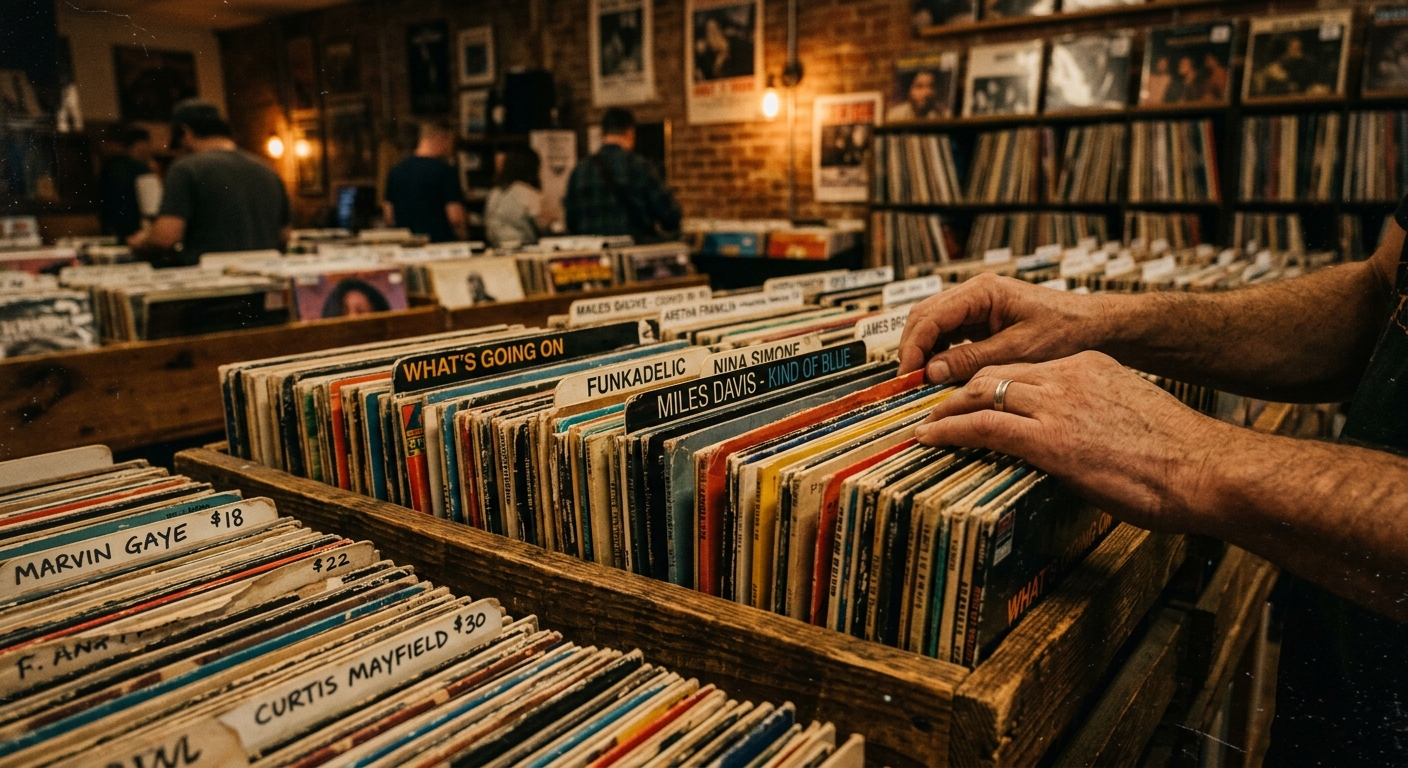
Every great hip-hop beat starts the same way: with a producer standing in front of a shelf of records, pulling one out at random, dropping the needle, and hoping the next few seconds contain something magic. That hunt for the perfect drum break, the right vocal sample, or the bassline that makes a beat come alive, is called crate digging. And it is one of the most romantic, secretive, and influential practices in all of music.
Crate digging is essentially the art of searching through bins of used and second-hand vinyl records, looking for isolated drum breaks, soul grooves, funk passages, and jazz solos that can be chopped up, looped, and repurposed as the foundation of a new composition. The name comes from the physical act of digging through crates of records at flea markets, garage sales, and indie record shops. The most dedicated crate diggers travel across cities, countries, and even continents in search of obscure pressings that have never been widely distributed outside of their original markets.
Where it all began
The origins of sampling in hip-hop trace back to the late 1970s in the South Bronx, where DJ Kool Herc and Grandmaster Flash began isolating and looping the breakbeat sections of funk and soul records during parties. These drum breaks, where the band would briefly stripped back to just the rhythm section, gave dancers their most energetic moments. By the early 1980s, producers like Marley Marl and Paul Sol were taking those breaks and layering them with other samples, laying the groundwork for what sampling would become.
The technology to sample was primitive at first. The Fairlight CMI, introduced in 1979, was the first commercially available digital sampler, but at around $25,000 it was far beyond the reach of most producers. The breakthrough came with the Akai MPC series, which launched in 1988 and put sampling power directly into the hands of working musicians at a fraction of that price. The MPC allowed producers to assign audio snippets to individual pads and trigger them rhythmically, creating an entirely new instrument for composing beats.
The most famous breaks in hip-hop history
Some drum breaks have appeared in so many records that they have become part of the shared language of hip-hop production. The Amen break, a six-second drum solo from the 1969 song "Amen, Brother" by the Winstons, has been sampled in over a thousand recordings spanning multiple decades and genres. It is one of the most sampled pieces of music ever recorded, appearing everywhere from early jungle tracks to modern boom-bap beats.
James Brown's catalog has been an even richer hunting ground. His "Funky Drummer" drum break, recorded in 1970 with Clyde Stubblefield on drums, has been sampled on hundreds of hits. His band was the most fruitful source of breakbeats in hip-hop history, and the reason so many early hip-hop records sound like they are improvising from the same playbook. Beyond drums, his records supplied basslines, horn stabs, and vocal yelps that became essential building blocks of the genre.
Loleatta Holloway's "Love Sensation" is another legendary source. Originally recorded as a gospel-inflected disco track in 1980, it has been sampled on records by Mariah Carey, Wiley, and numerous house music producers. The distinctive chest-thumping kick and rolling bassline give producers a groove that sounds good at virtually any tempo, which is why it keeps reappearing generation after generation.
How producers actually dig
The physical process of crate digging has not really changed in decades. A digger walks into a record shop, a flea market stall, or a thrift store, and starts flipping through shelves. Most records are unremarkable, but the skilled digger develops an eye for the promising ones: obscure labels, foreign pressings, soundtrack albums, and gospel records tend to yield the best results. Gospel music in particular has long been a secret weapon, because church productions often had tight, energetic bands and were rarely reissued, making them virgin territory for sampling.
Some producers specialize in specific eras or genres. J Dilla was famous for his collection of jazz and soul records, particularly from the 1970s. Madlib's collection reportedly numbers in the tens of thousands of pressings, spanning decades and continents. Pete Rock's crate digging has influenced a generation of producers with its focus on soulful, melodic grooves from the 1970s and early 1980s.
The digital era brought new tools and new complications. Sample packs and subscription services like Splice gave producers instant access to thousands of pre-cleared samples, which dramatically lowered the barrier to entry for making beats. But the most purist producers argue that this convenience comes at a cost. When everyone has access to the same packs, beats start sounding generic. The diggers who still hunt for obscure vinyl argue that the physical hunt produces something irreplaceable: a break that nobody else has found, on a record that nobody else has heard, that becomes the fingerprint of a unique sound.
The legal landscape
Using samples has always carried legal risk. The 1991 court case Grand Upright Music v. Warner Bros. Records established that unlicensed sampling, no matter how small, could constitute copyright infringement. A 2005 ruling in Bridgeport Music v. Dimension Films further tightened the standards, ruling that any digital sampling of a copyrighted recording requires a license. The result is that clearing samples, especially from major labels, can cost tens of thousands of dollars, and sometimes the original rights holders simply refuse to grant permission.
That legal pressure pushed many producers toward interpolation, where they recreate the musical elements of a song rather than sampling the original recording directly. This requires only a publishing license rather than a master use license, making it cheaper and faster. But for producers who prize authenticity, interpolation can feel like a compromise. The difference is audible: a recreated bassline rarely has the same groove and feel as the original performance.
Why crate digging still matters
In the age of streaming and algorithmic playlists, crate digging remains one of the most hands-on, personal ways of discovering music. A digger might pull a record off a shelf because the label art looks interesting, or because the catalog number suggests it is a foreign pressing, or simply because a title sounds intriguing. That record might sit on a turntable for twenty minutes before the right thirty-second break reveals itself. That process of active listening, of engaging with music rather than passively receiving it, is what makes crate digging feel more like an art form than a sourcing method.
The vinyl itself matters too. The sound of a drum break on an original pressing has a quality that digital reissues often lose: the natural compression of analog tape, the slight warmth of a well-loved record, the subtle imperfections that give each pressing its own character. When a producer finds that break on the right pressing and loops it into a new beat, they are carrying forward not just the music but the physical artifact that preserved it.
For producers building beats with What's Spinning, the connection between vinyl culture and hip-hop production is inseparable. The same obsessive attention to detail that makes a great crate digger is what makes a well-organized record collection valuable. Every record in a collection is a potential sample waiting to be discovered, and every session of digging is an education in music history that no algorithm can replicate.
Crate digging is the practice of searching through bins of second-hand vinyl records to find isolated drum breaks, basslines, and vocal samples that can be used in new music productions, especially in hip-hop and electronic music.
The Amen break from 'Amen, Brother' by the Winstons is the most famous, appearing in over a thousand songs. James Brown's 'Funky Drummer' and Lyn Collins' 'Think (About It)' are also among the most frequently sampled drum breaks in hip-hop history.
Most diggers use a direct-drive turntable paired with pitch-corrected mixer. Producers digitize their finds using audio interfaces, then chop samples using hardware samplers like the Akai MPC or software like Ableton Live and Pro Tools.
No. Under US copyright law, sampling a recording without a license from the rights holder is copyright infringement. The 2005 Bridgeport Music ruling established that any digital sampling requires a license, regardless of how small the sample is.
A spreadsheet tracks what you own. What's Spinning identifies what's playing.
On-device vinyl ID logs your listening history automatically. 7-day free trial.
Looking for Shazam for vinyl?
What's Spinning identifies what's playing on your turntable on-device, logs history, and AirPlays now-playing to your TV.
Comparing vinyl ID apps?
Analog requires Discogs and is iPhone-first (iPad coming). What's Spinning works without Discogs on iPhone and iPad with AirPlay.
Try What's Spinning Free
Turn your iPad into a live now-playing display. Track every record you spin.
START FREE TRIALThen $4.99/mo or $39.99/yr · Cancel anytime