The Ethics of Vinyl Record Collecting and Sustainability
Vinyl collecting ethics and sustainability can sound like a contradiction. Records are durable cultural objects, but most new LPs are still manufactured from polyvinyl chloride, or PVC, using heat, electricity, packaging, and global freight. The useful question is not whether collecting is perfectly green. It is how to collect in a way that respects music, people, and materials while wasting less.
The issue matters because vinyl is no longer a tiny niche. The RIAA's 2025 year-end report counted 46.8 million vinyl units and $1.04 billion in U.S. wholesale revenue, up 7.9 percent and 9.3 percent respectively. That marked 19 straight years of revenue growth. More records being made means collectors have more influence over which practices become normal.
What is the environmental cost of a new record?
A 2024 industry carbon study led by the Vinyl Record Manufacturers Association and Vinyl Alliance estimated that a record's full footprint can vary roughly from 0.7 to 6 kilograms of carbon dioxide equivalent, depending heavily on manufacturing and distribution. Its cradle-to-factory-gate case study attributed about half of manufacturing emissions to energy and 30 percent to PVC compound. The report also found that a 180-gram record increased the manufacturing footprint by 14 percent compared with 140 grams, while splatter vinyl increased it by 26 percent.
Shipping can overwhelm those gains. The same carbon footprint report estimated that airfreighting one record from Europe to the United States, or the reverse, adds about 1.36 kilograms of carbon dioxide equivalent. Europe-to-Australia airfreight adds about 3.46 kilograms per record. A lighter pressing in a simple sleeve is helpful, but not if it takes an airplane around the world for one buyer.
The best first move is to use what already exists
The U.S. Environmental Protection Agency puts source reduction and reuse above recycling in its materials management hierarchy. For collectors, that makes used records, swaps, gifts, and local shop purchases powerful options. A secondhand LP requires no new pressing run, and its purchase keeps a durable object circulating instead of treating it as disposable clutter.
There is a tradeoff: buying used usually does not send new revenue to the artist or label. A thoughtful collection can do both. Buy back catalog used when a good copy already exists, then buy a current release directly from the artist, independent label, or local record shop when you want your money to support new work. Ethics is not a single rule; it is a set of priorities made visible through your spending.
Buy the album, not every color
Variant culture turns one musical release into a shelf of nearly identical products. Collectors do not need to reject colored vinyl, deluxe packaging, or limited editions. The ethical problem begins when scarcity marketing encourages people to buy five copies they will not play, or to clear out stock only for immediate resale at inflated prices.
A practical standard is simple: choose the edition you genuinely want, and leave the rest for other listeners. When reselling, grade honestly, disclose defects, use recent sales history rather than hype, and avoid exploiting a release-day shortage. Discogs gives buyers access to marketplace sales history, including low, median, and high prices for a release. Fair dealing keeps collecting closer to a music community and farther from a speculative asset market.
Reward better manufacturing choices
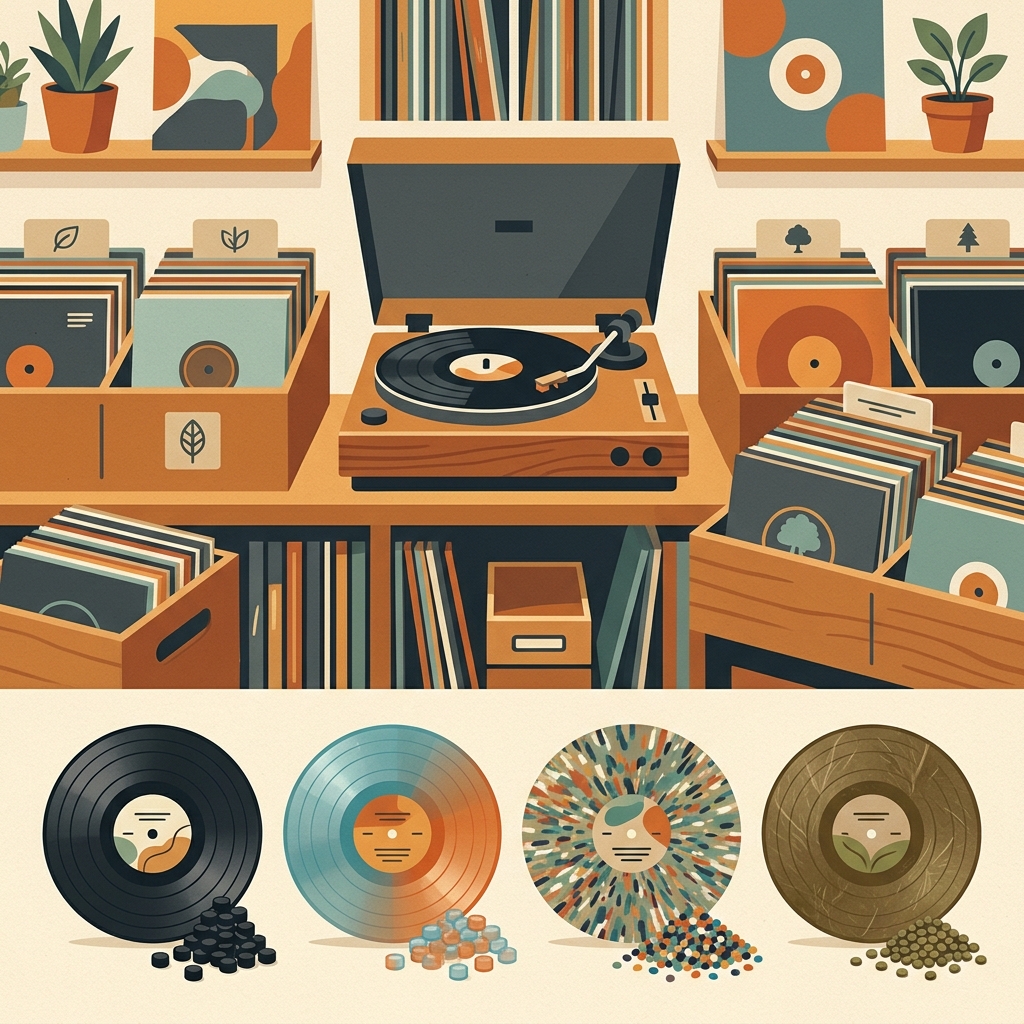
New materials and recycled compounds are improving, although no material is impact-free. In 2026, Warner Music Group and GZ Media reported a pilot that shredded about 10,000 unsold records and tested pressings containing 10 to 100 percent recovered material. Blind listening sessions coordinated with Abbey Road found that the recycled blends could meet commercial sound standards, while carbon modeling suggested reductions above 10 percent under the test conditions.
Other experiments are more visible at retail. Coldplay said each 140-gram Moon Music EcoRecord used recycled PET equivalent to nine plastic bottles and reduced manufacturing-process emissions per kilogram by 85 percent compared with traditional 140-gram vinyl. Billie Eilish's sustainability disclosures describe recycled vinyl, FSC-certified recycled paper, plant-based inks, water-based coatings, and reusable sleeves instead of shrink wrap on selected releases. These are manufacturer claims, so collectors should still look for specific materials, measured reductions, and transparent boundaries rather than accepting a vague "eco" label.
Care is a sustainability practice
A record that lasts for decades can move through several homes. The Library of Congress recommends handling grooved discs by the edge and label, storing them upright, and keeping home collections in a cool, clean, stable environment around 35 to 40 percent relative humidity. Good inner sleeves, a clean stylus, and sturdy shelving protect both sound and resale value.
This is also where a collection tracker can help. Use What's Spinning to notice what you actually play, identify duplicates, and decide which neglected records should be sold, traded, or gifted. Circulation is better than permanent storage for records you no longer value.
A practical ethical collecting checklist
- Buy used first for common back-catalog titles.
- Buy direct when you want to support an active artist or independent label.
- Choose one meaningful variant instead of chasing every color.
- Prefer 140-gram pressings, simple packaging, recycled content, and clear sustainability data.
- Combine mail orders, choose slower ground shipping, and buy locally when practical.
- Grade accurately and price fairly when selling.
- Store records well, maintain your turntable, and move unwanted copies back into circulation.
FAQ
Is buying used vinyl more sustainable than buying new?
Usually, yes. Reuse avoids the need for another copy to be manufactured and keeps an existing record in circulation. Buying new can still be an ethical choice when it directly supports an artist, label, or local shop.
Is recycled vinyl as good as virgin vinyl?
It can be. The 2026 Warner Music Group and GZ Media pilot found that recycled-content pressings passed blind listening evaluations at commercial quality. Results still depend on the plant, material stream, quality control, and mastering.
Are 180-gram records less sustainable?
They use more material and weigh more in shipping. The 2024 vinyl industry footprint study estimated a 14 percent higher manufacturing footprint for 180-gram records than for 140-gram records. Heavier vinyl does not automatically sound better.
What is the most ethical way to build a vinyl collection?
Buy intentionally, favor used copies when appropriate, support artists directly, avoid unnecessary duplicate variants, choose lower-impact new editions, maintain records carefully, and resell or donate what you no longer use.
Sources
A spreadsheet tracks what you own. What's Spinning identifies what's playing.
On-device vinyl ID logs your listening history automatically. 7-day free trial.
Looking for Shazam for vinyl?
What's Spinning identifies what's playing on your turntable on-device, logs history, and AirPlays now-playing to your TV.
Comparing vinyl ID apps?
Analog requires Discogs and is iPhone-first (iPad coming). What's Spinning works without Discogs on iPhone and iPad with AirPlay.
Try What's Spinning Free
Turn your iPad into a live now-playing display. Track every record you spin.
START FREE TRIALThen $4.99/mo or $39.99/yr · Cancel anytime
Get it on your iPhone
Open on iPhone